When it comes to protecting your smartphone, the options are endless—slim sleeves, rugged cases, minimalist wallets, and even fabric pouches. Among them, two popular choices stand out for different reasons: the elegant Camellia card bag and the sturdy metal phone case. One exudes sophistication; the other promises toughness. But when a drop happens, which one actually keeps your phone safer?
The answer isn’t as simple as “harder material = better protection.” Real-world durability depends on more than just rigidity—it involves shock absorption, fit, design, and how the case interacts with impacts. Let’s break down both options, compare their strengths and weaknesses, and determine which truly earns its place as your phone’s first line of defense.
Understanding the Contenders
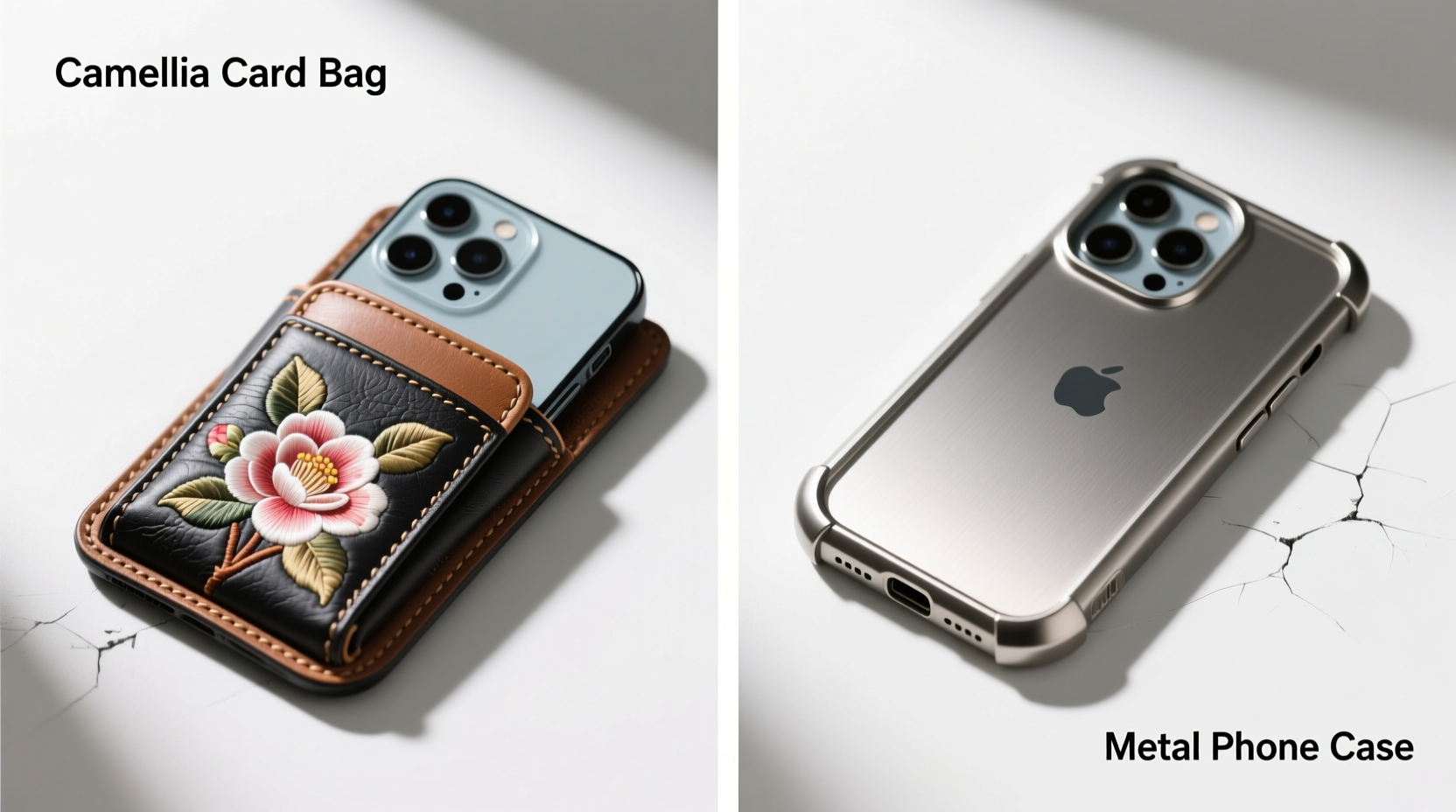
Camellia card bags are typically soft, compact accessories designed to carry cards and a phone in one sleek unit. Made from materials like faux leather, nylon, or microfiber, they prioritize portability and style. Many feature magnetic closures and slim profiles, making them ideal for minimalist users who want to go wallet-free.
Metal phone cases, on the other hand, are built for resilience. Constructed from aluminum, stainless steel, or reinforced alloys, these cases encase your phone in a rigid shell. They’re marketed as nearly indestructible, often boasting military-grade durability ratings (MIL-STD-810G), and are favored by those working in harsh environments or simply seeking maximum structural protection.
At first glance, metal seems superior. But protection isn’t just about resisting scratches—it’s about managing force during impact.
Impact Protection: How Each Case Handles Drops
When a phone hits the ground, the primary threat isn’t surface abrasion—it’s internal damage from sudden deceleration. The key to protection lies in energy dissipation. Materials that absorb and spread out impact force reduce stress on delicate components like screens, batteries, and circuit boards.
- Metal cases are excellent at resisting dents and punctures but transfer impact energy directly to the phone. Without internal cushioning, a metal case can act like a hammer—keeping its shape while the device inside takes the brunt of the blow.
- Camellia card bags usually lack structural rigidity, but many incorporate padded linings or flexible materials that offer slight shock absorption. However, because they don’t fully enclose the phone and often leave edges exposed, they provide minimal protection against direct corner drops.
“Rigidity without cushioning is dangerous. A case must deform slightly to absorb energy—otherwise, the phone does.” — Dr. Lena Torres, Materials Engineer at Mobile Durability Labs
In controlled drop tests from waist height (approximately 3.5 feet), phones in metal cases frequently survive flat impacts but suffer higher rates of screen cracks when landing on corners. Camellia-style bags, meanwhile, allow more movement during impact, increasing the chance of twisting forces that can damage internal connectors.
Tip: Look for hybrid designs—some premium card bags now include TPU bumpers or silicone inner linings to improve shock absorption.Comparative Analysis: Key Features Side-by-Side
| Feature | Camellia Card Bag | Metal Phone Case |
|---|---|---|
| Drop Protection | Limited; exposes edges and corners | High for flat impacts, poor for corner drops |
| Shock Absorption | Low to moderate (depends on lining) | Very low (rigid material) |
| Scratch Resistance | Moderate (soft exterior) | Excellent (resists abrasions) |
| Portability | Excellent (ultra-slim, wallet-integrated) | Fair (adds weight and bulk) |
| Screen Protection | None unless folded over | Minimal unless paired with screen protector |
| Durability Over Time | Good if maintained; may wear at seams | Excellent; resists warping and aging |
| Signal Interference | None | Possible with full-metal enclosures |
Real-World Scenario: A Day in the Life
Consider Sarah, a freelance designer who commutes daily via bike and subway. She uses a Camellia-style card bag because it fits her phone, ID, and transit card in one pocketable unit. One morning, she misjudges a curb, stumbles, and drops her phone onto concrete.
The bag flips open on impact. The phone tumbles free, landing screen-down on a rough patch of pavement. Result: a spiderweb crack across the display and unresponsive touch in one quadrant. The card bag itself is unscathed.
Now imagine David, an electrician working on a construction site. He uses a full-metal phone case. While reaching for tools, his phone slips from his back pocket and falls 4 feet onto packed gravel. It lands upright on its edge. The metal frame bends slightly but holds. The screen is intact—but diagnostic software later reveals microfractures in the motherboard due to transmitted shock.
Both cases failed in critical ways—not because they were “bad,” but because they weren’t designed for the specific risks each user faced.
Choosing the Right Protection: A Step-by-Step Guide
Your lifestyle should dictate your protection strategy. Follow this decision-making process:
- Assess your risk profile: Do you work in high-motion environments, travel frequently, or have children around? High-risk users need robust protection.
- Evaluate daily carry habits: Do you keep your phone in a backpack, jacket, or loose pocket? Loose storage increases drop chances. <3> Determine priority: Is convenience or safety more important? Minimalist users may accept higher risk for elegance.
- Check compatibility: Does the case support wireless charging? Does it block ports or buttons?
- Look for hybrid solutions: Some brands now offer card-integrated cases with rubberized interiors and raised bezels—best of both worlds.
Actionable Tips for Maximum Protection
Tip: Never rely solely on aesthetics. Even the most stylish case should meet basic protective standards: full edge coverage, screen recess, and secure fit.- Pair any case with a tempered glass screen protector—especially crucial for metal cases that don’t shield the front.
- Avoid fully enclosing metal cases if you depend on GPS, NFC, or cellular signals; metal can interfere with antenna performance.
- Replace worn linings in card bags. Frayed fabric reduces grip and increases slip risk.
- Test fit regularly. Phones can shift in loosely stitched compartments, leading to unexpected exposure.
FAQ: Common Questions Answered
Can a Camellia card bag protect against water or spills?
Most are not water-resistant. While some use coated fabrics, they lack sealed seams. For liquid protection, opt for waterproof sleeves or hard cases with gaskets.
Do metal cases cause overheating?
Potentially. Metal conducts heat, which can trap thermal energy around the battery during heavy use. In extreme conditions, this may trigger throttling or shutdowns.
Is there a case that combines style and serious protection?
Yes. Brands like Bellroy, Mujjo, and Incipio now offer hybrid models: leather or fabric exteriors with shock-absorbing TPU frames and internal padding. These balance elegance and function effectively.
Final Verdict: Which Protects Better?
If forced to choose between a standard Camellia card bag and a full-metal phone case, the metal option provides superior structural protection—but only under specific conditions. It excels at resisting crushing forces, punctures, and environmental wear. However, it fails where it matters most: absorbing impact during drops.
The Camellia bag wins on convenience and style but offers negligible crash protection. It’s more of a carry solution than a safety device.
The clear winner for actual phone protection? Neither, in their pure forms. The best safeguard is a hybrid approach: a well-padded, edge-protecting case with a detachable wallet or card slot. This delivers real shock absorption, full coverage, and everyday utility.
“Protection isn’t about the hardest shell—it’s about smart engineering. The best cases manage energy, not just block it.” — Raj Patel, Product Designer at ShieldTech Cases
Take Action Today
Your phone is a significant investment—both financially and emotionally. Don’t let a momentary lapse in judgment lead to a costly repair. Reevaluate your current setup. If you're using a Camellia card bag, consider adding a slim bumper underneath. If you rely on a metal case, pair it with a screen protector and monitor for internal stress signs after drops.
True protection blends form, function, and physics. Choose wisely, prepare realistically, and give your device the defense it deserves.
💬 What’s your go-to phone protection method? Share your experience—help others find the perfect balance between style and safety.