
When shopping for a new accessory for your smartwatch, you’ve likely encountered both “strap” and “band” used interchangeably. At first glance, they seem like synonyms—two words describing the same thing: the piece that connects your watch to your wrist. But is there actually a difference? And more importantly, can you swap them freely between devices? The answer isn’t as straightforward as it seems, and misunderstanding the nuances could lead to compatibility issues, discomfort, or even damage to your device.
The confusion stems from inconsistent terminology across brands, retailers, and regions. While many people use “strap” and “band” interchangeably in casual conversation, the distinction becomes critical when considering materials, attachment mechanisms, and device-specific designs. Understanding these differences ensures you make informed choices that enhance comfort, style, and functionality.
What’s in a Name? Defining Strap vs Band
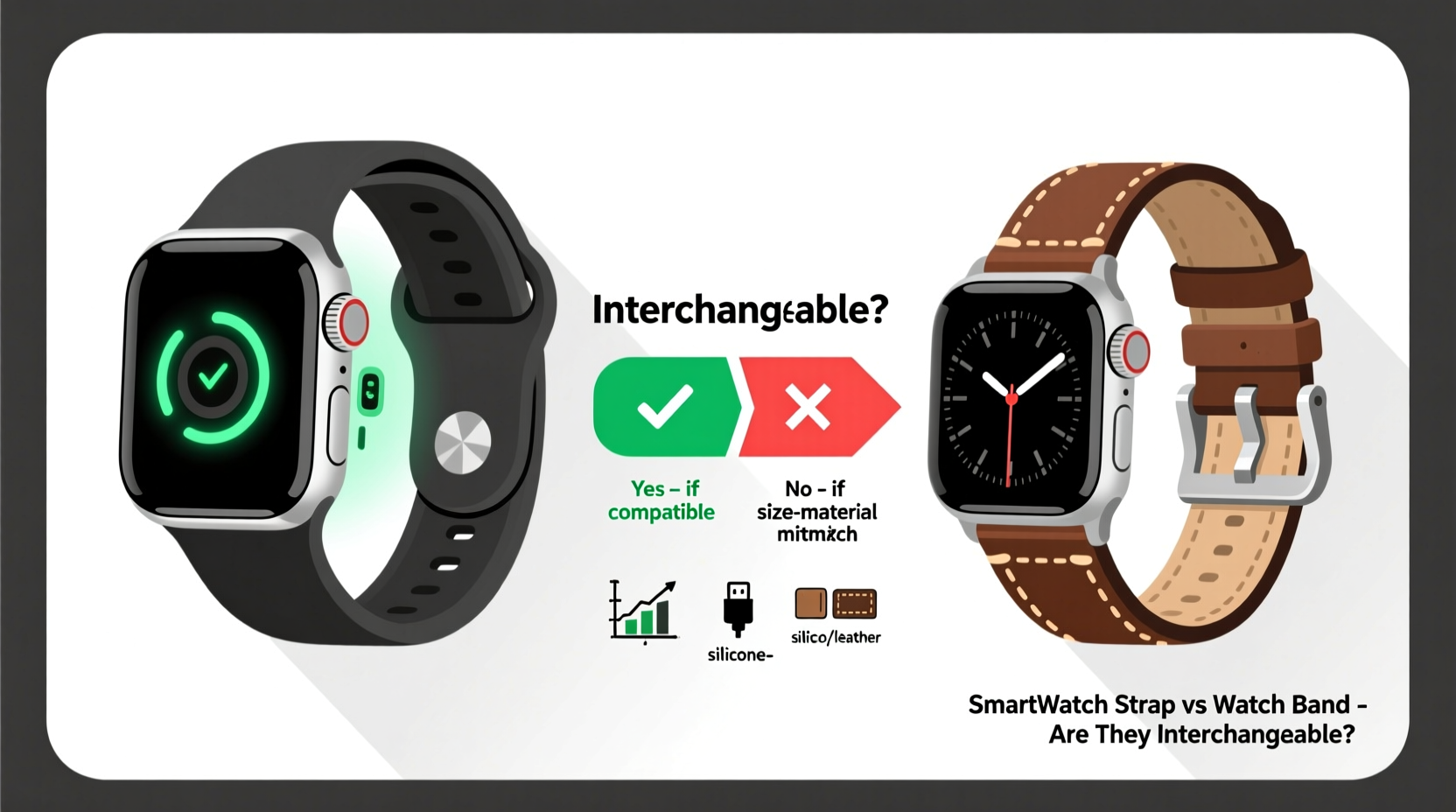
In traditional horology, the terms have distinct meanings. A “strap” typically refers to a flexible, soft material like leather, silicone, or nylon. It often has a buckle or pin-and-loop closure and resembles what you’d find on a classic dress watch. A “band,” by contrast, usually describes a rigid, multi-link structure made of metal—like stainless steel, titanium, or ceramic links—that adjusts via removable links or folding clasps.
With smartwatches, however, the lines blur. Apple calls its metal options “bands” and rubber or fabric options “straps.” Samsung uses “band” generically across materials. Fitbit and Garmin tend to favor “strap” regardless of construction. This inconsistency reflects marketing preferences rather than technical standards, but the underlying hardware differences remain important.
Tip: When shopping, ignore the label—focus instead on the lug width, attachment system, and material durability.Compatibility: Not All Straps Fit All Watches
Even if two watches appear similar in size, their strap attachment systems may differ. Most smartwatches use spring bars—thin metal rods that slide into lugs (the protrusions on either side of the watch case). But the distance between those lugs—the “lug width”—varies by model. A 22mm strap won’t fit a watch designed for 20mm unless an adapter is used.
Worse, some manufacturers use proprietary connectors. Apple Watch, for example, employs a unique release mechanism requiring compatible straps. Third-party options must replicate this design precisely. Similarly, the Samsung Galaxy Watch uses a standard 20mm or 22mm spring bar depending on model, making it more universally compatible than Apple’s ecosystem.
Hybrid models like the Withings ScanWatch blend analog aesthetics with smart features and often support standard 20mm straps, offering greater flexibility. Meanwhile, fitness-focused devices like the Garmin Forerunner series prioritize secure, breathable straps but still adhere to common widths.
“Interchangeability depends less on naming conventions and more on mechanical compatibility. Always check the lug width and attachment type before purchasing.” — David Lin, Wearable Tech Analyst at GadgetInsight
Material & Use Case: Matching Form to Function
Your choice of strap or band should align with your lifestyle. Here’s how different materials perform across scenarios:
| Material | Best For | Drawbacks |
|---|---|---|
| Silicone/Rubber | Fitness, swimming, daily wear | Can trap sweat; degrades over time |
| Leather | Office, formal settings | Not water-resistant; ages with exposure |
| Stainless Steel | Dress occasions, durability | Heavy; cold in winter; can scratch |
| Nylon/Fabric | Casual wear, breathability | Absorbs odors; needs frequent cleaning |
| Titanium | All-day comfort, premium feel | Expensive; limited style variety |
For example, wearing a leather strap during intense workouts risks moisture damage and bacterial growth. Conversely, a bulky metal band might be impractical for sleep tracking due to weight and rigidity.
Mini Case Study: Sarah’s Smartwatch Upgrade
Sarah bought an Apple Watch Series 9 and loved its sleek design but found the default silicone band too sporty for her corporate job. She purchased a third-party “leather strap” labeled as compatible with “all Apple Watches.” Upon arrival, she discovered the connector was slightly misaligned, causing the watch to wobble. After returning it, she researched lug specifications and found a properly certified 22mm quick-release strap with magnetic closure. The new fit was secure and elegant, proving that attention to technical specs matters more than marketing labels.
How to Choose the Right Replacement: A Step-by-Step Guide
Selecting the correct strap or band involves more than aesthetics. Follow this sequence to ensure compatibility and satisfaction:
- Identify your watch model – Note brand, series, and size (e.g., Apple Watch SE 44mm).
- Check the lug width – Refer to the user manual or measure the gap between lugs with a ruler.
- Determine the attachment type – Does it use standard spring bars, quick-release pins, or proprietary connectors?
- Assess your usage patterns – Will you swim, sleep, or attend meetings while wearing it?
- Select material accordingly – Prioritize breathability for sports, elegance for formal events.
- Verify seller credibility – Look for reviews, compatibility claims, and return policies.
Frequently Asked Questions
Can I use a regular watch strap on my smartwatch?
Only if the lug width and attachment system match. Most analog watches use standard spring bars, so a 20mm strap may fit certain smartwatches like the Garmin Venu or older Fossil models. However, devices with proprietary connectors (like Apple Watch) require specially designed replacements.
Why do some straps cost so much more than others?
Premium pricing often reflects materials (e.g., genuine Horween leather), craftsmanship, brand licensing, or advanced features like quick-release mechanisms and antimicrobial coatings. OEM (original equipment manufacturer) bands also carry a premium for guaranteed fit and finish.
Are third-party straps safe to use?
Yes, provided they’re well-made and correctly sized. Poorly manufactured straps may loosen unexpectedly or scratch the watch case. Opt for reputable brands with clear compatibility charts and customer support.
Final Thoughts: Clarity Over Confusion
The debate over “strap” versus “band” ultimately boils down to semantics. What truly matters is compatibility, comfort, and context. Whether you call it a strap or a band, the key is understanding your device’s physical requirements and your personal needs. Don’t let marketing language distract you—focus on measurements, materials, and mechanics.
By treating each replacement as a functional upgrade rather than just a fashion statement, you extend your smartwatch’s usability and comfort. The right strap—or band—can transform how you experience your wearable, making it feel fresh, secure, and perfectly suited to your day.
💬 Have a favorite strap or band that changed your smartwatch experience? Share your story in the comments and help others avoid costly mismatches.








