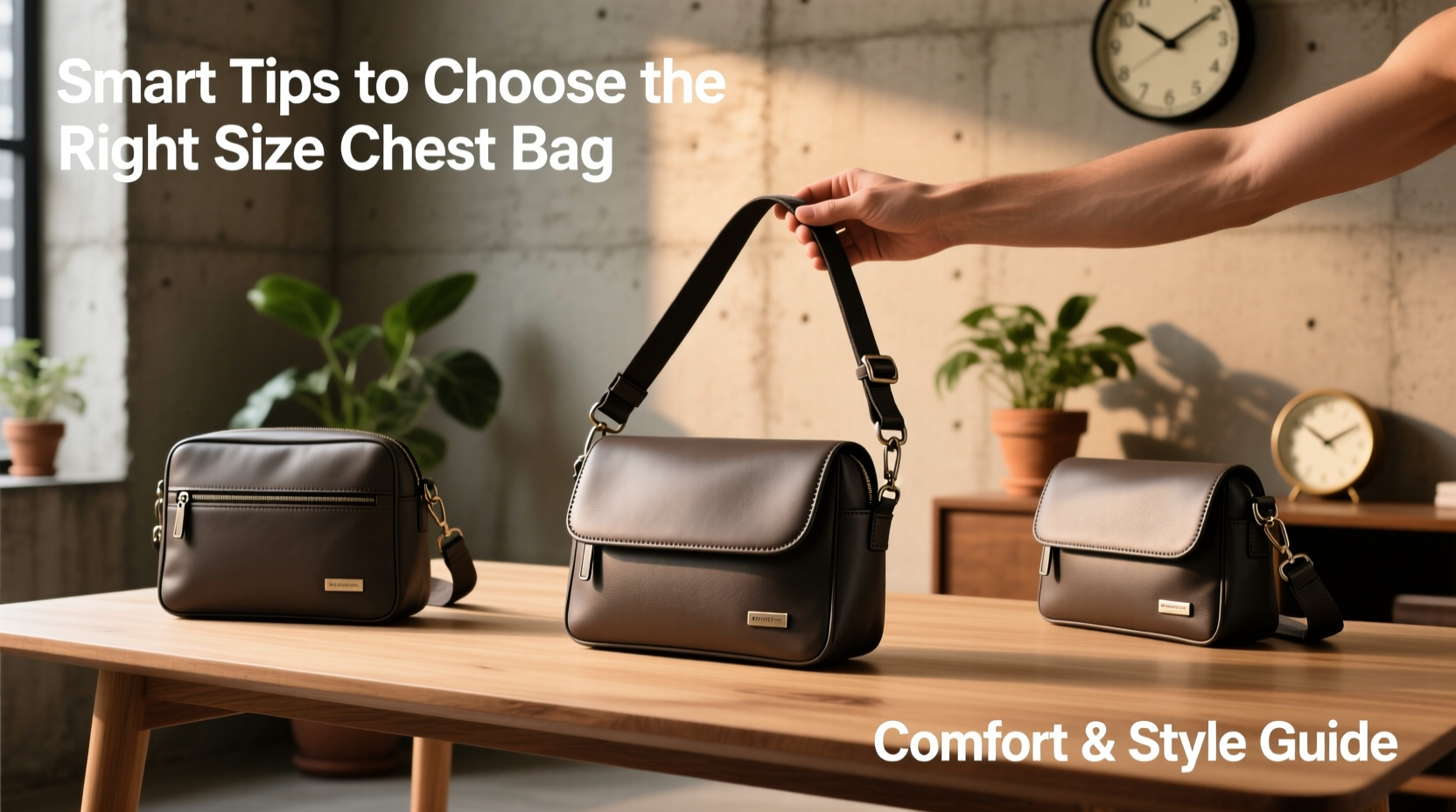
In an era where urban mobility meets minimalist design, the chest bag has emerged as a staple in modern wardrobes. Whether you're commuting through city streets, traveling light, or simply want hands-free convenience, a well-chosen chest bag can elevate both your comfort and aesthetic. But not all chest bags are created equal—and choosing the right size is critical. Too large, and it becomes cumbersome; too small, and it defeats its purpose. The key lies in aligning dimensions with body proportions, lifestyle needs, and personal style.
Understand Your Body Proportions First
Selecting the right chest bag starts with understanding your frame. A bag that looks sleek on one person may appear oversized or awkward on another due to differences in torso length, shoulder width, and chest circumference.
For individuals under 5'6\" (168 cm), compact chest bags measuring between 8–10 inches wide are typically most flattering. These proportions prevent the bag from extending beyond the shoulders or hanging too low across the torso. Taller users—especially those over 6 feet—can comfortably carry larger models up to 13 inches without compromising balance.
The ideal vertical placement of a chest bag is just below the collarbone and above the sternum. If the bag sits too high, it restricts movement; if too low, it interferes with arm motion and appears bulky. Adjustability in the strap system plays a major role here, but starting with the correct base size ensures optimal positioning.
Tip: Measure your chest at its widest point and compare it with the manufacturer’s fit guide before purchasing online.Match Bag Size to Daily Use Case
Your lifestyle should dictate capacity more than trends. A common mistake is opting for oversized bags “just in case,” which leads to unnecessary strain and visual imbalance. Instead, define your primary use: daily commute, weekend outings, travel, or fashion statement.
- Minimalist carry (essential items only): Choose a 10L or smaller bag. Ideal for phone, wallet, keys, sunglasses, and a slim notebook.
- Work or hybrid use: Aim for 10–14L. Accommodates a tablet, documents, charger, and small toiletries.
- Travel or extended wear: 14–18L may be acceptable, but ensure the design distributes weight evenly to avoid shoulder fatigue.
Overpacking is a frequent cause of discomfort. Even if a bag technically fits your items, exceeding 10% of your body weight in carried load can lead to posture issues over time.
“We see many customers return bags not because of quality, but because they chose size based on capacity alone—not ergonomics.” — Marcus Lin, Product Designer at Urban Carry Co.
Size Comparison Table: Fit by Lifestyle
| Bag Width | Typical Capacity | Best For | Avoid If |
|---|---|---|---|
| 7–9 inches | 5–8L | Running errands, night outs, petite frames | You carry a tablet or water bottle regularly |
| 10–11 inches | 8–12L | Daily commuting, medium builds, hybrid use | You need camera gear or multiple layers |
| 12–13 inches | 12–16L | Travel, taller users, tech-heavy carry | You prioritize subtlety or minimalism |
| 14+ inches | 16L+ | Backpacking transitions, photographers | You walk long distances or cycle frequently |
Step-by-Step Guide to Finding Your Perfect Fit
Follow this practical sequence to ensure your chest bag complements both form and function:
- Measure your chest: Wrap a soft tape measure around your torso just under the armpits. Note the circumference in inches or centimeters.
- Determine intended contents: List the items you plan to carry daily. This defines minimum internal dimensions.
- Check strap adjustability: Ensure the crossbody straps can be shortened or extended to position the bag correctly on your chest.
- Test proportion visually: Hold a similarly sized object (like a hardcover book) against your chest. Does it look balanced?
- Simulate wear: If shopping in-store, wear the empty bag and walk around for 5 minutes. Assess pressure points and swing.
- Review closure type: Zippers offer security; magnetic flaps allow quick access. Choose based on how often you open the bag.
Real Example: Choosing Right for City Commuting
Take Sarah, a graphic designer living in downtown Seattle. She walks 45 minutes to work each day and carries her 10-inch tablet, sketchbook, headphones, and lunch container. Initially, she bought a narrow 8-inch chest bag thinking it would be “minimalist.” However, she had to roll her tablet tightly and risked damaging it. The bag also tilted forward when zipped tight, pulling on her shoulders.
After reassessing, she switched to a 11.5-inch model with a padded main compartment and external water-resistant sleeve. The new size allowed her tablet to lie flat, distributed weight evenly, and sat flush against her chest. Despite being slightly larger, it felt lighter due to better ergonomics and material distribution.
Sarah’s experience underscores a vital truth: the right size isn’t about minimizing volume—it’s about maximizing usability without sacrificing comfort.
Style Considerations: When Size Influences Aesthetic
Beyond utility, the visual impact of a chest bag matters. A well-fitted bag enhances silhouette rather than disrupting it. Designers increasingly treat chest bags as fashion accessories, blending technical performance with clean lines.
For a polished urban look, opt for a bag that doesn’t extend past your shoulders. Angular silhouettes suit structured outfits (e.g., trench coats, tailored jackets), while softer, curved designs complement casual wear like hoodies and denim.
Color and material also interact with perceived size. Darker tones recede visually, making slightly larger bags appear slimmer. Conversely, bright or reflective finishes draw attention and can exaggerate volume.
“A chest bag should feel like an extension of your body—not a burden strapped to it.” — Lena Park, Fashion Ergonomics Consultant
Checklist: Before You Buy a Chest Bag
- ✅ Measured my chest circumference for proper fit
- ✅ Listed daily carry items to determine needed capacity
- ✅ Verified adjustable straps for height customization
- ✅ Checked weight of the empty bag (under 1.5 lbs / 700g preferred)
- ✅ Ensured main compartment opens fully for easy access
- ✅ Tested wearing it over outerwear (if applicable)
- ✅ Evaluated balance: does it swing or stay stable when walking?
Frequently Asked Questions
Can a chest bag be too small even if it holds my essentials?
Yes. If accessing items requires constant unzipping or digging, the internal layout is likely inefficient. A bag that's too snug stresses zippers and materials, shortening its lifespan. Opt for smart organization over sheer tightness.
How do I know if a chest bag will bounce while walking?
Bouncing usually results from improper strap tension or poor weight distribution. Straps should be tight enough so the bag moves minimally with your torso. Look for models with anti-slip padding or secondary stabilizer straps across the back.
Is one size suitable for all seasons?
Rarely. Layered winter clothing increases torso thickness, potentially requiring longer straps or a larger size. Consider having two options—one for lightweight summer wear and another for insulated winter use—or choose a highly adjustable model.
Final Thoughts: Balance Function with Form
Choosing the right chest bag size isn't just about fitting your belongings—it's about harmonizing with your body, routine, and personal expression. The most stylish bag is one that feels invisible during use yet instantly accessible when needed. By prioritizing proportion, purpose, and practicality, you invest in both comfort and confidence.
🚀 Ready to upgrade your carry? Reassess your current bag using the checklist above—and share your ideal chest bag specs in the comments to help others find their perfect match.