In today’s evolving professional landscape, workplace fashion is undergoing a quiet revolution. The traditional dominance of the pantsuit is being challenged by more relaxed yet polished alternatives—one of which is the shorts suit. Once reserved for vacation wardrobes or weekend outings, tailored shorts suits are now appearing in office environments, raising an important question: Is it ever appropriate to wear a shorts suit to work?
The answer isn’t a simple yes or no—it depends on industry norms, company culture, climate, and how the outfit is styled. As remote work and hybrid models reshape corporate aesthetics, professionals are redefining what “office-appropriate” means. This article explores the nuances between shorts suits and pantsuits, identifies contexts where shorts suits can be worn professionally, and offers practical guidance for pulling off this bold sartorial choice with confidence.
Understanding the Shorts Suit vs. Pantsuit Divide
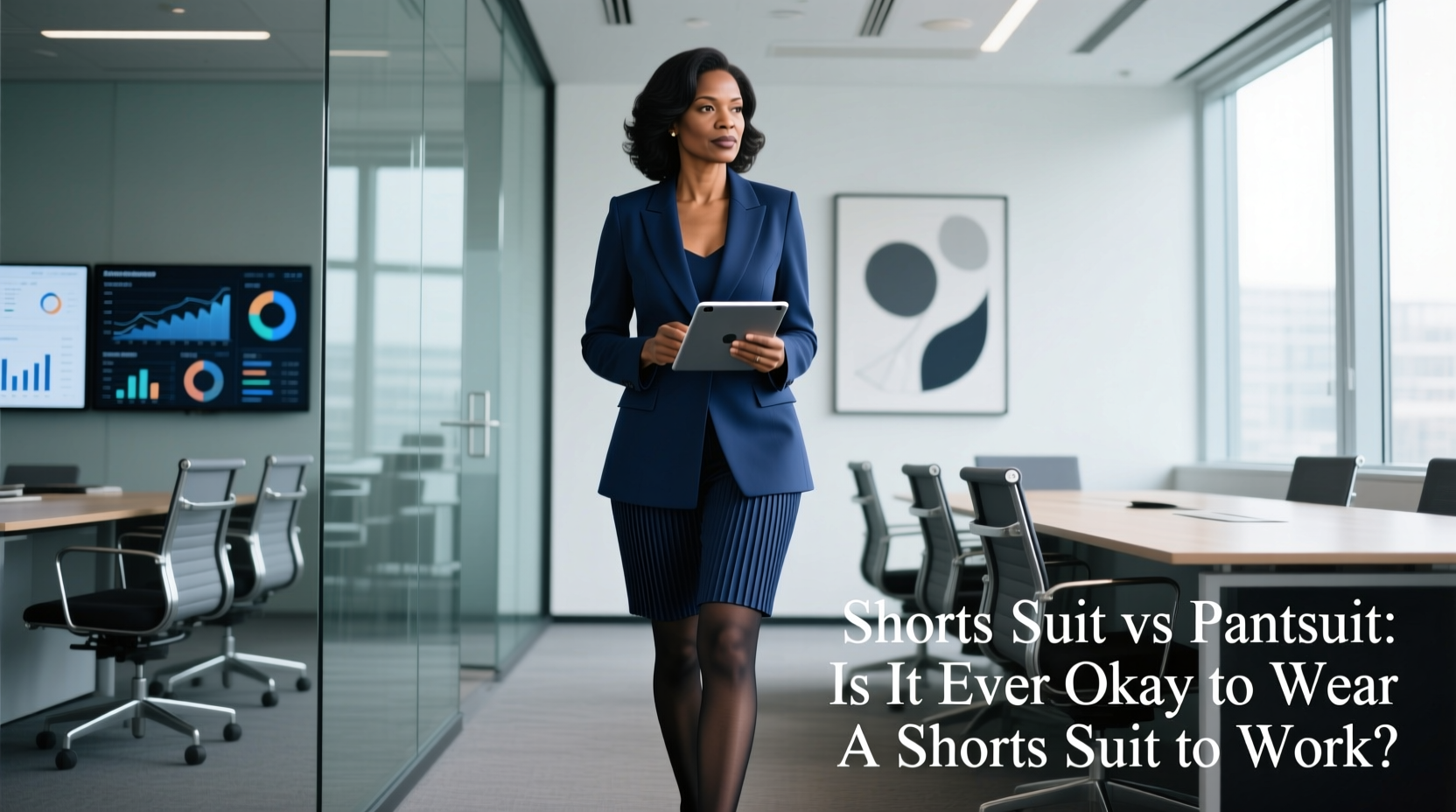
A pantsuit has long been the gold standard for professional dressing—offering structure, formality, and versatility across industries. It conveys authority and preparedness, making it ideal for boardrooms, client meetings, and formal events. In contrast, a shorts suit maintains the same tailored jacket and coordinated short pairing but replaces full-length trousers with knee-length or slightly above-the-knee shorts.
The visual difference may seem minor, but the symbolic shift is significant. While both garments originate from the same design language of suiting, the shorts suit inherently leans toward casualness due to its association with warmer weather and leisurewear. However, when crafted from structured fabrics like wool blends, crepe, or linen with clean lines and precise tailoring, a shorts suit can achieve a level of sophistication that rivals its longer counterpart.
Tip: Opt for high-waisted, tailored shorts with minimal detailing to maintain a professional silhouette.When a Shorts Suit Can Be Appropriate at Work
Acceptability hinges on three key factors: dress code, environment, and execution.
- Dress Code Flexibility: Creative industries (e.g., advertising, fashion, tech startups) often embrace expressive attire. If your office follows a “business casual” or “creative professional” dress code, a well-styled shorts suit may fit seamlessly.
- Climate Considerations: In tropical or consistently hot climates—such as Miami, Dubai, or Singapore—practicality often overrides tradition. Employers in these regions may welcome cooler alternatives without sacrificing professionalism.
- Event Context: Summer networking events, outdoor team-building sessions, or Friday “casual chic” days provide natural entry points for experimenting with shorts suits.
As Maria Chen, senior fashion consultant at StyleLogic Advisors, explains:
“Modern professionalism isn’t defined solely by length of hemline, but by intentionality. A sharply cut shorts suit in navy linen, paired with closed-toe heels and a silk blouse, signals thoughtfulness—not informality.” — Maria Chen, Fashion Consultant
Key Differences Between Shorts Suits and Pantsuits in Professional Settings
| Aspect | Pantsuit | Shorts Suit |
|---|---|---|
| Formality Level | High – suitable for formal meetings and presentations | Moderate – best for semi-formal or warm-weather settings |
| Climatic Suitability | Better for cooler seasons | Ideal for summer months and humid environments |
| Industry Acceptance | Widely accepted across all sectors | Limited to creative, tech, or hospitality fields |
| Mobility & Comfort | Standard comfort with full coverage | Greater airflow and ease of movement |
| Style Perception | Classic, authoritative | Modern, fashion-forward, occasionally daring |
How to Wear a Shorts Suit Professionally: A Step-by-Step Guide
If you’re considering introducing a shorts suit into your work wardrobe, follow this five-step approach to ensure it reads as polished rather than playful.
- Choose the Right Fabric: Avoid cotton jersey or athletic-looking materials. Instead, opt for structured fabrics like wool-blend, crepe, or mid-weight linen that hold shape and convey seriousness.
- Prioritize Tailoring: Ensure the shorts hit just above the knee and are neither too loose nor too tight. The jacket should align with your torso proportions and allow comfortable arm movement.
- Pair with Professional Footwear: Closed-toe pumps, loafers, or low block heels elevate the look. Avoid flip-flops, sandals, or sneakers unless explicitly allowed by your workplace.
- Balance the Outfit: Tuck in a crisp button-down shirt, shell top, or silk camisole. Add a thin belt to define the waist and enhance structure.
- Accessorize Thoughtfully: Minimalist jewelry, a structured tote, and a sleek watch complete the ensemble without drawing attention away from the outfit’s intent.
Real-World Example: Navigating Corporate Summer Dress Codes
Sophie Ramirez, a marketing strategist at a mid-sized design firm in Austin, Texas, faced a dilemma each summer: how to stay cool during July heatwaves while maintaining credibility during client calls. After observing colleagues in smart separates, she invested in a beige linen shorts suit with a cropped blazer and tailored Bermuda-style shorts.
She wore it on a Friday client presentation, pairing it with nude pointed flats and pearl studs. Her team responded positively, with one colleague later asking where she’d purchased it. Over time, Sophie noticed more women adopting similar styles during the summer months. Management never issued a policy change, but an unspoken norm emerged: well-executed shorts suits were conditionally acceptable in June through August.
This case illustrates how individual choices, when made with care and consistency, can gradually influence broader workplace norms—especially in environments open to subtle evolution.
Checklist: Is Your Shorts Suit Office-Ready?
- ✅ Fabric is structured and wrinkle-resistant
- ✅ Shorts length is conservative (above knee but not short-shorts)
- ✅ Jacket fits well and complements the shorts proportionally
- ✅ Shoes are closed-toe or professionally styled sandals
- ✅ Top is tucked and made from elevated material (silk, satin, fine cotton)
- ✅ Overall look feels intentional, not improvised
- ✅ Aligned with current office culture or seasonal flexibility
Frequently Asked Questions
Can I wear a shorts suit to a job interview?
Generally, it’s safer to opt for a pantsuit during interviews, especially in conservative industries like finance, law, or government. A shorts suit might be perceived as overly casual unless the company culture is demonstrably relaxed and creative. When in doubt, choose the more traditional option for first impressions.
Are there specific rules for men wearing shorts suits to work?
Men face stricter societal expectations regarding leg coverage in professional settings. While rare, some male designers and creatives have worn tailored shorts suits in fashion-forward cities like Milan or Seoul. For most male professionals, especially in Western corporate environments, this remains a boundary-pushing choice not yet widely accepted.
What if my office doesn’t have a written dress code?
Observe what others wear, particularly those in leadership roles. If no one else wears shorts—even in summer—it’s likely not appropriate. You can also discreetly ask HR or a trusted manager about seasonal flexibility. Introducing new styles works best when done incrementally and respectfully.
Final Thoughts: Redefining Professionalism One Hemline at a Time
The debate between shorts suits and pantsuits reflects a larger shift in how we define professionalism. As workplaces become more inclusive, diverse, and attuned to employee well-being—including physical comfort—the rigid codes of the past are softening. Climate-responsive clothing, gender-inclusive designs, and cultural diversity are all pushing fashion boundaries in positive directions.
That said, discretion remains essential. Wearing a shorts suit to work isn’t about defying norms for the sake of trendiness—it’s about making informed, context-aware decisions that reflect both personal style and professional respect.
If your environment allows it, a shorts suit can be a smart, stylish solution for staying sharp in the heat. But always prioritize alignment with your workplace’s values over fleeting fashion statements.
🚀 Ready to refresh your workwear? Try a tailored shorts suit this summer—in the right setting—and share your experience with your network. Fashion evolves through thoughtful risk-takers.