When it comes to choosing a dress that flatters your figure and provides confidence, few decisions matter more than how well it handles the midsection. The tummy area is a common concern for many women, especially when wearing form-fitting styles. Two of the most popular options—sheath and wrap dresses—are often compared not just for style but for their ability to conceal or enhance certain body areas. Understanding the structural differences between these two silhouettes can help you make an informed choice based on comfort, proportion, and visual effect.
Understanding the Sheath Dress Silhouette
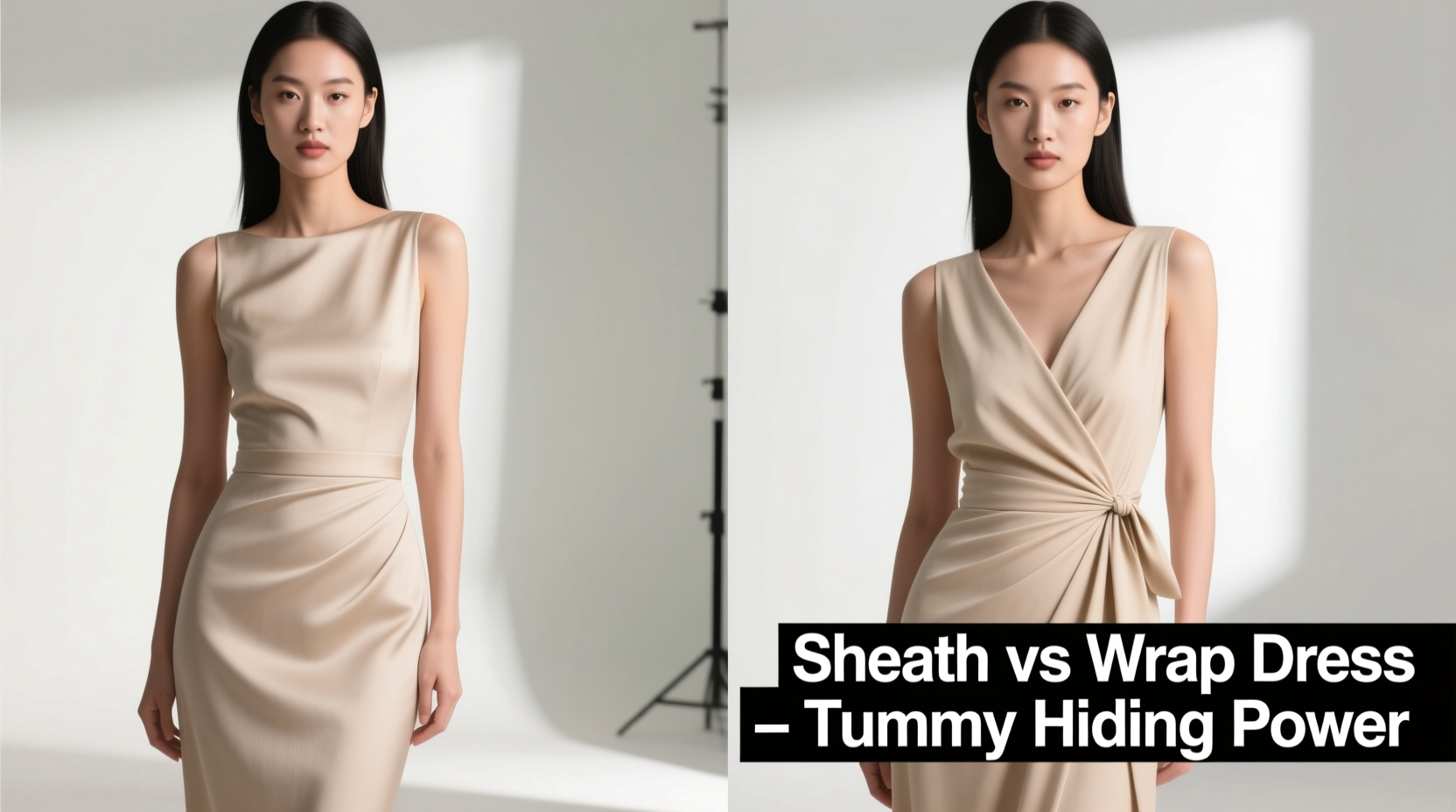
A sheath dress is characterized by its close, streamlined fit from shoulder to hem. Typically knee-length and made from structured fabrics like ponte knit, scuba, or stretch crepe, it follows the natural curves of the body without cinching at the waist. This dress style emphasizes shape, often creating a polished, professional look ideal for office wear or formal events.
Because it hugs the torso evenly, a sheath dress does not inherently \"hide\" the tummy—it showcases it. However, the right fabric and construction can offer subtle smoothing. For example, medium-weight knits with vertical seams or paneling can create a slimming optical illusion by elongating the torso. Some modern sheath designs include built-in lining or light compression panels to provide gentle control.
Tip: Choose a sheath dress in a darker color with vertical seaming to minimize attention on the midsection.The Wrap Dress Advantage: Built-In Flattery
In contrast, the wrap dress features a crossed front that ties or buttons at the waist, creating a V-shaped neckline and a defined waistline. Invented by Diane von Fürstenberg in the 1970s, this design has endured because of its universally flattering structure. The overlapping front panels naturally drape over the abdomen, allowing for adjustable coverage and a forgiving fit.
The key benefit of the wrap dress lies in its ability to customize the fit. You can tighten or loosen the wrap to accommodate bloating, posture, or personal preference. The diagonal lines created by the wrap visually divert attention away from the center of the stomach, while the cinched waist draws the eye to the narrowest part of the torso. Additionally, the V-neck elongates the upper body, contributing to a balanced silhouette.
“Wrap dresses are engineered for real bodies. The adjustable front isn’t just functional—it’s strategic. It allows women to manage fullness where they need to, without sacrificing elegance.” — Lena Park, Fashion Stylist & Body Positivity Advocate
Comparative Analysis: Key Differences That Matter
| Feature | Sheath Dress | Wrap Dress |
|---|---|---|
| Fitting Style | Slim, body-hugging throughout | Loose, adjustable front with waist tie |
| Tummy Coverage | Limited; shows natural contour | High; draping panels conceal effectively |
| Waist Definition | Subtle or none (unless belted) | Pronounced due to tie closure |
| Fabric Flexibility | Best in structured, slightly compressive materials | Works well in fluid, drapey fabrics like jersey or silk |
| Adjustability | Fixed fit; no room for expansion | Highly adjustable via tie closure |
| Bloating-Friendly? | No—tight fit may accentuate puffiness | Yes—can loosen wrap as needed |
Real-Life Scenario: Choosing for a Work Presentation
Sarah, a marketing executive, had a major client presentation scheduled for mid-afternoon. She wanted to look sharp but felt self-conscious about post-lunch bloating. Her wardrobe included both a navy sheath dress and a floral wrap dress. The sheath, though elegant, clung tightly around her midsection after lunch, emphasizing areas she’d rather downplay. Instead, she opted for the wrap dress, adjusting the tie slightly looser than usual. The diagonal drape camouflaged any fullness, and the defined waist still gave her a put-together appearance. Clients complimented her poised, confident look—proof that the right dress can influence both perception and self-assurance.
This scenario illustrates a critical point: function and comfort should not be sacrificed for style. The wrap dress offered Sarah adaptability and discretion, while the sheath, though professional, lacked flexibility when her body changed slightly during the day.
Styling Tips to Enhance Tummy Coverage
Regardless of which dress you choose, smart styling can improve the overall effect. Consider these actionable strategies:
Tip: Layer with a long cardigan or blazer to break up the torso line and add dimension.- Use strategic patterns: Avoid horizontal stripes or large prints centered on the stomach. Opt for vertical motifs or all-over small prints.
- Accessorize at the neck: Draw attention upward with statement earrings or a delicate pendant.
- Wear nude undergarments: Seamless shapewear in a matching skin tone prevents visible lines that can highlight bulges.
- Add a belt (selectively): On a wrap dress, a thin belt over the tie can refine the waist. On a sheath, avoid belts unless they sit above the fullest part of the tummy.
- Choose longer hemlines: Midi-length versions of either dress shift focus downward, balancing proportions.
Step-by-Step Guide: How to Evaluate a Dress for Tummy Smoothing
- Assess the fabric: Press the material gently. Does it stretch smoothly without pulling? Medium-weight, four-way stretch fabrics are ideal.
- Check seam placement: Vertical seams along the torso can elongate and slim. Avoid horizontal seams across the belly.
- Test mobility: Sit down in the dress. Does it ride up or strain across the stomach? A good fit should allow movement without discomfort.
- Evaluate adjustability: Can you modify the fit? Wrap styles score higher here, but some sheaths come with side zippers or elastic insets.
- Observe in natural light: Stand sideways in daylight. Does the dress create a smooth line, or does it bunch and cling?
Frequently Asked Questions
Can a sheath dress ever be tummy-friendly?
Yes, but only if it’s designed with thoughtful details: moderate compression fabric, vertical paneling, and a slightly A-line cut below the hips. Avoid ultra-tight styles or those with embellishments on the midsection.
Are wrap dresses suitable for plus-size figures?
Absolutely. Wrap dresses are celebrated for their inclusivity. The adjustable fit accommodates various body shapes, and the V-neckline enhances proportion. Look for versions with sleeves or thicker fabric for added support and coverage.
What should I avoid in both styles?
Avoid stiff fabrics that don’t drape, poor tailoring that gaps at the bust, and overly short lengths that create unflattering tension. Also, steer clear of shiny materials—they reflect light and draw attention to every curve.
Final Thoughts: Prioritizing Fit Over Fashion
The question of whether a sheath or wrap dress hides the tummy better ultimately comes down to purpose and preference. If you value structure, polish, and a tailored aesthetic, a well-chosen sheath can work—but it requires precise sizing and forgiving fabric. For most women seeking comfort, adaptability, and effective tummy concealment, the wrap dress is the superior choice. Its intelligent design accounts for real-life fluctuations in the body, offering elegance without compromise.
Dressing well isn’t about conforming to rigid ideals. It’s about selecting garments that align with your lifestyle, body, and confidence. Whether you reach for a sheath or a wrap, let fit, function, and personal comfort guide your decision.
💬 Which dress makes you feel most confident? Share your experience in the comments—your insight could help someone else find their perfect fit.








