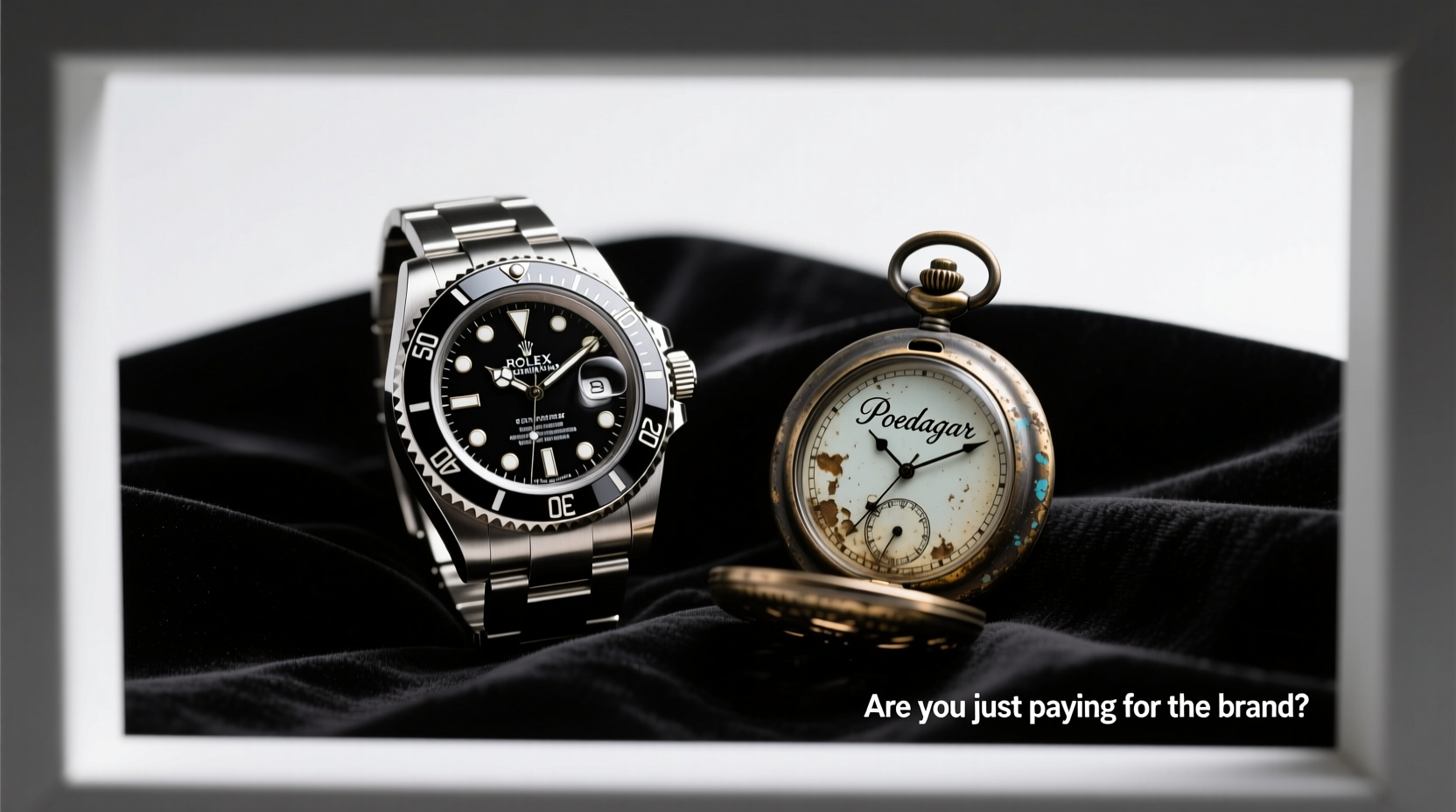
In recent years, Poedagar has emerged as a compelling alternative in the world of timepieces, offering sleek designs and Swiss-style mechanics at a fraction of the cost of traditional luxury watches. But is the difference between a Poedagar and a Rolex or Omega merely branding, or is there tangible value beneath the surface? As consumers grow more discerning—especially younger buyers who prioritize value over legacy—the question becomes urgent: are you really just paying extra for the brand?
The answer isn't binary. While prestige plays a significant role in luxury pricing, dismissing all high-end watchmakers as overpriced logos overlooks decades of engineering excellence, heritage, and craftsmanship. At the same time, Poedagar’s rise signals a shift toward accessible precision, challenging the notion that quality must come with a five-figure price tag.
The Price Gap: What You’re Actually Paying For
Luxury watches from brands like Patek Philippe, Audemars Piguet, or Jaeger LeCoultre often start above $20,000 and can exceed $500,000. In contrast, Poedagar models typically range from $300 to $1,200. That’s a 50x markup difference. So where does that money go?
| Cost Factor | Luxury Watches | Poedagar |
|---|---|---|
| R&D & In-House Movements | High investment in proprietary calibers | Uses modified ETA or Seiko-based movements |
| Materials | Gold, platinum, sapphire crystal, ceramic | Stainless steel, mineral/sapphire glass, basic alloys |
| Hand Assembly & Finishing | Entirely hand-finished components | Mechanized finishing with some manual touch-ups |
| Brand Heritage & Marketing | Global campaigns, celebrity endorsements | Digital-first marketing, influencer partnerships |
| Resale Value | Strong (some appreciate) | Negligible resale market |
The data shows that luxury brands invest heavily in vertical integration—designing, machining, and assembling nearly every component in-house. This includes intricate finishing like perlage, beveling, and engraving, done by master watchmakers. Poedagar, while delivering solid reliability, relies on third-party suppliers for movements and focuses resources on design and distribution.
Tip: If your priority is mechanical authenticity and long-term ownership, research whether a watch uses an in-house movement or a modified base caliber.Engineering and Craftsmanship: Is There a Noticeable Difference?
At first glance, many Poedagar models resemble iconic luxury designs—particularly dive watches inspired by Rolex Submariners or Omega Seamasters. The case lines, dial layouts, and even crown guards mirror high-end counterparts. But aesthetics don’t tell the full story.
Under magnification, differences emerge. Luxury watches feature hand-polished chamfers, mirror finishes on screws, and perfectly aligned Geneva stripes. These micro-details require hundreds of hours of labor. Poedagar dials, while clean and legible, lack this level of refinement. The hands may be stamped rather than filed and polished, and lume application is functional but not flawless.
Movement performance varies too. A well-maintained Rolex Chronometer averages -2/+2 seconds per day. Poedagar’s best models, using Sellita SW200, perform within -10/+20 seconds—a respectable range for the price, but not chronometer-grade precision.
“True haute horlogerie isn’t about telling time—it’s about how time is measured through human skill.” — Laurent Bouveret, Independent Watchmaker & Horology Lecturer
Real-World Example: Two Watches, One Weekend
Consider Mark, a 34-year-old architect who owns both a Poedagar Diver Pro ($850) and a pre-owned Omega Seamaster Aqua Terra ($4,200). Over a coastal weekend trip involving humidity, salt air, and occasional knocks, both watches were worn daily.
After three days, the Poedagar showed minor fogging under the crystal—likely due to a compromised gasket during initial assembly. It kept running but required servicing two weeks later. The Omega, despite similar exposure, remained perfectly sealed and accurate. Upon inspection, its movement was pristine; seals intact, no moisture ingress.
This doesn’t mean Poedagar is unreliable. But it highlights a key distinction: luxury watches undergo rigorous testing (ISO 6425 for divers, COSC certification for accuracy, shock resistance trials). Poedagar performs basic QC, but lacks independent certification or long-term durability tracking.
When Brand Premium Makes Sense—And When It Doesn’t
Yes, part of what you pay for in a luxury watch is the brand. Rolex spends over $50 million annually on marketing and sponsorship. Patek’s “You Never Actually Own a Patek Philippe” campaign is legendary. That emotional resonance adds value—but only if it matters to you.
For some, wearing a Rolex signals achievement. For others, it feels like unnecessary signaling. Poedagar appeals to those who appreciate design and mechanics without the social weight. It’s ideal for enthusiasts who want to rotate watches freely, travel without anxiety, or experiment with styles.
However, dismissing *all* brand value as superficial ignores real benefits: service networks, warranty depth, authentication support, and resale infrastructure. A used Rolex holds 70–80% of its value. A Poedagar might fetch 30%, if there’s demand.
Step-by-Step: How to Decide Which Watch Fits Your Needs
- Define your primary use: Dress occasions, daily wear, diving, or collection?
- Set a realistic budget: Include maintenance and potential insurance.
- Evaluate movement type: Do you prefer automatic, quartz, or hand-wound?
- Research service availability: Can local jewelers work on the brand?
- Test wearability: Case size, lug-to-lug, weight—does it suit your wrist?
- Check long-term costs: Replacement straps, battery changes, water resistance checks.
- Assess personal values: Do you care about heritage, or just functionality?
FAQ: Common Questions About Poedagar vs. Luxury Watches
Can Poedagar compete with Swiss-made watches in terms of accuracy?
Poedagar uses reliable base movements like the SW200 or Miyota 9015, which are accurate within industry standards for mid-tier watches (-10 to +20 seconds/day). However, they are not COSC-certified, unlike many Swiss luxury models, which guarantee tighter tolerances.
Is Poedagar considered a “luxury” brand?
No. Poedagar positions itself as a premium microbrand—not luxury. It offers elevated design and build quality beyond typical fashion watches but lacks the heritage, in-house manufacturing, and exclusivity associated with true luxury marques.
Will a Poedagar last as long as a Rolex with proper care?
Possibly, but not likely. While individual experiences vary, Rolexes are built with higher-grade materials, tighter tolerances, and superior corrosion protection. With regular servicing every 5–7 years, a Rolex can last generations. Poedagar watches may require earlier movement replacements or case degradation.
Final Verdict: Value Beyond the Logo
Poedagar isn’t trying to be Rolex—and that’s its strength. It delivers thoughtful design, competent mechanics, and modern appeal at an accessible price. You’re not just paying for a brand; you’re getting a capable tool watch that respects horological traditions without demanding reverence.
Luxury watches, meanwhile, justify their cost through unmatched craftsmanship, longevity, and cultural significance. They are heirlooms, not just instruments. But for many, that level of investment isn’t necessary—or desired.
The truth is, you’re not always just paying for the brand. Sometimes, you’re paying for centuries of innovation, microscopic attention to detail, and the assurance that your watch will outlive you. Other times, you’re paying for status alone. The wise buyer learns to tell the difference.
💬 What do you value more: proven heritage or modern accessibility? Share your thoughts and watch journey in the comments below.