Walk into any boutique or scroll through an online fashion catalog, and you’ll likely see both \"pencil dress\" and \"sheath dress\" listed under formal or office wear. At first glance, they appear nearly identical—fitted, knee-length, minimalist. But do these terms describe genuinely distinct styles, or are they interchangeable labels used to drive sales? The answer lies in subtle yet significant differences in construction, fit, and intent. Understanding them can transform how you shop, style, and wear these wardrobe staples.
The Anatomy of a Pencil Dress
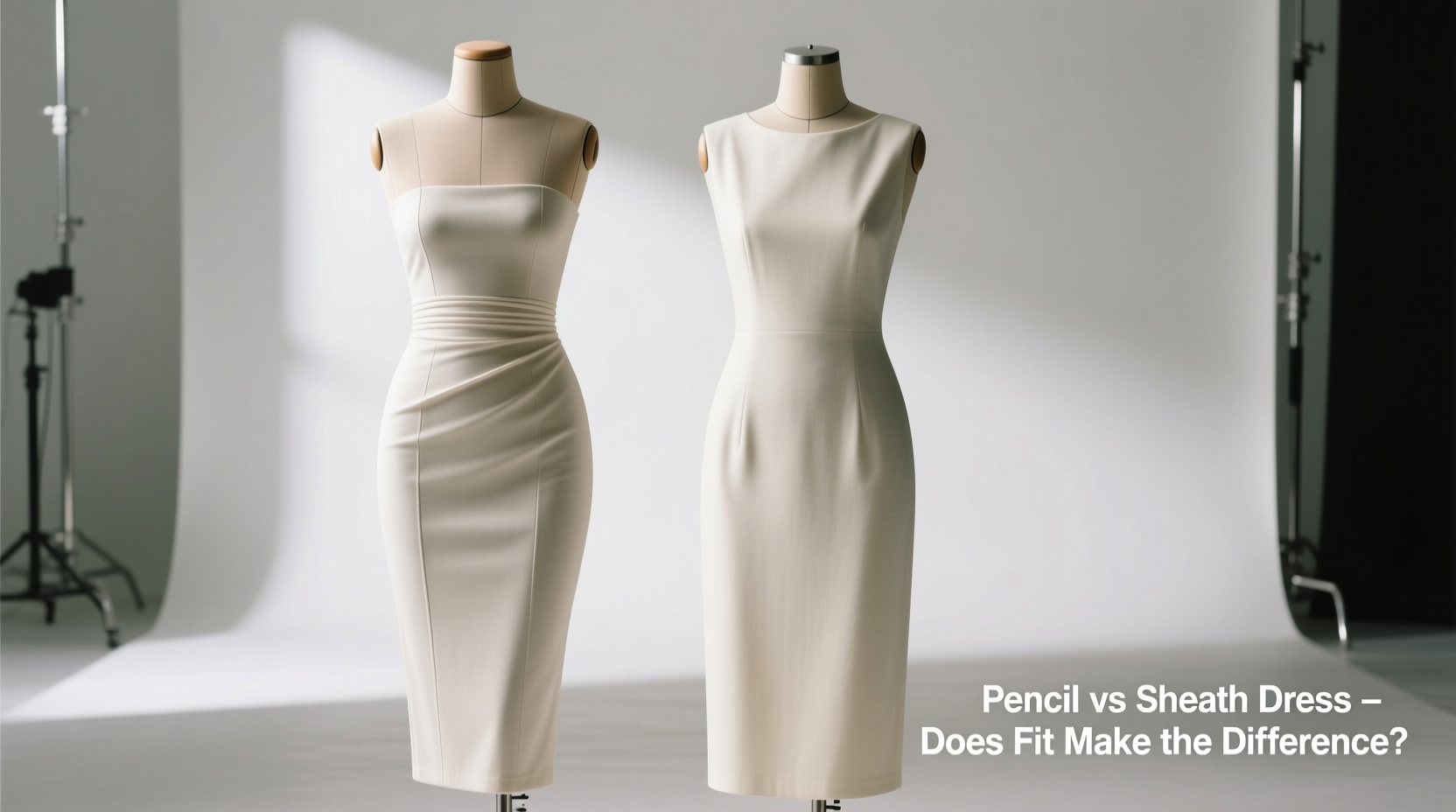
A pencil dress is defined by its narrow, straight silhouette that closely follows the body’s natural curves from bust to hip and down to the hem. Typically made with structured fabrics like wool crepe, ponte knit, or heavy cotton blends, it’s designed to create a sleek, elongated profile. The term “pencil” comes from the shape—tapered and slender, like the writing instrument.
Key features include:
- Tight fit through the hips and thighs
- Minimal draping or volume
- Often includes darts, boning, or seams for shaping
- Frequently has a back slit or kick pleat for movement
- Hemline typically hits at or just below the knee
Pencil dresses are engineered for precision. They require accurate sizing and often rely on stretch fabric or side/back zippers to get on and off. Because of their form-fitting nature, they’re popular in corporate environments and formal events where polished elegance is key.
Tip: When trying on a pencil dress, sit down before purchasing. If it pulls across the hips or restricts leg movement, it may not be comfortable for all-day wear.The Structure of a Sheath Dress
The sheath dress shares many visual traits with the pencil but differs in philosophy. While still tailored, it prioritizes ease and versatility over extreme contouring. Think of a sheath as a refined shift—slightly fitted but not restrictive. It skims the body rather than hugging it tightly.
Design elements commonly found in sheath dresses:
- Gentler shaping through the waist
- Looser fit over the hips and thighs
- Lighter fabrics such as jersey, silk blends, or soft knits
- May include subtle A-line flare or tucks for volume control
- Often slip-on style without zippers
Sheath dresses emerged in the 1950s alongside Christian Dior’s “New Look,” emphasizing femininity without constriction. Today, they’re favored for transitional dressing—equally suitable with heels for a meeting or flats for brunch.
“While both styles flatter, the sheath offers breathing room—literally and stylistically. It’s less about containment, more about suggestion.” — Lena Moretti, Fashion Historian & Curator, Museum of Style Evolution
Comparing Fit: Why the Difference Matters
To dismiss the distinction between pencil and sheath as marketing jargon overlooks how fit impacts function. Consider this scenario:
Mini Case Study: Office Wear Across Seasons
Sophie, a project manager in Toronto, owns two similar-looking black dresses. One is labeled “pencil,” the other “sheath.” In winter, she reaches for the pencil dress—its wool-blend structure pairs perfectly with tights and a blazer, maintaining sharp lines even under layers. Come summer, however, she chooses the sheath. Made from breathable cotton-viscose, it doesn’t cling in humidity and allows airflow during long days without air conditioning. The slight give in the fabric also accommodates lunchtime meals without discomfort.
Their appearances are close, but their performance diverges based on material, cut, and intended use.
Fit Implications at a Glance
| Feature | Pencil Dress | Sheath Dress |
|---|---|---|
| Body Hug | Tight, contoured | Softly fitted |
| Hip Allowance | Minimal (0–1” ease) | Moderate (2–3” ease) |
| Fabric Weight | Medium to heavy | Light to medium |
| Mobility | Restricted without slits | High, especially in knits |
| Occasion Suitability | Formal, structured settings | Versatile: office to weekend |
| Sizing Sensitivity | High – one size often critical | More forgiving across sizes |
This contrast shows that fit isn’t just aesthetic—it affects comfort, confidence, and practicality throughout the day.
How to Choose Based on Your Lifestyle
Selecting between a pencil and a sheath shouldn’t hinge solely on trend cycles. Instead, align your choice with daily demands. Follow this step-by-step guide when shopping:
- Assess your daily movements: Do you sit for hours, walk frequently, or attend standing events?
- Evaluate climate conditions: Will you wear it in hot, cold, or variable temperatures?
- Determine layering needs: Will you pair it with jackets, cardigans, or tights regularly?
- Test mobility: Sit, cross your legs, and simulate reaching forward in the fitting room.
- Consider maintenance: Structured pencil dresses may require dry cleaning; sheaths in jersey often machine-washable.
Checklist: Pencil vs Sheath – Which One Fits You?
Answer these questions before buying:
- ✅ Do I need a commanding, authoritative look? → Pencil
- ✅ Am I prioritizing all-day comfort? → Sheath
- ✅ Is breathability important? → Sheath
- ��� Do I want to emphasize my waist sharply? → Pencil
- ✅ Will I wear this often without tailoring? → Sheath
- ✅ Am I okay with frequent dry cleaning? → Pencil
FAQ: Common Questions Answered
Can a sheath dress be tailored to fit like a pencil?
Yes, but with limitations. Taking in a sheath too much can distort seams or eliminate design elements like tucks. Heavy alteration may compromise drape, especially in non-stretch fabrics.
Are pencil dresses outdated?
No. While fashion has embraced looser silhouettes, the pencil remains a staple in professional wardrobes. Modern versions use smarter knits and ergonomic cuts to improve wearability.
Can petite women wear sheath dresses?
Absolutely. The vertical line of a sheath elongates the frame. Avoid overly long torso seams or bulky necklines that can overwhelm shorter statures.
Conclusion: Beyond the Hype, Fit Is Functional
The debate over pencil versus sheath isn’t semantics—it’s about intentionality in dressing. The pencil delivers power through precision, ideal when you need to command attention in high-stakes environments. The sheath offers grace through flexibility, serving those who value ease without sacrificing elegance. Neither is superior; each excels in context.
Recognizing the nuances helps you build a smarter, more responsive wardrobe. Instead of chasing labels, focus on how a garment performs in your life. Does it move with you? Does it adapt? Does it make you feel capable, not constrained?
💬 What’s your go-to work dress—and why? Share your experience below. Your insight could help someone finally solve their office wear dilemma.








