
When it comes to shielding your skin from harmful UV rays, headwear plays a critical role. But with so many options available—especially the classic peaked cap and the wide-brimmed sun hat—it’s worth asking: which one truly delivers superior sun protection? While both are widely used, their effectiveness varies significantly depending on design, material, and how much of your face and neck they cover. This article breaks down the science, practicality, and dermatological recommendations behind each style to help you make an informed decision for long-term skin health.
Understanding UV Exposure and Facial Vulnerability
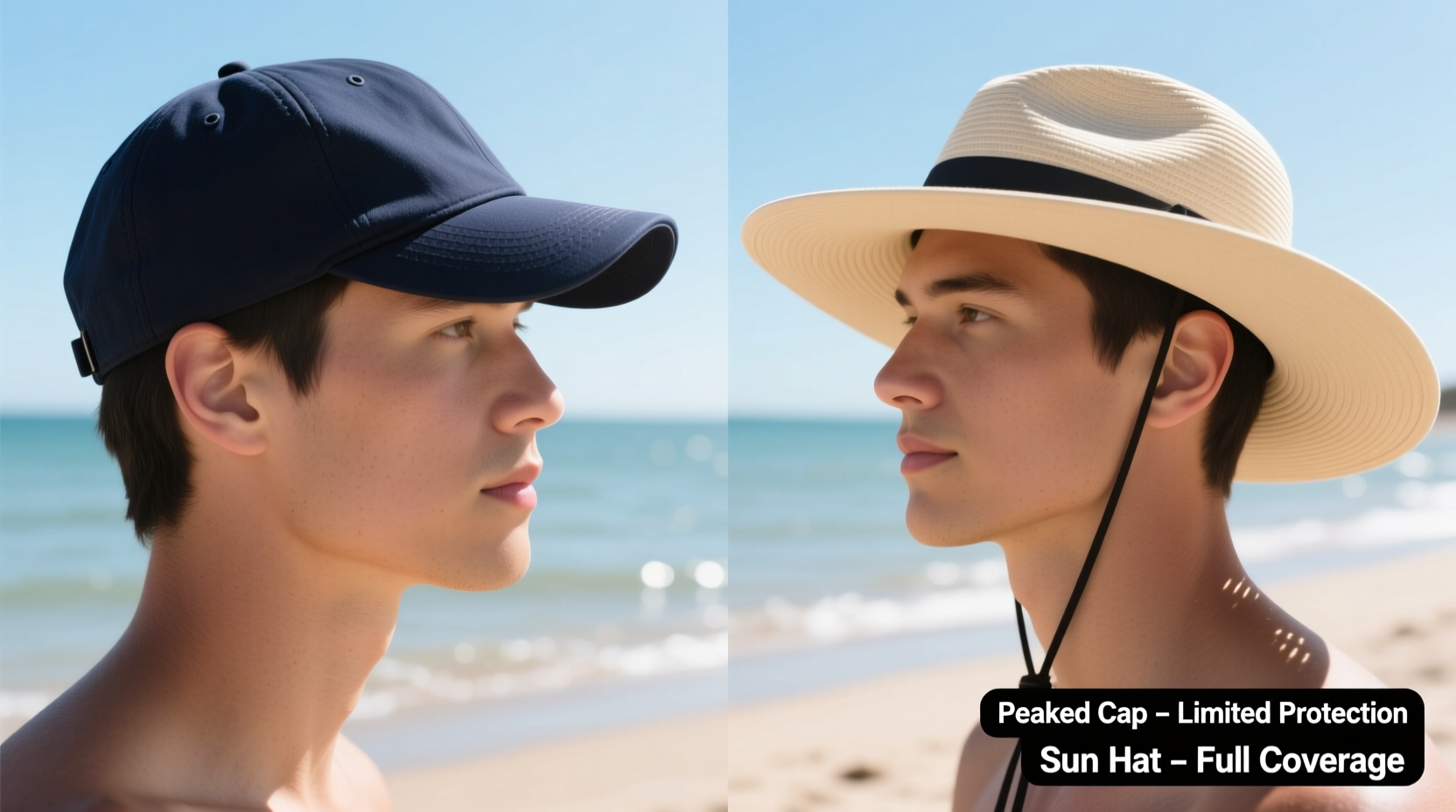
The face, ears, and neck are among the most frequently exposed areas to sunlight, making them prime targets for UV damage. According to the Skin Cancer Foundation, up to 80% of visible facial aging is caused by sun exposure, and these zones are also common sites for skin cancers like basal cell carcinoma and melanoma.
UV radiation includes both UVA (aging) and UVB (burning) rays. Both contribute to DNA damage in skin cells. Effective sun protection requires blocking or minimizing exposure across all exposed surfaces—not just the nose and forehead. This is where the structural differences between peaked caps and sun hats become critically important.
“Many people think a baseball cap is enough, but it leaves the ears, neck, and sides of the face completely vulnerable.” — Dr. Lena Torres, Board-Certified Dermatologist
Peaked Cap: Design, Coverage, and Limitations
Peaked caps—commonly known as baseball caps—are lightweight, stylish, and widely worn during outdoor activities. They typically feature a stiff front brim measuring 2–3 inches and a rounded crown that covers only the top of the head.
Pros:
- Excellent frontal shade for eyes, forehead, and nose
- Compact and easy to carry
- Widely available in UPF-rated fabrics
- Fits snugly, stays in place during activity
Cons:
- No protection for ears, jawline, or neck
- Lateral sun exposure remains high, especially during midday
- Rear and side profiles remain fully exposed
- Can create a false sense of security
Sun Hat: Superior Coverage with Trade-offs
Sun hats are specifically designed for UV protection. They come in various styles—floppy, bucket, legionnaire, and wide-brimmed—but share a defining feature: a brim that extends at least 3 inches all around the hat.
This full-circumference brim casts a consistent shadow over the face, ears, and neck, significantly reducing overall UV exposure. Many are made from tightly woven fabrics like canvas, raffia, or synthetic blends rated for UPF 50+, blocking over 98% of UV rays.
Pros:
- Full coverage for face, ears, and neck
- Reduces reflected UV from sand, water, and concrete
- Often designed with ventilation for breathability
- Available in packable, travel-friendly versions
Cons:
- Bulkier and less convenient to carry
- May be perceived as less fashionable in casual settings
- Can catch wind or shift during physical activity
- Potential for overheating if poorly ventilated
Direct Comparison: Peaked Cap vs Sun Hat
| Feature | Peaked Cap | Sun Hat |
|---|---|---|
| Frontal Protection | Excellent | Excellent |
| Ears Covered | No | Yes |
| Neck Protection | No | Yes (with 3\"+ brim) |
| Lateral (Side) Face Shielding | Poor | Good to Excellent |
| UPF Availability | Common | Very Common |
| Portability | High | Moderate to Low |
| Stability in Wind | High | Moderate |
| Recommended by Dermatologists? | Rarely (as sole protection) | Yes |
Real-World Scenario: A Day at the Beach
Consider Sarah, who spends a summer Saturday at the beach with her family. She wears a white peaked cap, assuming it’s enough since she applied sunscreen earlier. By afternoon, she notices redness behind her ears and along her neckline—areas she didn’t reapply sunscreen to because she assumed the cap covered them.
In contrast, her friend Maya wears a UPF 50+ wide-brimmed sun hat. Despite being in the same environment, Maya experiences no sunburn. Her hat consistently shaded her face, ears, and upper neck, even when reclining on a lounge chair. The difference wasn’t luck—it was design.
This example illustrates a key point: **protection only counts if it covers the areas exposed**. Reflective surfaces like sand and water increase UV intensity, making comprehensive shading essential.
Expert Recommendations and Medical Consensus
Dermatologists consistently recommend wide-brimmed hats over peaked caps for meaningful sun protection. The American Academy of Dermatology (AAD) states that “a hat with a brim that goes all the way around—about 3 inches—is ideal” for protecting the face, ears, and neck.
Dr. Alan Pierce, a photobiology researcher at the University of Colorado, explains: “We’ve measured UV exposure under different hats using mannequin heads fitted with UV sensors. Even high-UPF baseball caps allowed dangerous levels of radiation to reach the sides of the face and ears. Wide-brimmed hats reduced total exposure by up to 75%.”
“A sun-safe wardrobe isn’t complete without a proper sun hat. Think of it as wearable sunscreen.” — Dr. Nina Feldman, AAD Spokesperson
How to Choose the Right Sun Hat
Not all sun hats are created equal. To maximize protection, follow this checklist when selecting one:
- ✅ Brim width of at least 3 inches (7.5 cm) all around
- ✅ UPF 50+ certified fabric (look for labels)
- ✅ Tightly woven material (hold it up to light—less light passing through = better protection)
- ✅ Chin strap or adjustable band for windy conditions
- ✅ Darker colors (absorb more UV than whites or pastels)
- ✅ Ventilation features to prevent overheating
FAQ: Common Questions About Sun Protection Headwear
Do peaked caps block UV rays at all?
Yes, the brim and crown can block direct overhead UV, especially if made from UPF-rated fabric. However, they offer no protection for the sides and back of the head, leaving high-risk areas exposed. They should never be relied upon as standalone protection.
Can I wear a peaked cap under a sun hat?
Absolutely. Some people wear a baseball cap underneath a collapsible sun hat for added sweat absorption and style. Just ensure the sun hat still sits securely and provides full brim coverage.
Are straw hats effective for sun protection?
It depends. Traditional loosely woven straw hats (like some Panama styles) may allow significant UV penetration. Look for sun hats labeled “tightly woven” or “UPF 50+” regardless of material. Raffia, canvas, and polyester blends often perform better than natural straw.
Conclusion: Prioritize Protection Over Style
While peaked caps win on convenience and cultural ubiquity, sun hats are objectively superior for UV protection. The difference isn’t subtle—it’s medical. For anyone spending extended time outdoors, especially during peak sun hours (10 a.m. to 4 p.m.), a wide-brimmed sun hat is a non-negotiable part of sun safety.
That doesn’t mean you have to sacrifice style. Modern sun hats come in sleek, minimalist designs suitable for urban walks, beach outings, and gardening alike. Think of your hat not as an accessory, but as a critical piece of health equipment—just like sunscreen or sunglasses.
🚀 Ready to upgrade your sun defense? Replace your old baseball cap with a UPF 50+ wide-brimmed hat on your next outdoor adventure. Your skin will thank you years from now.