For decades, Nike has dominated the sneaker landscape with innovation, style, and cultural relevance. Two of its most iconic lines—Air Max and VaporMax—have captured the attention of athletes, fashion enthusiasts, and casual wearers alike. But as new models flood the market and social media amplifies every release, a critical question arises: Is the hype around Nike VaporMax versus Air Max based on genuine performance and design superiority, or is it primarily driven by marketing brilliance?
The answer isn’t simple. Both lines share DNA—visible Air cushioning—but they diverge significantly in technology, construction, and user experience. To separate substance from spin, we need to examine comfort, durability, versatility, price, and real-world feedback.
The Evolution of Air: From Visible Cushioning to Full Sole Innovation
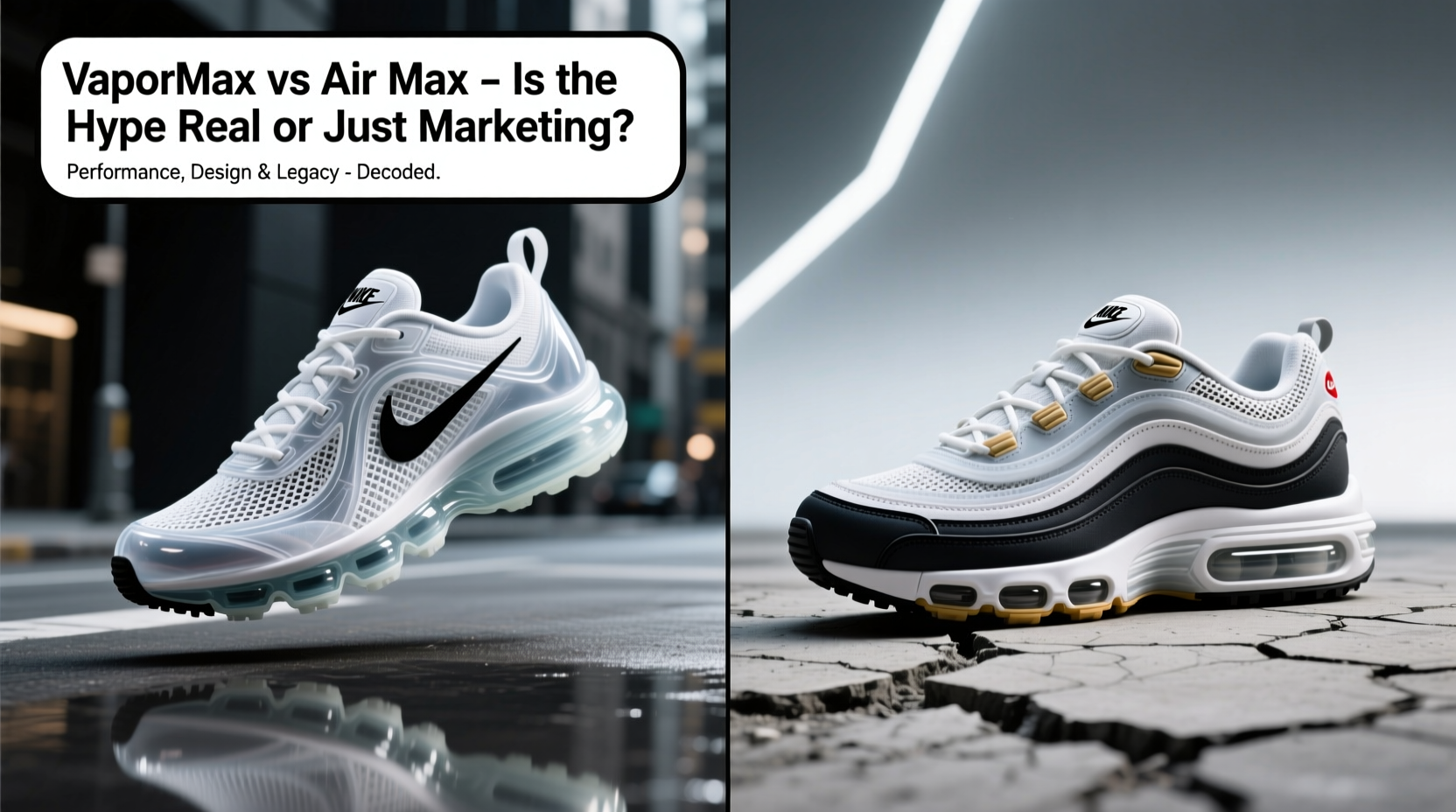
The Air Max line debuted in 1987 with the Air Max 1, introducing the world to visible Air units in the heel. This wasn’t just a functional upgrade—it was a visual revolution. Consumers could now see the technology that promised superior shock absorption. Over the years, Air Max evolved with full-length Air soles, updated upper materials, and bolder designs, becoming synonymous with streetwear culture.
VaporMax arrived in 2017 as a radical departure. Instead of embedding Air units within a foam midsole, VaporMax attached the Air bag directly to the upper, eliminating traditional foam entirely. The result was a lighter, more responsive ride with a futuristic aesthetic. Nike marketed it as “Air redefined,” and early adopters praised its bounce and breathability.
But does redefining Air mean improving it for everyone?
“VaporMax changed how we think about cushioning—not just what it does, but how it feels underfoot. It’s minimalist engineering at its best.” — Dr. Marcus Lin, Footwear Biomechanics Researcher, University of Oregon
Comfort & Performance: How Do They Feel in Real Use?
Comfort is subjective, but certain metrics hold up across users: cushioning responsiveness, weight, arch support, and adaptability to different activities.
Air Max models vary widely. The Air Max 90 offers firm yet reliable cushioning—ideal for walking or light standing. The Air Max 270, with its oversized heel unit, prioritizes plushness over precision, making it better suited for lifestyle use than running. These shoes often use a blend of foam and Air, which provides a balanced feel: soft enough for all-day wear, stable enough for moderate activity.
VaporMax, by contrast, delivers a trampoline-like sensation. The direct-to-foot Air sole compresses deeply and rebounds quickly. Runners appreciate this responsiveness during short sprints or gym sessions. However, long-distance testers often report a lack of consistent support, especially on hard surfaces like concrete. Without foam buffering, the Air bags can feel overly reactive or even fatiguing after two hours of continuous use.
Tip: If you're on your feet all day for work, opt for an Air Max model with hybrid cushioning. VaporMax excels in short bursts of activity, not endurance.Design, Durability, and Practicality Compared
Styling plays a major role in the hype. Air Max sneakers are bold—often featuring chunky silhouettes, retro colorways, and prominent branding. They’re designed to stand out, and they do. VaporMax leans into minimalism: sleek uppers, translucent soles, and a modern, almost alien appearance. Both have strong followings in fashion circles, but their practical differences matter.
Durability is where cracks begin to show—literally. VaporMax’s exposed Air pods are prone to punctures and delamination over time, especially when worn on rough terrain. Repair options are limited; once an Air bag fails, the shoe is usually retired. Air Max units, protected by rubber outsoles and midsole foam, tend to last longer under similar conditions.
Weather resistance is another factor. Most VaporMax models use knit uppers that breathe well but soak up rain easily. Air Max shoes often feature synthetic overlays or water-resistant treatments, making them more suitable for unpredictable climates.
Comparison Table: Key Features at a Glance
| Feature | Nike Air Max | Nike VaporMax |
|---|---|---|
| Cushioning Type | Foam + Encapsulated Air | Full-Length Exposed Air (no foam) |
| Weight | Moderate to Heavy | Lightweight |
| Durability | High (protected Air unit) | Moderate (exposed pods vulnerable) |
| Best For | All-day wear, casual use, retro style | Short workouts, urban fashion, tech appeal |
| Price Range | $100–$160 | $150–$200+ |
| Weather Resistance | Generally better | Poor (knit absorbs moisture) |
Real-World Example: A Commuter’s Experience
Jess T., a graphic designer in Chicago, bought a pair of VaporMax 2020s for their sleek look and lightweight feel. She wore them daily during spring, logging 4–6 miles of walking between meetings and transit stops. Initially impressed by the bounce and breathability, she noticed discomfort emerging by week three—especially in her forefoot, where the rigid Air pods created pressure points.
After five months, one of the Air bags developed a slow leak. Despite minimal visible wear, the shoe lost its cushioning symmetry and had to be replaced. She switched to Air Max 97s with moisture-wicking lining and reported significantly better comfort during winter commutes, even in slushy conditions. “The VaporMax looked incredible in photos,” she said, “but the Air Max actually works in real life.”
Marketing vs. Merit: What’s Driving the Hype?
Nike invests heavily in storytelling. VaporMax launched with cinematic ads, celebrity endorsements (like Travis Scott), and limited drops that fueled scarcity psychology. Social media influencers showcased the shoes in urban landscapes, emphasizing aesthetics over function. The message was clear: this isn’t just a sneaker—it’s a statement.
In contrast, Air Max benefits from nostalgia. The “Air Max Day” campaign every March taps into decades of cultural memory, celebrating retro releases and collaborations. Its marketing leans on heritage rather than futurism.
Both strategies work—but they serve different purposes. VaporMax sells aspiration; Air Max sells reliability. The higher price of VaporMax models isn’t always justified by longevity or performance gains. In many cases, the premium reflects brand narrative more than tangible upgrades.
Tip: Before buying based on looks alone, try both models side by side. Walk on different surfaces and assess fit over 10–15 minutes.Checklist: Choosing Between VaporMax and Air Max
- ✅ Determine your primary use: fashion, fitness, or daily wear?
- ✅ Test both shoes in-store if possible—don’t rely on online images.
- ✅ Consider climate: will you face rain, snow, or heat regularly?
- ✅ Check return policies—Air pod failures may not be covered under warranty.
- ✅ Evaluate long-term value: is the higher cost of VaporMax offset by performance?
- ✅ Look beyond colorways—focus on structural support and heel lockdown.
Frequently Asked Questions
Can I run in VaporMax shoes?
Yes, but with caveats. VaporMax offers excellent responsiveness for short runs or gym circuits. However, due to minimal underfoot protection and lack of medial support in most models, they’re not ideal for long-distance running or high-impact training. Runners with neutral gait may enjoy them, but those needing stability should consider dedicated running shoes.
Are Air Max shoes outdated compared to VaporMax?
Not at all. While VaporMax represents newer technology, Air Max continues to innovate—models like the Air Max DY8600 integrate modern foams and ergonomics while retaining classic aesthetics. Outdated doesn’t mean ineffective. Many Air Max variants still outperform VaporMax in comfort, weather resistance, and durability.
Why are VaporMax shoes more expensive?
The price reflects R&D costs, limited production runs, and premium positioning. Nike markets VaporMax as cutting-edge, which allows for higher margins. However, independent reviews often show diminishing returns beyond $160. You’re paying partly for the tech story, not just the materials.
Final Verdict: Hype or Substance?
The hype around VaporMax is real—but so is the marketing engine behind it. The shoe introduced a legitimate innovation: removing foam to create a direct Air connection. For some users, especially those valuing lightness and visual impact, it’s worth the cost. But for everyday practicality, longevity, and all-around comfort, traditional Air Max models often deliver better value.
The truth is, neither line universally “wins.” Your choice should depend on how you plan to use the shoe, your foot type, and your tolerance for trade-offs. Don’t let influencer photos or limited-edition labels dictate your decision. Try them, test them, and prioritize function alongside form.
💬 Have you tried both? Share your experience below—did the VaporMax live up to the buzz, or did the Air Max surprise you with its staying power?