In recent years, a quiet revolution has been reshaping engagement rings and fine jewelry. Once considered unthinkable, skipping diamonds in favor of alternatives like moissanite or colored gemstones is no longer niche—it’s mainstream. With shifting values around sustainability, transparency, and value, more consumers are rethinking what makes a stone “precious.” But is this trend just a flash in the pan, or are we witnessing a permanent shift in how we define luxury?
The Rise of Moissanite: Science Meets Sparkle
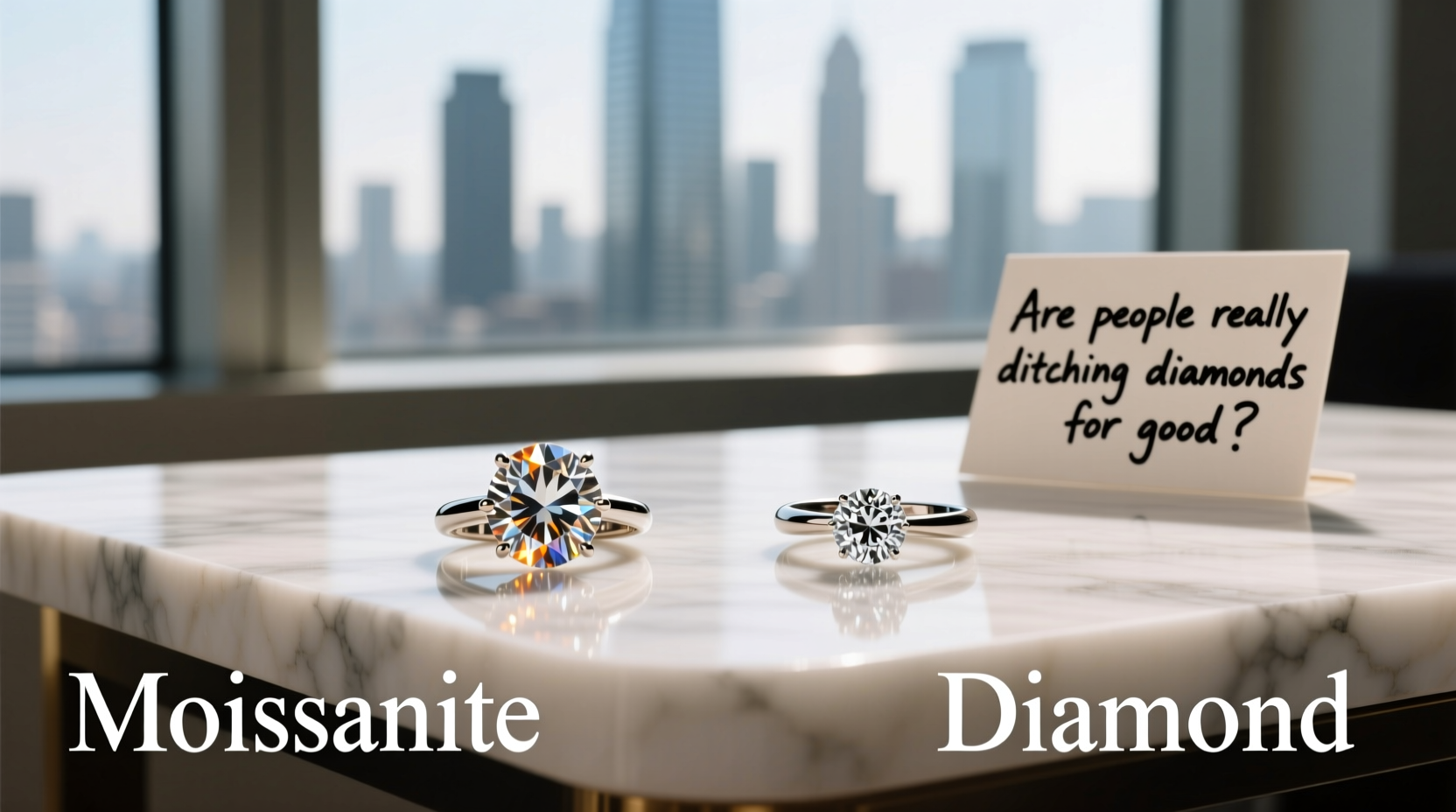
Moissanite, a lab-created gem composed of silicon carbide, was first discovered in a meteor crater by Henri Moissan in 1893. Today, it's grown in controlled environments with precision, resulting in a stone that rivals diamond in brilliance and fire—often exceeding it. Its refractive index (2.65–2.69) is higher than that of diamond (2.42), meaning it disperses light more dramatically, creating a rainbow-like sparkle under most lighting.
What sets moissanite apart isn’t just aesthetics. It scores 9.25 on the Mohs hardness scale—making it durable enough for daily wear, second only to diamond (10) and sapphire (9). And unlike mined diamonds, moissanite production has a significantly lower environmental footprint, with no large-scale earth displacement or water contamination.
Tip: Moissanite is ideal for those who want maximum sparkle on a budget without compromising ethics or durability.Gemstone Alternatives: Color, Character, and Meaning
Beyond moissanite, colored gemstones are gaining traction as centerpieces in engagement rings. Sapphires, emeralds, rubies, and even lesser-known stones like morganite and spinel offer unique color palettes and personal symbolism. Princess Diana’s sapphire ring, now worn by Kate Middleton, helped popularize blue sapphires as a romantic alternative to diamonds.
While natural gemstones carry geological history and rarity, they vary widely in durability and care requirements. For example, emeralds (7.5–8 on the Mohs scale) are prone to internal fractures, requiring protective settings and cautious wear. In contrast, sapphires and rubies (both 9) are excellent choices for everyday rings.
“People are no longer choosing stones based solely on tradition. They’re asking, ‘What does this mean to me?’ That shift is redefining engagement jewelry.” — Lena Torres, Gemologist & Sustainable Jewelry Advocate
Diamonds Under Scrutiny: Cost, Ethics, and Perception
Diamonds have long symbolized eternal love, but their reputation has faced growing criticism. The term “blood diamonds” entered public consciousness in the late 1990s, highlighting how some gems funded armed conflict. While the Kimberley Process was established to curb this trade, loopholes remain, and traceability is still a challenge.
Additionally, the environmental toll of diamond mining is significant. Extracting one carat of diamond can displace over 100 square feet of land and generate half a ton of waste. Lab-grown diamonds, which share the same chemical structure as mined ones, offer a cleaner option—but they still face stigma from traditionalists despite being up to 70% cheaper.
Comparing the Options: A Practical Breakdown
| Feature | Diamond (Mined) | Lab-Grown Diamond | Moissanite | Sapphire/Ruby |
|---|---|---|---|---|
| Hardness (Mohs) | 10 | 10 | 9.25 | 9 |
| Brilliance | High | High | Very High | Moderate |
| Average 1-Carat Price | $5,000–$8,000 | $1,000–$2,000 | $300–$600 | $800–$3,000 |
| Environmental Impact | High | Low | Very Low | Variable |
| Ethical Transparency | Limited | High | High | Depends on Source |
| Color Range | Mostly Clear | Clear or Fancy | Colorless to Slight Yellow/Green | Wide (Blue, Pink, Red, etc.) |
This comparison reveals why so many couples are exploring beyond diamonds. Moissanite offers exceptional value and radiance at a fraction of the cost. Colored gemstones provide individuality and emotional resonance. Even lab-grown diamonds, while chemically identical to mined ones, struggle to match moissanite’s price-to-sparkle ratio.
Real-World Shift: A Mini Case Study
Take Sarah and James, a couple from Portland who got engaged in 2022. After researching ethical sourcing and setting a $3,000 budget, they realized a 1-carat mined diamond was out of reach without sacrificing quality. Instead, they chose a 1.5-carat moissanite solitaire in recycled platinum. “We didn’t want to compromise our values for a stone,” Sarah said. “When guests compliment the ring, I love telling them it’s eco-friendly and sparklier than most diamonds.” Their decision reflects a broader trend: younger buyers prioritizing sustainability, authenticity, and financial prudence.
How to Choose What’s Right for You: A Checklist
- Define your priorities: Is it sparkle, durability, symbolism, or sustainability?
- Set a realistic budget: Know what you can afford and explore options within that range.
- Research sources: Ask jewelers about origin, treatment, and certifications.
- Consider long-term wear: Will the stone withstand daily use? Does it need special care?
- Trust your taste: If you love the look of a deep blue sapphire or a fiery moissanite, go for it.
- Think about resale value: Diamonds traditionally hold value better, though alternatives are gaining acceptance.
Common Misconceptions Debunked
One major myth is that moissanite looks “fake.” In reality, modern cuts and high-quality grades (like Forever One or Charles & Colvard Premium) are nearly indistinguishable from diamonds to the untrained eye. Another misconception is that gemstone rings aren’t “serious” commitments. Yet, historical figures from royalty to artists have used colored stones to symbolize love.
There’s also a belief that lab-created stones lack romance. But as one jeweler put it: “Love isn’t about where a rock came from—it’s about what it represents.”
Timeline: The Evolution of Engagement Rings
- 1940s: De Beers launches “A Diamond is Forever,” cementing diamonds as the default engagement symbol.
- 1980s–1990s: Mined diamond sales peak; marketing dominates cultural norms.
- 2000s: Ethical concerns rise; documentaries expose conflict diamond issues.
- 2010s: Lab-grown diamonds enter the market; millennials begin questioning tradition.
- 2020s: Moissanite and gemstone popularity surge; customization and sustainability become key drivers.
Frequently Asked Questions
Will moissanite pass a diamond tester?
No—most handheld diamond testers detect thermal conductivity, which moissanite passes due to its similar heat dispersion. However, advanced testers can distinguish between the two based on electrical conductivity. Always disclose the stone type when reselling or insuring.
Can gemstone rings be heirlooms?
Absolutely. With proper care, sapphires and rubies have lasted centuries in royal collections. Even moissanite, though newer, is durable enough to be passed down if set in quality metal and maintained well.
Are people really ditching diamonds for good?
Not entirely—but the monopoly is broken. While diamonds still dominate, especially in certain markets, alternatives now represent over 20% of engagement rings in the U.S., according to industry reports. The trend is growing fastest among Gen Z and environmentally conscious buyers.
Final Thoughts: Redefining Value in Modern Jewelry
The idea that diamonds are the only legitimate choice for engagement jewelry is fading. Consumers today demand more—more transparency, more personality, more value. Moissanite delivers brilliance and ethics at an accessible price. Colored gemstones offer storytelling potential and timeless beauty. Even lab-grown diamonds provide a middle ground for those who want the diamond name without the ecological cost.
Ultimately, the best stone is the one that resonates with you. Whether it’s a dazzling moissanite, a rich sapphire, or a classic diamond, what matters is the intention behind it. As traditions evolve, so too does the meaning of commitment—and that’s something worth celebrating.
🚀 Ready to explore beyond the diamond aisle? Visit a local jeweler, ask questions, and try on different stones. Your perfect ring might be waiting—just not where you expected.








