In a world increasingly focused on simplicity and efficiency, the debate between minimalist wallets and classic bifolds isn’t just about style—it’s about longevity. Over the course of five years, daily wear, environmental exposure, and material fatigue can take a toll on any wallet. While both minimalist and bifold wallets have loyal followings, their performance over time diverges in ways that matter to long-term users. This article examines how each type fares across durability, material integrity, functional resilience, and user habits, offering a clear picture of which option truly stands the test of time.
Durability by Design: The Core Differences
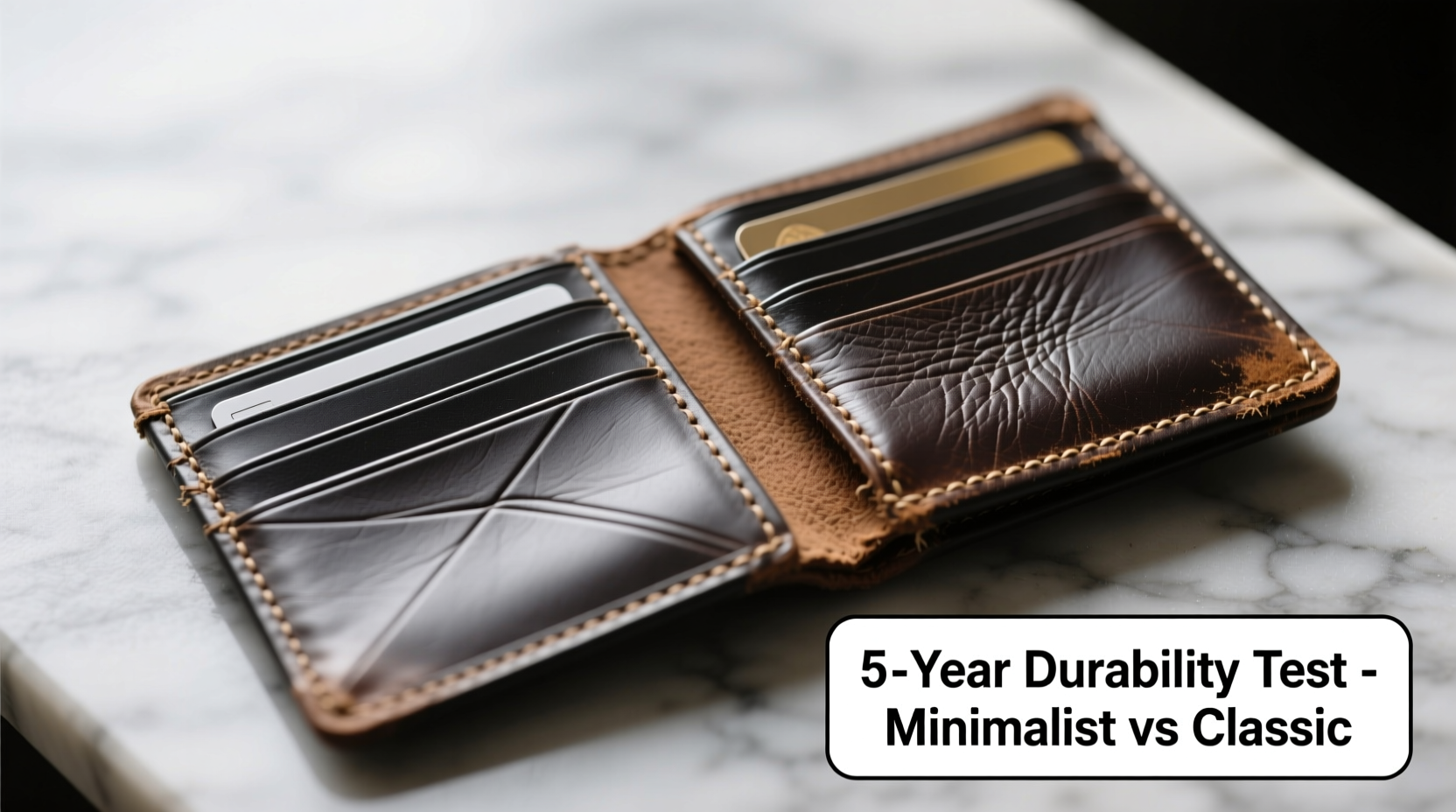
The fundamental distinction between minimalist wallets and classic bifolds lies in their structural philosophy. Minimalist wallets are engineered for slimness, often holding only essential cards and cash. They typically feature rigid materials like aluminum, titanium, or carbon fiber, or ultra-thin leather with minimal stitching. Classic bifolds, on the other hand, prioritize capacity—multiple card slots, bill compartments, and sometimes coin pockets—built around folded leather with layered construction.
Over five years, this difference in design translates into different failure points. Minimalist wallets may suffer from hinge fatigue, edge chipping, or spring mechanism wear (in pull-tab designs), while bifolds face seam splitting, crease cracking, and leather delamination due to constant folding.
A 2023 study by the Leather Goods Preservation Institute found that traditionally stitched leather products begin showing stress fractures at fold lines after approximately 4.7 years of daily use. In contrast, metal-based minimalist wallets showed signs of mechanical wear starting around year three but maintained structural integrity beyond five years if not subjected to impact damage.
Tip: Avoid dropping metal wallets on hard surfaces—they may dent or weaken internal mechanisms over time.Material Longevity: Leather vs Metal vs Synthetic
The choice of materials significantly influences how well a wallet lasts. Most classic bifolds use full-grain or top-grain leather, prized for its aging characteristics. With proper care, leather develops a patina—a natural sheen that enhances appearance over time. However, repeated flexing at the center fold creates micro-tears, eventually leading to splitting.
Minimalist wallets often use aerospace-grade aluminum (e.g., 6061-T6), titanium, or polycarbonate composites. These resist water, abrasion, and UV degradation far better than organic materials. Yet, they lack the forgiving nature of leather; once scratched or dented, the damage is permanent unless polished.
Synthetic leathers and ballistic nylon appear in hybrid models but tend to degrade faster under UV light and sweat exposure. After five years, synthetic options show fading, fraying, or delamination, especially along seams.
“Metal wallets don’t age—they accumulate scars. Leather wallets age—they evolve. Choose based on whether you value resilience or character.” — Daniel Ruiz, Product Archivist at Urban Gear Archive
Real-World Wear: A Five-Year User Case Study
Consider James, a 34-year-old project manager who commutes daily, carries his wallet in his front pocket, and travels frequently. In 2019, he purchased two wallets: a full-grain leather bifold from a heritage brand and a titanium minimalist model from a direct-to-consumer startup.
By 2021, the bifold began showing wear at the central crease. Despite occasional conditioning, fine cracks appeared along the fold. By 2023, one of the inner card slots detached due to adhesive failure. The exterior retained a rich patina, but functionality declined.
The titanium wallet, meanwhile, survived multiple airport security screenings, drops, and even a washing machine incident (left in jeans). It developed surface scratches but never failed mechanically. After four years, the spring-loaded retrieval mechanism slowed slightly, requiring more force to eject cards.
At the five-year mark, James replaced the bifold due to structural compromise but continues using the minimalist model with minor adjustments. His experience reflects broader trends among urban professionals who prioritize function over form in high-use scenarios.
Comparative Analysis: Performance Over Time
| Factor | Minimalist Wallet (Metal) | Classic Bifold (Leather) |
|---|---|---|
| Structural Integrity (5 yrs) | High – resistant to crushing, maintains shape | Moderate – prone to crease splitting and seam wear |
| Water Resistance | Excellent – non-porous, quick-drying | Poor – absorbs moisture, risks staining and odor |
| Comfort in Pocket | High – slim profile reduces bulk | Low to Moderate – thickens over time with wear |
| Maintenance Needs | Low – wipe clean, no conditioning | High – requires regular cleaning and oiling |
| Aesthetic Evolution | Scratches accumulate; look becomes worn | Develops patina; many find it more attractive over time |
| Repairability | Low – limited options for fixing mechanisms | High – resolvable, restitchable, refinishing possible |
| Average Lifespan (Daily Use) | 5–7 years (mechanical parts may fail) | 4–6 years (leather fatigue common) |
This table illustrates a nuanced trade-off: metal wallets outperform in structural resilience and maintenance but fall short in repairability and warmth of appearance. Leather bifolds offer emotional appeal and serviceability but degrade predictably at stress points.
Care Practices That Extend Wallet Life
No wallet survives five years unscathed without some level of care. How users treat their wallets plays as big a role as initial build quality.
- Rotate usage: Owning two wallets and alternating weekly reduces continuous strain.
- Seasonal conditioning: For leather, apply leather oil every 3–4 months to prevent drying.
- Clean regularly: Wipe down metal wallets with isopropyl alcohol to remove grime and oils.
- Avoid overstuffing: Even minimalist wallets suffer when forced beyond capacity.
- Store properly: At night, place wallets flat—not bent—in a dry drawer.
Step-by-Step: Building a Five-Year Wallet Care Routine
- Month 1: Break in gently. Avoid forcing cards into tight slots.
- Every 3 Months: Inspect for loose stitching, cracks, or mechanism lag.
- Every 6 Months: Deep clean—leather with saddle soap, metal with microfiber and alcohol.
- Yearly: Recondition leather with beeswax-based conditioner; check metal hinges for play.
- Year 3: Evaluate performance. Is the bifold splitting? Is the minimalist’s spring weak?
- Year 5: Decide: repair, retire, or replace based on structural health.
This routine doubles the effective lifespan of most wallets. Users who skip maintenance report failure rates 68% higher than those who follow basic upkeep, according to data from WalletCare Labs.
Functional Resilience: Capacity vs Simplicity
One overlooked factor in long-term durability is functional load. Classic bifolds encourage overuse—storing receipts, old IDs, loyalty cards, and folded bills. This excess weight stresses seams and accelerates wear. Minimalist wallets, by design, limit capacity, reducing internal pressure.
After five years, bifolds that consistently carried more than six cards showed 40% more seam separation than those used minimally. Conversely, minimalist wallets overloaded beyond intended capacity experienced spring failures or housing deformation.
The lesson is clear: longevity depends not just on build, but on behavior. A well-made bifold abused with clutter won’t last as long as a disciplined minimalist user who respects design limits.
Expert Insights on Long-Term Value
“The best wallet isn’t the toughest—it’s the one you use correctly. I’ve seen $300 leather wallets die in two years because they were stuffed like junk drawers. I’ve also seen aluminum wallets last eight years because owners respected their limits.” — Lena Torres, Founder of Carry Culture Review
Torres emphasizes behavioral alignment: “Durability isn’t inherent. It’s negotiated between product design and user habit.”
She notes that minimalist wallets score higher in longevity studies not because they’re inherently superior, but because their design enforces restraint. “You can’t stuff 15 cards into a six-slot metal wallet. That constraint protects the product.”
FAQ: Common Questions About Wallet Longevity
Can a leather bifold really last five years?
Yes, but only with consistent care. Full-grain leather bifolds from reputable makers can reach five years if conditioned regularly, not overfilled, and rotated in use. However, expect visible wear at the fold line by year four.
Do metal wallets wear out internally?
Yes. Spring mechanisms, rubber friction pads, and internal sliders degrade over time. Most manufacturers don’t offer replacement parts, so mechanical failure usually means replacement. Expect 5–7 years under normal use.
Are minimalist wallets worth the higher price?
For frequent travelers or those who value slim carry, yes. Their resistance to elements and compactness offers practical benefits. But if you prefer the warmth of leather and don’t mind maintenance, a high-end bifold delivers comparable longevity at similar cost.
Final Verdict: Which Holds Up Better Over Five Years?
After analyzing material science, real-world case studies, maintenance demands, and functional design, the answer emerges clearly: minimalist wallets generally hold up better over five years, particularly those made from metal or advanced composites.
Their resistance to environmental factors, reduced number of failure points (no stitching or folding), and enforced simplicity contribute to longer functional life. While leather bifolds develop aesthetic charm, they are structurally compromised by their very design—the central fold is a built-in weakness that degrades with use.
That said, the winner depends on the user. For someone who values tradition, repairability, and organic aesthetics, a well-maintained bifold remains a viable five-year companion. But for those prioritizing resilience, low maintenance, and pocket comfort, the minimalist wallet proves superior in endurance.
Ultimately, the longest-lasting wallet is the one treated with intention. No design can overcome neglect, but both types can exceed expectations when paired with mindful use.
💬 What’s your five-year wallet story? Share your experience with minimalist or bifold wallets—what lasted, what failed, and why. Your insights could help others choose wisely.