In an era dominated by digital notifications, health tracking, and AI-powered assistants, the wrist has become a battleground between tradition and technology. On one side is the Megir 8111—a sleek, minimalist quartz watch that channels vintage elegance at an accessible price. On the other, a fitness smartwatch like the Fitbit Charge or Xiaomi Band, packed with heart rate monitoring, step counting, sleep analysis, and smartphone integration. The real question isn’t just about features or price—it’s cultural: in a world obsessed with data and connectivity, does anyone still wear regular watches?
The answer isn’t simple. While smartwatches dominate tech headlines and gym bags, analog timepieces haven’t vanished. Instead, they’ve evolved—occupying niches where aesthetics, symbolism, and craftsmanship matter more than calorie counts.
The Rise of the Fitness Smartwatch
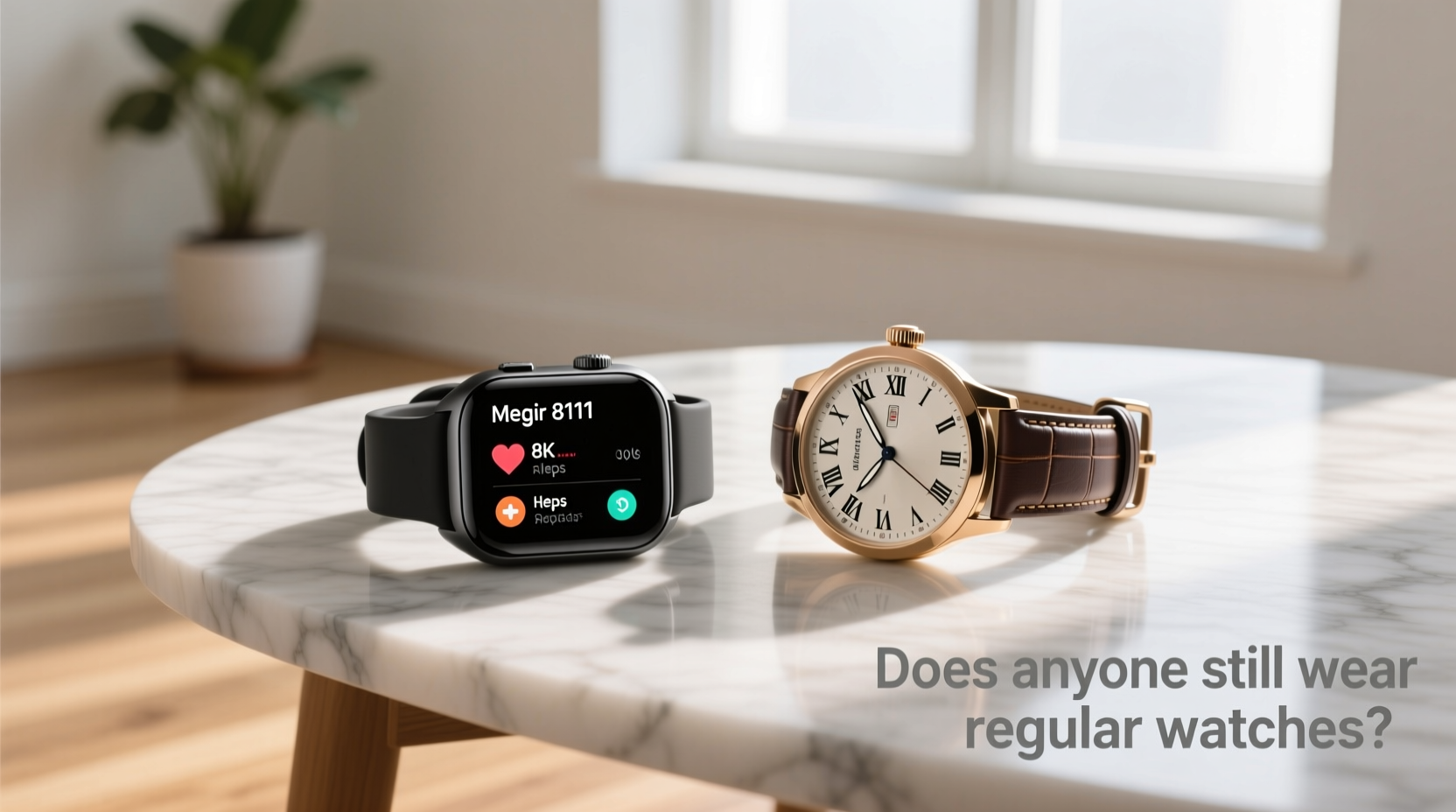
Fitness smartwatches have redefined what we expect from a device on our wrist. No longer just tools for telling time, they now act as personal health coaches, communication hubs, and lifestyle trackers. Brands like Garmin, Apple, and Huawei offer models that monitor blood oxygen levels, track stress, guide breathing exercises, and even detect falls.
For many users, especially those focused on wellness or productivity, these capabilities are non-negotiable. A 2023 Statista report found that over 150 million people worldwide use wearable fitness trackers regularly. That number continues to grow, driven by increasing health awareness and seamless smartphone integration.
But functionality comes at a cost—not just financially, but in design and longevity. Most fitness smartwatches require daily charging, feature plastic builds, and prioritize utility over elegance. They’re built for activity, not boardrooms.
Tip: If you value both fitness tracking and timeless style, consider using two watches—one smart, one analog—and switching based on context.Megir 8111: Simplicity with Substance
The Megir 8111 stands as a quiet rebuttal to the digital takeover. With its stainless steel case, sapphire crystal glass, Japanese quartz movement, and clean dial design, it mimics the look of luxury watches costing ten times more. Priced under $50, it appeals to budget-conscious buyers who appreciate minimalism and mechanical authenticity—even if it’s not mechanical.
What sets the Megir 8111 apart is its versatility. It pairs equally well with a t-shirt and jeans or a tailored suit. Unlike most fitness trackers, it doesn’t scream “gadget.” Instead, it whispers refinement. And because it runs on a standard battery lasting 1–2 years, there’s no nightly charging ritual.
Yet, it offers nothing in terms of interactivity. No notifications. No GPS. No heart rate sensor. For some, this absence is liberating—a return to intentional living. For others, it’s a dealbreaker.
“Wearing a simple watch like the Megir 8111 is a small act of resistance against constant digital distraction.” — Daniel Park, Horology Blogger & Minimalist Lifestyle Advocate
Feature Comparison: Megir 8111 vs Fitness Smartwatch
| Feature | Megir 8111 | Fitness Smartwatch (e.g., Fitbit, Amazfit) |
|---|---|---|
| Time Display | Analog (hands) | Digital (screen) |
| Battery Life | 1–2 years | 4 days to 2 weeks |
| Charging Required | No (replace battery) | Yes (daily/weekly) |
| Fitness Tracking | None | Steps, HR, Sleep, Calories, GPS |
| Smart Notifications | No | Yes (calls, texts, apps) |
| Water Resistance | 3 ATM (splash-proof) | 5 ATM+ (swim-ready) |
| Design Focus | Style, elegance | Functionality, data |
| Price Range | $30–$60 | $80–$300+ |
A Real-Life Example: Two Users, Two Choices
Consider Alex and Jordan—both in their early 30s, urban professionals, active lifestyles.
Alex wears a fitness smartwatch every day. As a personal trainer, he uses it to monitor clients’ heart rates during sessions, track his own workouts, and analyze recovery patterns. He values real-time feedback and syncs data to coaching apps. His watch buzzes when he’s been sedentary too long and reminds him to hydrate. For Alex, the device is indispensable.
Jordan, a graphic designer, owns a fitness tracker but rarely uses it. Instead, she wears her Megir 8111 daily. She appreciates how it complements her wardrobe and serves as a subtle confidence booster. “When I wear my Megir,” she says, “I feel put together. The smartwatch makes me feel monitored.”
Neither is wrong. Their choices reflect different priorities—utility versus identity.
Why Regular Watches Still Matter
The persistence of analog watches isn’t nostalgia; it’s rooted in deeper human needs. Timepieces have always been more than instruments—they’re symbols. A watch can signal professionalism, heritage, taste, or rebellion. Luxury brands like Rolex and Omega thrive not because they tell better time, but because they carry meaning.
Even affordable options like the Megir 8111 tap into this symbolism. They offer a sense of permanence in a disposable culture. While smartphones become outdated in three years, a well-maintained watch can last decades.
Moreover, wearing a regular watch encourages mindfulness. Without constant alerts, the wearer is less likely to fall into reactive behavior. Checking the time becomes intentional, not compulsive.
Tip: Try a \"digital detox\" week—wear only an analog watch and observe how your relationship with time and attention shifts.Checklist: Choosing What’s Right for You
- Evaluate your daily routine: Do you need fitness metrics, or is timekeeping enough?
- Assess your style: Does your wardrobe lean casual-tech or classic-professional?
- Consider charging habits: Are you disciplined about plugging in devices?
- Think long-term: Do you want a lasting accessory or a short-term tool?
- Budget for versatility: Can you afford two watches for different contexts?
- Test before committing: Borrow or rent both types to experience them firsthand.
FAQ
Can I wear a Megir 8111 while exercising?
Yes, for light activities like walking or gym sessions, the Megir 8111 is durable and water-resistant enough. However, it lacks fitness tracking, so it won’t record your performance. Avoid high-impact sports or swimming unless specified by the model’s rating.
Is the Megir 8111 a good gift option?
Absolutely. Its elegant design and low price make it an excellent entry-level watch for teens, graduates, or first-job celebrants. It’s also popular as a minimalist fashion accessory for women and men alike.
Do smartwatches make traditional watches obsolete?
Not entirely. While smartwatches dominate in functionality, traditional watches retain cultural and aesthetic value. Many people now own both—a smartwatch for workouts and an analog piece for formal occasions or daily elegance.
Conclusion: Coexistence Over Competition
The debate between the Megir 8111 and fitness smartwatches isn’t about which is better—it’s about recognizing that different tools serve different lives. Technology hasn’t erased tradition; it’s forced us to ask what we truly value in the things we carry.
Some wear a watch to stay connected. Others wear one to disconnect. Both impulses are valid. The resurgence of minimalist analog designs proves that simplicity still resonates. At the same time, the sophistication of fitness tracking shows how much we rely on data to understand ourselves.
Rather than choosing sides, the modern approach may be integration. Use a smartwatch when you need insight. Wear a Megir 8111 when you want presence. In doing so, you reclaim agency—not just over your wrist, but over your attention, time, and self-expression.
🚀 Your wrist, your rules. Whether you choose timeless elegance or cutting-edge function, make it a conscious decision. Share your thoughts—do you still wear a regular watch, and why?