The Megir 2228 has taken social media by storm. With its striking resemblance to high-end dive watches like the Rolex Submariner and Omega Seamaster, it’s easy to see why budget-conscious enthusiasts are drawn to it. Priced under $50, it promises a luxury aesthetic at a fraction of the cost. But when the conversation shifts from style to function—specifically underwater performance—the question arises: Is the Megir 2228 actually a dive watch, or is labeling it as such putting wearers at risk?
This article dissects the Megir 2228 not just as a fashion accessory, but as a potential tool for diving. We’ll compare its construction, water resistance claims, and real-world reliability against ISO 6425-certified dive watches. The goal isn’t to dismiss affordable timepieces, but to ensure consumers understand the difference between “dive-style” and “dive-ready.”
What Makes a Watch a True Dive Watch?
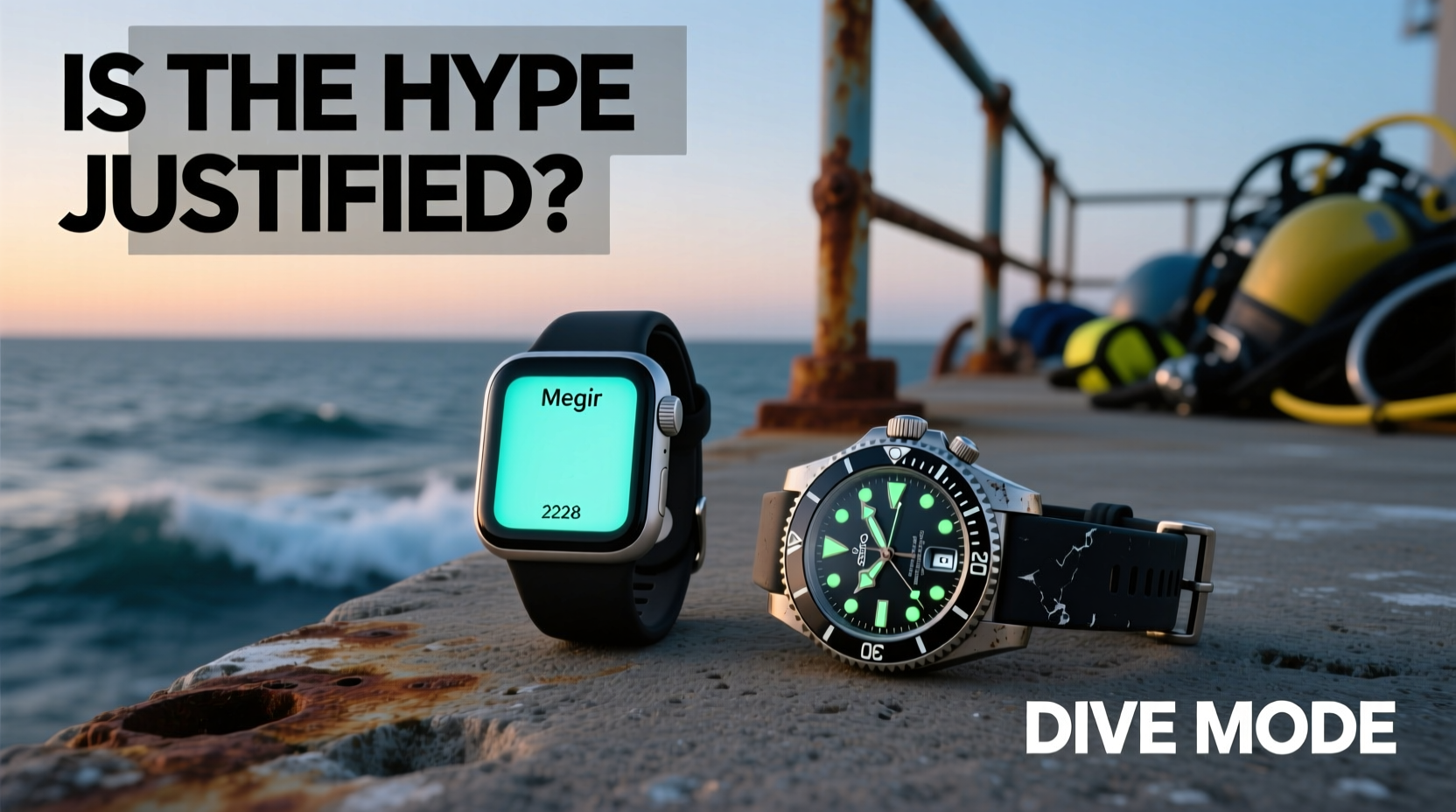
A true dive watch isn’t defined by its looks, but by rigorous standards designed for safety in extreme underwater conditions. The International Organization for Standardization (ISO) established ISO 6425 as the benchmark for dive watches. This standard goes beyond water resistance—it tests luminosity, shock resistance, magnetic resistance, strap integrity, and functionality under pressure.
To meet ISO 6425, a watch must:
- Withstand water pressure at a depth of at least 100 meters (though most certified models exceed 200m)
- Have a unidirectional rotating bezel with clear minute markings
- Maintain legibility in total darkness up to 25 cm
- Resist shocks, magnetism, and saltwater corrosion
- Include a timepiece function independent of any digital display
Crucially, ISO certification requires third-party testing and documentation. No evidence suggests the Megir 2228 has undergone such evaluation. While it may look the part, it lacks the official validation that backs genuine dive instruments.
“Calling a non-certified watch a ‘dive watch’ is misleading at best and life-threatening at worst. Diving demands precision and redundancy—your watch should be part of the safety system, not a liability.” — Captain Daniel Reyes, Commercial Diver & Safety Instructor
Megir 2228: Design, Claims, and Reality
The Megir 2228 mimics the design language of professional dive watches with a 40mm stainless steel case, sapphire-like glass, and a rotating bezel. It claims 200-meter water resistance, a figure that sounds impressive on paper. However, water resistance ratings on non-certified watches can be misleading.
In reality, “200m water resistance” without ISO 6425 means the manufacturer asserts the watch can survive static pressure equivalent to 200 meters in a lab setting. It does not account for movement, temperature changes, aging gaskets, or accidental impacts—all common in real diving scenarios.
Independent testers have submerged Megir 2228 units in controlled conditions, and while some survived shallow depths (under 30 meters), none were tested to actual diving stress levels. More concerning, long-term durability reports show frequent issues with fogging, condensation, and bezel stiffness after minimal exposure to moisture.
Tip: A watch with condensation inside the crystal has already failed its water resistance—replace the seals immediately or stop using it near water.Comparison: Megir 2228 vs Certified Dive Watch
| Feature | Megir 2228 | ISO-Certified Dive Watch (e.g., Citizen Promaster) |
|---|---|---|
| Water Resistance Claim | 200 meters (unverified) | 200+ meters (ISO 6425 certified) |
| Third-Party Certification | No | Yes (ISO 6425) |
| Lume Performance | Moderate; fades quickly | Bright, long-lasting (LumiBrite/Super-LumiNova) |
| Bezel Action | Stiff, inconsistent rotation | Smooth, precise, unidirectional |
| Crystal Type | Mineral or sapphire-coated glass | Sapphire or hardened mineral (tested for impact) |
| Strap Durability | Basic stainless steel; prone to pin loosening | Durable Oyster or bracelet with diver’s extension |
| Real-World Depth Use | Not recommended beyond swimming | Rated for scuba diving (recreational & technical) |
The data shows a stark contrast. While the Megir 2228 offers visual appeal, it lacks the engineering, materials, and verification required for actual diving. Using it below 10–20 meters risks internal flooding, which could lead to complete failure—especially during ascent when pressure changes rapidly.
Real-World Scenario: When Style Meets Risk
Consider Mark, a beginner diver who purchased a Megir 2228 after seeing influencers call it a “budget dive beast.” Excited to use it on his first open-water dive, he descended to 35 meters off the coast of Thailand. At depth, he noticed slight fogging inside the crystal. By the time he surfaced, water had seeped into the movement. The watch stopped entirely within hours.
While Mark wasn’t in danger—he relied on his dive computer for timing—the incident revealed a critical flaw: overconfidence in unverified gear. Had he used the watch to track bottom time during no-decompression limits, inaccurate readings or sudden failure could have led to decompression sickness.
This isn’t an isolated case. Online forums are filled with users reporting similar failures after snorkeling or pool use. The recurring theme? Assumptions based on appearance and marketing, not engineering.
What You Should Know Before Using Any Watch Underwater
Not all water-resistant watches are created equal. Here’s a step-by-step guide to assessing whether your watch is truly dive-capable:
- Check for ISO 6425 certification – Look for explicit mention on the dial, case back, or manufacturer’s website.
- Inspect the crown and case – A screw-down crown is standard on real dive watches. If it doesn’t lock, it’s likely not built for pressure.
- Test lume in darkness – Genuine dive watches use high-grade luminescent material visible for hours. If it fades in minutes, it fails a core safety requirement.
- Verify service history – Even certified watches lose water resistance over time. Gaskets degrade every 1–2 years.
- Never dive with a fashion or replica watch – Regardless of claimed depth rating, uncertified watches lack fail-safes and redundancy.
Frequently Asked Questions
Can I swim with the Megir 2228?
Yes, for surface swimming and splashes. Avoid diving into pools, snorkeling, or prolonged submersion. Treat it like a dress watch with water resistance, not a tool for aquatic activity.
Why do so many people call the Megir 2228 a dive watch?
Marketing and aesthetics. Its design mimics iconic dive watches, and influencers often repeat the label without verifying functionality. Social media amplifies perception over facts.
Are there affordable ISO-certified dive watches?
Yes. Models like the Citizen Promaster BN0150, Seiko SRP777, or Baltic Aquascaphe offer real dive credentials starting around $300–$600. They’re built to perform, not just impress.
Final Verdict: Hype or Hazard?
The Megir 2228 is not inherently flawed—it’s a well-designed fashion watch for its price point. But calling it a “dive watch” crosses into dangerous territory. The hype is driven by visuals, not validation. For casual wear, it’s a compelling option. For actual diving, it’s a gamble with potentially serious consequences.
Wearing a non-certified watch underwater doesn’t just risk the timepiece—it risks your dive safety. In low visibility or emergencies, a reliable watch can be a backup timer. When that fails, you’re relying solely on memory or equipment that may also malfunction.
If you value function over form, invest in a true ISO 6425-certified model. If you love the look of a dive watch but don’t dive, the Megir 2228 remains a stylish, low-cost alternative—just keep it above water.
💬 Your gear reflects your respect for the environment you enter. Whether you're exploring reefs or city streets, choose tools that match your intent. Share this article to help others make informed decisions—and never let style override safety.