Choosing the right hair accessory is more than a finishing touch—it’s an extension of your personal style and a subtle yet powerful way to elevate any outfit. Whether you're attending a formal gala, heading to a casual brunch, or walking into a boardroom, the right hairpiece can harmonize your look, enhance your features, and communicate intention. Yet, many overlook this small but significant detail, pairing statement clips with minimalist ensembles or over-accessorizing delicate dresses. The key lies not in following trends blindly, but in understanding how color, material, scale, and occasion influence harmony between your hair accessory and attire.
The Role of Occasion in Accessory Selection
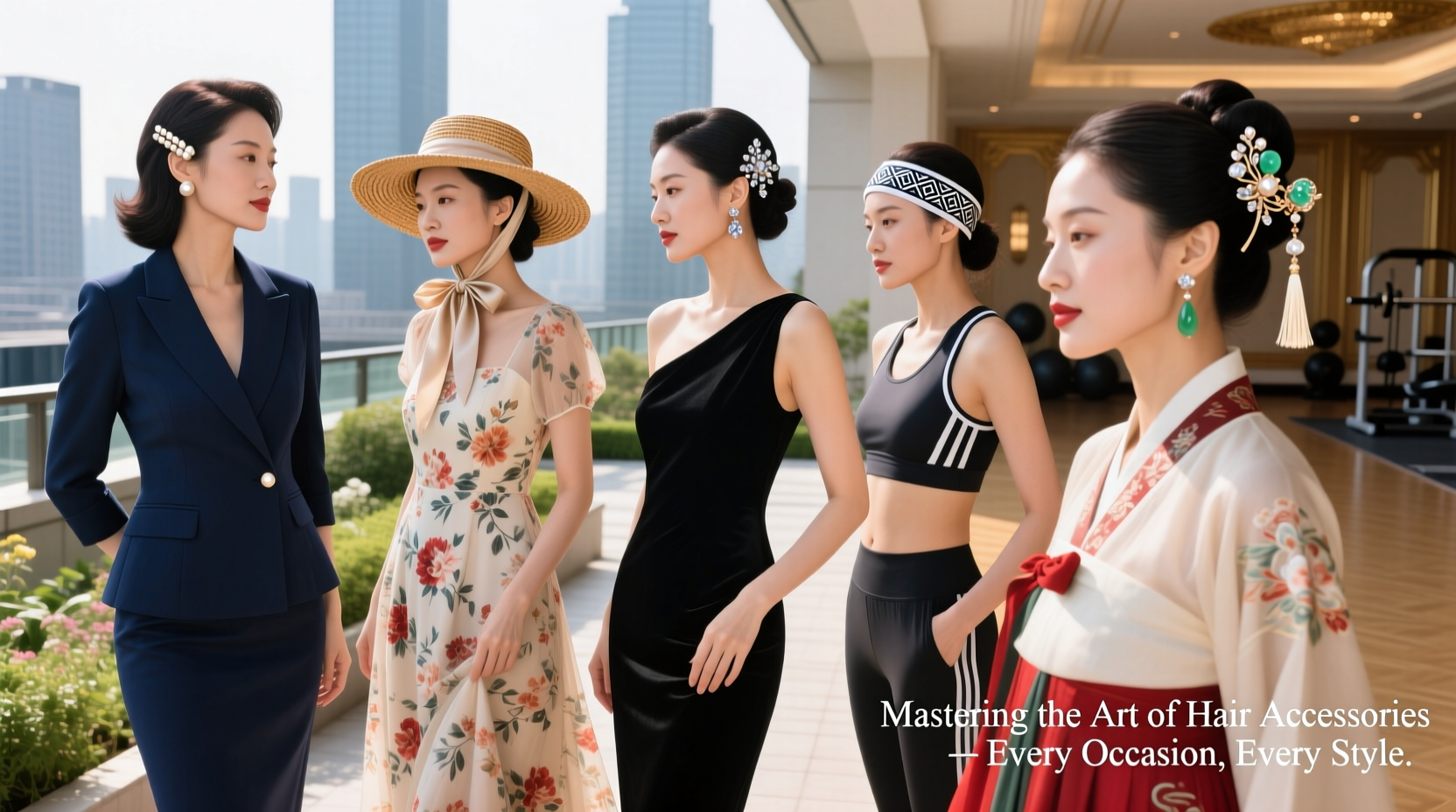
The event sets the tone for both clothing and accessories. A mismatched hairpiece can disrupt even the most thoughtfully curated outfit. Consider the energy and expectations of the setting: a corporate meeting calls for restraint, while a summer wedding invites playful elegance.
- Casual Day Out: Opt for fabric scrunchies, thin headbands, or simple barrettes in earthy tones or pastels.
- Office Wear: Sleek metal clips, tortoiseshell combs, or satin ribbons subtly complement structured blazers and tailored pants.
- Evening Events: Crystal-studded pins, pearl-embellished combs, or gold cuffs add sophistication without overpowering evening gowns.
- Weddings & Formal Gatherings: Delicate floral pins, lace-wrapped tiaras, or vintage brooch-adorned clips echo romantic themes.
- Festivals & Outdoor Events: Bold colors, feathers, or beaded strands express personality while holding up in wind and movement.
Color Coordination: Harmony Over Matching
Matching your hair accessory exactly to your outfit often results in a costume-like appearance. Instead, aim for tonal harmony. Use the color wheel as a guide: analogous shades (next to each other) create soft contrast, while complementary hues (opposite on the wheel) generate visual interest.
| Outfit Color | Recommended Accessory Tones | Avoid |
|---|---|---|
| Navy Blue | Silver, rose gold, cream, coral | Bright yellow, neon green |
| Black | Gold, ruby red, emerald, metallics | Washed-out pastels |
| Blush Pink | Rose gold, ivory, sage green, champagne | Harsh black or deep purple |
| Olive Green | Brass, terracotta, mustard, cream | Electric blue |
| White/Cream | Pearl, gold, soft lavender, pale blue | Dull gray |
For patterned outfits, pull a secondary hue from the print rather than matching the dominant color. A polka-dot dress with navy and white? Try a silver clip instead of another navy band that might blend in too much.
Material Matters: Aligning Texture and Fabric
Just as fabric weight influences silhouette, the texture of your hair accessory should mirror the tactile quality of your clothing. A chunky knit sweater paired with a dainty crystal pin feels disjointed, just as silk gown with a plastic clip appears incongruous.
“Texture continuity is what separates amateur styling from polished elegance. If your dress has a fluid drape, choose a hairpiece with a similar softness.” — Lila Montgomery, Stylist & Fashion Editor at *Chic Monthly*
Consider these pairings:
- Silk, Satin, Chiffon: Pearl pins, velvet bows, or metallic filigree.
- Cotton, Linen, Denim: Wooden beads, braided leather bands, or cotton-tied scrunchies.
- Wool, Tweed, Knits: Felt headbands, horn-style combs, or woven ribbon wraps.
- Sequins, Lamé, Glitter Fabrics: Rhinestone clips, mirrored cuffs, or chrome rings.
Step-by-Step Guide: Choosing the Perfect Hair Accessory
Follow this five-step process to ensure your hair accessory enhances, rather than distracts from, your overall look:
- Assess the occasion. Is it formal, casual, creative, or professional? This determines the level of embellishment appropriate.
- Analyze your outfit’s color palette. Identify primary, secondary, and accent colors. Choose an accessory that complements one of the latter two.
- Match material to fabric. Pair soft accessories with flowing fabrics and structured pieces with tailored garments.
- Consider your hairstyle. A high bun supports vertical pins or combs, while loose waves suit side clips or ribbon ties.
- Evaluate balance. If your outfit has bold prints or ruffles, go minimal with hair. If your attire is simple, a statement piece adds flair.
Mini Case Study: Olivia’s Job Interview Turned Success Story
Olivia had an important interview at a design-forward marketing firm. She chose a tailored beige linen blazer with wide-leg trousers and a silk camisole. Her initial instinct was a large floral headband—too whimsical for the setting. Instead, she opted for a narrow bronze headband with a subtle geometric twist. The warm metallic echoed the brass buttons on her blazer and grounded the softness of the linen. Her hair was half-pinned back, showing professionalism with a hint of creativity. She got the job and later learned the hiring manager noticed her “intentional yet effortless” presentation. The right accessory didn’t just match—it communicated confidence and attention to detail.
Common Mistakes and How to Avoid Them
Even seasoned fashion lovers make missteps when coordinating hair accessories. Awareness prevents repetition.
| Mistake | Why It Happens | How to Fix It |
|---|---|---|
| Over-accessorizing | Trying to stand out with multiple bold pieces | Choose one focal point—either jewelry or hair, not both |
| Ignoring face shape | Selecting styles that don’t flatter facial structure | Use side clips or headbands to balance proportions (e.g., wide bands soften round faces) |
| Seasonal mismatch | Wearing heavy velvet in summer or flimsy plastic in winter | Align materials with weather—lightweight for summer, rich textures for cooler months |
| Size imbalance | Large clips on fine hair or tiny pins on voluminous styles | Scale matters—match accessory size to hair volume and body frame |
Essential Checklist for Every Wardrobe
Keep these core hair accessories on hand to handle any occasion with confidence:
- One neutral-toned claw clip (black, tortoiseshell, or beige) – versatile for work or travel
- A metallic barrette (gold or silver) – ideal for evening wear
- A satin scrunchie set in three basics: black, navy, blush
- A thin chain headband – perfect for updos and modern minimalism
- A statement comb or pin for special events (pearl, crystal, or enamel)
- A fabric-wrapped elastic for days when function meets style
FAQ: Your Top Questions Answered
Can I wear a bold hair accessory with a busy outfit?
Generally, it’s best to avoid pairing a loud accessory with a patterned or heavily detailed outfit. Let either your clothes or your hair take center stage. If your outfit has strong prints, opt for a simple, solid-colored clip or tuck a plain pin near the temple.
How do I store hair accessories to keep them looking new?
Store clips and pins in a divided jewelry tray to prevent scratches. Wrap delicate items like silk ribbons in tissue paper. Keep metal pieces dry to avoid tarnishing, and avoid leaving accessories in direct sunlight to prevent fading.
Are there rules for hair accessory placement?
Yes. Side placements are flattering for most face shapes and feel modern. Center placements work well with symmetrical updos or veils. Back-of-the-head accents shine in low buns or chignons. Avoid placing bulky items too high on the crown if you have a shorter forehead.
Final Thoughts: Style With Intention
Mastering the art of matching hair accessories with outfits isn’t about rigid rules—it’s about cultivating awareness. The most memorable looks aren’t those overloaded with trends, but the ones where every detail feels considered. A well-chosen clip, a perfectly placed band, or a whisper of shimmer in the hair can transform an ordinary ensemble into something unforgettable.
💬 Start today: Open your wardrobe, pick an upcoming event, and select an outfit. Then, challenge yourself to find—or invest in—a hair accessory that doesn’t match, but elevates. Share your styling journey in the comments and inspire others to see hair adornment not as an afterthought, but as essential expression.