Jewelry is more than an accessory—it’s a language of style, personality, and intention. When coordinated thoughtfully, bracelets, necklaces, and earrings can elevate an outfit from ordinary to exceptional. Yet, mismatched pieces or over-accessorizing often dilute the impact. The key lies not in wearing more, but in wearing better. Achieving a harmonious balance requires understanding proportions, materials, color tones, and occasion-appropriate layering. This guide breaks down the principles of cohesive jewelry coordination so you can craft looks that are intentional, elegant, and effortlessly stylish.
Understanding Proportion and Balance
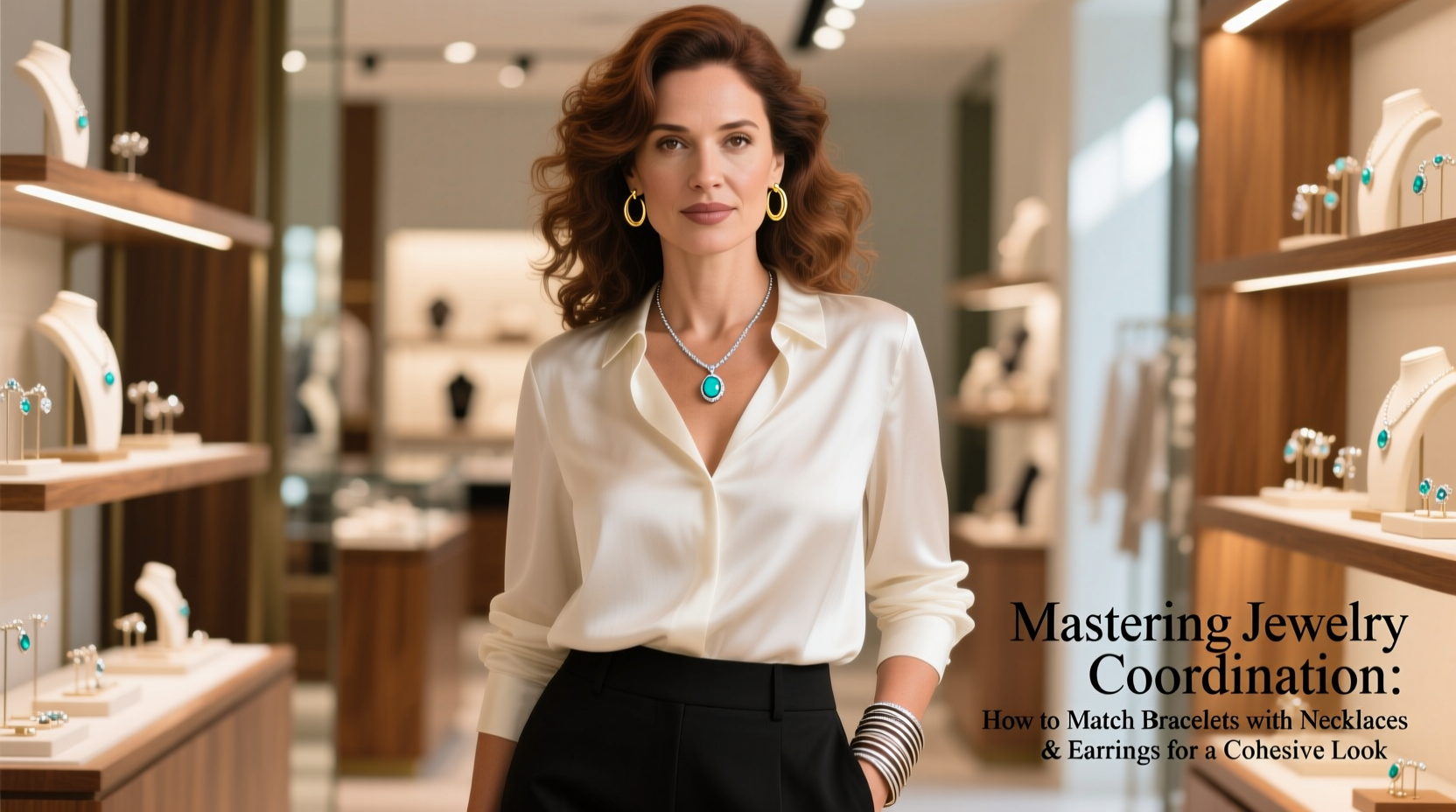
One of the most overlooked aspects of jewelry styling is proportion. A statement choker paired with delicate stud earrings may feel unbalanced, just as stacking multiple bold bangles with a chunky pendant necklace can overwhelm the senses. The goal is visual equilibrium across your neckline, ears, and wrists.
Think of your body as a canvas divided into zones: upper (face/ears), central (neckline), and lower (hands/wrists). Each zone should carry a deliberate weight. For instance, if your necklace commands attention with its size or design, keep earrings subtle—small studs or simple hoops work well. Conversely, dramatic drop earrings allow for a minimal pendant or even no necklace at all.
Tip: Use the \"one focal point\" rule: choose one standout piece per look—necklace, earrings, or bracelet—and let the others support it.Matching Metals Without Clashing
Mixing metals was once considered a fashion faux pas, but modern styling embraces gold, silver, rose gold, and gunmetal when done intentionally. The trick is consistency. If you wear a rose gold bracelet, echo that warmth in your earrings or opt for neutral-toned stones that bridge cool and warm hues.
To avoid a chaotic appearance, limit yourself to two metal types per ensemble. Carry a small test piece—like a ring or watch—with you when shopping to ensure compatibility. Also, consider your skin tone: cooler complexions often suit silver and platinum, while warmer undertones glow with yellow or rose gold.
The Art of Layering Necklaces and Bracelets
Layering adds depth and dimension, but only when executed with care. Begin by selecting chains of varying lengths to prevent tangling and create a cascading effect. A common formula includes a 16-inch choker, an 18-inch lariat, and a 20–24 inch pendant, each differing slightly in thickness.
When adding bracelets, follow a similar logic. Combine textures—such as a beaded band with a slim chain cuff or a leather wrap with metallic bangles—to create visual interest without overcrowding the wrist. Always leave breathing room; too many pieces can restrict movement and draw negative attention.
“Jewelry should whisper elegance, not shout for attention. Layering is about rhythm, not volume.” — Lila Chen, Fashion Stylist & Jewelry Curator
Creating a Cohesive Set: Color, Theme, and Material Harmony
Cohesion doesn’t require identical pieces. Instead, focus on shared elements such as gemstone color, motif, or material. A sapphire pendant necklace pairs beautifully with sapphire-studded earrings and a bracelet featuring the same stone, even if the designs differ.
Alternatively, unify through theme. Bohemian styles often use turquoise, feathers, and hammered metals across all accessories. Minimalist aesthetics favor clean lines, monochrome palettes, and geometric shapes. Sticking to a single design language ensures your jewelry tells a coherent story.
| Style Theme | Necklace Suggestion | Earrings | Bracelets |
|---|---|---|---|
| Minimalist | Thin chain with small bar pendant | Sleek huggie hoops or solitaire studs | Single slim bangle or cable chain |
| Vintage Glamour | Art Deco pendant or pearl strand | Chandelier earrings with filigree detail | Stacked vintage cuffs or charm bracelet |
| Bohemian | Multi-strand beaded or tassel necklace | Dangling earrings with stones or feathers | Leather wrap + stacked bangles |
| Modern Edge | Geometric pendant or asymmetric chain | Architectural studs or angular drops | Wide matte cuff or linked rings |
Step-by-Step Guide to Coordinating Your Jewelry Ensemble
Follow this five-step process to build a balanced, polished jewelry combination for any occasion:
- Start with your outfit: Note the neckline, color, and formality. A plunging dress calls for a longer necklace; a high collar works best with statement earrings.
- Choose your dominant piece: Decide whether your necklace, earrings, or bracelet will take center stage.
- Select supporting pieces: Pick complementary items in matching or harmonized metals and colors. Avoid competing focal points.
- Test the layers: Put everything on and observe in natural light. Check for clumping, imbalance, or excessive noise (jangling bracelets).
- Edit ruthlessly: Remove at least one piece. Often, less enhances the overall impression.
Real-Life Example: Evening Event Styling
Sophia had a black off-the-shoulder gown for a charity gala. She wanted elegance without excess. She began with diamond-drop earrings as her focal point—long enough to catch the light but not overpowering. For the neckline, she chose a delicate 18-inch white gold chain with a small pear-cut diamond pendant, ensuring it sat just above the neckline without distraction.
On her wrists, she wore a single white gold tennis bracelet—subtle yet refined. By anchoring all pieces in white gold and diamonds, she created unity. The result was a seamless, luminous look where each accessory enhanced the other without competing. Guests complimented her “effortless glamour,” unaware it was the product of careful coordination.
Jewelry Coordination Checklist
- ✔️ Confirm the outfit’s neckline and sleeve length
- ✔️ Choose one dominant jewelry piece
- ✔️ Match or harmonize metals across all accessories
- ✔️ Ensure proportional balance between neck, ears, and wrists
- ✔️ Limit layered necklaces to 2–3 pieces of varying lengths
- ✔️ Coordinate gemstone colors or design themes
- ✔️ Test the full set in natural lighting before finalizing
- ✔️ Remove one piece to avoid over-accessorizing
Frequently Asked Questions
Can I mix gold and silver jewelry?
Yes, but do so intentionally. Stick to a maximum of two metal tones and anchor them with a unifying element like a gemstone, texture, or design motif. Modern wardrobes increasingly embrace mixed metals when balanced correctly.
How many bracelets should I wear at once?
Three to four is typically ideal for stacking, depending on thickness. Include variety in width and material—pair a slim chain with a bangle and a beaded band. Leave space so each piece is visible and functional.
Should my necklace and earrings always match exactly?
No. Matching sets can appear outdated. Instead, aim for cohesion through tone, color, or style. A brushed gold pendant can pair beautifully with matte gold studs and a textured cuff, even if they’re from different collections.
Final Thoughts: Elevate Your Style with Intentional Jewelry Pairing
Mastering jewelry coordination isn’t about following rigid rules—it’s about cultivating awareness. When you understand how pieces interact, you gain the confidence to experiment while maintaining elegance. Whether dressing for a daytime meeting or a red-carpet event, your accessories should reflect thoughtfulness, not chance.
The most memorable looks aren’t defined by price or brand, but by harmony. By applying these principles—balancing proportions, unifying materials, and curating with purpose—you transform jewelry from mere decoration into a signature expression of personal style.
💬 Ready to refine your jewelry game? Reassess your collection, try a new combination tonight, and share your favorite pairing tip in the comments below.