
Choosing the right footwear for a business casual environment can be surprisingly nuanced. While both loafers and boat shoes are slip-on styles that offer comfort and convenience, their appropriateness in professional settings varies significantly. Understanding the subtle—but critical—differences between these two staples helps avoid fashion missteps and ensures your look aligns with workplace expectations.
At first glance, they may seem interchangeable: minimal lacing, clean silhouettes, and leather uppers. But their origins, design cues, and cultural associations tell very different stories. One evolved from European formalwear; the other from American coastal leisure. This article breaks down when and where each shoe belongs—and how to wear them confidently in a business casual context.
The Origins and Evolution of Loafers and Boat Shoes
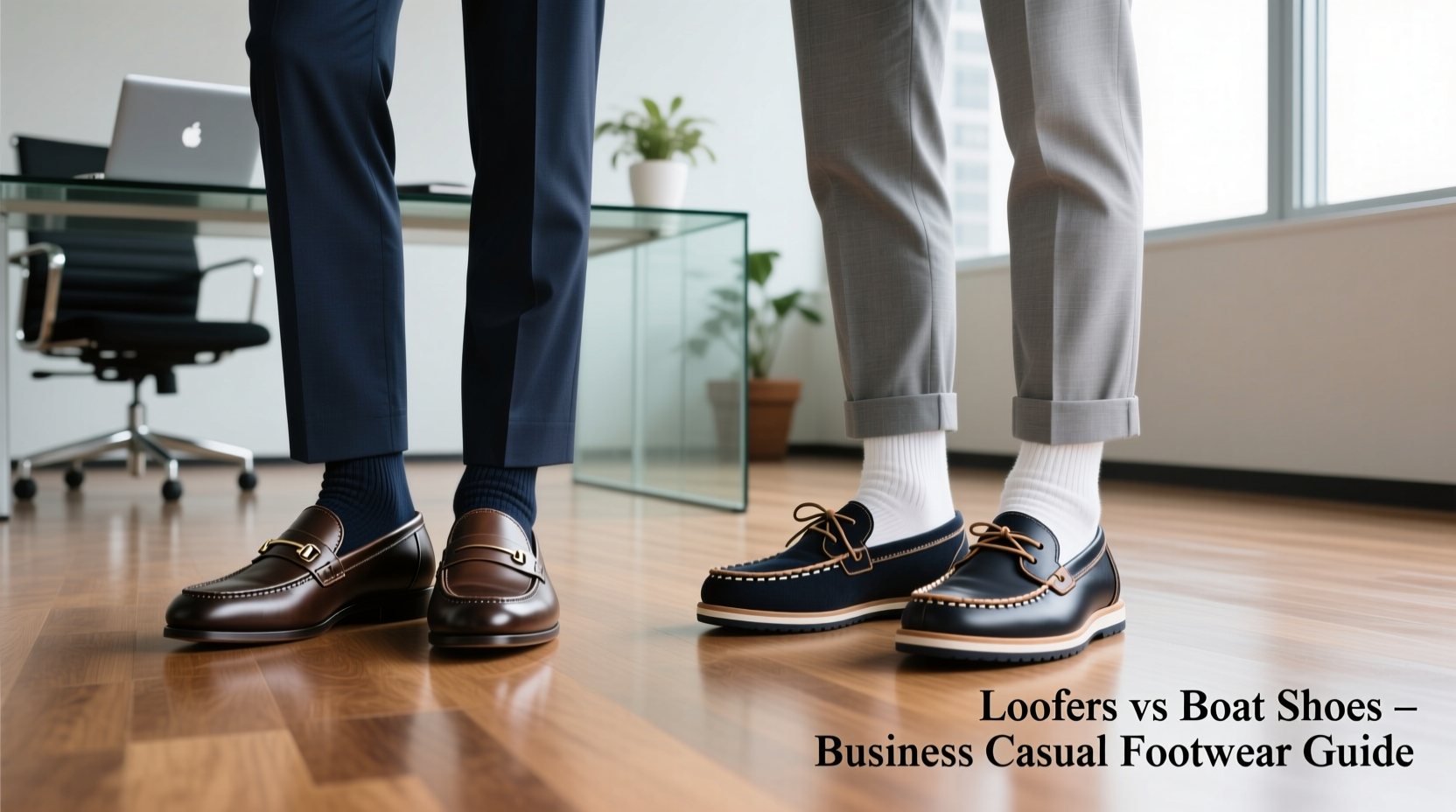
Understanding footwear begins with history. The lineage of each shoe reveals its intended purpose and, by extension, its place in modern dress codes.
Loafers trace their roots to 1930s Norway and were later refined in England and the United States. Originally worn as house shoes or driving moccasins, they quickly gained traction among Ivy League students and professionals due to their polished appearance and ease of wear. The classic penny loafer—so named because a penny was once slipped into the front strap for good luck—became a symbol of understated sophistication.
In contrast, boat shoes were invented in 1935 by Paul A. Sperry after he observed how his dog could run across ice without slipping. Inspired by the grooved pads on the animal’s paws, Sperry designed a non-slip sole specifically for sailors. These shoes were built for function: water-resistant leather, siped rubber soles, and lacing systems meant to keep feet secure on deck. Their aesthetic was rugged, utilitarian, and distinctly casual.
This divergence in origin explains why one has endured as a semi-formal staple while the other remains largely relegated to weekend wear.
“Footwear tells a story before you speak. Loafers suggest preparedness and polish. Boat shoes suggest relaxation—even when you don’t mean to.” — Daniel Hart, Menswear Stylist & Contributor, *GQ*
Design Differences That Matter in Business Settings
While both are slip-ons, not all slip-ons are created equal. Key design elements affect formality, versatility, and compatibility with tailored clothing.
| Feature | Loafers | Boat Shoes |
|---|---|---|
| Sole Type | Leather or composite, often sleek and low-profile | Rubber, siped (grooved) for grip, chunkier profile |
| Upper Construction | Smooth leather, minimal stitching, closed moc toe | Waxed leather, visible lacing, open seams near vamp |
| Lacing/Strap | Penny strap, tassel, or horsebit detail; decorative but refined | Functional lacing system across instep for adjustability |
| Color Range | Black, oxblood, dark brown, burgundy – formal-leaning hues | Tan, navy, white, beige – nautical, summery tones |
| Dress Compatibility | Excellent with chinos, wool trousers, and suit separates | Limited; best with shorts or unstructured cotton pants |
The structural differences aren't merely aesthetic—they signal intent. Loafers are designed to bridge the gap between formal and relaxed. Boat shoes are engineered for wet decks and sandy docks, not boardrooms or client meetings.
Tip: If the shoe has visible side lacing or a thick white sole, it's likely too casual for most business environments.When Are Boat Shoes Acceptable in Business Casual?
There are exceptions—but they’re narrow and highly context-dependent.
In creative industries—such as advertising, tech startups, or design firms—dress codes tend to be more relaxed. In these spaces, well-maintained boat shoes in darker shades like navy or espresso brown *might* pass muster during summer months, especially when paired with lightweight linen trousers and a tucked-in Oxford cloth shirt.
However, even in lenient workplaces, there are caveats:
- Avoid white soles, which scream “vacation” rather than “professional.”
- Never pair boat shoes with socks (except no-show types), as this amplifies their informality.
- Steer clear if you're attending a presentation, meeting with leadership, or interfacing with conservative clients.
One real-world example: Mark, a UX designer at a mid-sized tech company in Austin, occasionally wears dark tan boat shoes with cuffed khakis and a blazer. His team appreciates the laid-back confidence it projects. But when he presents quarterly results to stakeholders from a financial partner firm, he switches to black tassel loafers. “It’s about reading the room,” he says. “My boat shoes say ‘I’m creative and approachable.’ Loafers say ‘I respect your time and standards.’”
This illustrates a broader principle: footwear adjusts your perceived authority. Boat shoes lower it slightly; loafers maintain or elevate it.
How to Style Loafers for Business Casual Success
Loafers are one of the most versatile shoes in a professional man’s wardrobe. When chosen and worn correctly, they project competence without stiffness.
Here’s a step-by-step guide to styling them appropriately:
- Choose the Right Color: Opt for dark brown, oxblood, or black depending on your wardrobe. Oxblood works exceptionally well with navy and gray trousers, offering a rich alternative to basic brown.
- Select a Sleek Profile: Avoid overly bulky or heavily textured designs. A smooth calfskin finish reads as more formal.
- Pair with Tailored Bottoms: Chinos, flannel trousers, or wool blends work best. Hem length should lightly break or be cropped just above the ankle.
- Consider Socks (or Lack Thereof): No-show socks are acceptable in warm weather. For cooler months, match sock color to your pants. Navy with navy, charcoal with gray.
- Add a Blazer or Sport Coat: Elevate the look further with a structured layer. A navy blazer with light gray trousers and brown penny loafers is a timeless business casual combination.
For women, the principles are similar. Women’s loafers—especially those with block heels or minimalist hardware—pair beautifully with cigarette pants, midi skirts, or tailored dresses. The key is maintaining line continuity: clean lines from garment to shoe.
Common Loafer Mistakes to Avoid
- Wearing scuffed or dusty loafers—clean them regularly.
- Mismatching metal accents (e.g., gold horsebit with silver belt buckle).
- Pairing with jeans that are too distressed or baggy.
- Going sockless in cold weather or formal meetings.
Checklist: Is Your Slip-On Appropriate for Business Casual?
Use this quick checklist before stepping into the office:
- ✅ Is the sole leather or thin composite, not thick rubber?
- ✅ Is the upper made of smooth, high-quality leather?
- ✅ Does it lack visible side lacing or nautical detailing?
- ✅ Is the color neutral and professional (brown, black, oxblood)?
- ✅ Is it clean, polished, and free of scuffs?
- ✅ Am I pairing it with tailored, non-casual bottoms?
- ✅ Am I in a conservative industry or meeting with external partners?
If you answered \"yes\" to questions 1–6 and \"no\" to question 7, you’re likely safe. If question 7 is “yes,” stick with loafers and skip boat shoes entirely.
Frequently Asked Questions
Can I wear boat shoes to the office if they’re in a dark color?
Possibly—if your workplace culture is very relaxed and you’re not in a client-facing role. However, even dark boat shoes retain design cues (like siped soles and lacing) that mark them as casual. Loafers in the same color will always appear more professional.
Are driving moccasins the same as loafers?
Not exactly. Driving mocs have rubber nubs on the sole and are designed for actual driving. While stylish, they lean more toward leisure wear. True loafers have flat, smooth soles suitable for walking and standing in office environments.
Can women wear loafers in business casual settings?
Absolutely. Women’s loafers—especially those with a slight heel or almond toe—are a staple in professional wardrobes. Pair them with wide-leg trousers, pencil skirts, or sheath dresses for a polished yet comfortable look.
Final Verdict: Loafers Win for Business Casual
While both loafers and boat shoes offer the convenience of a slip-on design, only loafers consistently meet the standards of business casual attire. Their heritage, construction, and visual language align with professionalism. Boat shoes, despite occasional crossover appeal, remain rooted in leisurewear and rarely command the same level of respect in mixed-dress environments.
That doesn’t mean banishing boat shoes altogether. They excel on weekends, vacations, or casual Fridays—when the goal is comfort and ease, not influence or credibility.
The takeaway is simple: know your audience. In uncertain situations, default to loafers. They are the safer, smarter, and more versatile choice for anyone navigating the blurred lines of modern workplace dressing.
🚀 Ready to upgrade your work wardrobe? Start with a pair of high-quality dark brown penny loafers. Combine them with tailored cotton trousers and a crisp button-down—you’ll project confidence, competence, and contemporary style. Share your go-to business casual look in the comments below.