Choosing the right necklace isn't just about aesthetics—it's a strategic decision that can elevate your entire look. Whether you're dressing for a casual brunch or a formal event, the jewelry you select plays a pivotal role in defining your silhouette, drawing attention to your best features, and expressing your personality. Two of the most popular styles—layered necklaces and pendant necklaces—offer distinct advantages. But which one truly makes your outfit pop? The answer depends on context, intention, and how well you understand the visual impact each style creates.
The Visual Language of Necklaces
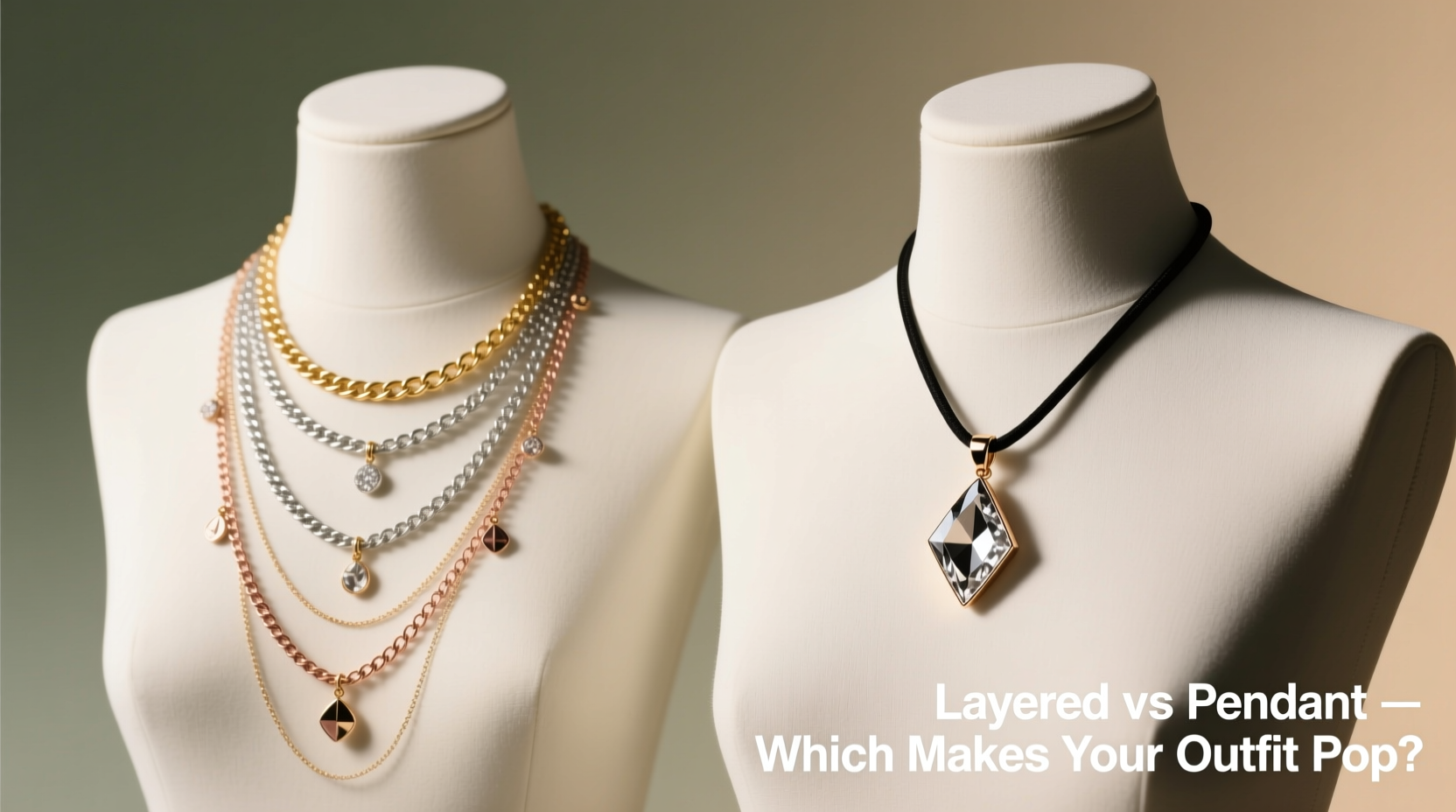
Jewelry functions as both accessory and accent. A necklace frames the face, guides the eye, and adds dimension to an otherwise flat neckline. Pendant necklaces typically feature a single focal point—a charm, gemstone, or symbolic design—suspended from a chain. This simplicity allows it to stand out, especially against minimal clothing. Layered necklaces, on the other hand, consist of multiple chains of varying lengths worn simultaneously. They create depth, movement, and texture, often producing a bolder, more intricate effect.
The choice between the two is not merely aesthetic; it’s psychological. A solitary pendant suggests focus and elegance, while layered chains convey confidence, modernity, and a curated sense of personal style. Understanding these nuances helps determine when to use each type to maximum effect.
Pendant Necklaces: The Power of Singular Focus
A well-chosen pendant acts like punctuation in a sentence—it emphasizes, defines, and completes. When worn alone, it draws attention directly to the décolletage and face, making it ideal for outfits with clean lines or neutral tones. Delicate pendants work beautifully with V-necks, scoop necks, or off-the-shoulder tops, where the chain follows the natural contour of the neckline.
Designers like Monica Rich Kosann emphasize the emotional weight of pendants:
“A pendant necklace tells a story. It might be a family heirloom, a symbol of faith, or a gift marking a milestone. That narrative gives it power beyond mere decoration.” — Monica Rich Kosann, Jewelry Designer
This storytelling quality makes pendants particularly effective in professional or intimate settings, where subtlety and meaning carry more value than volume.
Tip: Pair a dainty pendant with a high-collared blouse by opting for a longer chain (20–24 inches) so the pendant rests below the collarbone and remains visible.Layered Necklaces: Creating Dimension and Drama
Layering transforms jewelry into art. By combining different lengths, metals, and textures—such as a choker with a mid-length cross and a long bar pendant—you build visual interest. This approach works exceptionally well with simple garments: a black turtleneck, white button-down, or little black dress becomes instantly elevated through the addition of layered gold or silver chains.
The key to successful layering lies in balance. Too many similar-length chains can appear cluttered, while poorly coordinated metals may clash. Fashion stylist Adrian Hallorun advises:
“Start with three pieces: a short choker (14–16”), a mid-length lariat (18–20”), and a longer focal piece (22–28”). Choose one dominant pendant and let the others play supporting roles.”
Layered necklaces excel in social or creative environments where individuality is celebrated. They command attention without overpowering, provided they’re thoughtfully assembled.
When to Choose Layered vs. Pendant: A Practical Guide
There is no universal rule—only strategic considerations based on your outfit, body type, and occasion. Below is a breakdown to help you decide which style will make your ensemble pop more under specific conditions.
| Situation | Best Choice | Why |
|---|---|---|
| Minimalist outfit (solid colors, clean cuts) | Layered necklaces | Adds complexity and prevents the look from appearing too plain |
| Patterned or textured top | Single pendant | Avoids visual competition; keeps focus balanced |
| V-neck or plunging neckline | Long pendant or layered set | Follows the line of the neck; elongates the torso |
| Turtleneck or high collar | Short pendant or choker | Stays visible above fabric; doesn’t get lost |
| Cocktail party or date night | Layered necklaces | Creates glamour and sophistication through texture |
| Office meeting or formal interview | Dainty pendant | Projects professionalism and restraint |
Real-Life Style Scenario: Emma’s Weekend Look
Emma, a graphic designer in her early 30s, wanted to refresh her weekend wardrobe. She owned a crisp white linen shirt, dark jeans, and a beige trench coat—classic staples, but she felt they lacked personality. For a café outing, she first tried a small solitaire pendant. While elegant, the look felt safe, almost forgettable.
The next day, she layered three delicate chains: a 15-inch rose gold choker, an 18-inch chain with a tiny moon charm, and a 24-inch cable chain with a minimalist bar pendant. Instantly, her outfit transformed. The layers caught the light, added rhythm to her silhouette, and drew compliments. The same clothes now looked intentional, stylish, and expressive.
This mini case study illustrates a fundamental truth: sometimes, the difference between “nice” and “noticeable” is a single styling decision.
Step-by-Step: How to Build a Balanced Layered Necklace Set
- Start with a base chain: Choose a simple, durable chain (like cable or box) in your preferred metal. This anchors the look.
- Add a mid-length piece with subtle detail: Introduce texture or a small charm at a slightly different length to avoid tangling.
- Incorporate a statement pendant: Select one longer piece (22+ inches) with a modest focal point—geometric shape, initial, or stone.
- Vary thicknesses: Combine a thin chain with a medium or slightly chunkier one for contrast.
- Limit to three to four pieces: More than four risks looking messy unless you're going for a maximalist aesthetic.
- Clasp coordination: Ensure all clasps are similar in style and finish to maintain cohesion.
Jewelry Checklist: Maximizing Impact
- ✔ Match necklace length to neckline shape
- ✔ Consider skin tone when choosing gold, silver, or rose gold
- ✔ Avoid competing with earrings—pair bold necklaces with studs or skip earrings entirely
- ✔ Clean chains regularly with a soft cloth to maintain shine
- ✔ Store layered sets together in a lined jewelry box to prevent knots
- ✔ Rotate styles based on season—lighter chains in summer, bolder layers in winter
Frequently Asked Questions
Can I wear a pendant necklace with layered chains?
Absolutely. In fact, many layered looks include one standout pendant as the centerpiece. Just ensure it’s on the longest chain so it hangs lower and doesn’t get buried in the stack.
Do layered necklaces suit all body types?
Yes, but length matters. Shorter layers (14–18”) flatter petite frames by keeping focus near the face. Taller individuals can carry longer layers (up to 30”) that extend toward the waist, enhancing proportion.
Is mixing metals acceptable in layered necklaces?
Modern styling embraces mixed metals, especially when done intentionally. Stick to two tones max (e.g., gold and silver), and ensure each piece complements the others in style and weight.
Final Thoughts: Which Makes Your Outfit Pop More?
The question isn't which style is better—it's which serves your moment better. A singular pendant offers timeless elegance and quiet confidence. It’s the whisper in a crowded room that still gets heard. Layered necklaces, meanwhile, are the bold declaration—the curated composition that turns heads and sparks conversation.
If your goal is refinement and subtlety, go for a pendant. If you want dynamic energy and multidimensional flair, choose layering. And remember: the most powerful accessory isn’t the metal or the stone—it’s your intention behind wearing it.
💬 Ready to redefine your jewelry game? Try one new combination this week—swap your usual pendant for a layered set, or simplify a busy stack into a single meaningful piece. Share your transformation in the comments!








