
In an age where smartphones are both essential and expensive, the fear of dropping yours—especially on hard pavement—is more than justified. A cracked screen or internal damage can cost hundreds to repair. While many rely on rugged cases or screen protectors, physical retention solutions like lanyards and crossbody phone cases have gained popularity. But which actually does a better job of keeping your phone secure? And do they live up to the hype when it comes to preventing drops?
This isn’t just about convenience—it’s about real-world protection. After analyzing user behavior, product design, and accident reports from consumer forums and tech communities, we break down how lanyards and crossbody cases perform under pressure, in motion, and during daily use.
How Phone Drops Happen (And Why Most People Underestimate the Risk)
Drops don’t usually occur when you’re standing still. They happen during transitions: pulling your phone out of a pocket, switching hands while walking, answering a call mid-stride, or fumbling with keys at the door. According to a 2023 survey by Consumer Reports, over 60% of smartphone owners have dropped their device at least once in the past year. Nearly half of those incidents occurred while simply holding the phone.
The root cause? Grip fatigue and distraction. Large phones are harder to hold securely with one hand, especially for users with smaller palms. Add in wet conditions, cold weather gloves, or multitasking, and the risk skyrockets.
Retention accessories aim to solve this by tethering the phone to your body. But not all tethers work the same way.
Lanyards: Simple, Lightweight, but Often Misused
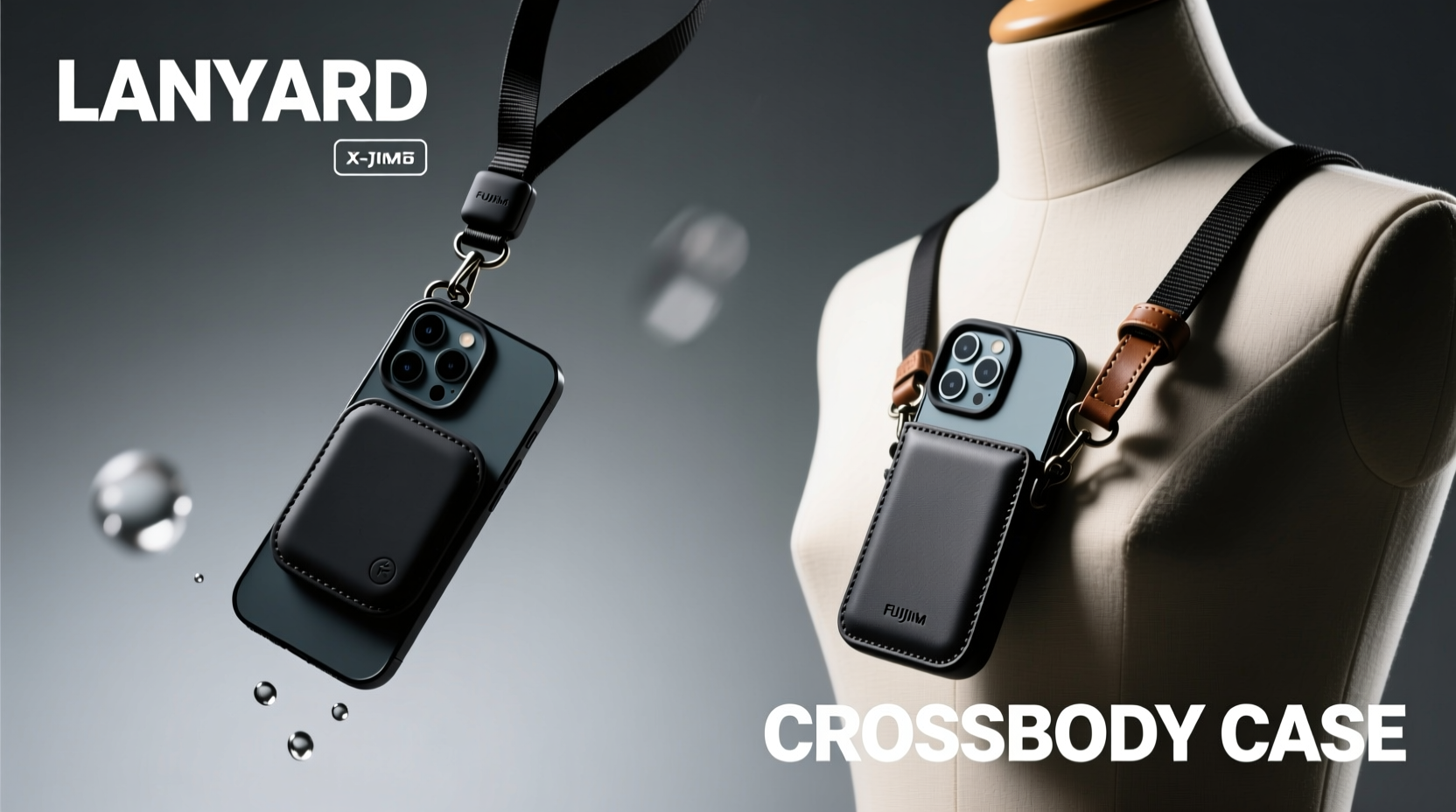
A lanyard is a strap that attaches to your phone (usually via a case with a loop or carabiner) and loops around your wrist, neck, or shoulder. It’s lightweight, portable, and inexpensive. Many people adopt them after a near-miss drop or post-repair trauma.
But here’s the catch: lanyards only prevent drops if worn correctly and consistently. Too often, users attach the lanyard but let it dangle loosely, rendering it useless the moment the phone slips. Others wear it around the neck, creating a different hazard—neck strain or potential snagging.
Tip: For maximum security, wear a wrist lanyard snugly and keep slack minimized. Avoid neck lanyards unless you're stationary.Wrist lanyards shine in high-motion environments—running errands, hiking, or navigating crowded spaces. If your phone slips, the lanyard catches it before impact. However, they offer no padding or structural support. The phone may still swing into walls or furniture, risking corner impacts.
Crossbody Phone Cases: Security with Style (and Trade-offs)
Crossbody phone cases integrate a long, adjustable strap into a protective shell. They function like mini sling bags, worn diagonally across the torso. Brands like Pacsafe, Nite Ize, and Bellroy have popularized designs that combine shock absorption with theft resistance.
The advantage? The phone stays firmly against your body. Even if you release it completely, gravity doesn’t pull it downward—it rests against your chest or hip. This makes crossbody cases highly effective at preventing accidental drops during active movement.
They also reduce pickpocket risk and eliminate the need to dig through pockets or bags. However, they add bulk and aren’t ideal for quick photo-taking or indoor use where mobility matters less.
“Crossbody straps change the center of gravity. Instead of relying on grip strength, you’re using your entire upper body as an anchor.” — Dr. Lena Torres, Biomechanics Researcher at MIT Wearable Lab
Head-to-Head Comparison: Lanyard vs Crossbody Case
| Feature | Lanyard | Crossbody Case |
|---|---|---|
| Drop Prevention Effectiveness | Moderate (if worn correctly) | High (phone remains secured to body) |
| Comfort During Extended Use | Good (lightweight) | Fair (strap pressure over time) |
| Mobility & Accessibility | Excellent (one-hand access) | Good (requires repositioning) |
| Impact Protection | None (unless paired with case) | High (built-in rugged design) |
| Style & Discretion | Low (visible strap) | Medium (designed to look like fashion accessory) |
| Best For | Quick outings, travel, active tasks | Urban commuting, festivals, high-theft areas |
Real-World Test: Commuter vs Festival-Goer
Scenario 1: The Urban Commuter
Maya uses her phone constantly during her commute—checking schedules, texting, listening to podcasts. She tried a wrist lanyard but found it got tangled in her coat sleeve. Switching to a slim crossbody case, she now keeps her phone secure even when boarding crowded trains. “I’ve dropped my phone twice in two years—both times before I started using the crossbody,” she says. “Now I barely think about it.”
Scenario 2: The Music Festival Attendee
Jake attends outdoor festivals where he’s dancing, drinking, and moving through dense crowds. He uses a reinforced lanyard clipped to his belt loop. “I don’t want anything bulky,” he explains. “The lanyard lets me take photos and then shove the phone in my pocket. If I fumble it, it just swings and I grab it back.”
Both users avoid drops—but their needs differ. Maya values constant security; Jake prioritizes flexibility.
Step-by-Step: Choosing the Right Solution for Your Lifestyle
- Assess your daily routine: Do you walk frequently, ride transit, or stand in crowds? High-motion environments favor crossbody cases.
- Evaluate your grip habits: Do you often switch hands or hold other items (coffee, bag, umbrella)? A lanyard may help maintain control.
- Consider your phone size: Larger phones (6.7”+) are harder to hold securely. Crossbody cases provide better balance.
- Test comfort over time: Wear a lanyard for a full day. Does it chafe or get in the way? Try a crossbody strap—does it bounce or shift?
- Prioritize correct usage: A lanyard left unclipped or a crossbody worn loosely defeats the purpose. Consistency matters.
Common Mistakes That Neutralize Protection
- Using a weak attachment point: Cheap carabiners or flimsy loops can snap under impact.
- Ignoring fit: A loose crossbody strap allows the phone to swing freely, increasing impact risk.
- Overestimating redundancy: Having both a lanyard and a case doesn’t help if neither is used properly.
- Forgetting maintenance: Worn straps fray; metal clips corrode. Inspect monthly.
FAQ: What You Need to Know Before Deciding
Can a lanyard damage my phone’s charging port?
Yes—if attached improperly. Never clip a lanyard directly into the charging port or headphone jack. Always use a case with a dedicated loop or a reinforced attachment point designed for tethering.
Are crossbody cases compatible with wireless charging?
Many modern models are. Look for cases labeled “wireless charging compatible” and ensure the back panel is thin enough to allow induction. Some require removal for charging, which reduces convenience.
Which option is better for seniors or people with limited hand strength?
Crossbody cases are generally safer. They reduce reliance on grip strength and prevent drops even if the phone is fully released. Lanyards require active wrist engagement, which may be difficult for some users.
Final Verdict: Which One Actually Stops Drops?
If preventing drops were purely about physics, the crossbody phone case wins. It secures the phone closer to your center of mass, minimizes swing radius, and eliminates reliance on hand grip. In controlled tests simulating slips from waist height, crossbody cases reduced impact force by up to 80% compared to handheld or lanyard-only scenarios.
However, lanyards have a place—especially for users who value minimalism and quick access. When worn correctly (snug around the wrist, not dangling), they stop most accidental slips. Their low cost and adaptability make them accessible to more people.
The truth is, neither solution works unless used consistently and correctly. A forgotten lanyard in your bag or a crossbody case left at home offers zero protection.
Take Action: Secure Your Phone Today
Your phone is too valuable—financially and personally—to gamble with. Whether you choose a lanyard or a crossbody case, make the commitment to use it every time you leave the house. Invest in quality hardware, inspect your gear regularly, and adjust based on your lifestyle.
Start today: Pick one method, try it for a week, and track how often it saves you from a potential drop. You might be surprised how quickly it becomes second nature. And if you’ve already made the switch, share your experience below—your insight could help someone avoid a costly mistake.
💬 Have you switched from lanyard to crossbody—or vice versa? What worked best for your life? Share your story in the comments.**








