When building a timeless, functional wardrobe, the choice of blouses matters more than many realize. Two popular options—lace floral blouses and silk blouses—each bring elegance and sophistication, but differ significantly in versatility. While both can elevate an outfit, their adaptability across occasions, seasons, and styling depends on fabric behavior, maintenance needs, and aesthetic flexibility. Understanding these differences helps you invest wisely in pieces that work harder and last longer.
Understanding Fabric and Aesthetic Identity
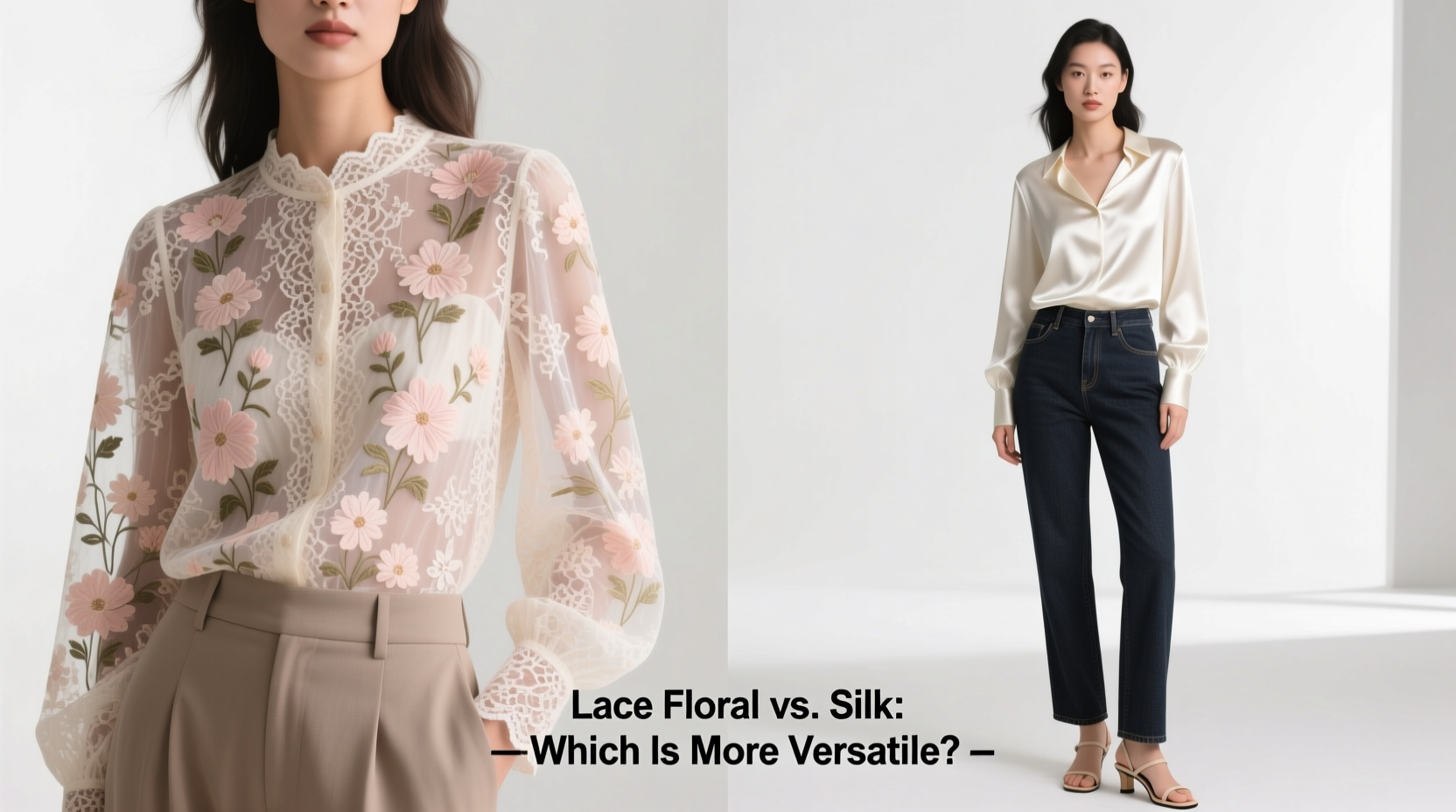
Lace floral blouses are defined by their intricate patterns and romantic appeal. The lace fabric, often cotton, polyester, or a blend, features openwork designs with floral motifs that evoke femininity and vintage charm. These blouses are typically chosen for their visual impact—soft, delicate, and expressive. They shine in spring and summer wardrobes and pair beautifully with high-waisted skirts or tailored shorts for garden parties or brunches.
Silk blouses, on the other hand, are celebrated for their smooth drape, subtle sheen, and luxurious texture. Made from natural silk fibers, they offer breathability, comfort against the skin, and a refined finish. Silk’s neutral elegance allows it to transition seamlessly from day to night. Whether in solid colors or minimalist prints, a silk blouse avoids drawing attention to itself while enhancing the wearer’s overall polish.
“Silk’s quiet luxury makes it a chameleon in any wardrobe. It doesn’t announce itself—it elevates everything around it.” — Clara Nguyen, Fashion Stylist & Wardrobe Consultant
Comparing Versatility: Occasion, Season, and Styling
Versatility isn’t just about how many times you can wear an item—it’s about how many roles it can play. A truly versatile piece adapts to different settings without requiring excessive accessories or alterations.
| Factor | Lace Floral Blouse | Silk Blouse |
|---|---|---|
| Dressiness Level | Highly decorative; leans formal or occasion-specific | Adaptable; easily dressed up or down |
| Seasonal Use | Best in spring/summer; limited winter pairing | Year-round; layerable under sweaters or blazers |
| Workplace Suitability | May be too bold for conservative offices | Widely acceptable in professional environments |
| Styling Flexibility | Requires careful coordination to avoid overstatement | Pairs effortlessly with jeans, trousers, skirts, suits |
| Color & Pattern Range | Often pastels or whites; pattern dominates | Available in solids, neutrals, subtle prints |
The data suggests silk blouses outperform lace floral ones in adaptability. Their understated elegance allows them to function as both a focal point and a supporting layer, depending on context. A black silk blouse under a navy blazer reads professional; the same blouse tied at the waist with high-waisted denim reads casual-chic.
Tip: To maximize versatility, opt for a silk blouse in a neutral tone like ivory, charcoal, or deep burgundy—they coordinate with more items in your closet.Care and Longevity: Real-World Maintenance
A garment’s practicality also hinges on how easy it is to care for. Frequent dry cleaning or delicate handling reduces usability, especially for daily wear.
Lace floral blouses often require hand washing or gentle machine cycles. The open weave is prone to snagging, and floral embroidery may loosen over time. Ironing must be done carefully—preferably inside out—to avoid crushing the pattern. Over time, lace can yellow or lose shape, particularly if stored improperly.
Silk demands attention but rewards with longevity when treated well. Most silk blouses can be hand washed with mild detergent or professionally cleaned. Avoid wringing; instead, roll in a towel to remove moisture. Store flat or on padded hangers to maintain shoulder structure. With proper care, a silk blouse can remain wearable for years, maintaining its luster and drape.
“Investing in silk is investing in performance. One well-cared-for piece replaces three fast-fashion alternatives.” — Marcus Reed, Sustainable Fashion Advocate
Mini Case Study: Olivia’s Workweek Wardrobe
Olivia, a marketing executive in Chicago, owns both a white lace floral blouse and a camel silk blouse. She wears the lace blouse twice a month—once for client lunches and once for weekend events. It requires special laundering and isn’t suitable under her office sweater due to bulkiness.
In contrast, her silk blouse appears in her rotation three times a week. She pairs it with cropped trousers for presentations, tucks it into a pencil skirt for meetings, and layers it under a cardigan for casual Fridays. “The silk blouse,” she says, “is my uniform anchor. I don’t think about it—I just know it works.”
This real-world example illustrates how functionality often trumps ornamentation in daily fashion decisions.
Step-by-Step Guide to Maximizing Blouse Versatility
Whether you own one or both types, use this guide to get the most value from your blouses:
- Evaluate Your Lifestyle Needs: Do you attend more formal events or need office-ready pieces? Prioritize silk if your days are structured; consider lace for social-heavy calendars.
- Choose Neutral Foundations: Opt for lace in off-white or blush if you want slightly broader pairing options. For silk, stick to earth tones or classic black/white.
- Test Layering Potential: Try each blouse under blazers, vests, or knitwear. Silk typically layers smoother due to thinner fabric weight.
- Assess Mix-and-Match Capacity: Pair each blouse with five existing bottoms. Count how many combinations feel cohesive. Silk usually wins here.
- Plan Care Routines: Schedule monthly care for silk; reserve lace cleaning for post-event maintenance. Factor time and cost into usage frequency.
Checklist: Is Your Blouse Truly Versatile?
- Can it be worn to work without standing out negatively?
- Does it pair well with both casual and formal bottoms?
- Can it be layered comfortably in colder months?
- Is it available in a color that matches multiple wardrobe items?
- Does it require minimal special care between wears?
- Have you worn it in at least three different contexts?
Frequently Asked Questions
Can a lace floral blouse be worn to the office?
Yes, but with caveats. In creative or relaxed workplaces, a lace blouse styled under a structured blazer can look polished. However, in conservative environments, the ornate design may be seen as too informal or distracting. Choose high-neckline, long-sleeve versions and pair with dark, tailored pants to increase professionalism.
Are silk blouses worth the investment?
Absolutely. High-quality silk resists pilling, maintains temperature regulation, and develops a softer hand feel over time. While the upfront cost is higher, its durability and styling range make it cost-effective per wear—especially compared to synthetic alternatives that degrade faster.
How do I style a lace blouse for everyday wear?
Balance the delicacy with simpler pieces. Tuck a lace blouse into dark wash jeans and add a leather belt to define the waist. Layer a thin turtleneck underneath in cooler weather. Avoid additional ruffles or lace-heavy accessories to prevent visual clutter.
Final Verdict: Which Is More Versatile?
The evidence points clearly to the silk blouse as the more versatile option. Its ability to shift roles—from boardroom staple to dinner-out elegance—with minimal effort makes it a cornerstone of a functional wardrobe. While the lace floral blouse offers undeniable charm and seasonal flair, its niche aesthetic limits repeated use across diverse settings.
That said, versatility doesn’t negate beauty. A lace floral blouse remains a valuable addition for those who appreciate statement dressing and curated moments. But if you’re choosing based on utility, wearability, and long-term value, silk is the superior investment.
💬 Ready to refine your wardrobe? Audit your blouses this week: count how many times each has been worn in the past month and ask whether it earned its space. Share your findings or favorite styling tricks in the comments below.








