Dry, brittle ends are a common frustration—especially when you're trying to grow out your hair. Split ends, frizz, and lack of shine can make even the healthiest-looking lengths appear dull and damaged. While trimming is often recommended as the only true fix, it's not always practical or desirable, particularly during growth phases. The good news? You don’t have to reach for the scissors right away. With the right care, hydration, and protection strategies, it’s possible to significantly improve the condition of dry ends and extend the life of your hair between cuts.
The key lies in understanding what causes dryness and how to counteract it through targeted interventions. From intensive moisture treatments to protective habits and ingredient-focused products, this guide walks you through science-backed and stylist-approved methods to restore softness, strength, and manageability to your hair tips—without losing an inch.
Understanding Why Ends Dry Out
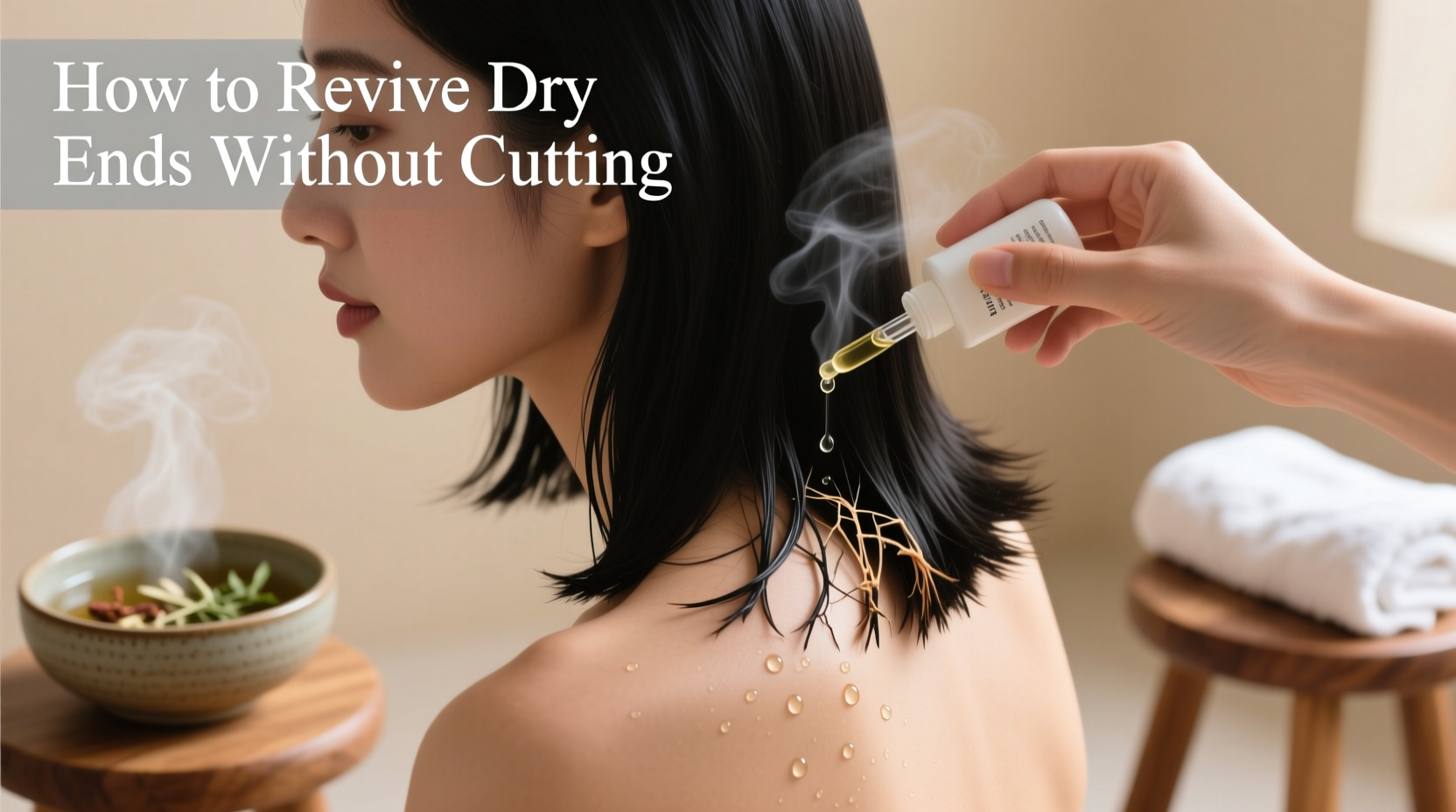
Hair ends are the oldest part of your strands. They’ve endured months—or even years—of exposure to heat styling, UV rays, chemical processing, mechanical friction (like brushing and pillow contact), and environmental stressors. Unlike roots, which are nourished by scalp oils, ends receive minimal natural lubrication. Over time, the cuticle layer lifts, exposing the cortex and leading to moisture loss, breakage, and split ends.
While some damage is irreversible at a structural level, surface-level dryness and brittleness can be mitigated. Reviving dry ends isn’t about reversing splits—it’s about restoring suppleness, reducing further damage, and improving appearance and feel until a trim becomes manageable.
“Hair ends are like weathered rope—they fray over time. You can't glue the fibers back together permanently, but you can condition, seal, and protect them to prevent worsening.” — Dr. Naomi Fields, Trichologist & Hair Research Specialist
Immediate At-Home Treatments to Restore Moisture
The fastest way to see improvement in dry ends is through direct, intensive hydration. These treatments work by penetrating the hair shaft or forming a protective barrier to lock in moisture and smooth the cuticle.
1. Deep Conditioning with Heat
Use a rich, protein-balanced deep conditioner containing ingredients like shea butter, ceramides, or panthenol. Apply from mid-lengths to ends, then cover with a shower cap. For enhanced penetration, apply low heat using a hooded dryer or warm towel for 20–30 minutes. Heat opens the cuticle slightly, allowing conditioning agents to absorb more effectively.
2. Hot Oil Treatment
Warm natural oils such as argan, coconut, or jojoba oil deeply penetrate the hair shaft. Coconut oil, in particular, has been shown in studies to reduce protein loss in both damaged and undamaged hair. Warm 2–3 tablespoons of oil, apply generously to ends, wrap in a silk scarf or shower cap, and leave on for 30 minutes to overnight before washing out.
Tip: After washing, apply a few drops of argan or marula oil to damp ends to seal in moisture and add instant shine.3. Leave-In Conditioner + Sealer Layering
Layering products maximizes hydration. Start with a water-based leave-in conditioner to rehydrate, then follow with a lightweight oil or butter-based sealer. This “LOC method” (Liquid-Oil-Cream) traps moisture inside the strand and protects against humidity and friction.
Protective Daily Habits to Prevent Further Damage
Revival isn’t just about treatment—it’s also about prevention. Without changing damaging habits, any progress will be short-lived. Adopt these daily practices to shield your ends from ongoing stress.
- Sleep on silk or satin: Cotton pillowcases create friction that roughens the cuticle. Switching to silk reduces snagging and moisture loss overnight.
- Protect ends while styling: Keep ends tucked into buns, braids, or twists during the day, especially in windy or dry environments.
- Avoid high-heat tools: If using flat irons or curling wands, set them no higher than 350°F and always apply a heat protectant.
- Limit manipulation: Constant touching, twisting, or brushing leads to mechanical damage. Style gently and only detangle when necessary with a wide-tooth comb.
- Shield from sun and chlorine: Wear a hat or protective style when swimming or spending extended time outdoors. Rinse hair after pool exposure to remove drying chemicals.
Case Study: Reversing Damage During Growth Phase
Maria, a 29-year-old teacher, was growing her hair from shoulder-length to waist-length. After six months, her ends became severely dry and split due to frequent blow-drying and ponytail use. Instead of cutting, she implemented a three-pronged approach: weekly hot oil treatments, switching to a silk pillowcase, and wearing a loose braid at night. Within eight weeks, her ends felt softer, looked shinier, and showed less frizz—even though splits remained. She delayed her trim by three months and maintained healthy-looking ends until her next appointment.
Choosing the Right Products: What to Look For (and Avoid)
Not all hair products are created equal. Some promise repair but actually worsen dryness. Use this guide to select formulations that support end revival.
| Ingredient Type | Recommended For Dry Ends | Avoid If Present |
|---|---|---|
| Humectants | Glycerin, honey, aloe vera – attract moisture in humid conditions | In dry climates: can draw moisture from hair if air is too dry |
| Oils | Coconut, argan, jojoba – penetrate and seal | Mineral oil, petrolatum – can build up and block moisture |
| Proteins | Keratin, hydrolyzed silk – strengthen weak areas | Overuse can cause stiffness; balance with moisture |
| Emollients | Shea butter, cetyl alcohol – smooth cuticle | Heavy butters without dilution may weigh hair down |
| Sulfates & Alcohol | Best avoided entirely near ends | Sodium lauryl sulfate, ethanol – extremely drying |
Look for products labeled “hydrating,” “moisture-rich,” or “for damaged hair.” Steer clear of shampoos with sulfates and avoid alcohol-heavy serums unless used sparingly. Always check ingredient lists—products marketed as “repairing” sometimes rely on silicones that coat rather than heal.
Tip: Apply silicone-free leave-ins and oils only to ends to avoid buildup at the roots, which can make hair look greasy.Step-by-Step Weekly Revival Routine
Consistency is critical. Follow this structured seven-day plan to maximize results without overwhelming your routine.
- Day 1 – Clarify (Optional): If product buildup is present, use a gentle clarifying shampoo once every 3–4 weeks. Otherwise, wash with a sulfate-free formula.
- Day 2 – Deep Condition: Apply a deep conditioner from mid-lengths to ends. Cover with a shower cap and sit under a hooded dryer for 20–30 minutes. Rinse thoroughly with cool water to seal the cuticle.
- Day 3 – Moisture Lock-In: On damp hair, apply a leave-in conditioner followed by 2–3 drops of argan oil. Gently scrunch or smooth into ends. Style as desired.
- Day 4–5 – Protect & Preserve: Wear protective styles like loose braids or buns. Minimize brushing. Reapply a tiny amount of oil if ends feel dry.
- Day 6 – Hot Oil Treatment: Warm coconut or jojoba oil and saturate the ends. Wrap hair and leave for at least one hour (or overnight). Wash out with a gentle shampoo.
- Day 7 – Assess & Adjust: Evaluate the texture and appearance of your ends. Are they softer? Less frizzy? Adjust product amounts or frequency based on results.
Repeat this cycle weekly for best outcomes. After four weeks, most users report noticeable improvements in softness, elasticity, and shine—even if trims were postponed.
Frequently Asked Questions
Can dry ends be truly repaired without cutting?
No treatment can fully repair a split end—the physical separation of the hair shaft requires removal. However, severe dryness, brittleness, and surface damage can be improved with hydration, sealing, and protection. This makes ends appear and feel healthier, delaying the need for a trim.
How long can I safely delay a trim using these methods?
Most experts recommend waiting no longer than 8–12 weeks beyond your usual trim schedule. While treatments help, prolonged delay increases risk of breakage traveling up the hair shaft, leading to more significant length loss later.
Are protein treatments good for dry ends?
Yes, but in moderation. Protein strengthens weakened areas, but overuse without balancing moisture can make hair stiff and prone to snapping. Use protein treatments every 3–4 weeks, alternating with moisturizing masks.
Checklist: Revive Dry Ends Without Cutting
Follow this actionable checklist to get started today:
- ✅ Assess current condition of your ends (frizz, splits, tangling)
- ✅ Purchase a quality deep conditioner and natural oil (coconut or argan)
- ✅ Replace cotton pillowcase with silk or satin alternative
- ✅ Eliminate high-sulfate shampoos and drying alcohols from routine
- ✅ Schedule weekly deep conditioning or hot oil treatment
- ✅ Apply leave-in conditioner and oil to damp ends after every wash
- ✅ Limit heat styling and protect ends during daily wear
- ✅ Re-evaluate progress every 4 weeks
“You can’t reverse a split, but you can stop it from splitting further. That’s the goal: preservation, not illusion.” — Lila Monroe, Celebrity Stylist & Texture Specialist
Conclusion: Nourish, Protect, and Extend
Reviving dry ends without cutting is entirely possible—with patience, consistency, and the right approach. While scissors remain the only permanent solution for split ends, strategic hydration, protective styling, and intelligent product use can dramatically improve the health and appearance of your hair tips. You’ll gain time to grow longer locks, reduce breakage, and maintain confidence in your hair’s condition.
The journey to healthier ends starts with small, daily choices: swapping fabrics, choosing better ingredients, and committing to weekly care. Don’t wait for damage to worsen—start today. Your future self, standing in front of the mirror with stronger, shinier hair, will thank you.
💬 Have a tip that saved your ends? Share your experience below and help others grow their hair with confidence!