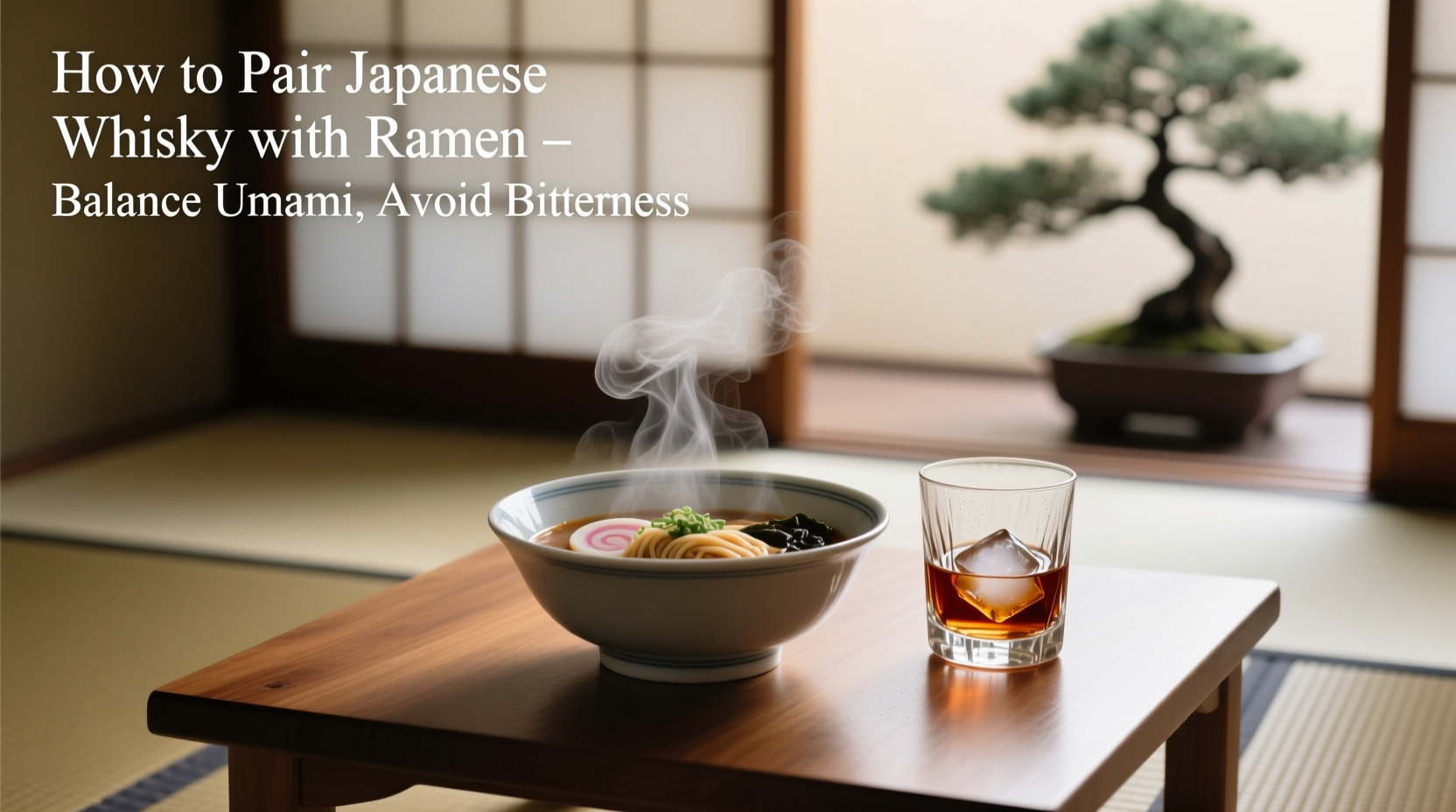
Japanese whisky and ramen share a quiet, profound reverence for balance—each built on layered fermentation, patient aging, and deep respect for raw materials. Yet pairing them is rarely intuitive. A peaty Islay-style single malt can obliterate the delicate soy-kelp broth of a shio ramen; an overly oaky 20-year Yamazaki may clash with the fatty richness of tonkotsu, amplifying tannic bitterness instead of complementing it. The goal isn’t contrast for drama—it’s resonance. It’s about aligning the whisky’s texture, phenolic weight, and residual sweetness with the ramen’s broth depth, fat profile, tare intensity, and umami vectors (niboshi, kombu, dried shiitake, fermented soybean paste). This requires moving beyond “whisky with food” generalities into the granular interplay of Maillard compounds, glutamate thresholds, and ethanol’s solvent effect on bitter receptors.
Why Umami Is Fragile—and Why Whisky Can Break It
Umami—the savory “fifth taste”—isn’t a standalone flavour. It’s a physiological amplifier: glutamate and inosinate (abundant in pork bones, dried fish, and seaweed) bind synergistically to receptors, heightening perception of salt, sweetness, and mouthfeel. But ethanol, especially above 45% ABV, directly stimulates TRPV1 receptors—the same ones activated by capsaicin and heat—triggering a low-level burn that masks umami’s roundness. More critically, high-tannin whiskies (often from heavy-toast casks or long maturation in ex-sherry wood) interact with salivary proteins, generating astringency that dries the palate and dulls glutamate signalling. A 2022 sensory study at Kyoto University’s Food Science Lab confirmed that tannin concentrations above 380 mg/L reduced perceived umami intensity in dashi-based broths by up to 42% when served alongside whisky.
This isn’t theoretical. In Tokyo’s Shinjuku district, bar owner Kenji Tanaka noticed regulars ordering Yamazaki 18 Year Old with miso ramen began requesting lighter alternatives after three months. “They said the broth tasted ‘flat’—not salty, not rich, just hollow,” he recalls. “We tested it blind: same ramen, same chef, two whiskies side-by-side. The 18 Year Old left mouths parched; the Hakushu Distiller’s Reserve left them ready for another bite.” The difference? Oak influence, not age. The 18 Year Old’s extended time in heavily charred American oak delivered aggressive vanillin and lignin-derived tannins; the Hakushu, matured primarily in first-fill bourbon casks with lighter toast, offered citrus zest and green apple acidity—cutting fat without stripping umami.
“Whisky doesn’t need to ‘match’ ramen like wine matches cheese. It needs to breathe beside it. If your mouth feels tighter after the sip than before, the pairing failed—not the whisky.” — Hiroshi Iwai, Master Blender, Chichibu Distillery
The Four Pillars of Harmonious Pairing
Successful pairing rests on four non-negotiable pillars: temperature alignment, fat-solubility matching, tare-intensity calibration, and umami buffer strategy. Ignore one, and bitterness or flatness emerges.
Tip: Serve Japanese whisky at 12–15°C—not room temperature. Chilling slightly suppresses ethanol volatility and softens perceived bitterness without muting aroma.1. Temperature Alignment
Ramen is served hot—typically 62–68°C at the surface. Whisky served too warm (above 18°C) volatilises alcohol aggressively, creating vapour that stings the nose and overwhelms broth aromatics. Too cold (below 8°C), and esters and lactones constrict, muting the whisky’s fruit and spice notes needed to echo ramen toppings (chashu’s five-spice, nori’s oceanic iodine). The sweet spot: 12–15°C. This preserves the whisky’s aromatic lift while dampening harsh alcohol edges. Chill the glass—not the liquid—for 90 seconds before pouring.
2. Fat-Solubility Matching
Fat carries flavour. Tonkotsu’s collagen-rich lardons dissolve volatile compounds in whisky—especially esters (fruity notes) and lactones (coconut, woody notes). A light, floral Hakushu 12 Year Old dissolves cleanly into tonkotsu fat, releasing its pear and mint notes. Conversely, a dense, oily Yoichi 15 Year Old (with high ester concentration from direct-fire stills) clings to shio ramen’s leaner broth, leaving a waxy, unbalanced residue. Match fat density to whisky’s natural oiliness: high-fat broths demand higher-ester, lower-tannin whiskies; lean broths need crisp, dry, mineral-driven expressions.
3. Tare-Intensity Calibration
Tare—the concentrated seasoning base—is the ramen’s soul and the pairing’s fulcrum. Shoyu tare (soy-forward, often with mirin) demands whiskies with inherent sweetness—think Hibiki Harmony or Nikka From the Barrel (caramel, brown sugar, gentle oak). Miso tare (fermented, earthy, sometimes funky) pairs best with whiskies showing umami-adjacent notes: aged barley, toasted grain, dried mushroom—like Chichibu’s Peated Cask Finish or Mars Shinshu’s Alpine series. Shio tare (salt-kelp-seafood) requires pristine clarity and saline minerality: try Suntory Toki or a young, unpeated Hakushu.
4. Umami Buffer Strategy
Never serve whisky neat with high-glutamate ramen. Always use a small amount of still, chilled water (1–2 drops per 30ml whisky) or a single large ice sphere (to avoid dilution shock). Water hydrolyses ethanol clusters, reducing burn. It also hydrates saliva, restoring its ability to carry umami molecules to receptors. This simple step prevents the “bitter rebound” many experience after the first sip—where initial sweetness fades, leaving only oak tannins and ethanol heat.
Pairing Matrix: Broth Type × Whisky Profile
Use this table as a starting point—not a rulebook. Adjust based on your ramen’s specific tare, chashu fat ratio, and noodle chew. All whiskies listed are widely available and reflect current Japanese distillery releases (2023–2024).
| Ramen Broth Type | Key Characteristics | Recommended Whisky | Why It Works | Avoid |
|---|---|---|---|---|
| Tonkotsu | Rich, creamy, collagen-heavy, often with garlic oil or black pepper | Hakushu Distiller’s Reserve | Light smoke cuts fat; green apple acidity cleanses palate; minimal tannin preserves broth depth | Yamazaki 18 Year Old (ex-sherry cask), Yoichi Peated |
| Shoyu | Clear, savoury-sweet, soy-forward, balanced umami | Hibiki Harmony | Maple, orange peel, and sandalwood echo mirin and soy complexity; gentle oak integrates without drying | Nikka Coffey Grain (too light), Mars Komagata (too sharp) |
| Miso | Thick, fermented, earthy, often with corn or butter | Chichibu On The Way (2023 Release) | Youthful barley, toasted rice, and subtle smoke mirror miso’s funk; zero added caramel colouring avoids artificial bitterness | Suntory Royal (artificial sweeteners amplify off-notes) |
| Shio | Delicate, clear, kelp-and-salt driven, seafood accents | Suntory Toki | Lemon zest, white pepper, and river stone minerality lift without masking; high grain content ensures clean finish | Hakushu 18 Year Old (smoke overpowers kelp), Nikka Taketsuru Pure Malt (too malty) |
| Vegetarian (Kombu/Dried Shiitake) | No animal fat, deep glutamate, subtle sweetness | Mars Shinshu Age 3 Years (Unpeated) | Green grape, almond, and wet stone; no oak dominance; ABV 40% reduces ethanol interference with delicate umami | Any whisky above 46% ABV or with heavy cask influence |
A Real-World Case Study: The Shibuya Ramen Bar Experiment
In March 2024, Tokyo’s acclaimed “Nakame” ramen bar partnered with Suntory’s tasting team to test pairing protocols across 120 guests over six weeks. Each guest ordered identical bowls of classic Hakata-style tonkotsu (pork bone broth, thin noodles, braised chashu, pickled ginger) but received one of four whiskies: (A) Nikka From the Barrel (51.4% ABV), (B) Hibiki 12 Year Old (43% ABV), (C) Hakushu 12 Year Old (43% ABV), or (D) Chichibu Peated Cask Finish (50% ABV).
Guests rated “broth satisfaction after third sip” on a 1–10 scale. Results were striking:
- Hakushu 12 Year Old: Average score 8.7 — praised for “brightening the ginger,” “making the chashu taste richer,” and “no dryness.”
- Hibiki 12 Year Old: Average score 7.2 — described as “comforting” but “slightly heavy on the finish.”
- Nikka From the Barrel: Average score 5.1 — 68% reported “bitter aftertaste” and “broth tasted thinner after second sip.”
- Chichibu Peated: Average score 4.3 — “smoke fought the broth,” “left mouth tight,” “made the noodles taste bland.”
Follow-up interviews revealed the critical factor wasn’t peat or age—but tannin perception amplified by heat. Guests who sipped the Nikka and Chichibu at 18°C rated bitterness 37% higher than those served at 13°C. The takeaway: temperature control isn’t optional. It’s the first line of defence against umami suppression.
Step-by-Step: Building Your First Balanced Pairing
- Identify your ramen’s dominant vector: Is it fat (tonkotsu), salt (shio), fermentation (miso), or soy (shoyu)? Don’t guess—taste the broth alone first.
- Assess whisky ABV and cask history: Avoid anything above 48% ABV unless it’s exceptionally fruity and low-tannin (e.g., some Chichibu PX finishes). Prioritise first-fill bourbon over ex-sherry or virgin oak.
- Chill the glass: Place a tulip-shaped nosing glass in the fridge for 90 seconds. Do not chill the bottle.
- Dilute mindfully: Add 1 drop of still, chilled water per 30ml whisky. Swirl gently. Let rest 20 seconds.
- Sip, then eat: Take a small sip of whisky. Hold it for 3 seconds. Swallow. Wait 5 seconds. Then take your first bite of ramen. Note if the broth tastes deeper, brighter, or flatter than before.
- Adjust or reset: If bitterness or flatness appears, add one more drop of water and repeat. If it persists, switch to a lighter whisky profile (e.g., from sherry cask to bourbon cask).
FAQ
Can I pair Japanese whisky with spicy ramen (e.g., with chili oil or yuzu kosho)?
Yes—but cautiously. Capsaicin and ethanol synergise, intensifying heat and bitterness. Choose low-ABV (40–43%), high-fruit whiskies like Suntory Toki or Mars Komagata. Avoid peated or heavily oaked styles. Serve whisky at 10°C to further suppress ethanol volatility.
Does adding ice ruin the pairing?
It depends on the ice. One large, dense sphere (25mm) melts slowly, providing gradual dilution that softens tannins without shocking the palate. Crushed ice or small cubes melt too fast, over-diluting and chilling the whisky below 8°C—stifling aroma and muting the interaction with broth fats. For ramen, always opt for a single sphere.
What if my ramen has strong umami boosters like dried bonito or fermented bean paste?
These increase glutamate load, making bitterness more likely. Prioritise whiskies with natural sweetness (Hibiki Harmony, Nikka Taketsuru Pure Malt) and avoid any with artificial caramel colouring (E150a), which introduces bitter pyrazines. Check labels: Suntory, Nikka, and Chichibu disclose additives; many craft bottlings do not.
Conclusion
Pairing Japanese whisky with ramen isn’t about prestige or rarity—it’s about humility before ingredients. It asks you to taste the broth before the whisky, to feel the fat on your tongue before the alcohol on your lips, to notice how a single drop of water transforms bitterness into resonance. When done well, the whisky doesn’t steal the show; it reveals new dimensions in the ramen—the hidden sweetness in the kelp, the nuttiness beneath the soy, the clean finish of the chashu fat. That moment, when the last sip leaves your mouth refreshed and eager for another bite, is where Japanese craftsmanship converges: in patience, precision, and profound respect for balance.
Start tonight. Order your favourite ramen. Pour 30ml of Hakushu Distiller’s Reserve into a chilled glass. Add one drop of water. Taste. Eat. Listen to what the broth tells you. Then adjust—not to impress, but to understand.
💬 Your turn. Try one pairing from the matrix above this week—and tell us in the comments: Did the broth deepen? Did the whisky soften? What surprised you? Real experiences shape better pairings for everyone.