For decades, the hot comb has been a staple in many hair routines—especially among those with tightly coiled or textured hair. Its ability to straighten, smooth, and tame frizz is unmatched by traditional flat irons in some cases. But with the rise of multifunctional tools like the hair dryer brush, a new question emerges: can this modern styling device actually replace the classic hot comb?
The answer isn’t a simple yes or no. It depends on your hair type, desired outcome, styling frequency, and comfort with heat tools. Let’s break down how these two devices work, where they excel, and whether one can truly take the place of the other.
Understanding the Hot Comb
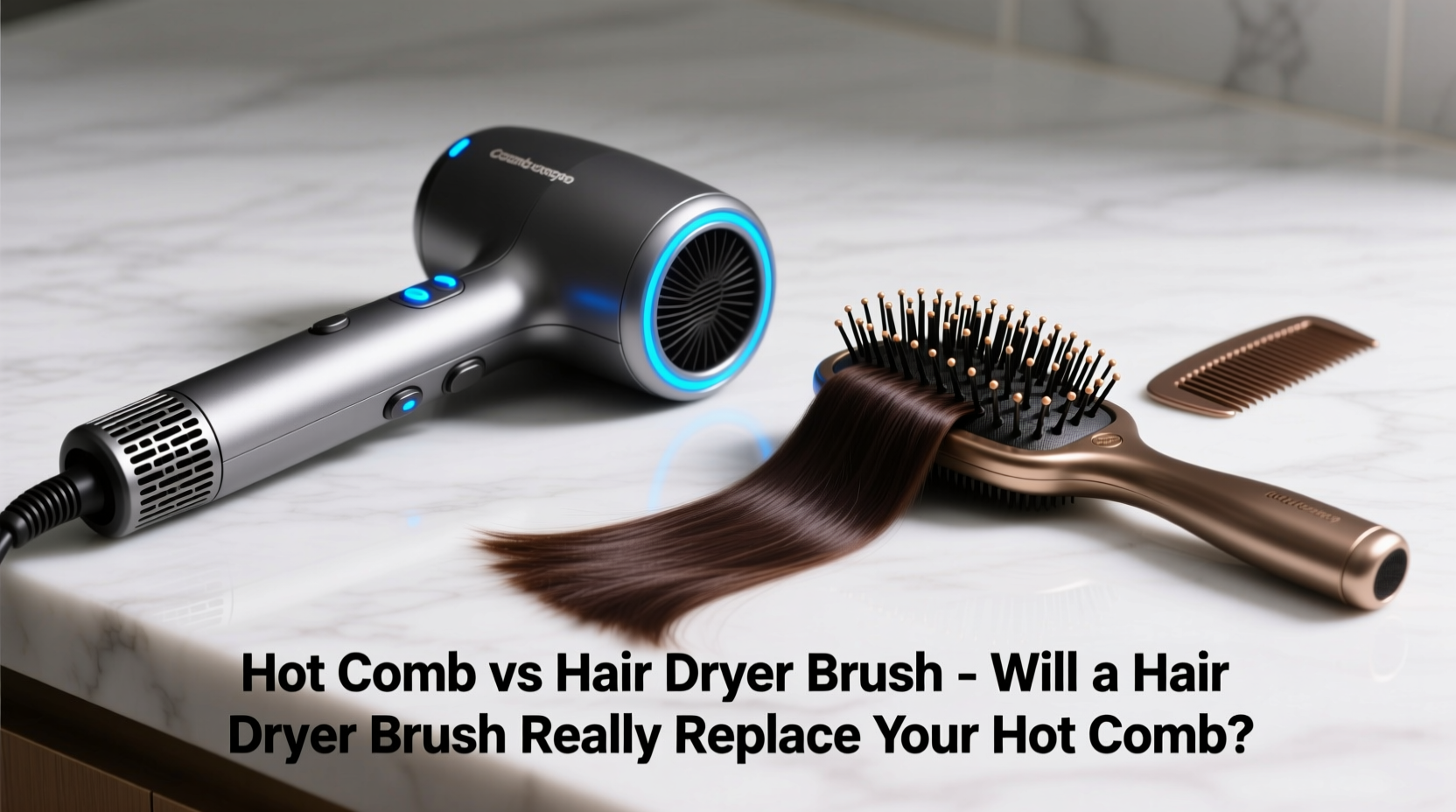
A hot comb—also known as a pressing comb—is a metal comb heated on a stove or via electric power that’s used to straighten hair strand by strand. Traditionally made of metal, it conducts high heat directly to the hair shaft, allowing for precise smoothing and elongation. This method dates back over a century and remains popular due to its effectiveness on thick, coarse, or highly textured hair.
When used correctly, a hot comb delivers sleek, long-lasting straight styles with minimal frizz. However, it requires skill, patience, and caution. Because it applies direct, intense heat, improper use can lead to severe damage, including breakage and scalp burns.
“The hot comb offers unparalleled precision for edge work and root smoothing, especially on Type 4 hair. But it demands respect—both for technique and temperature control.” — Dr. Jasmine Reed, Trichologist & Hair Care ConsultantTip: Always use a thermal protectant when using a hot comb—even if heating it manually. Heat damage starts at 300°F, and metal combs can exceed that quickly.
How the Hair Dryer Brush Works
The hair dryer brush combines a round brush with a built-in blow dryer. As you brush through damp hair, it dries and styles simultaneously, adding volume, smoothing texture, and creating soft bends or waves. Some models even offer ion technology to reduce frizz and ceramic barrels to distribute heat evenly.
Unlike the hot comb, which works on dry hair with direct contact, the hair dryer brush operates primarily during the drying phase. It’s ideal for achieving salon-like blowouts at home and is favored for its ease of use and speed. Most users see results in under 15 minutes, making it a go-to for daily styling.
Modern versions come with adjustable heat settings, cool-shot buttons, and interchangeable brush heads. While not designed for full straightening of very curly or kinky hair, newer high-heat models claim to deliver near-straight results on wavy to loosely curled textures.
Key Differences: Function, Heat, and Results
To understand whether one tool can replace the other, we need to compare them across several key factors:
| Feature | Hot Comb | Hair Dryer Brush |
|---|---|---|
| Heat Source | Direct conductive heat (metal-to-hair) | Convective heat (hot air + brushing) |
| Ideal For | Straightening tightly coiled hair, edges, roots | Volumizing, smoothing, light straightening |
| Best Hair Type | Type 3C–4C | Type 2A–3B |
| Drying Capability | None – used on dry hair only | Yes – dries while styling |
| Styling Precision | High (individual section control) | Moderate (depends on brush size) |
| Risk of Damage | High if misused | Moderate (lower direct heat) |
| Learning Curve | Steep – requires practice | Gentle – beginner-friendly |
The table shows a clear divergence in purpose. The hot comb excels in high-control, high-heat straightening, particularly for resistant textures. The hair dryer brush shines in convenience, volume-building, and multitasking—but falls short on delivering pin-straight results on very curly or coarse hair without multiple passes or additional tools.
Can a Hair Dryer Brush Replace a Hot Comb? Real-World Scenarios
Consider Keisha, a 32-year-old professional with 4B hair who has used a hot comb since her teens. Every weekend, she dedicates an hour to pressing her hair for a sleek, polished look suitable for client meetings. Recently, she invested in a high-end ionic hair dryer brush hoping to cut down styling time.
She found that on slightly stretched hair (after a braid-out), the dryer brush could smooth mid-lengths and ends with decent results. However, her roots remained frizzy, and her edges refused to lie flat without going over them with a flat iron afterward. After three weeks, she returned to her hot comb for weekly press sessions but now uses the dryer brush for touch-ups between presses.
Keisha’s experience reflects a growing trend: hybrid styling. Rather than replacing the hot comb entirely, many users are integrating the hair dryer brush into their routine for maintenance, volume, and faster refreshes.
Step-by-Step: When to Use Each Tool
- Use the Hot Comb When:
- You want long-lasting, fully straightened hair.
- Your hair is Type 4 or resists other heat tools.
- You’re doing a full scalp press or edge control.
- You need maximum frizz reduction for formal events.
- Use the Hair Dryer Brush When:
- You’re styling damp hair fresh out of the shower.
- You want volume at the roots and smoothness throughout.
- You have wavy or loose curls and desire a “lived-in” straight look.
- You need a quick style refresh between deep treatments.
- Combine Both Tools When:
- Start with a hot comb for roots and edges.
- Use the dryer brush on mid-lengths to add shine and movement.
- Finish with a light serum to unify the texture.
Checklist: Choosing the Right Tool for Your Needs
- ✅ Do you have tightly coiled or resistant hair? → Lean toward hot comb.
- ✅ Are you looking for volume and body? → Hair dryer brush wins.
- ✅ Do you style daily and value speed? → Dryer brush is more efficient.
- ✅ Is heat damage a concern? → Dryer brush generally safer with indirect heat.
- ✅ Do you struggle with edge control? → Hot comb offers superior precision.
- ✅ Do you often style damp hair? → Only the dryer brush can handle this.
- ✅ Are you a beginner? → Start with the dryer brush before mastering the hot comb.
Frequently Asked Questions
Can I use a hair dryer brush on wet hair?
Yes, most hair dryer brushes are designed to be used on towel-dried, damp hair. This is one of their biggest advantages—they dry and style in one step. Just ensure your hair isn’t dripping wet to prevent steam buildup and uneven drying.
Is a hot comb safer than a flat iron?
Not necessarily. Both apply direct heat, but the hot comb often reaches higher temperatures and requires more manual control. Without proper technique, it poses a greater risk of scalp burns and localized damage. A flat iron or even a dryer brush may offer more consistent, safer heat distribution.
Can I get straight hair with just a hair dryer brush?
On fine to medium hair with loose waves, yes—especially with a high-heat model and tension brushing. However, for tight curls or coarse textures, it may only provide “touchably soft” straightness rather than bone-straight results. Multiple passes increase heat exposure, so proceed with caution and always use a heat protectant.
Final Verdict: Complement, Not Replace
The hair dryer brush is a revolutionary tool for convenience, volume, and everyday styling—but it doesn’t eliminate the need for a hot comb in many routines. Instead of viewing it as a replacement, think of it as a complementary device that fills gaps in speed, moisture management, and ease of use.
For those with highly textured hair seeking maximum straightening power, the hot comb remains unmatched in precision and longevity of style. Meanwhile, the hair dryer brush serves best as a time-saving ally for maintaining smoothness, refreshing styles, or achieving a softer, more natural finish.
The future of hair styling lies not in choosing one over the other, but in knowing when and how to use each to their fullest potential.
💬 Have you switched from a hot comb to a hair dryer brush—or do you use both? Share your experience and help others find their perfect styling balance!








