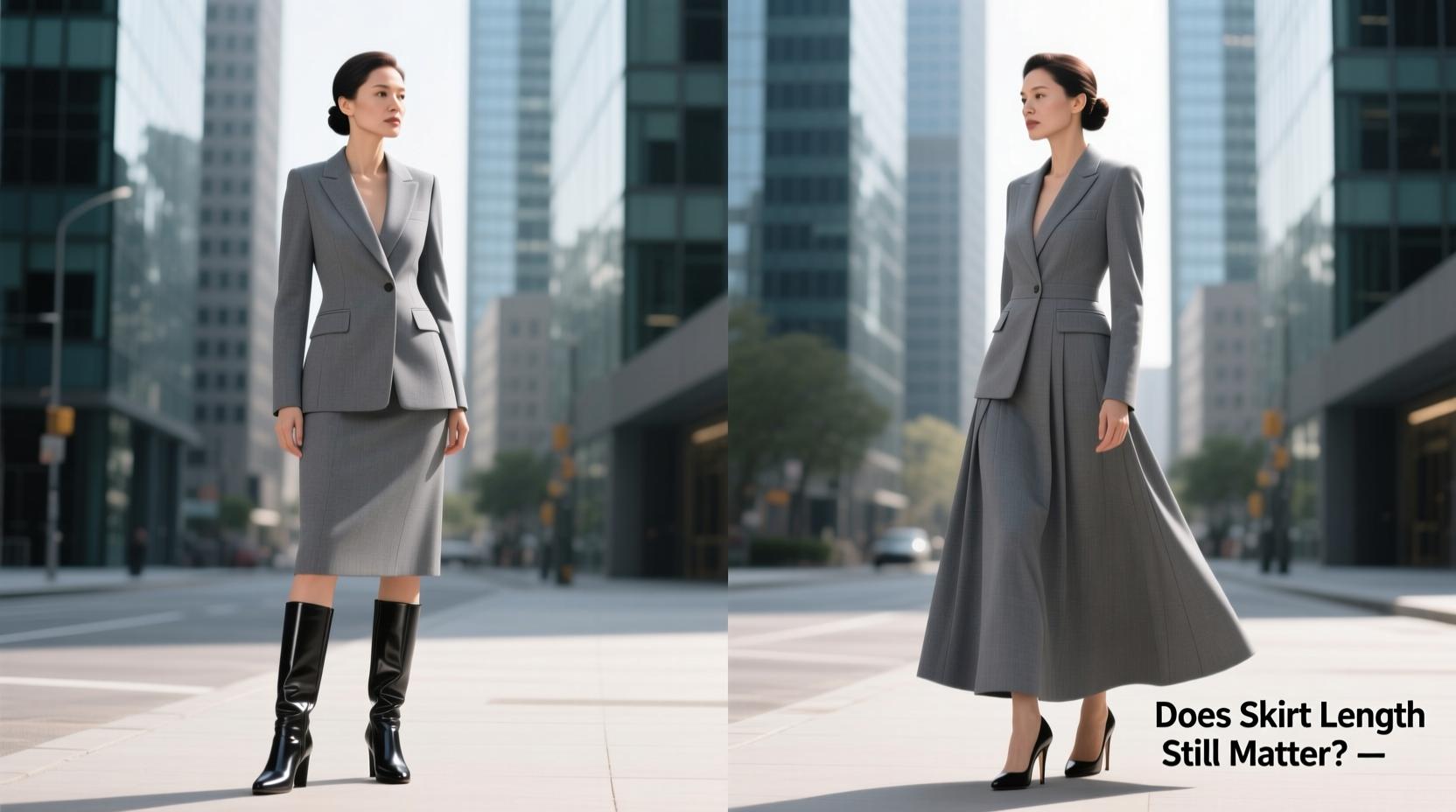
In today’s rapidly evolving fashion landscape, traditional dress codes are being redefined. The classic debate between half (pencil) skirts and full (A-line or flared) skirts within the context of a suit has taken on new dimensions. Once dictated by rigid corporate standards, skirt length is now influenced by personal expression, body positivity, inclusivity, and shifting cultural norms. But beneath the surface of sartorial freedom lies a practical truth: while fashion may say “anything goes,” real-world settings—from boardrooms to weddings—still carry subtle expectations. So, does skirt length matter anymore? The answer isn’t a simple yes or no—it depends on context, intention, and awareness.
The Evolution of Skirt Length in Professional Wear
Historically, skirt length was tightly regulated, especially in professional environments. In the mid-20th century, knee-length pencil skirts became the default for office-appropriate attire, symbolizing modesty and professionalism. Full skirts, often associated with femininity and post-war glamour, were acceptable but typically reserved for less formal roles or social events. Over time, as women entered leadership positions and challenged gender norms, clothing evolved alongside them.
By the 1990s, power suits with shorter hemlines emerged as symbols of confidence and authority. Designers like Giorgio Armani and Donna Karan championed tailored silhouettes that prioritized both function and style. Fast forward to today, and we see a broader spectrum: midi skirts, asymmetrical cuts, and even mini-skirted suits grace corporate spaces—especially in creative industries.
Yet, despite this progress, certain institutions remain conservative. Legal firms, government offices, and traditional financial sectors often expect skirts to fall at or below the knee. This isn't merely about tradition; it reflects an unspoken code of perceived seriousness and respectability.
“Skirt length can still influence first impressions—particularly in high-stakes environments where image impacts credibility.” — Lena Torres, Corporate Image Consultant
Half Skirt vs Full Skirt: A Functional and Stylistic Breakdown
The choice between a half (commonly called a pencil) skirt and a full (A-line, circle, or flared) skirt affects more than just appearance—it influences movement, comfort, and appropriateness across occasions.
| Feature | Half (Pencil) Skirt | Full (A-Line/Flared) Skirt |
|---|---|---|
| Silhouette | Slim-fitting, straight cut from hips to hem | Wider at the bottom, flares out from waist or hips |
| Mobility | Limited stride; requires smaller steps | Greater freedom of movement |
| Formality Level | High—ideal for business meetings | Moderate to high—depends on fabric and length |
| Comfort Over Time | Can feel restrictive after prolonged sitting | Generally more comfortable for long wear |
| Versatility | Easily paired with blazers and heels | Works well with structured and soft tops |
When Skirt Length Still Matters: Context Is Everything
While many embrace the idea that “length doesn’t matter,” reality suggests otherwise—depending on where you are and what you’re doing.
- Corporate Offices: Knee-length or just-below-knee remains safest. Mini skirts, even in a suit, may be seen as inappropriate unless company culture explicitly allows it.
- Creative Industries: Tech startups, design studios, and media companies tend to welcome bolder choices. Here, a cropped full skirt suit might signal innovation and individuality.
- Client-Facing Roles: When meeting conservative clients, err on the side of discretion. A longer hemline projects reliability and restraint.
- Weddings & Formal Events: Full skirts dominate here, especially in midi or tea-length variations. They convey elegance without overshadowing the bride.
- Activewear-Inspired Suits: Emerging trends include short, sporty skirt suits made from technical fabrics. These work best in casual or hybrid settings, not formal ones.
Mini Case Study: Sarah’s Job Interview Dilemma
Sarah, a marketing strategist applying to a global bank, chose a sharp navy pencil skirt suit ending two inches above her knee. She felt confident and modern. However, during the panel interview, one senior executive noted she “might want to consider a more traditional length” when discussing team representation. Though qualified, Sarah didn’t get the role. Later, feedback revealed concerns about client perception.
In contrast, when she interviewed at a digital agency known for its progressive culture, she wore the same suit—and received praise for her bold yet polished look. She was hired immediately.
This illustrates a key point: skirt length isn’t inherently right or wrong—it’s about alignment with environment and audience.
How to Choose the Right Skirt Length for You
Personal preference should never be ignored. Confidence in your outfit enhances posture, speech, and presence. That said, making an informed decision means balancing self-expression with situational intelligence.
- Assess the Setting: Research the organization’s dress code. Look at employee photos on LinkedIn or their website.
- Consider Your Body Type: Pencil skirts elongate legs and emphasize curves; full skirts balance wider hips and create volume where desired.
- Think About Practicality: Will you be sitting for hours? Climbing stairs? Presenting on stage? Choose mobility accordingly.
- Match Fabric to Occasion: Wool blends project authority; cotton or linen suits breathe better in warm climates; stretch materials offer comfort.
- Test Sit-to-Stand Movement: Always try sitting down in a skirt before wearing it publicly. Nothing undermines professionalism faster than constant readjustment.
Checklist: Choosing the Right Skirt Suit
- ✅ Length falls at or near knee for conservative settings
- ✅ Hem allows easy sitting without excessive thigh exposure
- ✅ Fabric is wrinkle-resistant and appropriate for season
- ✅ Silhouette complements my body shape and posture
- ✅ Matches footwear commonly worn in this environment (e.g., closed-toe heels)
- ✅ Aligns with brand identity if representing a company
FAQ: Common Questions About Skirt Length in Modern Fashion
Is a mini skirt suit ever appropriate for work?
Yes—but selectively. In creative fields like fashion, advertising, or tech startups, a mini skirt suit can be stylish and empowering. However, avoid them in legal, finance, or government roles unless you know the culture supports it. Pair with opaque tights and structured tailoring to maintain polish.
What’s the ideal length for a professional skirt?
The universally safe range is from the top of the knee to one inch below. This “golden zone” works across cultures, generations, and industries. For taller individuals, slightly longer lengths maintain proportion without appearing outdated.
Can I wear a full skirt suit to a job interview?
Absolutely—if it's tailored and knee-length or longer. A well-cut A-line skirt conveys sophistication and approachability. Avoid overly voluminous styles that could seem costumey or impractical.
Conclusion: Relevance Over Rules
Skirt length still matters—not because arbitrary fashion rules demand it, but because clothing communicates. It signals awareness, respect, and intention. Whether you choose a sleek half skirt or a graceful full skirt, the real question isn’t about length—it’s about relevance. Are you dressing for the world you’re entering, or only for yourself?
The most powerful style choices blend authenticity with insight. Know when to challenge norms and when to honor them. Ultimately, the best skirt is the one that lets you move freely, think clearly, and command space—no matter where it falls.
💬 Your turn: Have you faced judgment based on your skirt length? How do you decide what to wear? Share your experiences and help redefine what professionalism looks like today.