
Tight shoes don’t just pinch—they compromise foot health, posture, and daily comfort. As a professional cobbler with over two decades of experience restoring and modifying footwear, I’ve seen countless pairs ruined by improper stretching attempts. The good news? With the right techniques, nearly any shoe can be widened safely and effectively. This guide shares proven, field-tested methods that preserve material integrity while delivering real relief.
Why Shoes Feel Tight—and When to Widen Them
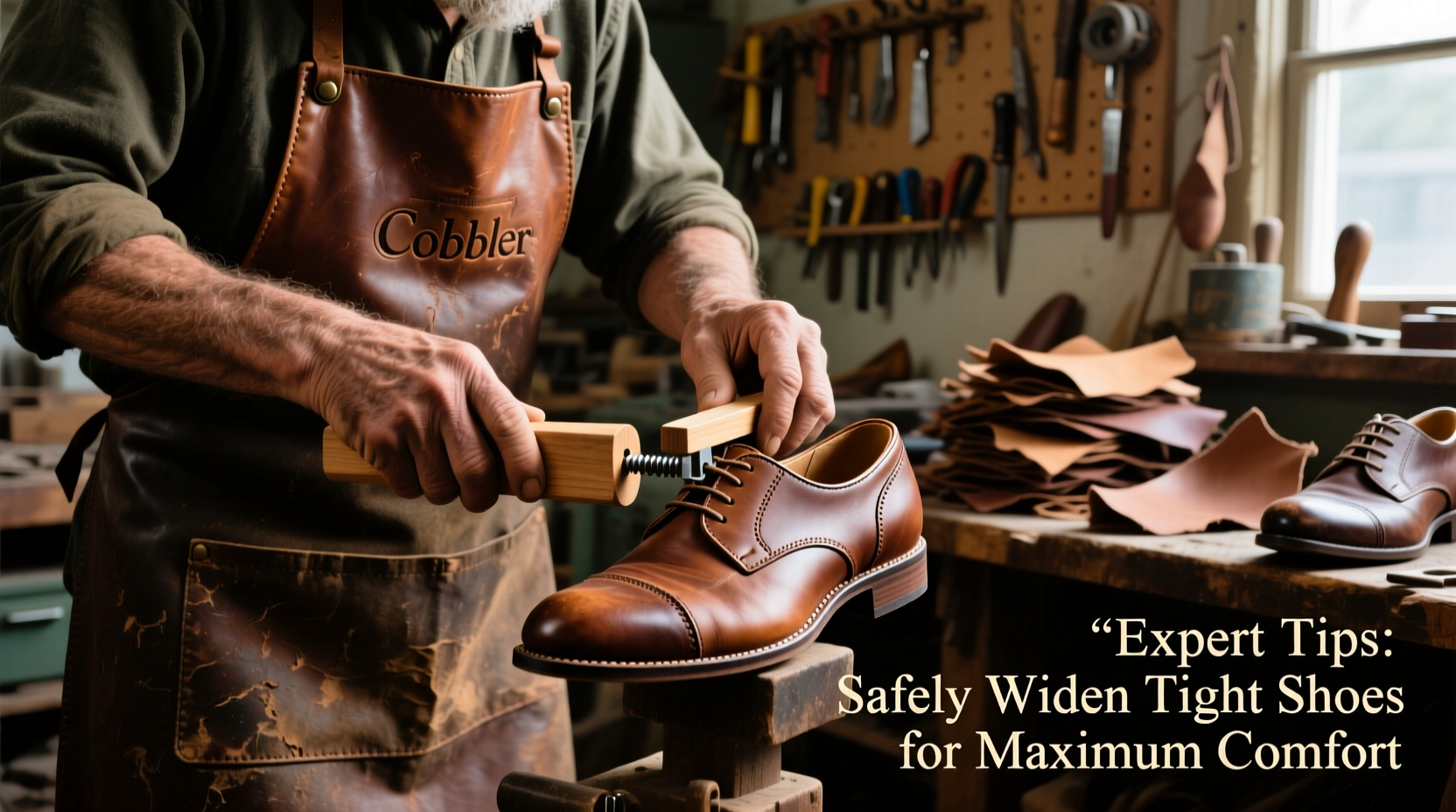
Shoes may feel tight for several reasons: manufacturing inconsistencies, narrow lasts (the mold used in construction), seasonal swelling of feet, or changes in foot shape over time. Leather naturally molds to the foot, but synthetic uppers and stiff soles often resist expansion. Attempting to wear undersized shoes long-term can lead to blisters, bunions, nerve compression, and even gait issues.
The key is identifying whether the discomfort stems from width, volume, or length. Width issues affect the ball of the foot; volume problems press on the instep or toes; length issues cause toe jamming. Widening specifically targets lateral pressure across the forefoot and midfoot. If your shoes are too short, widening won’t solve the problem—and could worsen it.
Tip: Perform the \"paper test\": trace your foot on paper, then compare the outline to the insole. A gap of less than 1/4 inch on either side means widening may help.Safe Methods to Widen Shoes at Home
Many DIY solutions exist, but only a few deliver consistent results without damage. Below are the most reliable home-based techniques, ranked by effectiveness and safety.
1. Use a Professional Shoe Stretcher with Expander Blocks
A dual-axis wooden stretcher with adjustable width knobs applies steady pressure to the sides of the shoe. Insert it fully, then turn the lateral knob clockwise to expand. Leave for 24–72 hours. For leather, lightly dampen the upper first to increase pliability.
2. The Freezer Method (For Minor Width Adjustment)
- Fill two sandwich bags with water.
- Place one inside each shoe, ensuring they fill the tightest areas.
- Seal and freeze overnight.
- As water expands into ice, it gently pushes outward.
This method works best for fabric or soft leather shoes and typically gains 1/8 inch of width. Avoid using on glued constructions or delicate materials like suede exposed to moisture.
3. Alcohol and Wear Technique
Rubbing alcohol breaks down leather fibers temporarily, allowing reshaping. Dampen a cloth with isopropyl alcohol and wipe the interior where pressure occurs. Immediately wear the shoes with thick socks until dry. Repeat if necessary. Never soak the shoe—only spot-treat high-pressure zones.
Tip: Combine alcohol treatment with a heat gun (on low) for faster results—but keep the nozzle 6 inches away to prevent scorching.When to Seek a Professional Cobbler
Some materials and constructions require expert tools. Machines like the McKay staking machine or hydraulic press apply precise force without warping the sole or breaking stitching. Professionals also use steam-injection stretchers that soften leather deeply before expansion.
“Most people try to stretch shoes too quickly. Patience and incremental pressure preserve the shoe’s lifespan.” — Rafael Mendez, Master Cobbler, Boston Boot & Shoe Repair
Visit a cobbler if you have:
- Hand-stitched oxfords or brogues
- Full-leather soles with delicate welting
- Expensive dress shoes or vintage footwear
- More than half-size widening needed
Professional stretching typically costs $25–$50 and can add up to a full size in width over multiple sessions.
Do’s and Don’ts of Shoe Widening
| Do | Don't |
|---|---|
| Test methods on inconspicuous areas first | Use boiling water directly on the shoe |
| Stretch gradually over several days | Apply excessive force with clamps or pliers |
| Condition leather after stretching | Wear un-stretched tight shoes for long periods |
| Use shoe trees to maintain new shape | Freeze shoes with condensation-prone containers |
| Consult a cobbler for valuable footwear | Attempt to stretch vulcanized rubber or bonded synthetics |
Real-World Case: Restoring a Heirloom Oxford
A customer brought in a pair of 1950s Italian calfskin oxfords—family heirlooms that had become painfully tight. The original owner had narrow feet; the current wearer had broader forefeet due to age-related flattening. Attempting home remedies, he’d boiled the shoes briefly, causing glue failure at the welt.
I reversed the damage by re-cementing the sole, then used a combination of steam injection and a lateral expander over three visits. Each session added 1/16 inch of width. After conditioning, the shoes fit perfectly—preserving both function and heritage. This case underscores why controlled, professional intervention matters for irreplaceable footwear.
Step-by-Step: Safely Widen Leather Dress Shoes at Home
- Assess Fit: Identify exact pressure points using foot tracing or wear-test with athletic tape on sensitive areas.
- Clean Surface: Wipe leather with a dry cloth; remove dirt that could scratch during expansion.
- Insert Stretcher: Place a two-way wooden stretcher inside, aligning the width knob with the ball of the foot.
- Moisten Slightly: Lightly spray rubbing alcohol on inner upper at pressure zones.
- Expand Gradually: Turn the width knob 1/4 turn. Wait 12 hours. Repeat until slight resistance eases.
- Wear and Set: Wear for 30 minutes with thick socks to lock in new shape.
- Condition: Apply leather balm to restore oils lost during stretching.
- Maintain: Use cedar shoe trees nightly to prevent contraction.
This process typically takes 3–5 days and yields a measurable 1/8 to 1/4 inch gain in width.
Frequently Asked Questions
Can I widen synthetic or mesh athletic shoes?
Synthetic uppers have limited stretchability. While moisture and heat may offer minor relief, significant widening isn’t possible without compromising structural support. Consider switching to a roomier model designed for wide feet.
How long do stretched shoes stay widened?
If properly maintained with shoe trees and avoided over-compression (e.g., stepping on heels), the new shape lasts indefinitely. Leather retains memory once fibers re-bond post-stretching.
Is it safe to stretch suede shoes?
Yes, but with caution. Use minimal moisture and avoid alcohol, which can discolor the nap. Opt for professional steam stretching instead. Afterward, brush the surface with a suede eraser to restore texture.
Final Advice from the Workbench
Shoes are investments in comfort and style. Treating them with care extends their life far beyond seasonal trends. Widening doesn’t mean forcing a poor fit—it means adapting quality footwear to your unique anatomy. Whether you’re reviving a favorite pair or breaking in new ones, remember: gentle, consistent effort beats aggressive shortcuts every time.
💬 Have a pair that needs help? Share your shoe type and issue below—we’ll suggest the safest fix.








