When choosing a ring—whether for an engagement, anniversary, or personal indulgence—two key factors dominate the decision: durability and long-term value. Gold rings and gemstone rings are both timeless choices, but they differ significantly in how well they withstand daily wear and how effectively they retain or appreciate in value over time. Understanding these differences helps you make a smarter purchase, whether you're investing emotionally, financially, or both.
Durability: How Well Does Each Ring Withstand Daily Wear?
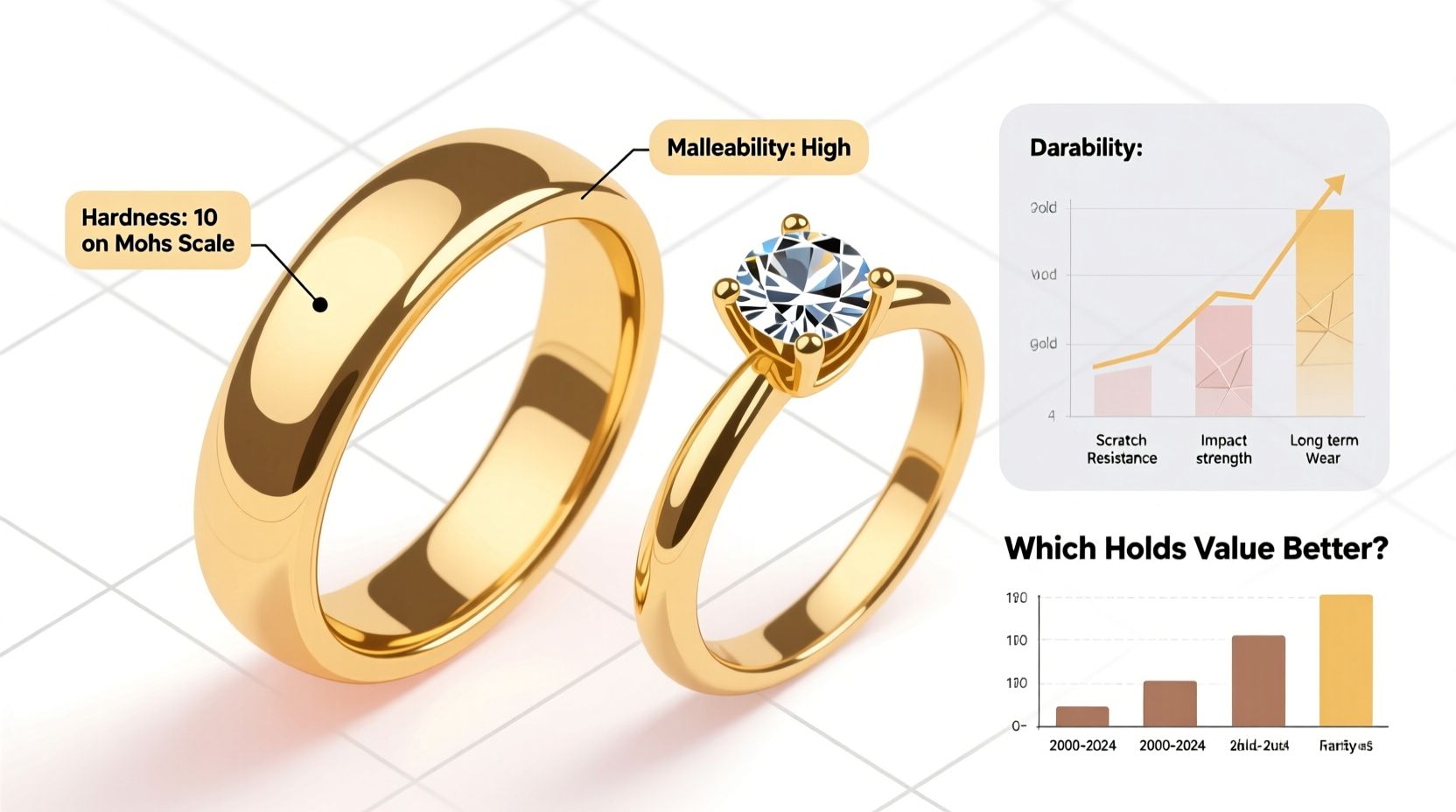
Gold, as a metal, is inherently soft in its pure 24-karat form. However, most gold rings are made from 14k or 18k gold, which blends pure gold with harder metals like copper, silver, or zinc to improve strength. This alloying process enhances durability while maintaining gold’s signature luster. As a result, solid gold rings resist scratches and dents reasonably well under normal conditions, especially if worn occasionally or with care.
Gemstone rings, on the other hand, introduce variables based on the type of stone used. Diamonds, sapphires, and rubies rank high on the Mohs hardness scale—9 to 10—making them highly resistant to scratching. These stones are ideal for everyday wear and can endure years of use without visible degradation. Softer gemstones like opals (5.5–6.5), emeralds (7.5–8), or pearls (2.5–4.5) are far more vulnerable to chipping, cracking, or abrasion, even with light use.
Tip: If you lead an active lifestyle or work with your hands, opt for a diamond or sapphire set in gold rather than softer gemstones.The Role of Setting in Durability
A gemstone's setting plays a crucial role in its longevity. Prong settings expose more of the stone but increase the risk of snagging or loosening. Bezel settings offer superior protection by encasing the stone’s edges, making them more suitable for rugged environments. In contrast, a plain gold band has no moving parts or fragile components—its simplicity makes it one of the most durable ring types available.
“Even the hardest gemstone can become damaged if poorly set. A secure mounting is just as important as the stone itself.” — Daniel Reyes, Master Jeweler & GIA Graduate
Value Retention: Which Holds Its Worth Over Time?
Gold has intrinsic commodity value tied to global markets. While prices fluctuate, gold maintains purchasing power over decades due to its scarcity and universal demand. A well-crafted solid gold ring will always have melt value at minimum—and often exceeds that in resale markets, especially if it’s vintage or designer-made.
Gemstone rings derive their value from multiple factors: rarity, cut, clarity, color, and carat weight. High-quality diamonds and colored gemstones like Burmese rubies or Kashmir sapphires can appreciate significantly. However, most commercially available gemstone rings do not increase in value. In fact, many lose 30–50% of their retail price immediately after purchase, similar to luxury goods like watches or handbags.
Resale Realities
Selling a gold ring is straightforward. You can take it to a reputable dealer who will assess purity and weight, then offer a price close to the current spot rate minus refining fees. Gemstone rings, however, require expert appraisal. Buyers must authenticate the stone, verify documentation (e.g., GIA certificate), and assess market demand. This complexity reduces liquidity and often results in lower returns unless the piece is exceptional.
| Feature | Gold Ring | Gemstone Ring |
|---|---|---|
| Durability (Daily Wear) | High – resistant to deformation with proper karat choice | Variable – depends on stone hardness and setting |
| Scratch Resistance | Moderate – develops patina over time; polishable | High for diamond/sapphire; low for softer stones |
| Intrinsic Material Value | Yes – based on gold weight and purity | Limited – only applies to rare, certified stones |
| Resale Simplicity | Easy – based on weight and market rate | Complex – requires grading and buyer trust |
| Potential for Appreciation | Steady – tracks inflation and market trends | High for rare gems; minimal for average stones |
Long-Term Care and Maintenance Comparison
Both gold and gemstone rings benefit from regular maintenance, but their needs differ. Gold rings may accumulate scratches over time, especially with frequent wear. These can be polished out by a professional jeweler every few years, restoring the original shine. Avoid exposing gold to chlorine or harsh chemicals, which can weaken the metal structure over time.
Gemstone rings require more attentive care. Dirt and oils can build up under the stone, dulling its brilliance. Ultrasonic cleaners are effective for diamonds but can damage porous or fractured stones like emeralds or opals. Steam cleaning is generally safe for most hard gemstones but should be avoided for treated or composite stones.
Step-by-Step Ring Maintenance Routine
- Remove ring before swimming, cleaning, or exercising.
- Clean weekly with lukewarm water and mild dish soap using a soft brush.
- Rinse thoroughly and dry with a lint-free cloth.
- Inspect prongs or bezels monthly for looseness.
- Visit a jeweler annually for professional inspection and tightening.
Real-Life Example: Two Rings Over Ten Years
Consider two individuals who purchased rings in 2014. Sarah bought a 14k gold solitaire band for $1,200. James chose a white gold ring with a 0.75-carat lab-grown diamond for $1,500. By 2024, Sarah’s ring had developed a gentle patina but remained structurally intact. She sold it to a local jeweler for $980—reflecting the year’s gold price and slight premium for craftsmanship.
James attempted to resell his ring but found limited interest. Despite the stone’s quality, lab-grown diamonds have seen steep price declines due to increased production. He received only $400 from a buyer skeptical about future value. His ring, though beautiful, failed to retain financial worth despite consistent care.
This example illustrates that while aesthetics matter, material fundamentals determine long-term performance.
Checklist: Choosing the Right Ring for Durability and Value
- ✅ Determine your lifestyle—will the ring face physical stress?
- ✅ Choose gold purity wisely: 14k offers best balance of durability and value.
- ✅ For gemstones, prioritize hardness (Mohs 8+) and provenance.
- ✅ Ensure the gem comes with certification from GIA, AGS, or AGL.
- ✅ Opt for protective settings like bezel or flush mounts for active wearers.
- ✅ Verify the metal hallmark (e.g., “14K”, “585”) to confirm authenticity.
- ✅ Buy from reputable jewelers offering buy-back or trade-up policies.
Frequently Asked Questions
Can a gold ring last a lifetime?
Absolutely. Solid gold rings are among the most enduring forms of jewelry. With occasional polishing and minor repairs, a well-made gold band can be passed down through generations without losing structural integrity.
Do gemstone rings lose value faster than gold?
Most do, especially those featuring lab-created stones or common designs. Natural, high-grade gemstones with documentation may hold or increase value, but these represent a small fraction of the market. Gold, by comparison, reliably preserves wealth.
Is it better to invest in a diamond ring or a gold ring?
If your goal is financial return, neither is a guaranteed investment—but gold comes closer. Diamond resale margins are typically poor unless the stone is large, rare, and certified. Gold’s consistency makes it a safer store of value, though appreciation is gradual.
Final Thoughts: Balancing Beauty, Strength, and Worth
The choice between a gold ring and a gemstone ring isn’t merely aesthetic—it’s practical and financial. Gold excels in durability and value retention, offering peace of mind for everyday wear and long-term ownership. Gemstone rings deliver unmatched sparkle and emotional significance, but only certain stones justify their cost over time.
The smartest approach combines both: a high-karat gold band set with a durable, certified gemstone. This fusion maximizes resilience, beauty, and potential value. Whether you’re buying for love, legacy, or luxury, prioritize materials and craftsmanship over trends. A ring should endure—not just survive.
💬 What kind of ring do you own, and how has it held up over time? Share your experience and help others make informed decisions about their jewelry choices.