Choosing the right piece of jewelry as a gift can carry deep emotional weight. Among delicate designs, flower and heart bracelets stand out for their elegance and symbolic resonance. Both evoke affection, but they do so in subtly different ways. Understanding these nuances helps ensure your gift not only looks beautiful but also speaks directly to the recipient’s heart.
The decision between a flower and a heart bracelet isn’t just about aesthetics—it’s about meaning, context, and personal connection. While hearts are universally recognized symbols of love, flowers bring layered interpretations based on type, color, and cultural significance. This guide explores both options in depth, helping you make an informed, heartfelt choice.
Symbolism: What Each Design Represents
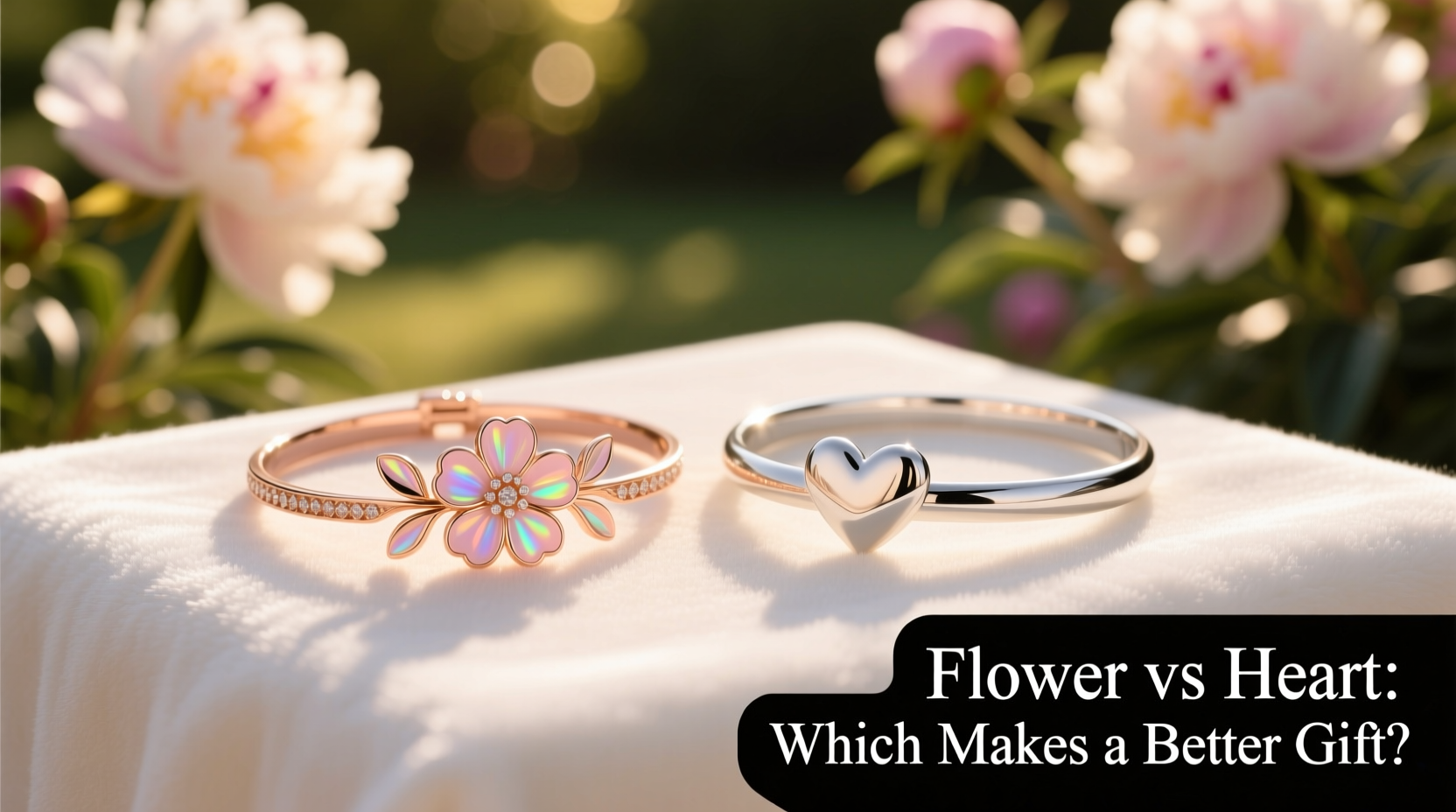
At the core of any meaningful gift is symbolism. Jewelry, especially when worn close to the wrist, becomes a personal emblem. The heart has long been associated with romantic love, passion, and emotional commitment. It’s direct, unambiguous, and timeless—ideal for anniversaries, Valentine’s Day, or declarations of deep affection.
Flowers, by contrast, offer a broader symbolic language. A rose signifies romance; a daisy stands for innocence; a lotus reflects resilience and rebirth. When crafted into a bracelet, floral motifs can represent growth, beauty, and individuality. They often appeal to those who appreciate subtlety and nature-inspired elegance.
“Jewelry that carries symbolic weight tends to be cherished longer. The best gifts aren’t just beautiful—they feel personal.” — Lila Monroe, Contemporary Jewelry Designer
A heart bracelet says, “I love you,” clearly and confidently. A flower bracelet might whisper, “You are unique, vibrant, and deeply seen.” Depending on your relationship and the message you wish to convey, one may resonate more than the other.
Style and Versatility: Which Fits Daily Wear?
Practicality matters. Even the most symbolic piece will lose impact if it doesn’t suit the wearer’s lifestyle. Heart bracelets often feature bold outlines or gemstone accents, making them statement pieces. They pair well with evening wear or minimalist outfits where the design can stand out.
Flower bracelets tend to be more intricate and delicate. Petal-like curves and textured metalwork lend themselves to everyday elegance. They layer seamlessly with other bracelets and complement both casual and formal attire. For someone with a bohemian, romantic, or nature-oriented aesthetic, a floral design integrates effortlessly into their wardrobe.
Tip: Consider the recipient’s daily routine. If they work with their hands or prefer understated accessories, a slender flower bracelet may be more comfortable and practical than a chunky heart design.Comparison Table: Flower vs Heart Bracelets
| Feature | Flower Bracelet | Heart Bracelet |
|---|---|---|
| Primary Symbolism | Growth, beauty, renewal, individuality | Love, passion, romance, devotion |
| Design Complexity | Often detailed, organic, textured | Simpler, bolder, geometric |
| Versatility | High—pairs well with layered styles | Moderate—best as a focal point |
| Ideal For | Birthday, Mother’s Day, self-gift, friendship | Anniversary, Valentine’s Day, proposal |
| Durability | May require care due to fine details | Generally sturdy, fewer fragile parts |
Real-Life Scenario: Choosing for a Milestone Moment
Sophia wanted to surprise her partner, Maya, on their five-year anniversary. She considered a heart bracelet for its clear romantic message but hesitated—Maya had once mentioned loving cherry blossoms because they reminded her of resilience and new beginnings after a difficult year.
Sophia chose a white gold cherry blossom bracelet instead. Engraved with their initials and the date, it combined personal history with natural beauty. At dinner, Maya was moved—not just by the gift, but by how seen she felt. “It’s not just pretty,” she said. “It feels like *me*.”
In this case, the flower bracelet won not because it was inherently better, but because it aligned perfectly with the recipient’s identity and journey. A heart might have been appropriate, but the flower carried deeper personal resonance.
When to Choose a Heart Bracelet
There are moments when clarity of emotion outweighs subtlety. A heart bracelet shines in contexts where romantic intent must be unmistakable:
- Proposals or engagement celebrations
- Valentine’s Day, especially for new relationships
- Reconciliation gifts after a period of distance
- As part of a matching set (“his and hers” designs)
Hearts also work well when paired with birthstones or names, transforming a universal symbol into something personalized. For example, a heart-shaped locket bracelet with a photo inside adds intimacy without sacrificing the classic message.
Actionable Checklist: Picking the Right Bracelet
Before purchasing, ask yourself the following:
- What is the occasion? (Romantic, platonic, celebratory?)
- Does the recipient prefer bold statements or subtle elegance?
- Do they have a favorite flower or floral memory?
- Is durability important for their lifestyle?
- Would they appreciate symbolic depth over immediate recognition?
- Can the bracelet be personalized (engraving, stones, color)?
- Does it match their existing jewelry style?
Frequently Asked Questions
Can a flower bracelet be romantic?
Absolutely. Roses, tulips, and orchids are all traditionally linked to romance. A red enamel rose bracelet, for instance, conveys passion just as clearly as a heart—sometimes more poetically.
Are heart bracelets too cliché?
Not necessarily. While common, hearts remain powerful because they’re universally understood. To avoid cliché, opt for unique craftsmanship—a twisted heart, asymmetrical design, or mixed metals can refresh the classic symbol.
Which is better for a friendship gift?
Flower bracelets often feel more inclusive and less romantically charged, making them ideal for friends. A daisy or sunflower design celebrates joy and loyalty without implying romance.
Final Guidance: It’s About Intention, Not Just Design
Neither flower nor heart bracelets are objectively “better.” The right choice depends on intention, relationship dynamics, and the story you want to tell. A heart says, “My love for you is certain.” A flower says, “I notice the details that make you bloom.”
For new love or grand gestures, the heart’s clarity is unmatched. For deepened relationships where nuance matters, the flower’s layered meaning often lands more profoundly. In some cases, combining both—such as a floral pattern centered around a small heart charm—can strike the perfect balance.
“The most memorable gifts reflect the giver’s attention, not just their budget.” — Rafael Torres, Gift Psychology Researcher
Take the Next Step
Now that you’ve weighed symbolism, style, and sentiment, take a moment to reflect: What does your recipient value most—direct emotion or thoughtful subtlety? Visit a jeweler or browse ethical online collections to find a piece that aligns with your insight. And when you give it, do so with presence—look them in the eye and say why this design reminded you of them.
💬 Have you given or received a flower or heart bracelet that meant more than words? Share your story in the comments—your experience might inspire someone else’s perfect gift.