
When children walk to school, play outside after dusk, or travel on foot during evening hours, visibility becomes a critical safety issue. Rainy conditions compound the risk—wet surfaces reduce traction, weather can obscure vision, and darkness makes it harder for drivers to see small figures. A standard raincoat may keep a child dry, but without specific safety features, it won’t ensure they’re seen in low-light environments. Choosing the right raincoat for nighttime use isn't just about fabric or hood design; it's a matter of integrating high-visibility elements, proper fit, and certified safety standards into one practical garment.
The responsibility falls on caregivers to proactively select outerwear that enhances protection during vulnerable moments. With so many options on the market, it’s easy to be misled by bright colors alone or assume all “waterproof” jackets meet safety benchmarks. This guide breaks down what truly defines a safe nighttime raincoat for children, offering actionable insights grounded in real-world risks and expert recommendations.
Prioritize High-Visibility Materials and Reflective Elements
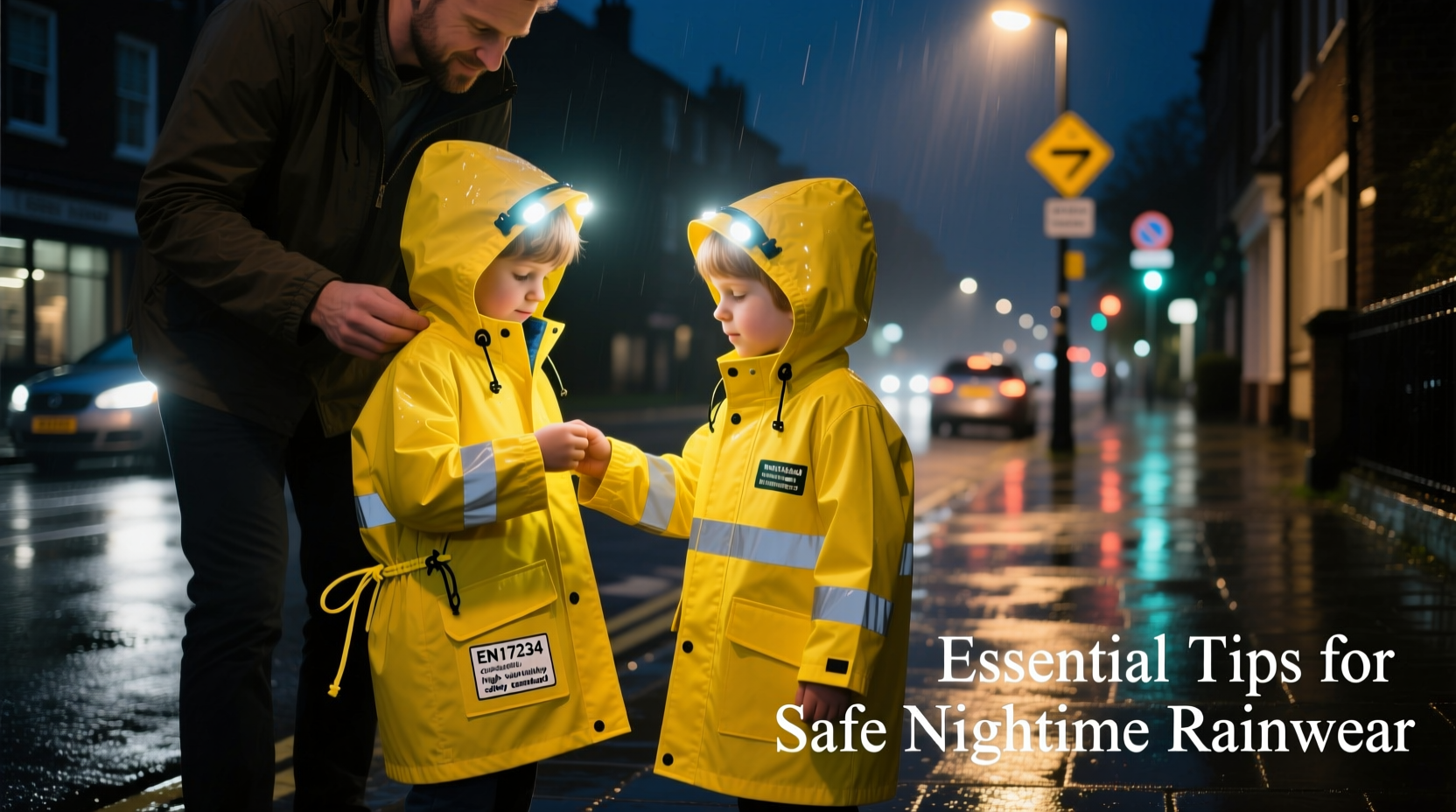
Color matters, but not all bright hues perform equally at night. Fluorescent yellow, orange, or lime green are effective in daylight, but once ambient light drops, even vibrant colors fade into shadows. That’s where reflective materials become non-negotiable. These materials don’t emit light—they reflect it back to its source, such as car headlights, making the wearer instantly more visible from a distance.
Look for raincoats with wide, strategically placed reflective strips. The most effective designs include 360-degree reflectivity: bands around the sleeves, across the chest and back, and along the hem. Some advanced models feature retroreflective logos or patterns that increase surface area for light return. Avoid coats with tiny logos or thin piping—these offer minimal visibility improvement.
Tip: Shine a flashlight on the coat in a dark room to test how well the reflective material bounces light back.Understand Safety Standards and Certification Labels
Not all reflective gear is created equal. In Europe, high-visibility clothing must comply with EN ISO 20471, which sets strict requirements for background material luminosity, retroreflective performance, and garment design. While this standard primarily applies to occupational wear, some premium children’s raincoats are tested and rated under similar protocols.
In the U.S., ANSI/ISEA 107 is the equivalent benchmark for high-visibility apparel. Though rarely labeled on kids’ products, manufacturers who adhere to these standards often mention compliance in product descriptions. Look for phrases like “meets ANSI Class E” or “tested to ISO 20471 background material requirements.” Even if full certification isn’t claimed, referencing these standards indicates a commitment to measurable safety performance.
“Children under 10 are three times more likely to be involved in pedestrian incidents after dark. Properly designed high-visibility clothing can reduce that risk significantly.” — Dr. Lena Torres, Pediatric Injury Prevention Specialist, National Safe Routes to School Program
Fit and Mobility: Safety Beyond Reflectivity
A perfectly reflective raincoat offers no benefit if it’s too tight to allow movement or so long it creates a tripping hazard. Ill-fitting coats also tend to ride up or bunch, covering reflective strips or exposing the lower back to rain. For nighttime safety, fit impacts both comfort and visibility consistency.
Choose a slightly roomy cut that allows layering over sweaters or uniforms without restricting arm motion. Adjustable cuffs, drawstring waists, and hoods with toggle closures help customize the fit as the child grows. Ensure the hood covers the head fully and stays in place in wind—preferably with a brim to shield the face from rain while preserving forward vision.
Length is another key factor. The coat should end above the knees to prevent dragging, especially on stairs or uneven sidewalks. Test mobility by having the child raise their arms, bend forward, and simulate walking with a backpack.
Material Durability and Weather Protection
Safety starts with staying dry. Wet clothing leads to discomfort, distraction, and reduced body heat, impairing alertness. A nighttime raincoat must first function as effective rain protection before enhancing visibility.
Opt for waterproof (not just water-resistant) fabrics such as polyurethane-coated polyester or nylon. Sealed seams prevent leakage at stress points. Breathable materials reduce internal condensation, preventing fogging inside the hood or excessive sweating during active commutes.
Durable construction ensures longevity and consistent performance. Reinforced shoulders and elbows resist wear from backpack straps. Zippers should be covered with storm flaps and operate smoothly, even with gloves. Avoid coated vinyl or PVC alternatives—they’re often less breathable and prone to cracking over time.
| Feature | Recommended | Avoid |
|---|---|---|
| Reflective Material | Wide strips, 360° placement | Small logos, narrow piping |
| Fabric Type | Waterproof, breathable polyester | Vinyl, uncoated cotton |
| Hood Design | Brimmed, adjustable, wide field of view | Tight-fitting, no brim |
| Certification | Mentions ANSI/ISEA or ISO standards | No safety claims or vague terms |
Real-World Scenario: How One Coat Made a Difference
In a suburban neighborhood outside Portland, Oregon, seven-year-old Mia walks 15 minutes to school each morning, often in pre-dawn darkness during winter months. Her parents initially bought her a cute pink raincoat with a single thin silver stripe across the back. After learning about visibility risks from a school safety presentation, they replaced it with a certified high-visibility model featuring wide reflective bands on the arms, torso, and legs.
One foggy November morning, a delivery driver rounding a blind corner reported seeing Mia from over 120 feet away due to the reflection from her coat. He later told school staff he wouldn’t have noticed her in time had she been wearing her old jacket. This incident prompted the school to launch a “Be Seen, Be Safe” campaign promoting upgraded outerwear for all students.
Step-by-Step Guide to Selecting the Right Raincoat
- Evaluate lighting conditions: Observe the routes your child takes after dark. Identify poorly lit zones, crosswalks, or areas with heavy vehicle traffic.
- Check for certified reflectivity: Look for garments with broad, durable reflective materials—not just decorative accents.
- Assess fit and range of motion: Have the child try the coat on with typical layers and a backpack.
- Test waterproof integrity: Review fabric specs; look for sealed seams and hydrostatic head ratings above 3,000mm.
- Verify durability and ease of care: Machine-washable coats maintain reflectivity longer when properly cleaned—avoid fabric softeners.
- Involve the child in selection: When kids like the style and comfort, they’re more likely to wear the coat consistently.
Frequently Asked Questions
Can a bright-colored raincoat be enough for nighttime safety?
During twilight or under streetlights, bright colors help—but they are insufficient in complete darkness. Without reflective materials, even neon garments become nearly invisible beyond 50 feet. Reflectivity is essential for nighttime scenarios.
How do I maintain the reflective strips on the coat?
Wash the coat according to manufacturer instructions, usually in cold water on a gentle cycle. Avoid bleach and fabric softeners, which degrade adhesive layers. Air dry when possible—high heat can delaminate reflective tape over time.
Are there age-specific guidelines for high-visibility children’s wear?
While no universal age-based rules exist, experts recommend introducing certified high-visibility gear as soon as a child begins walking independently outdoors before sunrise or after sunset—typically ages 5 and up.
Final Thoughts: Safety Is Built Into the Details
Selecting a raincoat for nighttime travel requires shifting focus from aesthetics to functionality. It’s not enough for a coat to be merely colorful or trendy—it must actively contribute to the child’s visibility and physical safety. By prioritizing certified reflectivity, proper fit, and durable weather protection, parents and caregivers make a proactive investment in accident prevention.
Every detail—from the width of a reflective band to the positioning of a hood brim—plays a role in how safely a child navigates dimly lit streets. In moments where split-second recognition means the difference between harm and safety, the right raincoat doesn’t just keep them dry—it keeps them seen.
🚀 Take action tonight: Inspect your child’s current raincoat with a flashlight in a dark hallway. If you can’t clearly see reflective surfaces from 20 feet away, it’s time to upgrade. Share this knowledge with other parents—because every child deserves to be seen.