In today’s hyper-connected world, teenagers spend more time than ever staring at screens—phones, laptops, tablets, and gaming consoles. With an average of 7 to 9 hours of daily screen exposure, many parents and educators are concerned about digital eye strain. One popular solution gaining traction is blue light blocking glasses. But do they actually work? And if so, how much relief can they offer teens struggling with tired, dry, or irritated eyes after long screen sessions?
This article examines the science behind blue light, evaluates clinical evidence on blue light glasses, and offers practical strategies for reducing digital eye strain in adolescents. The goal is not just to assess a product, but to empower families with informed decisions about eye health in the digital age.
The Science of Blue Light and Eye Strain
Natural sunlight contains a spectrum of visible light, including blue wavelengths that play a key role in regulating circadian rhythms and boosting alertness during the day. Digital screens emit artificial blue light—specifically high-energy visible (HEV) light in the 400–450 nanometer range. While not inherently harmful in moderation, prolonged exposure, especially in low-light environments, may contribute to visual discomfort.
Digital eye strain, also known as computer vision syndrome, includes symptoms like:
- Eye fatigue
- Dryness or irritation
- Blurred vision
- Headaches
- Difficulty focusing
- Sleep disturbances
The American Optometric Association notes that these symptoms arise not solely from blue light, but from extended focus, reduced blinking, poor ergonomics, and uncorrected vision issues. However, blue light has become a focal point due to its prevalence in modern screen use and its potential disruption of melatonin production—a hormone critical for sleep regulation.
“While blue light exposure late at night can delay sleep onset, the link between blue light and physical eye strain is less direct. Visual fatigue is more often tied to how we use screens than what kind of light they emit.” — Dr. Lena Patel, Pediatric Optometrist, Cleveland Clinic
What Does the Research Say About Blue Light Glasses?
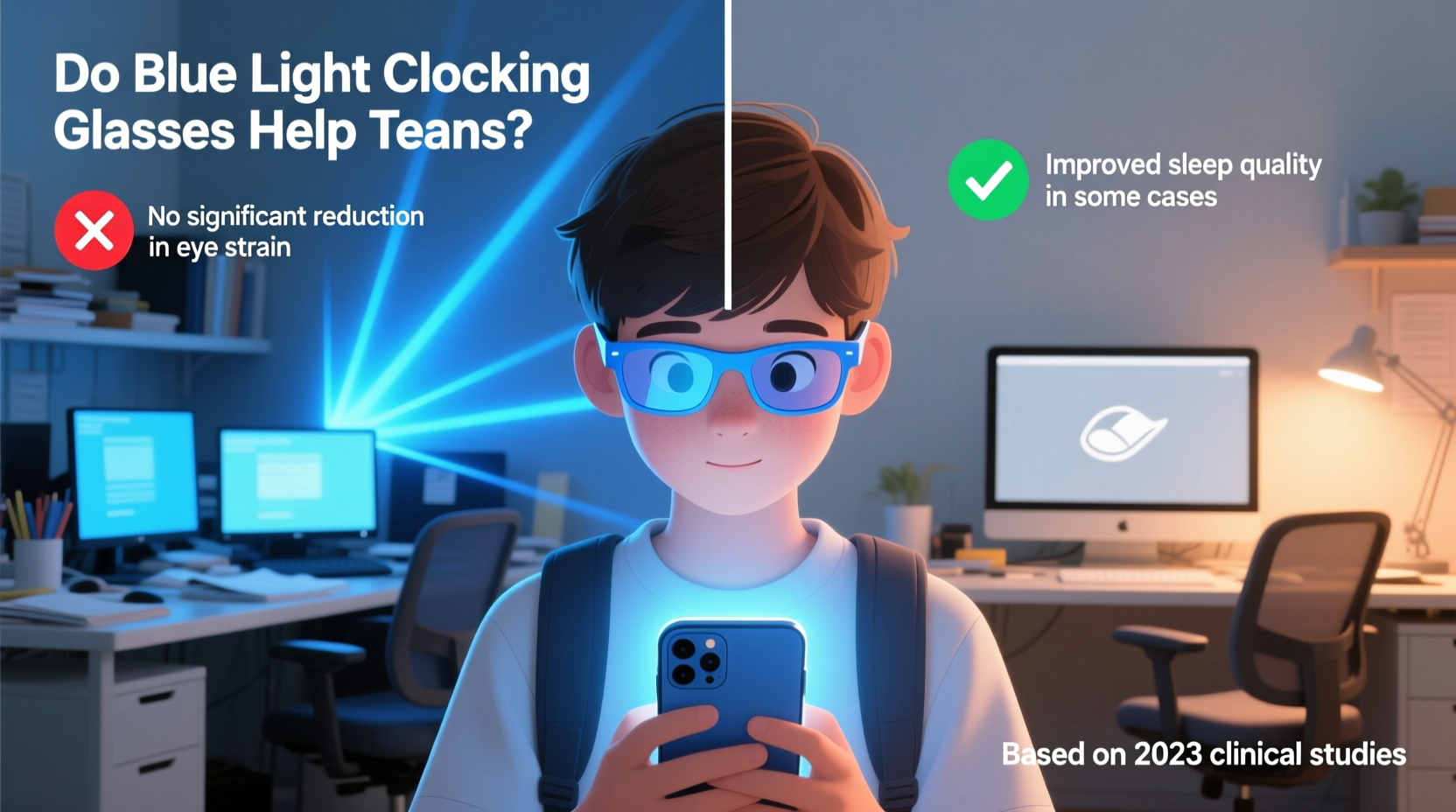
Studies on blue light blocking glasses have produced mixed results. A 2020 review published in *Ophthalmic & Physiological Optics* analyzed 17 clinical trials and found limited evidence supporting their effectiveness in reducing eye strain. Some participants reported subjective improvements in comfort, but objective measures—such as blink rate, tear film stability, and visual acuity—showed no significant change.
However, research does support one clear benefit: improved sleep. A study from the University of Houston showed that participants wearing amber-tinted blue light glasses two hours before bedtime experienced a 58% increase in nighttime melatonin levels compared to those without glasses. For teens, who already face circadian rhythm shifts during puberty, this can be meaningful.
Another consideration is placebo effect. When teens believe they’re using a protective tool, they may unconsciously adopt better screen habits—taking breaks, adjusting brightness, or reducing usage. This behavioral shift, rather than the glasses themselves, could explain perceived symptom relief.
Key Factors That Influence Effectiveness
Not all blue light glasses are created equal. Their impact depends on several variables:
- Lens tint: Amber or orange tints block more blue light than clear lenses with coatings.
- Wear timing: Glasses used only during evening screen time affect sleep more than daytime eye strain.
- Screen type and brightness: High-brightness devices in dark rooms increase glare and discomfort, regardless of lens use.
- User expectations: Psychological perception plays a role in self-reported symptom improvement.
Practical Alternatives to Reduce Digital Eye Strain
While blue light glasses may offer marginal benefits, especially for sleep, they should not replace foundational eye care practices. The most effective strategies for managing digital eye strain in teens are behavioral and environmental.
Follow the 20-20-20 Rule
Every 20 minutes, look at something 20 feet away for at least 20 seconds. This simple habit allows eye muscles to relax and reduces accommodative stress—the constant focusing required when viewing near objects.
Optimize Screen Settings
- Reduce screen brightness to match ambient lighting.
- Use “night mode” or “warm filter” settings in the evening.
- Increase text size to minimize squinting.
- Enable dark mode where available to reduce glare.
Improve Ergonomic Setup
A poorly positioned screen forces the eyes and neck to work harder. Ideal setup includes:
- Top of screen at or slightly below eye level.
- Screen distance of about arm’s length (18–24 inches).
- Chair with lumbar support and feet flat on the floor.
Encourage Regular Breaks and Physical Activity
Movement increases blood flow and reduces overall fatigue. Encourage teens to stand up, stretch, or walk around every hour—even briefly. Outdoor daylight exposure during breaks helps regulate circadian rhythms and supports healthy vision development.
“Teens need dynamic visual input—not just near work. Time outdoors is one of the best defenses against both eye strain and myopia progression.” — Dr. Rajiv Mehta, Vision Scientist, Johns Hopkins University
Mini Case Study: Sarah’s Screen Fatigue Journey
Sarah, a 16-year-old high school junior, began experiencing frequent headaches and blurry vision after switching to remote learning. She spent 8+ hours daily on her laptop and phone, often studying late into the night. Her mother bought her a pair of trendy blue light glasses advertised to “reduce eye fatigue.”
Initially, Sarah felt better and credited the glasses. But after three weeks, symptoms returned. A visit to the optometrist revealed mild uncorrected astigmatism and extremely low blink rate—she was blinking only 5 times per minute instead of the normal 15–20.
With corrective lenses, ergonomic adjustments, and structured screen breaks, Sarah’s symptoms improved significantly within two weeks. The blue light glasses remained useful in the evenings to support sleep, but were not the primary solution for her eye strain.
This case illustrates a common pattern: blue light glasses may provide psychological comfort or minor benefits, but underlying causes—like refractive errors, poor posture, or excessive screen time—require targeted interventions.
Checklist: Reducing Digital Eye Strain in Teens
Parents and teens can work together to create healthier screen habits. Use this checklist to get started:
- ✅ Schedule regular comprehensive eye exams—at least once a year.
- ✅ Apply the 20-20-20 rule during homework and leisure screen time.
- ✅ Adjust screen brightness and enable warm filters after sunset.
- ✅ Position devices at proper height and distance.
- ✅ Limit recreational screen use 1 hour before bedtime.
- ✅ Encourage outdoor activity for at least 60 minutes daily.
- ✅ Use artificial tears if eyes feel dry (non-preservative preferred).
- ✅ Discuss screen habits openly—avoid shame-based restrictions.
Blue Light Glasses: Do’s and Don’ts
| Do | Don't |
|---|---|
| Use amber-tinted glasses 2–3 hours before bed to support sleep | Rely on them as the sole solution for persistent eye strain |
| Purchase lenses with independent lab testing for blue light filtration | Buy cheap, unverified glasses from online marketplaces without reviews |
| Combine glass use with reduced screen brightness | Wear them in low-light conditions if they distort color perception |
| Involve your teen in selecting comfortable, well-fitting frames | Assume clear-coated lenses block significant amounts of blue light |
| Pair evening use with device night modes | Expect immediate relief from headaches or blurred vision without addressing root causes |
Frequently Asked Questions
Can blue light glasses prevent myopia in teens?
No, there is no scientific evidence that blue light blocking glasses prevent nearsightedness. Myopia progression is influenced by genetics, lack of outdoor time, and prolonged near work. Spending more time outdoors in natural light remains the most effective preventive strategy.
Are blue light glasses safe for everyday use?
Yes, they are generally safe. However, clear-coated lenses may offer minimal protection, while heavily tinted versions (like red or amber) can distort color perception and aren’t ideal for daytime tasks requiring accurate color judgment, such as art or design work.
At what age should teens start using blue light glasses?
There’s no minimum age, but use should be purpose-driven. If a teen uses screens extensively at night and struggles with falling asleep, amber-tinted glasses in the evening may help. For younger teens, prioritizing screen time limits and outdoor activity is more impactful than relying on accessories.
Conclusion: A Balanced Approach to Eye Health
Blue light blocking glasses are not a magic fix for digital eye strain in teens. While they may modestly improve sleep quality when worn in the evening, they do little to address the core causes of eye fatigue—excessive screen time, poor ergonomics, infrequent blinking, and uncorrected vision problems.
The most effective approach combines smart technology use with proactive eye care. Regular eye exams, adherence to the 20-20-20 rule, optimized screen settings, and consistent outdoor activity form the foundation of long-term visual wellness. Blue light glasses can play a supporting role, particularly for teens with delayed sleep patterns, but should be viewed as one tool among many—not a standalone solution.
💬 What’s your experience with blue light glasses? Have they helped your teen with eye strain or sleep? Share your story in the comments to help other families make informed choices.