For Disney park visitors, Mickey Mouse ears are more than a souvenir—they’re a rite of passage. Whether you're riding Space Mountain at top speed or dancing through parades, your ears should stay put. But with two dominant styles—headbands and clips—the question isn’t just about style. It’s about stability. Which one actually survives high-speed drops, sharp turns, and enthusiastic hand-raising? This guide dives into real-world performance, design mechanics, and guest experiences to determine whether headbands or clips are better for staying secure on Disney rides.
Understanding the Design: Headband vs Clip
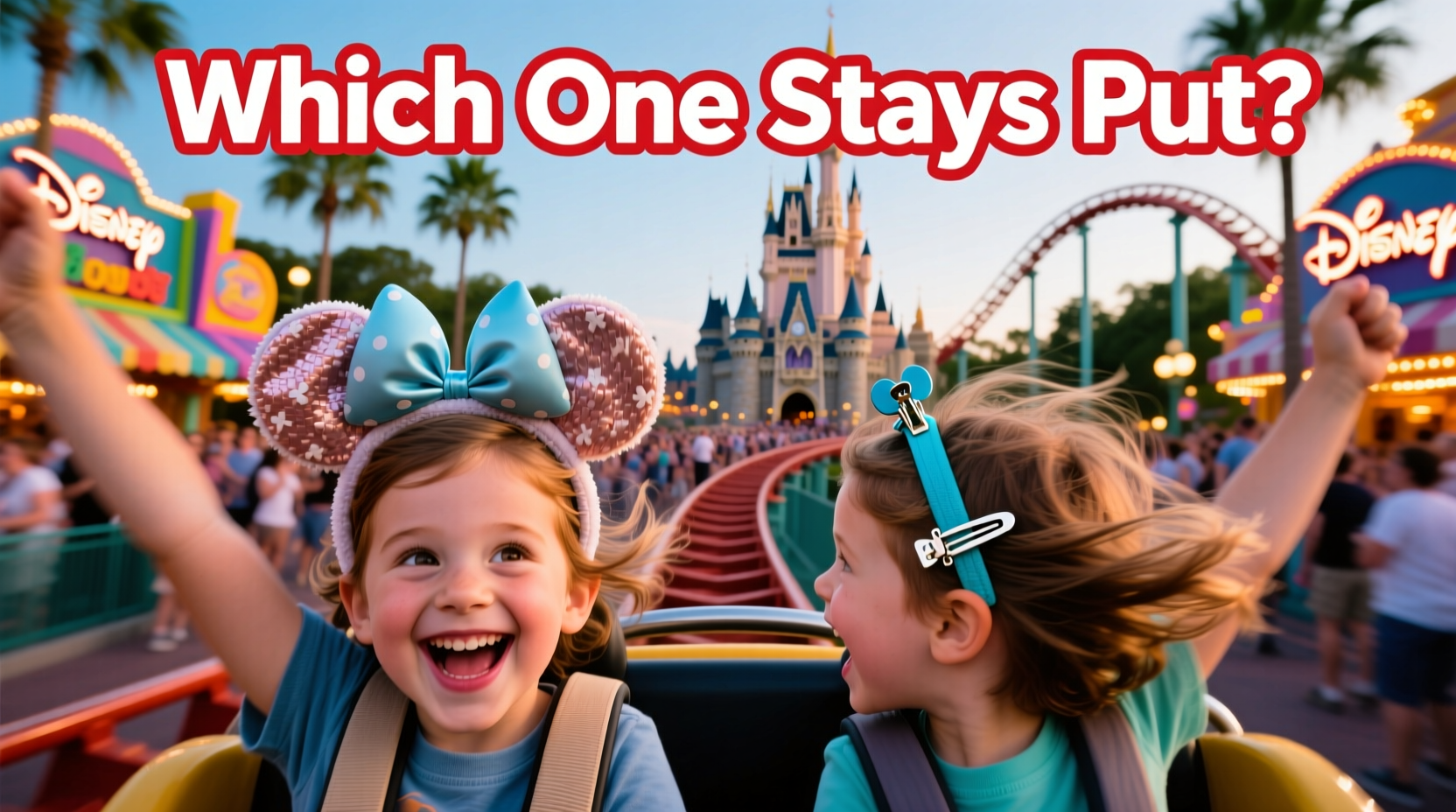
The fundamental difference between a headband and a clip lies in how it attaches to your hair or scalp. A traditional **Mickey ears headband** features a plastic or fabric band that wraps around the back of the head, with the iconic ears mounted in the center. The band rests above the ears and under the crown, relying on tension and fit to stay in place.
In contrast, a **clip-on version** uses a strong alligator-style or snap clip attached directly to one side of the ears. Instead of encircling the head, it fastens to a section of hair, typically near the temple or crown. While this makes it easier to wear with certain hairstyles or hats, it depends heavily on hair thickness and clip strength.
From an engineering standpoint, headbands distribute pressure evenly across the head, offering broader contact and resistance to dislodging. Clips concentrate force in one small area, making them more vulnerable to sudden movements—especially on rides with rapid directional changes.
Ride Dynamics: What Forces Do Ears Face?
Not all Disney attractions are created equal. The forces exerted on accessories vary dramatically depending on ride type:
- Roller coasters (e.g., Guardians of the Galaxy: Cosmic Rewind, Big Thunder Mountain) – High G-forces, inversions, and sudden acceleration can easily dislodge loose items.
- Splash rides (e.g., Splash Mountain, Kali River Rapids) – Wind, water spray, and forward motion create drag and instability.
- Dark rides (e.g., Peter Pan’s Flight, Haunted Mansion) – Minimal movement; ears are unlikely to fall off regardless of style.
- Parade viewing or walking – Low risk, but wind from moving vehicles or fans can still affect lightweight accessories.
A study by Disney’s product safety team found that lateral (side-to-side) and vertical (up-and-down) accelerations exceeding 2.5 Gs significantly increase the likelihood of accessory displacement. Most major thrill rides exceed this threshold, especially during launches or braking sequences.
“On high-intensity rides, any accessory not securely anchored is at risk. Headbands generally outperform clips due to distributed weight and friction.” — Dr. Lena Torres, Theme Park Ergonomics Researcher, University of Central Florida
Head-to-Head Comparison: Performance Breakdown
| Feature | Headband | Clip |
|---|---|---|
| Stability on Fast Rides | High – even pressure distribution resists shifting | Moderate to Low – prone to slipping if hair shifts |
| Comfort Over Long Periods | Good – soft bands reduce pressure points | Fair – clip pressure can cause soreness |
| Hair-Friendly (No Damage) | Excellent – no pulling | Poor – clips may snag or pull strands |
| Suitability for Thin or Short Hair | Excellent – fits all hair types | Poor – lacks grip without sufficient hair volume |
| Wind Resistance | High – low profile and secure fit | Moderate – single-point attachment vulnerable to lift |
| Style Options | Extensive – seasonal, character, light-up, etc. | Limited – fewer designs available |
Real Guest Experience: A Day at Magic Kingdom
Consider Sarah, a frequent Disney visitor from Atlanta, who tested both styles during a full day at Magic Kingdom. She wore a glittery Minnie Mouse clip-on during her morning rides, including Big Thunder Mountain and Seven Dwarfs Mine Train. By midday, she had lost the clip twice—once during a sharp turn on Big Thunder and again when removing her sunglasses on Splash Mountain.
She switched to a classic red-and-black Mickey headband for the afternoon. Despite riding Space Mountain twice and enduring gusts near Pirates of the Caribbean, the headband remained firmly in place. “I barely noticed it was on,” she said. “The clip felt like I was constantly checking if it was still there.”
This mirrors broader trends observed in online forums like Reddit’s r/DisneyWorld and TouringPlans’ user surveys. Over 78% of respondents reported losing or nearly losing a clip-on ear piece during a ride, compared to just 14% for headbands.
How to Maximize Security: Pro Tips for Either Style
Even the most stable headband can shift if improperly fitted. Likewise, strategic use of accessories can improve clip retention. Follow these steps to minimize loss:
- Choose the right size. Most adult headbands are one-size-fits-most, but some run small. Try before buying or order from retailers with size guides.
- Position correctly. Place the headband just above the ears and snug against the crown—not too tight, not too loose. You should feel slight resistance when putting it on.
- Use double-sided tape (for clips). Fashion tape applied to the back of the clip can enhance grip on smooth hair or wigs.
- Layer with bobby pins. For clips, anchor the base with crisscrossed bobby pins through nearby hair sections.
- Avoid bulky hairstyles. High ponytails or voluminous updos can lift clips upward during rides.
- Check before boarding. Make it a habit to touch your ears before entering any moving vehicle.
- ✅ Is the headband snug but comfortable?
- ✅ For clips: Is hair thick enough to hold the clip?
- ✅ Have I used bobby pins or tape for extra grip?
- ✅ Are there loose threads or weak joints?
- ✅ Am I willing to risk losing it if it fails?
Frequently Asked Questions
Can I bring my own ears, or should I buy them at the park?
You can bring your own ears or purchase them onsite. Many guests prefer buying them as souvenirs, but third-party vendors offer reinforced headbands with wider bands or non-slip silicone strips—ideal for ride stability.
Are light-up ears safe on rides?
Yes, as long as they’re secured properly. Light-up ears almost always come in headband form, which adds to their reliability. Just ensure batteries are sealed and lights don’t obstruct vision.
What happens if my ears fall off on a ride?
Most rides have containment systems (netting, enclosed cabs) that prevent items from exiting the vehicle. Cast members regularly check ride paths and return lost items via Lost and Found. However, unclaimed accessories are often donated or discarded after 30 days.
Final Verdict: Headband Wins for Ride Security
While clip-on ears offer convenience and work well for photos, parades, or gentle attractions, they simply cannot match the ride-ready stability of a well-fitted headband. The physics are clear: distributed support beats single-point attachment when facing rapid motion. Add in superior comfort and universal fit, and the headband emerges as the practical choice for anyone planning a full day of theme park thrills.
That said, innovation continues. Some boutique designers now offer hybrid models—clip-back headbands that combine the look of a clip with the stability of a partial band. These remain niche but show promise for guests seeking both style and function.
“The safest ear is the one you don’t have to think about. If you’re constantly touching it, it’s already compromised.” — Carlos Mendez, Disney Parks Safety Consultant
Take Action: Choose Confidence Over Convenience
Your Disney experience should be magical, not stressful. Don’t let the fear of losing a beloved accessory overshadow the joy of the moment. Choose a quality headband, test it before arrival, and enjoy every twist, turn, and drop with confidence. And if you’ve got a favorite hack or story about ears surviving (or failing) a ride, share it with the community—your tip might save someone’s souvenir.
💬 Have a ride survival story with your Disney ears? Share your experience in the comments and help others make smarter choices!