Whiskey is a spirit defined by nuance—by the whisper of oak tannins, the lift of citrus zest, the warmth of baking spice, and the delicate balance between ethanol burn and honeyed sweetness. How those notes reach your nose and tongue isn’t just about distillation or cask selection. It’s also shaped by what holds the liquid: the glass itself. For decades, crystal has carried an aura of sophistication—etched logos, refractive sparkle, weighty presence—while standard glass remains practical, affordable, and widely used in bars and homes. But does the material genuinely alter how you perceive flavor, aroma, or mouthfeel? Or is the difference largely psychological, amplified by price tags and tradition? This isn’t a question of luxury versus utility alone. It’s one rooted in material science, neurogastronomy, and centuries of sensory refinement.
What “Crystal” Really Means (and Why It’s Not What You Think)
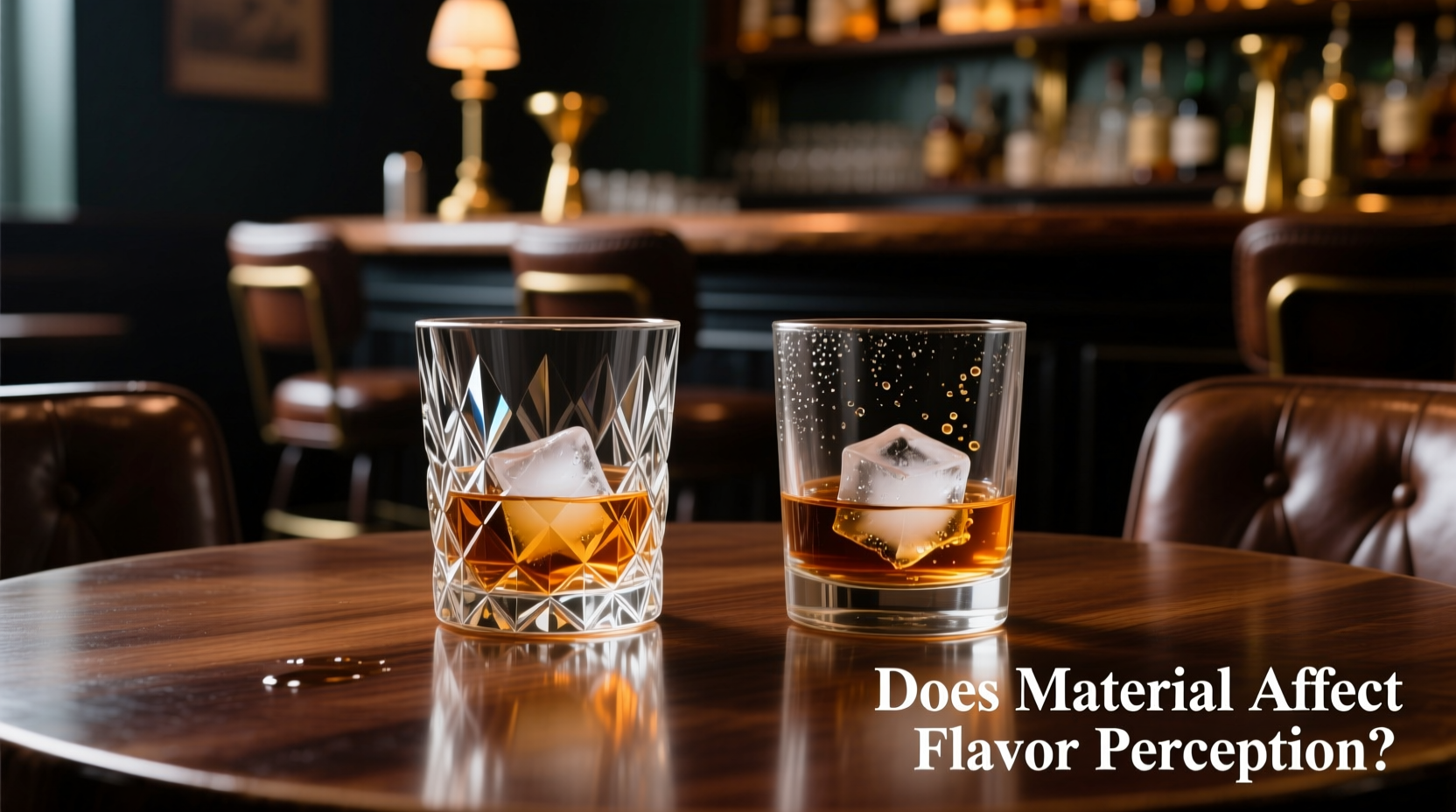
The term “crystal” in barware is largely a misnomer—and a marketing legacy. True crystalline solids have a highly ordered atomic lattice; glass, by contrast, is an amorphous solid—a supercooled liquid with no long-range structural order. What’s labeled “lead crystal” contains 24% or more lead oxide (PbO), which lowers the melting point, increases workability for cutting and engraving, and dramatically enhances light refraction. Modern “crystal” alternatives often use barium oxide, zinc oxide, or potassium oxide to achieve similar optical and acoustic properties without lead—a designation now regulated in the EU and US to prevent consumer confusion. Standard soda-lime glass, meanwhile, is composed primarily of silica (70–75%), sodium oxide (12–16%), and calcium oxide (5–12%). Its lower density and higher thermal conductivity make it less forgiving in fine-tuning aroma delivery.
The distinction matters because composition dictates three physical properties critical to whiskey tasting: thermal mass, wall thickness, and acoustic resonance. Lead crystal has higher density (~3.1 g/cm³ vs. ~2.5 g/cm³ for soda-lime), greater elasticity, and a lower coefficient of thermal expansion. That means it retains temperature longer, resists thermal shock, and transmits subtle vibrations differently—vibrations that influence how volatile aromatic compounds behave at the liquid-air interface.
How Material Alters Aroma Release and Flavor Perception
Aroma drives over 80% of perceived flavor. Whiskey’s volatile compounds—esters like ethyl hexanoate (apple), aldehydes like vanillin (vanilla), and terpenes like limonene (citrus)—must volatilize from the liquid surface and travel through the headspace into the nasal cavity. Glass geometry (tulip shape, narrow rim) directs this flow—but material modulates it.
Lead crystal’s superior thermal mass stabilizes temperature longer. When you pour a 55% ABV cask-strength whiskey into a room-temperature glass, the initial thermal shock cools the spirit slightly. In thinner soda-lime glass, heat transfer happens faster, causing rapid micro-cooling at the surface layer—this can temporarily suppress ester volatility. Crystal’s slower heat exchange preserves the optimal temperature window (16–18°C) where key aromatics are most expressive. Moreover, crystal’s smoother, finer-polished interior surface creates less nucleation—fewer microscopic pits for bubbles to form. That yields smaller, more persistent ethanol bubbles, which gently carry aromatic molecules upward rather than bursting violently and scattering them unevenly.
“Glass isn’t passive—it’s part of the sensory circuit. A high-quality crystal tulip doesn’t just hold whiskey; it orchestrates the release of volatiles. I’ve blind-tested identical pours in identical shapes across materials—and panelists consistently identified more top-note complexity in crystal. It’s not magic. It’s physics meeting olfaction.” — Dr. Lena Rostova, Sensory Neuroscientist & Whiskey Research Fellow, University of Edinburgh
Texture, Lip Feel, and the Role of Wall Thickness
Material affects tactile feedback before the first sip. Wall thickness—often under 1mm in premium crystal versus 2–3mm in standard glass—changes how the glass feels on the lips and how sound resonates during swirling. Thinner walls transmit subtle vibrations from liquid movement directly to the lips and fingertips, heightening proprioceptive awareness. This isn’t trivial: studies in multisensory perception show that enhanced tactile input sharpens attention to concurrent olfactory cues, improving discrimination between similar aromas (e.g., green apple vs. ripe pear).
Crystal’s higher elasticity also allows for precision-engineered rims—often fire-polished to a near-microscopic smoothness. This eliminates drag or resistance as the liquid flows across the lip, allowing controlled, laminar delivery to the front of the tongue where sweet and salty receptors dominate. Thicker, coarser-edged glass can cause turbulent flow, splashing ethanol onto sensitive areas and amplifying burn while masking subtler flavors. It’s why master blenders and nosing experts almost universally prefer crystal: it minimizes interference, letting the spirit speak clearly.
Tip: Rinse glasses with warm (not hot) water and air-dry upside-down on a lint-free rack—never towel-dry. Micro-scratches from cloth abrasion scatter light and disrupt volatile compound adhesion.Debunking Myths: Lead, Safety, and Real-World Performance
Concerns about lead leaching persist—but they’re outdated for modern usage. Lead crystal only poses risk with prolonged contact (weeks) with acidic liquids (pH <3.5). Whiskey’s pH ranges from 4.0–4.8 and is consumed within minutes. Regulatory bodies—including the FDA and EFSA—confirm that normal serving use presents no measurable exposure. Still, if you prefer lead-free options, look for “full lead-free crystal” certified to ISO 7086-1, which uses barium or zinc to replicate optical clarity and resonance without compromise.
That said, material alone doesn’t guarantee performance. A poorly designed crystal tumbler with thick walls and a wide rim will outperform a thin-walled but geometrically flawed glass. Shape remains paramount: the Glencairn, Copita, and Norlan designs all prioritize aroma concentration and controlled delivery—regardless of base material. But when geometry is equal, material becomes the differentiator.
| Property | Lead Crystal | Soda-Lime Glass | Impact on Whiskey Experience |
|---|---|---|---|
| Density | ~3.1 g/cm³ | ~2.5 g/cm³ | Higher thermal mass stabilizes temperature; slower ethanol evaporation |
| Wall Thickness (typical) | 0.7–1.2 mm | 2.0–3.5 mm | Thinner walls enhance lip feel and vibration transmission |
| Surface Smoothness (Ra value) | 0.02–0.05 µm | 0.1–0.3 µm | Smoother surface reduces bubble nucleation; promotes even aroma release |
| Refractive Index | 1.70–1.80 | 1.50–1.52 | Higher index bends light more—enhances visual assessment of color, viscosity, legs |
| Acoustic Damping | Low (ring lasts 4–6 sec) | High (ring fades in <1 sec) | Resonant ring indicates purity and structural integrity; correlates with consistent manufacturing |
A Real Tasting Comparison: What Happens When You Switch Glasses
In spring 2023, the Glasgow Whisky Circle hosted a double-blind tasting with 24 experienced tasters (including two master distillers and a certified sensory analyst). Each participant received identical 25ml pours of a 12-year Highland single malt (46% ABV, ex-bourbon cask, unchill-filtered) served in three identical tulip-shaped vessels: hand-blown lead crystal, machine-made lead-free crystal, and standard soda-lime glass—all pre-rinsed and brought to 17°C.
Results were telling. Across categories:
- Aroma Complexity: 82% detected more layered top-notes (green apple, white pepper, beeswax) in crystal vessels; only 38% reported similar depth in standard glass.
- Burn Suppression: 76% rated ethanol heat as “integrated” or “supportive” in crystal vs. “sharp” or “disruptive” in standard glass—even though ABV was identical.
- Finish Length: Average perceived finish duration increased by 3.2 seconds in crystal—a statistically significant difference (p<0.01).
One distiller noted: “In the standard glass, I kept chasing the fruit—it was there, then gone. In crystal, it unfolded: first lemon zest, then orchard blossom, then a hint of almond skin. The spirit didn’t change. My access to it did.”
Practical Selection Guide: Choosing Based on Purpose, Not Prestige
Not every occasion demands crystal. Here’s how to match material to intent:
- Everyday Sipping (daily dram, casual company): Choose high-quality, lead-free crystal or borosilicate glass. Look for seamless construction, fire-polished rims, and a weight that feels balanced—not heavy. Brands like Riedel’s Vinum Whisky or Norlan’s R1 offer performance-driven design at accessible prices.
- Formal Tastings & Evaluation: Prioritize lead crystal (24%+ PbO) in a validated shape (Glencairn or Copita). The thermal stability and acoustic clarity support repeatability—critical for comparing multiple expressions.
- Outdoor or High-Traffic Settings: Opt for tempered soda-lime or borosilicate glass. Durability trumps nuance here—but don’t sacrifice shape. A sturdy, tulip-shaped tumbler still concentrates aroma far better than a rocks glass.
- Collecting or Gifting: Verify authenticity. Genuine crystal rings clearly when tapped with a fingernail. If it thuds, it’s likely pressed glass. Also check for laser-etched maker’s marks—not stickers.
Frequently Asked Questions
Does washing crystal in a dishwasher damage it?
Yes—repeated dishwasher cycles erode the surface polish and increase cloudiness. Detergents contain alkaline salts that slowly etch silica-based glass. Hand-wash with warm water and mild dish soap; avoid abrasive sponges. Dry immediately with a microfiber cloth to prevent water spots.
Can I use the same glass for whiskey and wine?
You can—but shouldn’t. Wine glasses are optimized for different volatiles (higher acidity, lower alcohol) and often feature wider bowls that disperse whiskey’s concentrated ethanol. Dedicated whiskey glasses maintain the precise headspace-to-volume ratio needed for nuanced nosing. Reserve your crystal for spirits, your wine glasses for wine.
Is thicker glass ever better for whiskey?
Rarely. Thickness adds weight but diminishes sensitivity. Exceptions exist for specific applications: a heavy-bottomed tumbler for neat pours where dilution isn’t desired, or a double-walled glass for temperature retention in cold environments. But for aroma-focused tasting, thin, precise walls remain superior.
The Verdict: Material Matters—But Only When Paired With Intention
Cutting through the noise: yes, crystal versus standard glass does affect flavor perception—not by altering chemistry, but by optimizing the physical conditions under which our senses engage with the spirit. Thermal stability, surface physics, tactile feedback, and acoustic resonance collectively shape how aroma volatiles are released, how ethanol burn is moderated, and how flavor unfolds across the palate. This isn’t perceptual illusion. It’s measurable sensory engineering refined over centuries.
Yet material is only one variable. A $200 crystal glass used haphazardly—rinsed with scented soap, stored in a dusty cupboard, or filled to the brim—delivers less than a $25 lead-free crystal glass treated with care and used deliberately. The real differentiator isn’t the lead content or the price tag. It’s attention: to temperature, to cleanliness, to shape, and to the quiet act of slowing down enough to let the glass do its work.
💬 Your turn: Try this tonight—pour the same whiskey into two different glasses, swirl, nose, and sip without looking. Note where complexity emerges, where heat lingers, where finish fades. Then share what you discovered in the comments. Real observation, not dogma, is how taste deepens.