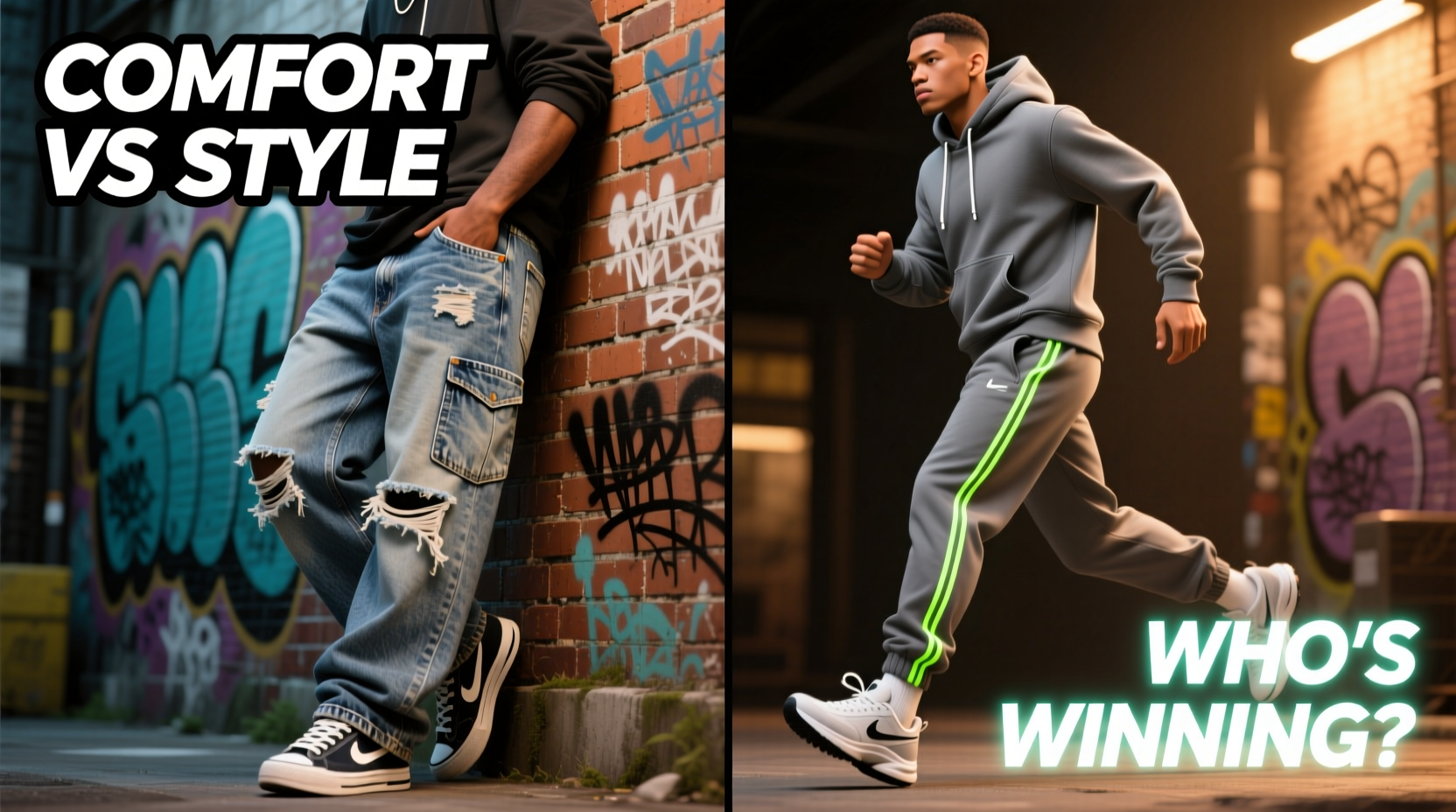
In the evolving landscape of casual menswear and unisex fashion, two contenders dominate the comfort category: baggy jeans and track pants. Both offer freedom of movement, relaxed silhouettes, and a laid-back aesthetic. But when it comes to balancing comfort with style, which one truly takes the crown? The answer isn’t straightforward—it depends on context, material, personal taste, and lifestyle needs. This article breaks down the key differences, advantages, and real-world applications of both garments to help you make an informed choice.
The Rise of Relaxed Wear
Fashion has undergone a quiet revolution over the past decade. The rigid formality of slim-fit everything has given way to looser cuts, driven by cultural shifts toward comfort, inclusivity, and self-expression. Streetwear culture, remote work, and athleisure trends have all contributed to this evolution. Baggy jeans and track pants are not just wardrobe items—they’re symbols of a broader movement prioritizing ease without sacrificing aesthetics.
While both styles share common ground in their loose fit and casual appeal, they diverge significantly in construction, material, and social perception. Understanding these distinctions is crucial for building a versatile, functional, and stylish wardrobe.
Comfort Showdown: Fabric, Fit, and Function
When evaluating comfort, three factors matter most: fabric composition, mobility, and climate adaptability.
- Baggy Jeans: Typically made from cotton denim, sometimes blended with elastane for stretch. While modern versions offer improved flexibility, traditional denim remains stiff and can feel restrictive during prolonged sitting or activity.
- Track Pants: Constructed from soft, breathable materials like polyester-cotton blends, fleece, or performance knits. They often feature elastic waists, drawstrings, and tapered legs designed for movement.
Track pants win decisively in pure comfort. Their lightweight fabrics, flexible waistbands, and moisture-wicking properties make them ideal for lounging, travel, or workouts. Baggy jeans, while more structured, require a break-in period and may cause discomfort after hours of wear—especially if worn without stretch fibers.
Tip: For maximum comfort in jeans, opt for styles with at least 2% elastane and a mid-rise cut that allows natural hip movement.Mobility Comparison
| Feature | Baggy Jeans | Track Pants |
|---|---|---|
| Fabric Flexibility | Moderate (improves with stretch blend) | High (knit or jersey-based) |
| Waistband Type | Button & zip with fixed waist | Elastic with drawstring |
| Freedom of Movement | Good for walking, limited for bending | Excellent for all activities |
| Breathability | Medium (cotton absorbs sweat but dries slowly) | High (synthetic blends wick moisture) |
| Temperature Regulation | Poor in heat, decent in mild weather | Adjustable with lining (fleece vs. mesh) |
Style Analysis: From Streetwear to Smart-Casual
Where track pants excel in comfort, baggy jeans hold their ground in versatility and style potential. The visual language of each garment sends different signals depending on the setting.
Baggy jeans, especially in raw or vintage washes, carry a heritage appeal. Paired with a tucked-in tee, minimalist sneakers, or a chore coat, they project intentionality and understated cool. Designers like Levi’s, Carhartt, and emerging labels such as Denham and Edwin have redefined wide-leg denim as a fashion-forward staple.
Track pants, historically associated with gym use or lazy Sundays, have been elevated by brands like Adidas, Nike, and even luxury houses like Balenciaga and Prada. However, outside curated streetwear ensembles, they still risk appearing sloppy if not styled carefully.
“Denim is timeless because it ages with you. Track pants are functional, but rarely become heirlooms.” — Marcus Reed, Menswear Stylist & Editor, *Urban Cloth* Magazine
Styling Scenarios
- Office Casual: Baggy jeans with a button-down shirt and loafers = appropriate. Track pants = generally frowned upon unless in a creative tech environment.
- Date Night: Dark-wash baggy jeans with a tailored jacket and boots = stylish. Track pants require high-end fabrication and precise footwear to avoid looking underdressed.
- Weekend Errands: Both work, but track pants offer superior practicality.
Real-World Example: Alex’s Wardrobe Shift
Alex, a 29-year-old graphic designer based in Portland, used to wear slim jeans daily. After transitioning to full-time remote work, he found himself constantly changing into joggers by midday. He experimented with baggy jeans for video meetings—pairing them with structured tops and clean sneakers—and received positive feedback on his “effortless” look. However, during back-to-back Zoom calls, he noticed the denim restricted circulation and caused discomfort.
He now splits his week: baggy jeans for client-facing days (even if virtual), and track pants for internal team sessions or creative deep work. His compromise reflects a growing trend—using each garment where it performs best.
How to Choose: A Practical Checklist
Still unsure which option suits your lifestyle? Use this checklist to decide:
- Do you prioritize breathability and unrestricted movement? → Track Pants
- Are you dressing for semi-formal or public-facing occasions? → Baggy Jeans
- Do you value long-term durability and aging potential? → Baggy Jeans
- Is your day mostly sedentary or active? → Active favors Track Pants
- Do you want one piece that transitions from home to street easily? → Mid-ground: Tech-denim hybrids
For those seeking balance, hybrid options exist—such as “jogger jeans” or performance denim with four-way stretch and soft interiors. These merge the structure of jeans with the comfort of activewear, though they often come at a premium price.
FAQ: Common Questions Answered
Can I wear track pants in public without looking lazy?
Yes, but only with intentional styling. Choose slim-cut, minimal-logo versions in neutral colors. Pair with fitted tops, quality outerwear, and clean footwear. Avoid oversized logos or sagging hems.
Are baggy jeans still in style in 2024?
Absolutely. Wide-leg and straight baggy cuts remain dominant in streetwear and high fashion. Brands like Maison Margiela, Amiri, and even Uniqlo have embraced the silhouette. The key is proportion—balance volume in the leg with a more fitted top half.
Which is easier to care for?
Track pants typically win here. Most are machine washable, wrinkle-resistant, and dry quickly. Baggy jeans, especially raw denim, require specific washing routines to preserve color and shape. Overwashing can lead to fading and shrinkage.
Final Verdict: Comfort vs. Style – Is There a Winner?
If comfort were the only factor, track pants would be the undisputed champion. Their ergonomic design, adaptive materials, and ease of wear make them ideal for modern life. But style is equally important—and here, baggy jeans offer unmatched versatility and sartorial credibility.
The truth is, neither garment universally “wins.” Instead, the smart approach is integration. Think of them as tools in a larger wardrobe system:
- Reach for track pants when comfort, movement, and low maintenance are priorities.
- Choose baggy jeans when appearance, longevity, and cross-setting adaptability matter.
Fashion today rewards fluidity. The most stylish individuals aren’t loyal to one category—they know how to leverage both, depending on the moment.
💬 What’s your go-to comfort wear? Do you lean toward baggy jeans, track pants, or a hybrid? Share your thoughts and styling tips in the comments—let’s build a smarter casual wardrobe together.








