In recent years, anime has transcended television screens and manga pages to influence global fashion trends—especially in footwear. Collaborations between major anime franchises like *Naruto*, *Demon Slayer*, and *Sailor Moon* with athletic brands such as Nike, Adidas, and Converse have turned once-niche fandom into mainstream streetwear phenomena. But beneath the vibrant colorways and character motifs lies a growing debate: Are fans purchasing anime sneakers for genuine comfort and performance, or are they driven primarily by emotional attachment and collectibility?
This shift reflects deeper changes in consumer behavior, where identity and nostalgia increasingly shape purchasing decisions. While classic sneaker designs continue to dominate due to their timeless appeal and proven ergonomics, anime-themed releases often sell out within minutes—not because of superior cushioning or arch support, but because of cultural resonance. Understanding this dynamic reveals much about modern retail psychology, brand strategy, and what people truly value when they lace up their shoes.
The Rise of Anime-Inspired Footwear
Anime's infiltration into Western fashion began slowly but gained momentum in the 2010s. What started as limited-edition cosplay accessories evolved into high-profile collaborations with globally recognized sportswear labels. The release of the *Dragon Ball Z* x Puma collection in 2017 marked a turning point, generating over $5 million in pre-orders alone. Since then, partnerships have multiplied: *My Hero Academia* x Asics, *Evangelion* x New Balance, and *One Piece* x Reebok have all drawn massive attention from both anime enthusiasts and sneakerheads.
These releases often feature intricate design elements tied directly to characters or story arcs. For example, a *Demon Slayer* collaboration might use gradient dyes mimicking flame patterns associated with the protagonist Tanjiro, while incorporating kanji embroidery and themed insoles. Packaging frequently includes collector’s boxes, certificates of authenticity, and QR codes linking to exclusive digital content—elevating the product beyond mere utility.
However, despite their visual innovation, many anime sneakers retain the same base models as standard versions. A *Sailor Moon* Converse Chuck Taylor may share identical soles and upper construction with its non-anime counterpart. This raises questions about whether buyers are investing in functional upgrades or symbolic ownership.
Tip: If you're considering an anime sneaker purchase, research whether it uses an updated platform or just cosmetic changes on an older model.Comfort vs. Collectibility: What Drives the Purchase?
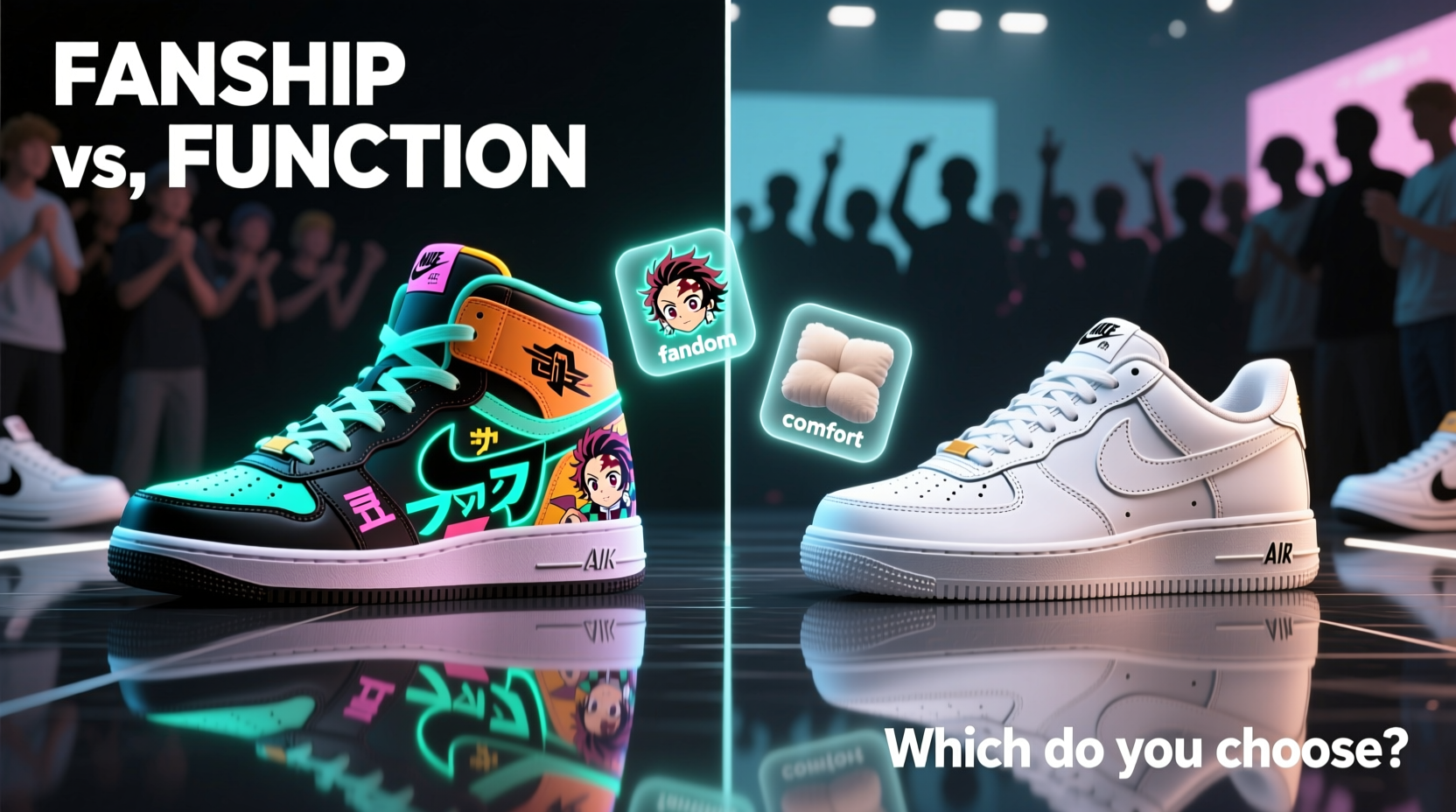
When evaluating why consumers choose anime sneakers over classic designs, two primary motivations emerge: comfort/functionality and fandom/identity expression.
Classic sneakers—think the Nike Air Force 1, Adidas Stan Smith, or Vans Old Skool—are celebrated for decades of iterative refinement. Their materials, midsole cushioning, weight distribution, and breathability have been tested across countless wearers and environments. These shoes prioritize longevity and versatility, making them ideal for daily use, commuting, or casual outings.
In contrast, anime sneakers often sacrifice practical optimization for aesthetic storytelling. Limited production runs mean less time for prototyping and biomechanical testing. Some fans report that certain anime editions feel stiffer, heavier, or less breathable than standard versions—even when built on the same chassis. Yet, these drawbacks rarely deter buyers.
A 2023 survey conducted by Footwear Insight Group found that 68% of anime sneaker purchasers listed “emotional connection to the series” as their top reason for buying, compared to just 24% who cited comfort or fit. Only 8% considered long-term wearability a deciding factor. This suggests that for most buyers, the shoe functions more as wearable art than utilitarian gear.
“Fans aren’t just buying a pair of shoes—they’re buying a piece of a world they love. That kind of emotional equity can outweigh physical comfort every time.” — Dr. Lena Tran, Cultural Anthropologist specializing in fandom economies
Design Breakdown: Anime Sneakers vs. Classic Models
To better understand the differences, here’s a comparative analysis of key features between typical anime-themed sneakers and their classic counterparts:
| Feature | Anime-Themed Sneakers | Classic Sneaker Designs |
|---|---|---|
| Primary Design Goal | Narrative expression, character tribute | Functionality, minimalism, universal appeal |
| Materials Used | Frequently include specialty prints, metallic finishes, embroidered patches | Standard canvas, leather, rubber; optimized for durability |
| Cushioning Technology | Often unchanged from base model | Regularly updated (e.g., Nike Air, Boost foam) |
| Production Volume | Limited runs (often under 10,000 pairs) | Mass-produced, widely available year-round |
| Resale Value Trend | High initial spike; depends on franchise popularity | Stable or gradual appreciation (e.g., vintage Air Jordans) |
| Target Audience | Fans, collectors, fashion-forward youth | Broad demographic including athletes, commuters, trend followers |
The data shows a clear divergence in intent. While classic sneakers aim for broad usability and incremental improvement, anime variants focus on exclusivity and narrative depth. This doesn’t mean anime sneakers lack quality—but rather, their value proposition is fundamentally different.
Real-World Example: The Case of Hiroshi Tanaka
Hiroshi Tanaka, a 27-year-old graphic designer from Osaka, owns over 40 pairs of anime-themed sneakers. His prized possession? A prototype *Neon Genesis Evangelion* x Puma RS-X drop released exclusively at a Tokyo pop-up event in 2022. He paid ¥120,000 ($800) through a resale platform after missing the lottery.
“I’ve worn them twice,” he admits. “Once to a convention, once for photos. They’re not comfortable for walking. The heel counter is rigid, and the special laces snag easily. But every time I look at them, I remember watching Evangelion with my brother when we were kids. It’s more than footwear—it’s memory made tangible.”
Hiroshi stores most of his collection in climate-controlled display cases. He tracks upcoming collabs via fan forums and sets budget limits per season. When asked if he’d trade one for a pair of ultraboosts known for superior comfort, he hesitates. “Maybe if it was for work. But no—I wouldn’t give up the stories behind these.”
His experience mirrors a broader trend: anime sneakers are often treated as curated artifacts, not everyday essentials.
How Brands Leverage Fandom in Design Strategy
Brands understand this emotional leverage and craft marketing campaigns accordingly. Rather than emphasizing foot support or sweat-wicking fabric, promotions highlight lore integration. Trailers for new drops resemble mini-anime episodes, complete with voiceovers from original cast members. Social media countdowns use episode-style naming (“Chapter 1: The Awakening”), reinforcing the sense of narrative participation.
Additionally, brands frequently tie releases to major franchise milestones—anniversaries, movie premieres, or finale episodes—to amplify urgency. The *Death Note* x Crocs Jibbitz set launched alongside the Netflix adaptation’s debut, creating cross-platform buzz. Similarly, the *Pokémon* x Nike Air VaporMax collection dropped during Pokémon Day, maximizing visibility among core fans.
This strategic alignment allows companies to command premium pricing. An anime sneaker priced at $160 may cost only $20 more to produce than its plain counterpart but sells at a 200% markup due to perceived rarity and sentimental value. Resale markets further inflate prices—some *Cowboy Bebop* Vans have resold for over $1,000 despite offering no technical advantages.
Checklist: Before Buying an Anime Sneaker
- ✅ Confirm whether the shoe uses an updated sole unit or lasts the same as the standard version
- ✅ Check reviews from owners regarding fit, breathability, and long-term comfort
- ✅ Determine your intended use—daily wear or display/occasional styling?
- ✅ Set a personal budget limit to avoid overspending on emotional purchases
- ✅ Research resale potential if investment is a consideration
- ✅ Verify authenticity through official retailers—counterfeits are common in niche markets
Can Fandom and Function Coexist?
Not all anime sneakers compromise comfort. Some collaborations integrate performance upgrades alongside thematic design. The *My Hero Academia* x Asics Gel-Kayano 30, for instance, features enhanced gel cushioning tuned for urban running, along with color blocking inspired by Deku’s hero costume. Likewise, the *Attack on Titan* x Saucony Kinvara series included reflective elements mimicking Survey Corps insignia while maintaining lightweight responsiveness.
These hybrid models represent a growing segment: products designed to satisfy both heart and heel. They acknowledge that while fandom drives initial interest, repeat wear depends on real-world usability. As consumer expectations rise, more brands are investing in dual-purpose development—ensuring that even limited editions meet baseline ergonomic standards.
Still, challenges remain. Licensing constraints can delay development cycles, limiting time for material testing. Additionally, studios sometimes insist on specific visual elements (e.g., large logos, unconventional textures) that interfere with structural integrity. Balancing creative fidelity with engineering excellence remains a delicate act.
Frequently Asked Questions
Do anime sneakers last as long as classic ones?
It depends on construction. Many anime sneakers use the same molds and materials as regular editions, so lifespan can be similar—if worn gently. However, specialty fabrics (like printed mesh or glued-on patches) may degrade faster with frequent use or exposure to moisture.
Are they worth collecting as investments?
Some are, but unpredictably. High-demand franchises (*Dragon Ball*, *Studio Ghibli*) tend to hold or increase value, especially in original packaging. However, unlike vintage Jordans with established market histories, anime sneakers lack long-term price stability. Treat them as passion purchases first, investments second.
Can I wear anime sneakers every day?
You can, but consider comfort and maintenance. Intricate designs may be harder to clean, and rare models might lose resale value with heavy scuffing. For daily commuting, many owners prefer rotating in simpler, more durable classics while saving anime pairs for events or styling moments.
Conclusion: Wear Your Story, But Know Your Soles
The tension between anime sneakers and classic designs isn't really about comfort versus fandom—it's about purpose. Classic sneakers endure because they serve a universal need: reliable, comfortable footwear. Anime sneakers thrive because they fulfill a human desire: to carry meaning with us, step by step.
Neither approach is inherently superior. The best choice depends on what you seek when you open your closet each morning. Do you want efficiency and ease? Reach for the classics. Do you want to express identity, nostalgia, or allegiance to a story that shaped you? Then an anime pair might be exactly what your wardrobe—and spirit—needs.
As fashion continues blending culture and commerce, the line between apparel and artifact will blur further. What matters is staying aware of your motivations. Buy anime sneakers because they speak to you, not just because they're hyped. And if comfort matters, demand it—even from your favorite franchises.
💬 What does your sneaker collection say about you? Share your thoughts on fandom-driven fashion—do you wear your passions, or keep them boxed?