The microwave oven is now a staple in nearly every modern kitchen, quietly reheating leftovers and defrosting frozen meals with the press of a button. Yet few people know that this everyday appliance began not in a culinary lab, but as a byproduct of military radar research during World War II. The invention of the microwave was not driven by a desire to speed up cooking, but rather by an accidental discovery in a high-stakes technological race. Understanding why the microwave was invented reveals a fascinating intersection of science, serendipity, and consumer innovation.
The Accidental Discovery: Percy Spencer’s Eureka Moment
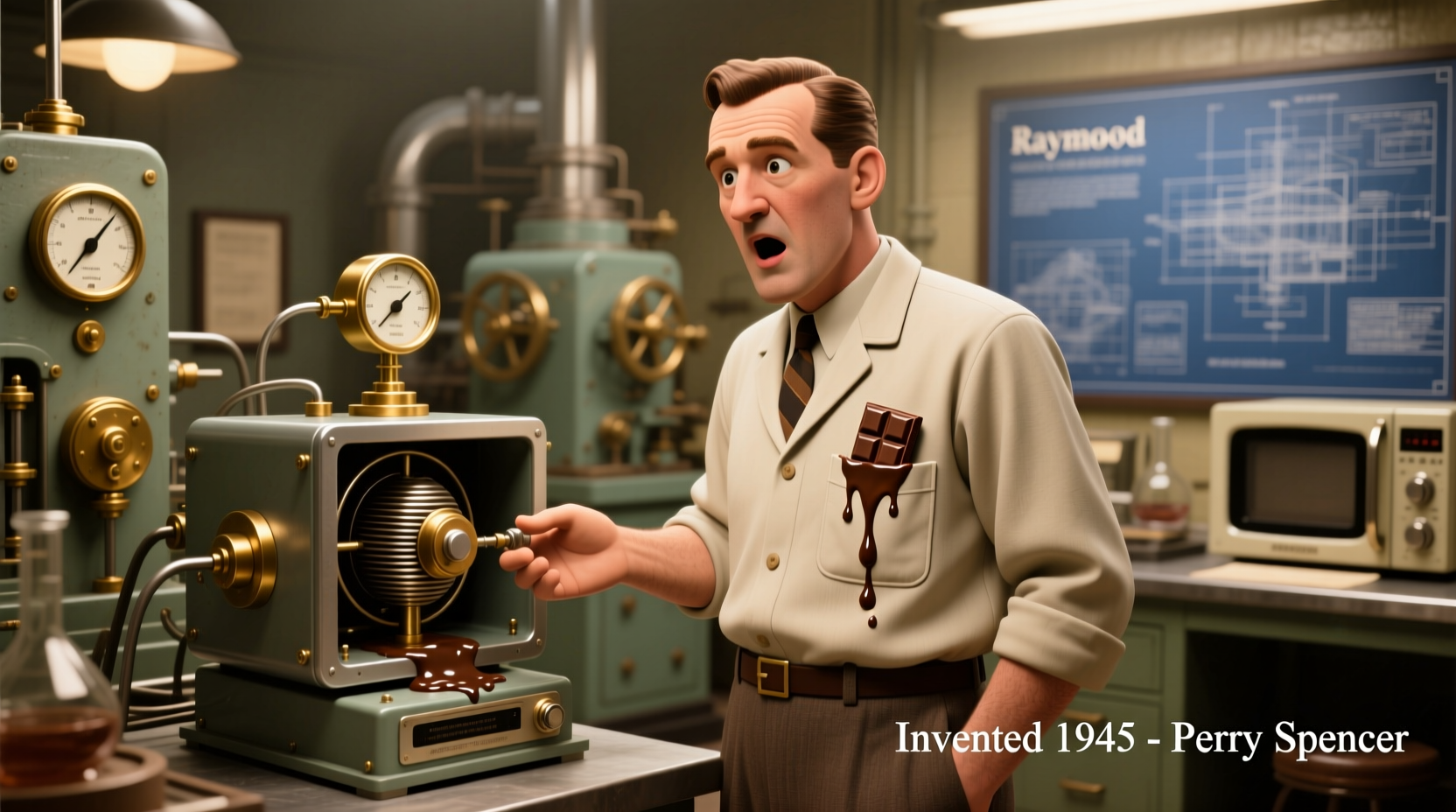
In 1945, American engineer Percy Spencer was working for Raytheon Corporation, a defense contractor heavily involved in developing radar systems using magnetrons—vacuum tubes that generate microwaves. While testing an active magnetron, Spencer noticed something unusual: a candy bar in his pocket had melted. Intrigued, he experimented further, directing the magnetron at other foods like popcorn kernels and eggs. The popcorn popped, and one egg famously exploded in a colleague’s face. These informal tests confirmed that concentrated microwave energy could heat food rapidly.
This accidental observation marked the birth of microwave cooking. Spencer filed a patent for a “Method of Treating Foodstuffs” later that year, and Raytheon soon developed the first microwave oven, called the \"Radarange.\" Standing nearly six feet tall and weighing over 750 pounds, it was far from the compact countertop models we use today. Initially used in commercial kitchens, railway dining cars, and ocean liners, the Radarange was expensive and impractical for home use.
Tip: The microwave was not invented to make cooking easier—it was discovered while improving wartime radar.From Military Tech to Kitchen Appliance: A Timeline
The transition from military radar equipment to household convenience took decades. Below is a key timeline showing how microwave technology evolved:
- 1940s: Magnetrons developed for radar during WWII; Percy Spencer discovers heating effect.
- 1947: Raytheon introduces the first commercial microwave oven, the Radarange.
- 1954: Raytheon acquires Amana Refrigeration, setting the stage for home appliance development.
- 1967: Amana releases the \"Radarange RR-1,\" the first practical countertop microwave for home use, priced at $495 (over $4,000 today).
- 1970s: Mass production lowers costs; microwave ownership surges in American households.
- 1986: Over 25% of U.S. homes have a microwave; by the 1990s, it exceeds 90%.
This progression highlights how a military innovation gradually became democratized through engineering improvements and cost reductions.
Original Purpose vs. Modern Use
The primary purpose of early microwave development was never cooking. Engineers sought to improve radar transmission for detecting enemy aircraft. Microwaves were valuable because they allowed for more precise targeting and smaller radar units. Spencer’s discovery redirected part of that research toward food preparation—but only after recognizing its potential beyond the battlefield.
By the late 1960s, Raytheon saw a market opportunity. As lifestyles changed and more women entered the workforce, demand grew for faster meal solutions. Frozen dinners, instant foods, and time-saving appliances gained popularity. The microwave fit perfectly into this cultural shift. Its ability to heat food in minutes—not hours—made it ideal for modern life.
| Era | Purpose of Microwave Technology | Primary Users |
|---|---|---|
| 1940s–1950s | Radar enhancement for military defense | Military, engineers |
| 1950s–1960s | Commercial food heating (restaurants, trains) | Businesses, airlines |
| 1970s–Present | Home cooking, reheating, defrosting | Households worldwide |
How Microwaves Work: Science Behind the Speed
Microwave ovens use electromagnetic waves—specifically microwaves at around 2.45 GHz—to agitate water molecules in food. This agitation generates heat through friction, warming the food from the inside out. Unlike conventional ovens that rely on conduction and convection, microwaves penetrate food directly, making the process much faster.
However, this method has limitations. Microwaves do not brown or crisp food effectively because they don’t produce the dry, high surface heat needed for the Maillard reaction. That’s why many modern microwaves include convection or grill functions to combine speed with texture.
“Percy Spencer didn’t set out to change how people cook—he was solving radar problems. But his curiosity turned a melted candy bar into one of the most transformative kitchen inventions of the 20th century.” — Dr. Laura Chen, Historian of Technology
Mini Case Study: Fast Food Chain Adopts Microwaves
In the early 1970s, a regional fast-food chain in Ohio faced challenges with order consistency and speed during peak hours. After installing commercial microwaves in several locations, they found they could reheat pre-cooked burgers and sandwiches in under two minutes without significant quality loss. Customer wait times dropped by 30%, and employee training simplified since precise timing replaced manual grilling skills. Within a year, the chain expanded to ten new outlets, citing microwave integration as a key operational advantage. This case illustrates how businesses leveraged microwave efficiency long before it became standard in homes.
Tips for Using Your Microwave More Effectively
Despite its ubiquity, many users underutilize their microwave or misuse it. Here are some practical tips to get better results:
Tip: Stir food halfway through heating to ensure even temperature distribution and avoid cold spots.- Cover food with a microwave-safe lid or damp paper towel to retain moisture.
- Use lower power settings (50–70%) for delicate tasks like melting chocolate or softening butter.
- Arrange food items in a circle, leaving space between them, for more uniform heating.
- Let food stand for 1–2 minutes after cooking to allow heat to distribute evenly.
Frequently Asked Questions
Is microwave radiation dangerous?
No, microwave ovens are designed with safety shielding that prevents radiation leakage when the door is closed. The non-ionizing radiation used does not make food radioactive and poses no health risk when the appliance is functioning properly.
Can you cook everything in a microwave?
While microwaves excel at reheating, defrosting, and steaming, they are less effective for tasks requiring browning, frying, or baking crusty breads. Combining microwave use with other methods often yields the best results.
Why did it take so long for microwaves to become common in homes?
Early models were large, expensive, and lacked consumer trust. It wasn’t until the 1970s—when prices dropped, designs improved, and awareness grew—that microwaves became affordable and desirable for average households.
Conclusion: From Radar to Reheating
The microwave oven stands as a testament to how scientific exploration can lead to unexpected, life-changing innovations. What began as a tool for national defense transformed into a cornerstone of modern convenience. Its invention wasn’t guided by a vision of quick meals, but by keen observation and the willingness to explore anomalies. Today, billions rely on microwaves daily, often without knowing the remarkable story behind their creation.
Understanding the history and purpose of the microwave not only satisfies curiosity but also reminds us that breakthroughs often come from the least expected places. Whether you're reheating coffee or steaming vegetables, you're engaging with a legacy of wartime engineering and inventive thinking.
🚀 Did this change how you see your microwave? Share your thoughts or ask a question in the comments—let’s keep the conversation heating up!