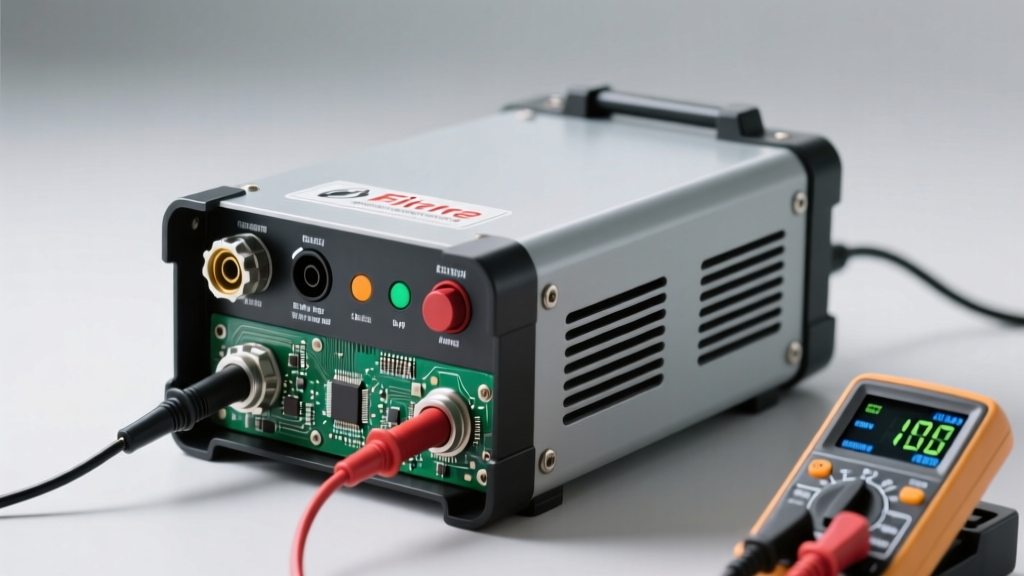
Types of Triple-Axis Magnetometers
A triple-axis magnetometer is a sophisticated instrument designed to measure the strength and direction of magnetic fields along three perpendicular axes (X, Y, and Z), enabling full 3D magnetic field mapping. These devices are essential in fields ranging from geophysics and archaeology to industrial quality control and aerospace navigation.
Triple-axis magnetometers vary significantly in design, sensitivity, and application. Understanding the different types helps users select the right tool for precise measurements in laboratory, field, or industrial environments.
Portable & Handheld
Compact, battery-powered devices designed for mobility and real-time field measurements.
Advantages
- Highly portable and lightweight
- Real-time data acquisition in the field
- Easy to operate with intuitive interfaces
- Ideal for on-site surveys and inspections
Limitations
- Lower sensitivity compared to lab-grade models
- Limited battery life during extended use
- May require calibration in variable environments
Best for: Field surveys, geological prospecting, utility detection, and educational demonstrations
Benchtop Models
Stationary, high-precision instruments optimized for controlled laboratory environments.
Advantages
- Exceptional measurement accuracy and stability
- Advanced data logging and analysis features
- Thermal and vibration isolation for precision
- Suitable for material characterization and R&D
Limitations
- Not portable; requires fixed installation
- Higher cost and maintenance needs
- Requires stable power and controlled conditions
Best for: Academic research, material science, quality assurance labs, and calibration facilities
Eddy Current (Induction-Based)
Utilize electromagnetic induction and eddy currents to detect magnetic field variations in conductive materials.
Advantages
- Non-contact measurement capability
- High-speed detection for industrial processes
- Excellent for flaw detection and material sorting
- Robust in harsh industrial environments
Limitations
- Limited to conductive materials
- Sensitive to surface conditions and temperature
- Less effective for weak or static magnetic fields
Best for: Manufacturing QA, metal inspection, pipeline monitoring, and scrap sorting
Scientific Research Grade
Ultra-sensitive instruments like cesium vapor or SQUID magnetometers used in high-precision scientific applications.
Advantages
- Extremely high sensitivity (down to femtotesla levels)
- Capable of detecting minute geomagnetic fluctuations
- Used in cutting-edge geophysical and archaeological surveys
- Supports long-term monitoring and data integration
Limitations
- Very high cost and complexity
- Requires shielding from external interference
- Specialized training needed for operation
Best for: Geomagnetic studies, mineral exploration, oceanography, and defense applications
| Type | Sensitivity | Mobility | Primary Use Case | Example Models |
|---|---|---|---|---|
| Portable & Handheld | Medium | Excellent | Field surveys, utility detection | Harris Geomatics MAG-01, Geometrics G-331 |
| Benchtop | High | Poor | Material testing, lab research | Goudsmit MAG220, MAG30 |
| Eddy Current | Medium-High | Good | Industrial QA, flaw detection | East Hills MCGD-1, TMI MAG-9000 |
| Scientific Research | Extremely High | Fair (some portable variants) | Geophysics, archaeology, defense | Cesium vapor magnetometers, SQUID systems |
Expert Tip: When using portable triple-axis magnetometers in the field, always perform a baseline calibration away from magnetic interference sources (e.g., vehicles, power lines) to ensure measurement accuracy. For eddy current models, maintain consistent probe-to-surface distance for reliable comparative readings.
Triple-Axis Magnetometer: Specifications and Maintenance Guide
A triple-axis magnetometer is a precision instrument designed to measure the strength and direction of magnetic fields in three-dimensional space. Its performance is influenced by several technical and environmental factors, including measurement accuracy, resolution, orientation stability, temperature sensitivity, and proper handling. These devices are widely used in geophysical surveys, navigation systems, space research, and industrial sensing applications, where even minor deviations can lead to significant data inaccuracies.
To ensure reliable and repeatable measurements, it's essential to understand both the key specifications and the proper maintenance practices. This guide provides a comprehensive overview of what to consider when selecting, operating, and maintaining a triple-axis magnetometer for optimal performance and longevity.
Key Specifications of a Triple-Axis Magnetometer
The performance of a magnetometer is defined by several interrelated technical parameters. Understanding these specifications helps in selecting the right device for your application and interpreting its data accurately.
Measurement Range
The measurement range refers to the span of magnetic flux density values the magnetometer can detect without saturating. It is typically expressed in nanoTesla (nT), making it ideal for detecting subtle variations in the Earth's magnetic field, which averages around 25,000 to 65,000 nT depending on location.
For example, high-sensitivity magnetometers used in mineral exploration may have a range of ±100,000 nT, while compact sensors in smartphones might only cover ±1,000 nT. Selecting a range that matches your application ensures accurate readings without signal clipping or loss of detail.
Resolution
Resolution defines the smallest detectable change in the magnetic field that the instrument can reliably measure. High-resolution magnetometers can detect changes as small as 0.1 nT or less, enabling them to capture fine magnetic anomalies.
This level of sensitivity is crucial in applications like archaeological surveys or unexploded ordnance (UXO) detection, where subtle magnetic disturbances indicate buried objects. Higher resolution generally correlates with better signal-to-noise ratio and improved data fidelity.
Triple-Axis Sensing
Unlike single-axis sensors, a triple-axis magnetometer measures the magnetic field along three orthogonal axes (X, Y, Z), allowing it to compute the full vector of the magnetic field at any point in space.
This capability enables accurate determination of both the magnitude and direction of the magnetic field, which is essential for orientation tracking, attitude determination in aerospace systems, and 3D magnetic mapping. The vector sum of the three components gives the total field intensity: Btotal = √(Bₓ² + Bᵧ² + Bz²).
Orientation Sensitivity and Accuracy
Orientation plays a critical role in measurement accuracy. Even slight angular deviations can introduce significant errors, especially in high-precision applications. For instance, a 1° tilt in a sensitive instrument can result in a measurable offset in the vertical component (Z-axis).
To mitigate this, many advanced magnetometers are integrated with tilt compensation systems or inertial measurement units (IMUs) that correct for orientation changes in real time. Proper mounting and alignment during installation are also essential to maintain data integrity.
| Specification | Typical Range/Value | Application Relevance |
|---|---|---|
| Measurement Range | ±25 µT to ±100 µT (25,000–100,000 nT) | Suitable for Earth’s field and geological surveys |
| Resolution | 0.1 nT to 10 nT | Determines sensitivity to small magnetic anomalies |
| Axis Configuration | X, Y, Z (orthogonal) | Enables 3D field vector calculation |
| Operating Temperature | -40°C to +85°C | Affects stability; requires thermal compensation |
| Nonlinearity | < 0.1% | Ensures consistent accuracy across the full range |
Essential Maintenance and Operational Best Practices
Proper care and maintenance are crucial to preserving the accuracy and lifespan of a triple-axis magnetometer. Environmental factors and physical handling can significantly impact performance if not managed correctly.
Important: Avoid exposing the magnetometer to strong magnetic fields (e.g., MRI machines, large speakers, or welding equipment), as this can cause permanent sensor damage or require recalibration. Always follow the manufacturer’s guidelines for handling, calibration intervals, and operational limits. Neglecting maintenance can result in data inaccuracies, reduced sensitivity, and shortened equipment lifespan.
Applications of a Triple-Axis Magnetometer
The triple-axis magnetometer is a highly versatile instrument capable of measuring magnetic field strength and direction in three-dimensional space (X, Y, and Z axes). Its ability to detect subtle variations in magnetic fields makes it indispensable across a wide range of scientific, industrial, and exploratory disciplines—including geology, engineering, marine operations, and space exploration. Any field requiring precise magnetic field monitoring or detection benefits from this advanced sensing technology.
Key Insight: Unlike single-axis sensors, triple-axis magnetometers provide full vector data of the magnetic field, enabling accurate directional analysis and spatial mapping—critical for navigation, anomaly detection, and scientific modeling.
Geophysical Surveys
In earth sciences and mineral exploration, triple-axis magnetometers are essential tools for mapping variations in the Earth's magnetic field caused by subsurface geological structures. These instruments detect anomalies associated with magnetic minerals such as magnetite, pyrrhotite, and iron-rich ore deposits, aiding in the identification of economically viable mining targets.
- Used in airborne, ground-based, and borehole surveys to map crustal magnetism at regional and local scales
- Support geological mapping by identifying fault lines, igneous intrusions, and volcanic formations
- Help assess natural hazards like volcanic activity and tectonic shifts through long-term geomagnetic monitoring
- Enable environmental studies by detecting buried metallic waste or unexploded ordnance (UXO)
Industry Example: Global mining giants like Rio Tinto and BHP utilize high-resolution magnetometer data in their exploration programs, often integrating it with GPS and GIS systems for real-time analysis and decision-making.
Engineering and Construction
Triple-axis magnetometers play a vital role in ensuring electromagnetic compatibility and structural safety in large-scale engineering projects. They are used to evaluate ambient magnetic fields around infrastructure and to calibrate sensitive navigation and measurement systems.
- Assess magnetic interference near skyscrapers, bridges, power plants, and communication towers to ensure compliance with health and safety standards
- Support quality assurance in aerospace and automotive industries by testing magnetic cleanliness of components and vehicles
- Calibrate onboard compasses and inertial navigation systems (INS) in aircraft, ships, and autonomous vehicles
- Monitor magnetic signatures of naval vessels to reduce detectability (degaussing verification)
Real-World Use: Engineering firms such as Bechtel and Fluor incorporate magnetometer testing into their commissioning protocols for critical infrastructure, especially in defense, energy, and transportation sectors.
Marine and Oceanography
In marine environments, triple-axis magnetometers are deployed for underwater exploration, archaeological discovery, and oceanographic research. Mounted on towed arrays, autonomous underwater vehicles (AUVs), or ships, they detect magnetic anomalies beneath the seafloor.
- Locate shipwrecks, submerged aircraft, submarines, and sunken cargo for historical, commercial, or salvage operations
- Detect and neutralize naval mines and unexploded ordnance in military and maritime security missions
- Map underwater geological features such as mid-ocean ridges, fault zones, and hydrothermal vents
- Support offshore oil and gas exploration by identifying magnetic basement structures and tectonic boundaries
Notable Application: The U.S. Navy, NOAA, and private marine survey companies routinely use magnetometers in deep-sea expeditions. Archaeologists have successfully used them to uncover ancient shipwrecks in the Mediterranean and Pacific Oceans.
Space Exploration
Triple-axis magnetometers are integral to planetary science missions, providing crucial data about the magnetic environments of celestial bodies. Mounted on orbiters, landers, and rovers, these instruments help scientists understand planetary formation, interior dynamics, and space weather interactions.
- Map magnetic fields of the Moon, Mars, Mercury, and asteroids to study their geological history and core composition
- Detect remnant magnetism in lunar and Martian rocks, offering clues about past magnetic dynamos and atmospheric loss
- Monitor solar wind interactions with planetary magnetospheres to assess radiation risks for future human missions
- Support navigation and attitude control of spacecraft in deep space where GPS is unavailable
Pioneering Missions: NASA’s MAVEN orbiter and ESA’s Mars Express have used triple-axis magnetometers to study Mars’ weak magnetic field. Similarly, instruments aboard the Lunar Reconnaissance Orbiter (LRO) have mapped the Moon’s crustal magnetism in unprecedented detail.
| Application Field | Primary Use Case | Key Benefits | Example Platforms/Instruments |
|---|---|---|---|
| Geophysical Surveys | Mineral and resource exploration | High-resolution subsurface imaging, cost-effective prospecting | Airborne surveys, ground magnetometers, drones |
| Engineering & Construction | EMI assessment and system calibration | Ensures safety, accuracy, and regulatory compliance | Calibration labs, naval vessels, aerospace test facilities |
| Marine & Oceanography | Wreck detection and seabed mapping | Non-invasive, long-range detection in deep water | Towed arrays, AUVs, research vessels |
| Space Exploration | Planetary magnetic field analysis | Reveals internal structure and evolutionary history | Mars rovers, lunar orbiters, interplanetary probes |
Additional Considerations
- Sensor Types: Modern triple-axis magnetometers may use fluxgate, Hall-effect, or magnetoresistive technologies—each suited to different sensitivity and environmental requirements
- Data Integration: Often combined with GPS, accelerometers, and gyroscopes in inertial measurement units (IMUs) for enhanced positioning and orientation accuracy
- Calibration Needs: Require regular calibration to compensate for hard-iron and soft-iron distortions, especially in mobile applications
- Environmental Robustness: Designed to operate in extreme conditions—from deep-sea pressures to vacuum and radiation in space
- Future Trends: Miniaturization and integration with AI-driven analytics are expanding applications in robotics, autonomous systems, and smart infrastructure
Expert Insight: As demand grows for precision sensing in autonomous systems and planetary exploration, triple-axis magnetometers are evolving into smarter, more compact, and energy-efficient devices. Their role extends beyond measurement—they are becoming key enablers of intelligent navigation, environmental awareness, and scientific discovery in both terrestrial and extraterrestrial domains.
Choosing the Right Triple-Axis Magnetometer: A Comprehensive Guide for Manufacturers and Distributors
Selecting an appropriate triple-axis magnetometer is a critical decision for manufacturers and distributors who supply precision measurement instruments to diverse industries. These devices measure the strength and direction of magnetic fields along three perpendicular axes (X, Y, Z), enabling accurate spatial analysis of magnetic environments. Whether serving geophysical surveyors, aerospace engineers, or laboratory researchers, understanding the technical and operational requirements of end-users is essential to recommend or produce the right product.
Important Note: As a supplier or manufacturer, your role extends beyond product selection—you must anticipate integration challenges, environmental demands, and compatibility with downstream data systems. A thorough understanding of application-specific needs ensures customer satisfaction and long-term reliability.
Key Selection Criteria for Triple-Axis Magnetometers
Below are the most important technical and practical factors to evaluate when choosing a 3-axis magnetometer. These criteria apply across industries but should be weighted according to the intended use case.
- Measuring Range (Field Strength Capacity)
The measuring range defines the minimum and maximum magnetic field strengths the sensor can accurately detect, typically expressed in microtesla (µT) or nanotesla (nT). Selecting the correct range is crucial to avoid signal saturation or insufficient sensitivity.
- Geophysical & Field Applications: Require wide dynamic ranges (e.g., ±100 µT or higher) to capture Earth's magnetic field variations and anomalies in mineral exploration.
- Laboratory & Precision Research: Often operate within narrow, controlled ranges (e.g., ±10 µT) where high stability and linearity are more important than breadth.
- Industrial & Navigation Systems: May need moderate ranges optimized for detecting local interference or orientation tracking in robotics and drones.
- Sensitivity and Resolution
Sensitivity refers to the smallest change in magnetic field that the magnetometer can reliably detect, while resolution is the smallest increment it can display. High sensitivity enables detection of subtle magnetic signals, which is vital for scientific and defense applications.
- High-sensitivity sensors (e.g., fluxgate or optically pumped magnetometers) can resolve changes below 1 nT, making them ideal for archaeological surveys or space research.
- Lower-cost MEMS-based sensors may offer resolutions in the 10–100 nT range, suitable for consumer electronics or basic orientation sensing.
- Ensure the resolution matches data acquisition system capabilities to avoid loss of fidelity during signal processing.
- Form Factor and Mounting Configuration
The physical design of the magnetometer must align with the deployment environment and integration requirements. Form factor impacts portability, installation ease, and mechanical stability.
- Handheld & Portable Units: Designed for field surveyors and outdoor use; lightweight, battery-powered, and often integrated with GPS for mapping applications.
- Compact Benchtop Models: Ideal for laboratory settings where space is limited and precise positioning is required.
- Embedded/OEM Modules: Small footprint sensors designed for integration into larger systems such as UAVs, satellites, or medical devices.
- Consider mounting options (tripod, panel, rail) and whether the unit includes shock-absorbing or vibration-dampening features.
- Data Output and Interface Compatibility
The way magnetic data is transmitted and formatted determines how easily it integrates with existing software, control systems, or data loggers. Incompatible outputs can lead to costly retrofitting or data loss.
- Common interfaces include USB, RS-232, I²C, SPI, Ethernet, and wireless (Bluetooth/Wi-Fi).
- Ensure compatibility with data acquisition platforms (e.g., LabVIEW, MATLAB, ROS) and support for standard protocols like NMEA or CAN bus if used in vehicles.
- Check for real-time streaming capability, logging functions, and onboard processing (e.g., filtering, coordinate transformation).
- Verify output formats: raw sensor data, calibrated values, vector magnitude, or heading angles.
- Environmental Durability and Operating Conditions
Magnetometers deployed in harsh environments must withstand physical and climatic stressors without compromising performance.
- Outdoor/Field Use: Look for IP65 or higher ingress protection against dust and water spray. Shock resistance and ruggedized enclosures are essential for use on bumpy terrain or in mobile platforms.
- Temperature Stability: Sensors should maintain accuracy across expected temperature ranges. Some high-end models include thermal compensation algorithms.
- EMI/RFI Shielding: Electromagnetic interference from motors, power lines, or radio sources can distort readings—ensure adequate shielding or noise rejection features.
- Humidity & Corrosion Resistance: Important for marine, underground, or tropical deployments.
| Critical Parameter | Ideal for Field Use | Ideal for Lab Use | Common Technologies |
|---|---|---|---|
| Measuring Range | ±60 to ±100 µT | ±10 to ±30 µT | Fluxgate, Hall Effect |
| Sensitivity | 1–10 nT | 0.1–1 nT | Fluxgate, Optically Pumped |
| Form Factor | Portable, ruggedized | Benchtop, compact | All (varies by model) |
| Data Interface | USB, Bluetooth, SD card | USB, Ethernet, GPIB | Digital output standard |
| Environmental Rating | IP65+, wide temp range | Indoor rated, stable temp | Rugged enclosures available |
Pro Tip: When supplying to OEMs or system integrators, provide detailed datasheets with calibration certificates, coordinate system diagrams, and communication protocol documentation. This reduces integration time and enhances customer trust.
Additional Considerations for Suppliers
- Calibration and Accuracy: Offer factory-calibrated units with traceable standards. Re-calibration intervals should be clearly specified.
- Power Requirements: Battery life, voltage input, and power consumption are critical for portable or remote installations.
- Software Support: Include or recommend compatible software for visualization, analysis, and firmware updates.
- Regulatory Compliance: Ensure adherence to relevant standards (e.g., CE, FCC, RoHS) for international distribution.
- Scalability: Provide modular options that allow customers to upgrade or expand functionality as needs evolve.
Selecting the optimal triple-axis magnetometer involves balancing performance, durability, and usability across a spectrum of applications. By focusing on the specific needs of your target customers—whether they're conducting underground surveys, developing autonomous vehicles, or performing advanced physics experiments—you can deliver solutions that are not only technically sound but also commercially successful. Always encourage end-user feedback to refine future product offerings and stay ahead in this rapidly evolving field.
Frequently Asked Questions (FAQs) About the Triple-Axis Magnetometer
Q1: What is a triple-axis magnetometer?A1: A triple-axis magnetometer is a precision scientific instrument designed to measure the strength and direction of magnetic fields along three mutually perpendicular axes—typically labeled X, Y, and Z. By capturing data in all three spatial dimensions simultaneously, it provides a complete vector representation of the ambient magnetic field at any given point. This capability allows for accurate determination of both the magnitude and orientation of magnetic fields, making it far more comprehensive than single- or dual-axis models. These instruments are based on various sensing technologies, including fluxgate, Hall-effect, and magnetoresistive sensors, each suited to different sensitivity and environmental requirements.
Q2: What are the main uses of a triple-axis magnetometer?A2: Triple-axis magnetometers have a wide range of applications across scientific, industrial, and exploratory fields. Key uses include:
- Geological Surveys: Detecting magnetic anomalies associated with mineral deposits such as iron ore, nickel, and rare earth elements.
- Mining Exploration: Mapping subsurface geology to identify economically viable ore bodies and optimize drilling locations.
- Archaeological Studies: Locating buried metallic artifacts, foundations, or hearths without invasive excavation by identifying subtle magnetic disturbances.
- Marine Research: Used in towed arrays or autonomous underwater vehicles (AUVs) to detect shipwrecks, pipelines, unexploded ordnance (UXO), and submerged geological features.
- Space Exploration: Employed on satellites and planetary rovers to study the magnetic fields of Earth, Mars, and other celestial bodies, contributing to our understanding of planetary interiors and space weather.
- Navigation Systems: Integrated into inertial measurement units (IMUs) for attitude determination in drones, spacecraft, and submarines where GPS signals are unavailable.
Their versatility and high-resolution data output make them indispensable tools in modern geophysics and remote sensing.
Q3: How does a triple-axis magnetometer benefit geophysical surveys?A3: In geophysical surveys, the triple-axis magnetometer plays a critical role in mapping spatial variations in the Earth's magnetic field with high precision. Because certain rock types and mineral deposits generate distinct magnetic signatures, these instruments can detect even minor deviations from the expected background field. This enables geoscientists to:
- Identify potential locations of economically valuable minerals.
- Create detailed magnetic anomaly maps used in structural geology and tectonic analysis.
- Distinguish between natural geological formations and man-made interference.
- Support environmental assessments, such as locating buried waste or old landfill sites.
When mounted on aircraft, drones, or ground-based platforms, triple-axis systems provide full 3D magnetic vector data, improving interpretation accuracy and reducing ambiguity compared to scalar-only measurements. This leads to more reliable subsurface models and better-informed exploration decisions.
Q4: Is the triple-axis magnetometer suitable for marine applications?A4: Absolutely. Triple-axis magnetometers are widely used in marine environments due to their ability to operate effectively underwater and detect ferromagnetic objects with high sensitivity. They are commonly deployed in:
- Underwater Archaeology: Pinpointing the location of historic shipwrecks by detecting the magnetic signature of iron components like anchors, cannons, or hull fragments.
- Defense and Security: Surveying harbors and coastal zones for unexploded ordnance (UXO) or submerged threats.
- Offshore Energy: Mapping subsea pipelines and cables to prevent damage during drilling or construction activities.
- Scientific Oceanography: Studying seafloor spreading, magnetic striping patterns, and volcanic activity along mid-ocean ridges.
Marine-grade magnetometers are typically housed in waterproof, pressure-resistant enclosures and can be towed behind vessels or integrated into remotely operated vehicles (ROVs) and AUVs. Their real-time data transmission capabilities allow for immediate analysis and rapid response during survey missions.
Q5: Can the instrument withstand harsh environmental conditions?A5: Yes, triple-axis magnetometers are specifically engineered for durability and reliability in challenging field conditions. Most professional-grade models are built with ruggedized components and feature:
- Environmental Sealing: Protection against dust and water ingress, often rated to IP67 or higher standards, ensuring performance in rain, snow, or humid environments.
- Thermal Stability: Operable across wide temperature ranges (e.g., -20°C to +60°C), with internal compensation to minimize thermal drift and maintain measurement accuracy.
- Shock and Vibration Resistance: Designed to endure transport over rough terrain or deployment from aircraft and vessels.
- Corrosion-Resistant Materials: Especially important for marine versions, which may use titanium or anodized aluminum housings to resist saltwater corrosion.
These robust design features make triple-axis magnetometers ideal for long-duration field campaigns in remote locations, including polar regions, deserts, dense forests, and deep ocean settings. Regular calibration and proper handling further ensure sustained performance and data integrity.