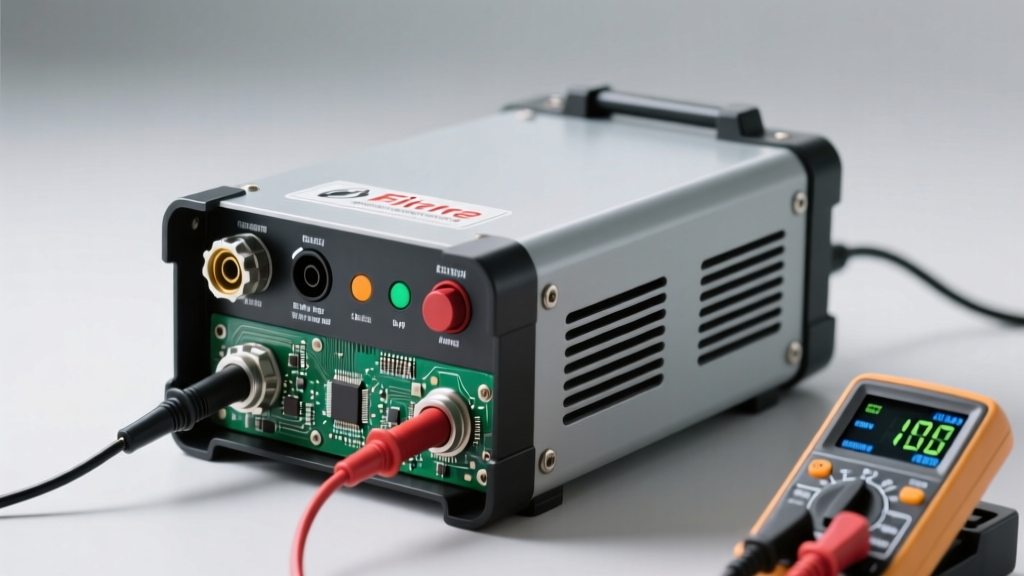
Types of Fire Pump Battery Chargers
A fire pump battery charger is a critical component in fire protection systems, ensuring that backup batteries remain fully charged and ready to power the fire pump during emergencies. These chargers maintain system reliability by preventing battery degradation due to undercharging or overcharging. With various technologies available, selecting the right charger is essential for optimal performance, longevity, and compliance with safety standards such as NFPA 20.
Automatic Battery Chargers
These intelligent chargers automatically detect the battery's state and adjust the charging process accordingly. They eliminate the need for manual intervention by continuously monitoring voltage, current, and charge levels.
Advantages
- Self-regulating charging process
- Reduces risk of overcharging
- Adaptable to varying battery conditions
- Low maintenance operation
Limitations
- Limited diagnostic capabilities
- May lack advanced communication features
- Less precise than smart chargers
Best for: Standard fire pump systems, commercial buildings, and facilities requiring reliable, hands-off charging
Smart Battery Chargers
Equipped with microprocessor-based controls, smart chargers analyze battery health and apply customized charging algorithms. They support real-time diagnostics, remote monitoring, and fault reporting via digital interfaces.
Advantages
- Precise, adaptive charging profiles
- Real-time monitoring and alerts
- Enhanced battery lifespan
- Integration with building management systems (BMS)
Limitations
- Higher initial cost
- Requires technical setup and configuration
- May need software updates or support
Best for: Mission-critical facilities, hospitals, data centers, and installations requiring compliance reporting and remote oversight
Trickle Chargers
Designed to deliver a continuous low-level charge, trickle chargers prevent self-discharge and maintain full capacity during prolonged periods of inactivity. Ideal for backup systems that are rarely used but must remain operational.
Advantages
- Prevents battery sulfation
- Simple and cost-effective
- Ideal for seasonal or infrequent use
- Minimal energy consumption
Limitations
- Not suitable for rapid recharging
- Limited protection against deep discharge
- May require supervision in extreme conditions
Best for: Standby fire pumps, rural installations, and auxiliary backup systems with infrequent operation
Three-Stage Battery Chargers
These chargers follow a structured charging cycle: bulk (rapid charge), absorption (topping off), and float (maintenance). This method maximizes battery efficiency and longevity by applying the correct voltage and current at each stage.
Advantages
- Optimized charging efficiency
- Extends battery service life
- Prevents thermal runaway
- Widely compatible with lead-acid and AGM batteries
Limitations
- Longer charging time in bulk phase
- Requires proper system calibration
- Less effective with severely depleted batteries
Best for: Most fire pump applications, especially those using valve-regulated lead-acid (VRLA) or flooded batteries
Fast Battery Chargers
Engineered for rapid recharging, fast chargers minimize downtime after battery use or testing. They deliver high current safely and efficiently, bringing batteries back to full capacity in a fraction of the time required by standard chargers.
Advantages
- Significantly reduces recharge time
- Minimizes system vulnerability post-test
- Supports emergency readiness
- Improves maintenance workflow efficiency
Limitations
- Generates more heat during charging
- May reduce long-term battery life if overused
- Higher power demand on electrical system
Best for: High-demand facilities, fire stations, emergency response centers, and systems undergoing frequent testing
| Type | Charging Speed | Battery Life Impact | Complexity | Best Application |
|---|---|---|---|---|
| Automatic | Medium | Good | Low | General commercial fire pump systems |
| Smart | Medium | Excellent | High | Hospitals, data centers, smart buildings |
| Trickle | Slow | Fair | Low | Standby systems, infrequent use |
| Three-Stage | Medium-Fast | Very Good | Medium | Most standard fire pump installations |
| Fast | Very Fast | Fair (with overuse) | Medium | Emergency-ready facilities, frequent testing |
Expert Tip: For optimal fire pump reliability, pair your battery charger with a regular testing and maintenance schedule. NFPA 20 recommends monthly visual inspections and annual functional tests to ensure the entire system—including the charger—remains operational.
Specifications and Maintenance of Fire Pump Battery Charger
Fire pump battery chargers are essential components in fire protection systems, ensuring that emergency backup power remains reliable and ready for immediate use. These chargers maintain the charge level of batteries that power fire pump controllers during power outages. Proper understanding of their technical specifications and maintenance requirements is critical to ensure uninterrupted performance, compliance with safety codes, and extended equipment lifespan across industrial, commercial, and municipal applications.
Key Specifications to Consider
Output Voltage and Current
The output voltage of a fire pump battery charger must precisely match the battery system it supports—common configurations include 12V, 24V, or 48V DC systems. Mismatched voltage can lead to undercharging or overcharging, both of which degrade battery health and reduce operational readiness.
Additionally, the charger’s current rating (measured in amperes) determines how quickly it can replenish the battery’s charge. Chargers are typically sized at 10–25% of the battery’s ampere-hour (Ah) capacity to balance charging speed with longevity. For lithium-ion battery packs, specialized lithium-ion chargers with precise voltage regulation and stage control (constant current/constant voltage) are required to prevent thermal runaway and ensure safe, efficient charging.
Charging Time and Efficiency
Charging time is directly influenced by the battery’s capacity (Ah), the charger’s output current, and its charging algorithm. Standard chargers may take 6–12 hours to fully charge a depleted battery, while smart or fast chargers can reduce this time significantly using adaptive charging profiles.
In fire protection systems, rapid recharge capability is crucial after a power event. High-efficiency chargers (typically >85%) minimize energy loss and heat generation, contributing to system reliability and lower operating costs. Look for chargers with automatic float mode to maintain full charge without overcharging, preserving battery life during standby periods.
Weather and Environmental Resistance
Fire pump battery chargers are often installed in outdoor enclosures, utility rooms, or harsh industrial environments. As such, they must be built to withstand moisture, dust, temperature extremes, and corrosive elements.
Look for chargers housed in NEMA 3R, 4, or 4X-rated enclosures, which provide protection against rain, snow, splashing water, and rust. Operating temperature ranges should typically span from -20°C to +50°C (-4°F to 122°F) to ensure functionality in both freezing and hot climates. Sealed connectors and conformal-coated circuit boards further enhance durability in challenging conditions.
Safety and Protection Features
Safety is paramount in fire protection equipment. Modern fire pump battery chargers incorporate multiple layers of protection to prevent hazards and ensure compliance with standards such as NFPA 20, UL 2237, and IEEE 485.
Essential safety features include overvoltage, overcurrent, short-circuit, reverse polarity, and thermal shutdown protection. These safeguards prevent damage to both the charger and the connected battery, reducing the risk of fire, explosion, or system failure. Chargers should also include status indicators (LEDs or digital displays) for real-time monitoring of charging phases, faults, and battery health.
| Specification | Importance | Selection Guidelines |
|---|---|---|
| Output Voltage Match | High | Must exactly match battery bank voltage (e.g., 12V, 24V, 48V); verify system requirements before installation |
| Current Rating (Amps) | High | Select 10–25% of battery Ah capacity; higher for faster recharge in critical systems |
| Enclosure Rating | High | NEMA 3R minimum for outdoor use; NEMA 4/4X preferred for harsh environments |
| Charging Algorithm | Medium-High | Smart chargers with multi-stage (bulk, absorption, float) charging improve battery life and reliability |
| Operating Temperature Range | Medium | Ensure operation between -20°C and +50°C for all-climate reliability |
Essential Maintenance Practices
Important: Always adhere to the manufacturer’s maintenance schedule and local fire safety regulations (e.g., NFPA 20). Improper maintenance or use of non-compliant parts can lead to system failure during emergencies, regulatory penalties, and voided warranties. Document all inspections, tests, and repairs for compliance audits and insurance purposes. When in doubt, consult a certified fire protection technician for servicing.
Usage Scenarios for Battery Chargers for Fire Pumps
Fire pump battery chargers are mission-critical components in fire protection systems, ensuring that emergency water delivery systems remain fully operational during power failures or other emergencies. These intelligent charging systems maintain battery readiness, support automatic start-up protocols, and comply with stringent safety standards such as NFPA 20 and NFPA 70. The following comprehensive overview details key usage scenarios across various industries, highlighting application-specific challenges and performance requirements.
Industrial and Manufacturing Plants
Large-scale industrial and manufacturing facilities often house complex fire protection infrastructure, including automatic sprinkler systems, standpipe networks, foam suppression, and water mist systems. Due to the high risk of fire from machinery, chemicals, and combustible materials, uninterrupted fire pump operation is essential.
- Battery chargers ensure backup diesel or electric fire pumps start instantly during grid failure
- Integrated with control panels for continuous battery voltage monitoring and self-diagnostics
- Designed to withstand harsh plant environments with dust, vibration, and temperature fluctuations
- Support fail-safe operation in facilities with high electrical load variability
Key Benefit: Prevents production downtime and protects high-value equipment and personnel
Marine Applications
Ships, offshore drilling platforms, cargo vessels, and floating production units operate in extreme marine environments where corrosion, humidity, and saltwater exposure are constant threats. Fire safety at sea is paramount due to limited evacuation options and remote locations.
- Marine-grade battery chargers feature corrosion-resistant enclosures (e.g., stainless steel or powder-coated aluminum)
- Comply with ABS, DNV, and SOLAS regulations for marine fire safety systems
- Provide stable charging despite vessel motion, voltage fluctuations, and wet conditions
- Enable automatic fire pump activation in engine rooms, cargo holds, and accommodation areas
Critical Feature: IP66-rated enclosures and galvanic isolation protect against saltwater ingress and electrical faults
Commercial Buildings
High-rise office towers, hotels, shopping malls, and mixed-use complexes rely on robust fire protection systems to safeguard occupants and ensure compliance with building codes. These buildings often have vertically zoned sprinkler systems requiring consistent pump pressure.
- Battery chargers maintain emergency power for jockey pumps and main fire pumps
- Support integration with building management systems (BMS) for remote monitoring
- Ensure elevator recall systems and pressurization fans operate during fire events
- Used in conjunction with deluge, pre-action, and dry-pipe systems in sensitive areas
Safety Impact: Enables reliable fire suppression in densely occupied structures during blackouts
Oil and Gas Facilities
Refineries, petrochemical plants, offshore rigs, and pipeline pumping stations face extreme fire hazards due to flammable hydrocarbons and high-pressure systems. Fire pump reliability is non-negotiable in these high-risk environments.
- Explosion-proof (Class I, Div 2) battery chargers used in hazardous zones
- Support rapid pressurization of deluge systems and foam concentrate delivery
- Designed for 24/7 operation under extreme temperatures (-40°C to +60°C)
- Equipped with redundant charging circuits and alarm relays for predictive maintenance
Performance Need: Immediate response capability to prevent catastrophic fires and explosions
Residential Complexes
Large residential developments such as high-rise apartments, condominiums, and retirement communities require dependable fire protection for resident safety. Power outages during storms or grid failures make backup systems essential.
- Battery chargers keep emergency fire pumps ready for immediate activation
- Compact, quiet chargers installed in mechanical rooms or basements with minimal footprint
- Support automatic weekly self-testing per NFPA 25 requirements
- Integrate with fire alarm systems to trigger pump start during smoke detection
Resident Safety: Ensures water pressure for sprinklers and standpipes even during prolonged outages
Institutional and Public Infrastructure
Hospitals, schools, data centers, airports, and government buildings have continuous occupancy and critical operations that cannot afford fire system failures.
- Hospitals use battery-backed fire pumps to protect life-support areas and operating rooms
- Data centers rely on fire suppression to prevent server damage from smoke or heat
- Chargers with advanced diagnostics reduce maintenance costs and improve uptime
- Support seamless integration with emergency power generation systems
Compliance Focus: Meets strict inspection, testing, and maintenance (ITM) requirements
Expert Insight: When selecting battery chargers for fire pumps, always verify compliance with NFPA 20 (Standard for the Installation of Stationary Pumps for Fire Protection) and UL 1012 (Standard for Safety for Power Units Other Than Class 2). Look for models with microprocessor-based charging algorithms, temperature compensation, and remote alarm contacts to ensure maximum reliability across all usage scenarios.
| Application | Charger Type | Key Requirements | Standards Compliance |
|---|---|---|---|
| Industrial Plants | Heavy-duty AC/DC | Vibration resistance, wide input voltage range | NFPA 20, UL 1012, IEEE 450 |
| Marine | Marine-grade, corrosion-resistant | IP66 rating, galvanic isolation, salt-fog tested | SOLAS, ABS, DNV-GL |
| Commercial Buildings | Smart microprocessor-controlled | BMS integration, silent operation, diagnostics | NFPA 72, ASME A13.1, Local Codes |
| Oil & Gas | Explosion-proof, ruggedized | Hazardous location rating, extreme temp tolerance | API 610, NFPA 70, ATEX/IECEx |
| Residential Complexes | Compact, maintenance-free | Low noise, automatic testing, space efficiency | NFPA 13, NFPA 101, IRC |
Additional Considerations
- Battery Type Compatibility: Chargers must match battery chemistry (lead-acid, AGM, gel, or lithium-ion) to prevent overcharging or reduced lifespan
- Charging Stages: Multi-stage charging (bulk, absorption, float) ensures optimal battery health and readiness
- Monitoring & Alarms: Remote annunciators and SCADA integration allow real-time status tracking and early fault detection
- Environmental Resilience: Sealed units with conformal-coated circuitry perform reliably in humid, dusty, or corrosive environments
- Maintenance Access: Front-access designs simplify inspection and servicing in tight mechanical rooms
Factors That Impact Pricing of Fire Pump Battery Chargers
Selecting the right fire pump battery charger involves more than just comparing price tags. Multiple technical, regulatory, and operational factors influence the cost. Understanding these elements helps facility managers, engineers, and procurement professionals make informed decisions that balance upfront investment with long-term reliability, safety, and performance. This guide breaks down the key pricing drivers to help you evaluate options effectively.
Safety & Compliance Note: Fire pump systems are critical life-safety components. Any charger used must comply with applicable codes such as NFPA 20 and local fire safety regulations. Using non-compliant equipment can result in system failure during emergencies and legal liability.
Charger Type
The type of battery charger selected plays a major role in determining cost. Different technologies offer varying levels of performance, automation, and efficiency, which directly affect pricing:
- Smart Chargers: These feature microprocessor-controlled charging algorithms that optimize voltage and current based on battery condition. They often include diagnostics, temperature compensation, and multi-stage charging (bulk, absorption, float). Due to advanced electronics, they are typically 30–50% more expensive than basic models.
- Fast Chargers: Designed to recharge batteries quickly without damaging them, these are ideal for facilities requiring rapid recovery after testing or discharge. Their higher output and thermal management systems increase manufacturing costs.
- Trickle Chargers: Provide a low, continuous charge to maintain battery readiness. While cost-effective and suitable for backup applications with infrequent use, they lack adaptive intelligence and may not be compliant for all fire pump installations.
- Automatic Battery Chargers: A budget-friendly option that automatically switches between charging modes. Though less sophisticated than smart chargers, they offer reliable performance for standard lead-acid setups and are commonly used in cost-sensitive projects.
Expert Tip: For mission-critical fire protection systems, investing in a smart charger often pays off through improved battery lifespan and reduced risk of failure.
Battery Compatibility
The charger must be precisely matched to the battery chemistry and configuration. This compatibility significantly affects pricing:
- Lithium-Ion Batteries: Require specialized chargers with precise voltage regulation, cell balancing, and built-in battery management systems (BMS). These chargers are generally 40–70% more expensive than lead-acid equivalents due to complex circuitry and safety protocols.
- Lead-Acid Batteries (Flooded, AGM, Gel): More common in traditional fire pump systems. Chargers for these batteries are widely available and less costly because the charging profile is simpler and well-standardized. AGM-compatible chargers may include slight voltage adjustments but remain relatively affordable.
- Mismatched chargers can lead to undercharging, overcharging, reduced battery life, or even fire hazards—making compatibility a critical cost consideration beyond initial price.
Industrial Standards and Certifications
Fire pump battery chargers must meet stringent industry standards to ensure reliability during emergencies. Compliance adds to the cost but is non-negotiable for legal and insurance purposes:
- NFPA 20 (Standard for the Installation of Stationary Pumps for Fire Protection): Specifies performance requirements for fire pump power supplies, including battery charging systems. Chargers must support continuous operation and automatic recharging within specified timeframes.
- UL 1012 (Standard for Power Units Other Than Class 2): Covers safety requirements for power supplies, including electrical insulation, overheating protection, and fault conditions.
- UL 1741 (Inverters, Converters, Controllers): Relevant if the charger integrates with alternative power sources or energy storage systems.
- Certified products undergo rigorous third-party testing, which increases development and production costs—but ensures compliance with fire codes and insurance requirements.
Customization and System Integration
Many installations require tailored solutions to fit space constraints or integrate with broader building systems, which increases cost:
- Physical Customization: Modifications such as custom enclosures (NEMA 3R, 4X for outdoor/wet locations), mounting brackets, or compact designs for tight spaces add engineering and fabrication costs.
- Communication Interfaces: Modern chargers may need to interface with Building Management Systems (BMS), SCADA, or fire alarm control panels via protocols like Modbus, BACnet, or SNMP. Adding these capabilities requires extra hardware and software licensing.
- Remote Monitoring & Alarms: Features like email/SMS alerts for charger faults, low battery, or AC power loss involve additional sensors, connectivity modules, and cloud services, increasing both initial and ongoing costs.
- Turnkey integration services from manufacturers or third parties can add 15–30% to the total project cost but improve system visibility and maintenance efficiency.
Power Output and Charging Efficiency
Higher power and greater efficiency correlate with increased cost, but offer long-term benefits:
- Chargers with higher amperage (e.g., 20A vs. 5A) can recharge large battery banks faster, minimizing downtime after tests or outages. However, they require robust components and cooling systems, raising production costs.
- Energy-efficient chargers (with >90% efficiency) reduce heat generation and electricity consumption over time. Though more expensive upfront, they lower operating costs and may qualify for energy efficiency incentives.
- Pulse-width modulation (PWM) or resonant switching topologies improve efficiency but are more complex than basic linear designs.
Cost-Saving Insight: While high-efficiency chargers have a premium price, calculate return on investment (ROI) based on energy savings and reduced cooling needs—especially in large-scale or continuously operating facilities.
Maintenance Requirements and Longevity
The total cost of ownership (TCO) should be considered, not just the purchase price:
- Premium chargers built with industrial-grade components (e.g., conformal-coated circuit boards, sealed relays) often last 10–15 years with minimal maintenance, compared to 5–7 years for lower-tier models.
- Units with diagnostic LEDs, self-testing routines, or predictive failure alerts reduce service time and prevent unexpected failures.
- Cheaper chargers may require frequent repairs or replacement, leading to higher labor costs, downtime, and potential code violations during inspections.
- Some manufacturers offer extended warranties or service contracts, which add to initial cost but provide peace of mind and predictable maintenance budgets.
| Factor | Low-Cost Option | High-End Option | Price Difference | Key Trade-offs |
|---|---|---|---|---|
| Charger Type | Automatic/Trickle Charger | Smart/Fast Charger | 40–60% higher | Intelligence, speed, battery health monitoring |
| Battery Compatibility | Lead-Acid Only | Lithium-Ion + BMS Support | 50–70% higher | Chemistry-specific safety, efficiency |
| Certifications | Basic Safety Markings | UL 1012, NFPA 20 Compliant | 20–35% higher | Code compliance, insurance acceptance |
| Integration | Standalone Unit | BMS/SCADA Ready with Modbus | 25–40% higher | Remote monitoring, centralized control |
| Efficiency & Build | 75–85% Efficiency | 90–95% Efficiency, Industrial Build | 30–50% higher | Durability, energy savings, cooler operation |
Recommendations for Cost-Effective Selection
- Always verify that the charger meets NFPA 20 and local fire code requirements—non-compliance can void insurance and result in fines.
- Assess total cost of ownership (TCO), including energy use, maintenance, and expected lifespan, rather than focusing solely on sticker price.
- Consider future-proofing by selecting chargers with communication ports, even if not currently needed.
- Work with suppliers who offer technical support, documentation, and warranty service to minimize downtime.
- For retrofits, ensure compatibility with existing battery banks and control systems to avoid costly upgrades.
Ultimately, the price of a fire pump battery charger reflects its reliability, compliance, and performance under emergency conditions. While budget constraints are real, compromising on quality or certification can jeopardize life safety. A well-chosen charger ensures your fire pump remains operational when it matters most—protecting people, property, and regulatory compliance.
Frequently Asked Questions About Fire Pump Battery Chargers
Q1: Can one use a battery charger for different fire pump types?Yes, a universal battery charger can be used across various fire pump systems, provided it is compatible with the specific battery chemistry (such as lead-acid, AGM, or lithium-ion) and voltage requirements (typically 12V, 24V, or 48V).
However, it's crucial to understand that fire pump systems are mission-critical and have strict compliance standards (e.g., NFPA 20 and local fire codes). Each system may have unique electrical and operational specifications.
- Compatibility Check: Always verify that the charger matches the battery type, voltage, and charging profile recommended by the fire pump manufacturer.
- Regulatory Compliance: Chargers must meet UL, FM, or other recognized safety standards for fire protection equipment.
- Professional Consultation: Before substituting or upgrading a charger, consult the system manufacturer or a certified fire protection technician to ensure full compatibility and code compliance.
Using an incompatible charger can lead to undercharging, overcharging, reduced battery life, or even failure during an emergency.
Q2: What are the benefits of using a smart battery charger for a fire pump?Smart battery chargers offer advanced features that significantly enhance the reliability and efficiency of fire pump backup power systems.
- Precise Charging Control: Smart chargers use microprocessor-based technology to deliver multi-stage charging (bulk, absorption, float), ensuring optimal battery voltage and current at each phase.
- Real-Time Monitoring: Many models include digital displays or remote monitoring capabilities that show voltage, current, charge status, and fault codes, enabling proactive maintenance.
- Adaptive Charging: These chargers assess the battery’s condition and adjust the charging algorithm accordingly, preventing overcharge and sulfation, especially in standby applications.
- Extended Battery Life: By minimizing stress on the battery and maintaining ideal charge levels, smart chargers can extend battery lifespan by up to 30–50% compared to conventional models.
- Diagnostics and Alerts: Built-in diagnostics can detect issues like weak cells, poor connections, or charger faults, often with audible or visual alarms.
For fire pumps, where reliability is non-negotiable, smart chargers provide peace of mind and help meet rigorous inspection and testing requirements.
Q3: What is the average lifespan of a fire pump battery charger?A well-maintained fire pump battery charger typically lasts between 5 and 15 years, depending on several key factors:
| Factor | Impact on Lifespan |
|---|---|
| Charger Quality | Industrial-grade, UL-listed chargers from reputable manufacturers tend to last longer (10–15 years) due to better components and design. |
| Environmental Conditions | Exposure to moisture, extreme temperatures, dust, or corrosive atmospheres can shorten lifespan. Indoor, climate-controlled environments are ideal. |
| Maintenance Frequency | Regular cleaning, inspection, and testing help identify issues early and prevent premature failure. |
| Usage Patterns | Chargers in systems with frequent discharge cycles (e.g., regular testing) may experience more wear than those in pure standby mode. |
To maximize longevity, follow the manufacturer’s maintenance schedule and replace the charger proactively if signs of aging (e.g., inconsistent charging, error messages) appear—even if it still appears functional.
Q4: How often should one perform maintenance on a fire pump battery charger?At a minimum, a comprehensive maintenance inspection should be conducted annually, in accordance with NFPA 25 and other fire safety standards. However, more frequent checks may be necessary depending on the application:
- Monthly: Visual inspection for warning lights, error codes, or physical damage. Verify that the charger is powered and operating normally.
- Quarterly: Check for secure connections, corrosion on terminals, and proper ventilation. Clean dust and debris from the unit.
- Annually: Perform a full functional test, including output voltage and current verification, grounding checks, and integration testing with the fire pump controller.
- After Any Power Event: Inspect the charger following a power outage, surge, or battery discharge to ensure it has resumed normal operation.
In high-risk or critical facilities—such as hospitals, data centers, or industrial plants—some organizations opt for semi-annual professional servicing to ensure maximum reliability.
Always document all maintenance activities for compliance and audit purposes.
Q5: Do fire pump battery chargers have safety features?Yes, modern fire pump battery chargers are equipped with multiple built-in safety mechanisms to protect both the battery and the overall system. These features are essential for preventing hazards and ensuring long-term reliability:
- Overcurrent Protection: Prevents excessive current flow that could damage wiring or cause overheating.
- Overvoltage Protection: Shuts down or regulates output if voltage exceeds safe levels, protecting the battery from damage.
- Short-Circuit Protection: Automatically cuts power in the event of a short, reducing fire and explosion risks.
- Reverse Polarity Protection: Prevents damage if the battery is connected incorrectly.
- Thermal/Overtemperature Protection: Monitors internal temperature and reduces output or shuts down if overheating occurs.
- Ground Fault Detection: Identifies unintended current paths to ground, enhancing electrical safety.
These safety features not only protect the equipment but also help maintain compliance with fire codes and insurance requirements. When selecting a charger, ensure it includes these protections and is certified to relevant standards such as UL 1012 or NFPA 70.