For professionals considering a career shift, few transitions generate as much interest—and debate—as moving into STEM (Science, Technology, Engineering, and Mathematics). With headlines touting six-figure salaries and high demand, it’s easy to assume that STEM automatically means higher pay. But how much more are STEM roles actually paying compared to non-STEM careers in 2024 and 2025? And is the switch worth it for someone mid-career or just starting out?
This article breaks down the real income gap between STEM and non-STEM fields using current labor market data, salary trends, and real-world examples. Whether you're in education, marketing, healthcare, or finance, understanding the financial implications of switching to STEM can help you make an informed decision.
Understanding the STEM Pay Premium in 2024–2025
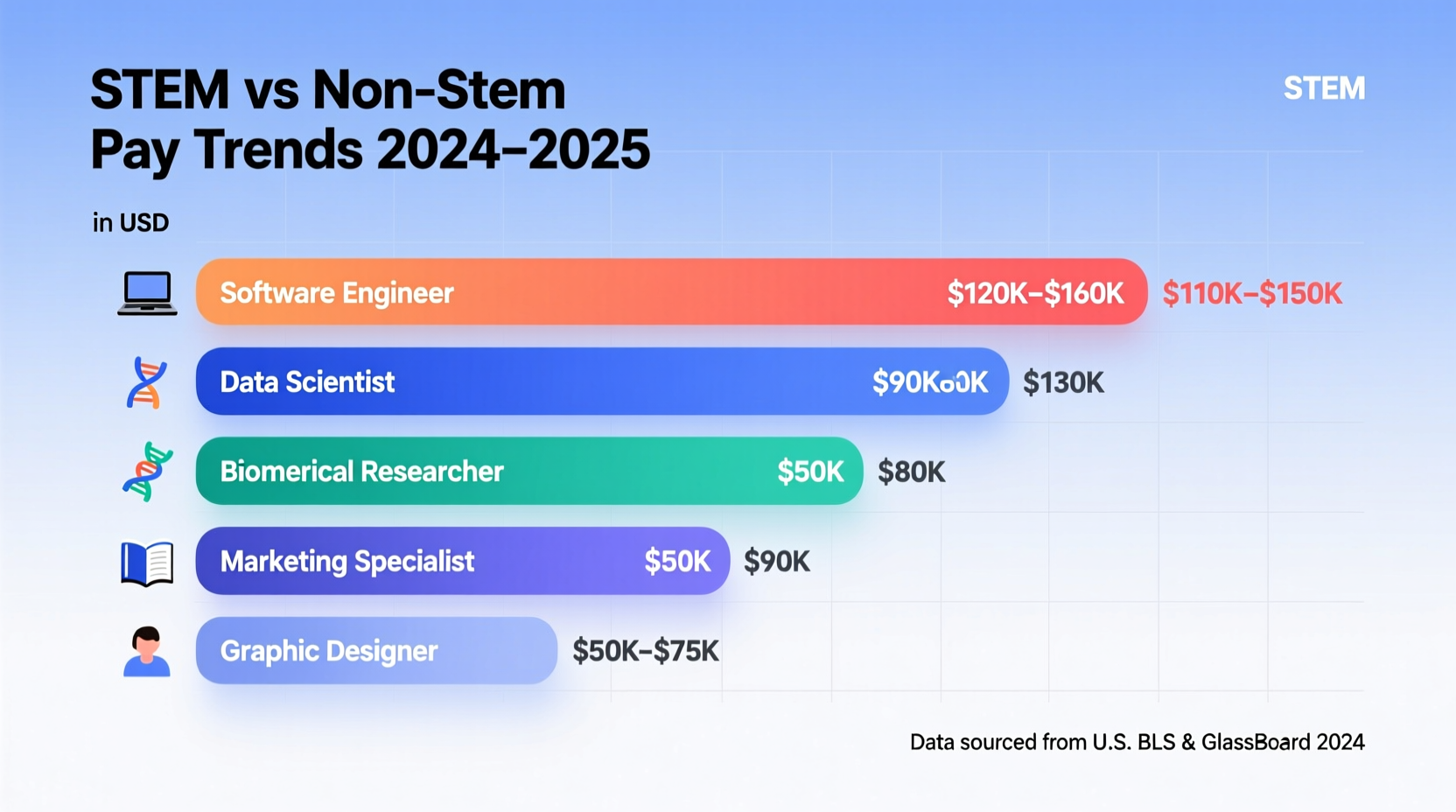
According to the U.S. Bureau of Labor Statistics (BLS), STEM occupations continue to command significantly higher median salaries than non-STEM roles. As of May 2023, the median annual wage for STEM jobs was $95,990—nearly double the $42,330 median for non-STEM positions. Projections through 2025 show this gap widening slightly due to accelerating demand in AI, cybersecurity, renewable energy, and data science.
The premium isn’t uniform across all STEM disciplines. For example, computer and information research scientists earn a median of $136,620, while entry-level environmental scientists average $50,750. Similarly, mechanical engineers often start around $70,000, whereas software developers can begin at $85,000+ depending on location and specialization.
Non-STEM fields like law, finance, and executive management can also offer competitive compensation. A senior accountant might earn $90,000; a corporate lawyer, $160,000. However, these roles typically require advanced degrees and years of experience. In contrast, many STEM roles—especially in tech—offer faster salary growth early in the career path.
“STEM fields reward technical scarcity. When you have skills in machine learning or cloud architecture, companies will pay a premium because qualified talent is limited.” — Dr. Lena Patel, Labor Economist at Georgetown University Center on Education and the Workforce
Comparative Salary Analysis: STEM vs. Non-STEM Roles
To illustrate the pay differences clearly, here's a comparative table based on BLS 2023 data and 2025 projections from Lightcast and Emsi Burning Glass:
| Occupation | Median Salary (2023) | Projected 2025 Median | Field Type |
|---|---|---|---|
| Software Developer | $110,140 | $118,000 | STEM |
| Data Scientist | $103,500 | $112,000 | STEM |
| Electrical Engineer | $101,780 | $107,500 | STEM |
| Registered Nurse | $81,220 | $85,000 | Non-STEM (Healthcare) |
| Marketing Manager | $135,030 | $140,000 | Non-STEM |
| High School Teacher | $62,460 | $65,000 | Non-STEM |
| Financial Analyst | $96,220 | $100,000 | Non-STEM |
| Web Developer | $80,730 | $87,000 | STEM |
Note: While some non-STEM roles like marketing management appear competitive, they often represent top-tier positions. Entry-level marketing coordinators may start at $45,000, whereas junior developers frequently begin above $70,000 in major tech hubs.
Tip: Don’t compare peak salaries only. Consider early-to-mid career growth. STEM roles often see faster salary increases within the first 5 years.Real-World Case: From Teaching to Tech
Consider the story of Marcus Tran, a former high school biology teacher in Chicago who transitioned into data analytics in 2023. After two years of teaching at $58,000 annually, Marcus enrolled in a six-month data bootcamp while working part-time. He landed a junior data analyst role at a healthcare startup with a starting salary of $78,000.
By mid-2024, after earning Google’s Data Analytics Certification and contributing to key dashboards, Marcus received a promotion to data analyst II with a $92,000 salary. His total income growth in under two years exceeded 58%. “I didn’t expect such a steep jump,” he says. “The biggest surprise wasn’t just the pay, but how quickly I could level up by learning new tools.”
Marcus’s experience reflects a broader trend: mid-career professionals entering tech-focused STEM roles often see faster financial returns than in their original fields, especially when transitioning from lower-wage public sector jobs.
Factors That Influence the Pay Gap
The raw numbers don’t tell the whole story. Several factors affect whether a STEM switch results in meaningful financial gain:
- Location: Salaries in San Francisco, Seattle, or New York are significantly higher—but so is cost of living. A $120,000 software job in Austin may offer better net value than a $150,000 role in San Francisco.
- Demand for Specialization: AI, cybersecurity, and cloud computing specialists earn premiums over generalists. Full-stack developers with React and Node.js skills are in higher demand than those with only front-end experience.
- Education and Certifications: While some STEM roles require degrees, others prioritize certifications (e.g., AWS, CompTIA, CISSP). These can be earned faster and cheaper than traditional degrees.
- Remote Work Access: Many STEM roles allow remote work, increasing earning potential regardless of geographic location. Non-STEM roles like teaching or nursing are less likely to offer full remote options.
Checklist: Is a STEM Switch Worth It Financially?
- Assess your current salary and projected 5-year trajectory in your current field.
- Research median salaries for target STEM roles in your region or desired remote market.
- Evaluate the time and cost of required training (bootcamps, certifications, degrees).
- Identify transferable skills (e.g., analytical thinking, project management).
- Network with professionals in the field to validate salary claims and hiring trends.
- Calculate break-even point: when your new salary covers transition costs and exceeds your old earnings path.
FAQ: Common Questions About STEM Salaries
Is every STEM job higher-paying than non-STEM jobs?
No. While the majority of STEM roles pay above the national median, some—like certain life science technician positions or adjunct STEM instructors—may pay less than experienced non-STEM professionals in law, sales, or skilled trades. The premium is strongest in computing, engineering, and advanced data roles.
Do I need a degree to get a high-paying STEM job?
Not always. Many tech companies, including Google, Apple, and IBM, now hire based on skills and certifications rather than degrees. Bootcamps in coding, cybersecurity, or data analysis can lead to roles starting at $70,000–$85,000 without a four-year degree.
Will AI reduce STEM job opportunities and wages?
In some routine tasks, yes—but overall, AI is increasing demand for STEM talent. Professionals who understand AI integration, model training, and ethical deployment are seeing higher salaries. The World Economic Forum predicts 97 million new STEM-related roles by 2025 due to technological shifts.
Conclusion: Weighing the Real Value of a STEM Career Shift
The pay difference between STEM and non-STEM fields in 2024–2025 remains substantial, particularly in technology and engineering disciplines. On average, STEM professionals earn nearly twice as much as their non-STEM counterparts, with faster salary progression in the early career stages. However, the return on investment depends on your starting point, chosen specialty, and willingness to reskill.
For those in lower-wage or stagnant-income roles, switching to a high-demand STEM field can be transformative. But it’s not automatic. Success requires strategic planning, skill acquisition, and realistic expectations about timelines and effort.
🚀 Ready to explore your next career move? Research one STEM role that matches your interests, find a free course to start building skills, and connect with someone already in that field. Small steps today can lead to significant financial gains by 2025.