Moving from a flagship Android device like the Huawei P50 to an iPhone 13 is more than just swapping phones—it’s stepping into a different ecosystem with new workflows, app behaviors, and long-term expectations. The iPhone 13, released in 2021, remains a popular choice due to Apple’s software support, seamless integration, and consistent performance. But for users deeply embedded in Huawei’s EMUI and Google-free environment, the transition raises real questions: Is the switch truly worth the cost and adjustment?
This article breaks down the practical realities of moving from the Huawei P50 to the iPhone 13, covering hardware differences, software experience, camera quality, ecosystem lock-in, and long-term usability.
Hardware Comparison: Power, Design, and Build Quality
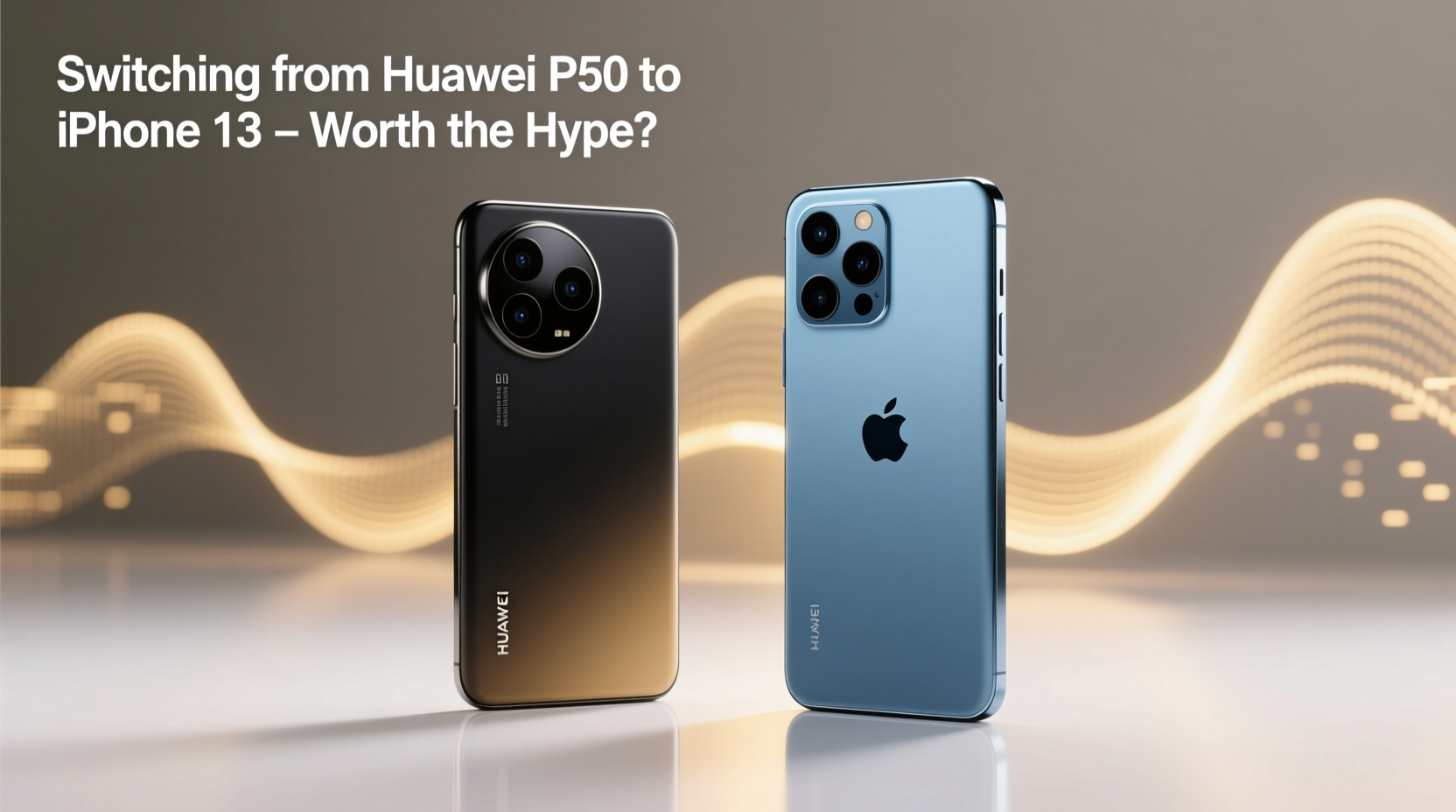
The Huawei P50 and iPhone 13 occupy similar price brackets at launch but diverge in design philosophy and component selection. The P50 features a sleek, minimalist design with a unique circular camera module, while the iPhone 13 retains Apple’s flat-edge aluminum-and-glass aesthetic introduced with the iPhone 12.
Under the hood, the P50 runs on Qualcomm’s Snapdragon 888 (in select regions) or Huawei’s own Kirin 9000, both powerful chips. However, due to U.S. sanctions, these devices lack access to Google Mobile Services (GMS), which affects app availability. In contrast, the iPhone 13 uses Apple’s A15 Bionic chip—still competitive in 2024 for everyday tasks and gaming—and benefits from full integration with iCloud, App Store, and third-party services.
| Feature | Huawei P50 | iPhone 13 |
|---|---|---|
| Processor | Snapdragon 888 / Kirin 9000 | A15 Bionic |
| RAM | 8GB | 4GB |
| Storage Options | 128GB, 256GB | 128GB, 256GB, 512GB |
| Display | 6.5-inch OLED, 120Hz | 6.1-inch Super Retina XDR, 60Hz |
| Battery Capacity | 4100mAh | 3227mAh |
| Charging | 66W wired, 50W wireless | 20W wired, 15W MagSafe |
Despite lower RAM, the iPhone 13 performs smoothly thanks to iOS optimization. The P50 wins in raw charging speed and refresh rate, but the iPhone offers better thermal management and sustained performance over time.
Tip: If you rely on fast charging and high refresh rates, consider keeping a power bank when using the iPhone 13.Software and Ecosystem: The Real Switch Hurdle
The most significant shift isn’t hardware—it’s ecosystem. Huawei users are accustomed to Huawei Mobile Services (HMS), AppGallery, and alternatives like Petal Maps and Huawei Browser. While functional, these lack the global reach and polish of Google and Apple equivalents.
iOS offers a tightly controlled environment where apps are vetted, updates arrive simultaneously, and cross-device sync (with Macs, iPads, Apple Watch) is seamless. Features like AirDrop, iMessage, FaceTime, and Handoff create a cohesive experience that Huawei can't match under current constraints.
“Apple’s ecosystem creates sticky loyalty because everything just works together—once you’re in, leaving feels inefficient.” — Mark Thompson, Tech Analyst at GadgetInsight
For users who frequently share files between devices, use cloud backups, or rely on messaging apps like WhatsApp, the iPhone 13 delivers a more predictable and integrated experience. However, if your digital life revolves around Chinese apps or local services, the transition may require relearning workflows.
Camera Performance: Strengths on Both Sides
Photography is a key selling point for both devices. The Huawei P50 boasts a Leica-tuned triple-camera system with exceptional low-light capabilities and color science praised by enthusiasts. Its XMAGE imaging technology compensates for lack of Google Photos by offering strong native editing tools.
The iPhone 13, meanwhile, uses computational photography to deliver consistent results across lighting conditions. Its 12MP dual-camera system (wide and ultra-wide) supports Night mode, Deep Fusion, and Smart HDR 4. Video recording is a standout feature, with Cinematic Mode and Dolby Vision support unmatched in the Android space at this price.
- Huawei P50 strengths: Superior low-light stills, natural skin tones, zoom flexibility
- iPhone 13 strengths: Reliable auto-exposure, best-in-class video, accurate white balance
In real-world use, the P50 excels in artistic shots with rich detail, while the iPhone 13 shines in consistency—especially for social media content creators who prioritize ready-to-share images without post-processing.
Step-by-Step Guide to Transition Smoothly
Migrating data and habits from Huawei to iPhone requires planning. Follow this timeline to minimize friction:
- Week 1: Audit Your Apps – List essential apps and check iOS availability. Replace unavailable ones with alternatives (e.g., WeChat exists on iOS; Didi does too).
- Day of Switch: Use Move to iOS – During iPhone setup, select “Move Data from Android” and install the Move to iOS app on your P50.
- Transfer Contacts, Messages, Photos – Let the app handle core data via direct Wi-Fi connection.
- Set Up iCloud – Sign in with your Apple ID and enable iCloud Drive, Photos, and Keychain for password sync.
- Install Missing Tools – Download replacements for HMS-exclusive apps (e.g., Petal Search → Google Search, Huawei Fitness → Apple Health).
- Customize Gestures & Settings – Adjust navigation (swipe vs. button), notification style, and Dark Mode preferences.
Long-Term Value and Software Support
One of the strongest arguments for the iPhone 13 is longevity. Apple typically provides five to six years of iOS updates. As of 2024, the iPhone 13 runs iOS 17 and is expected to receive iOS 20 or even 21. This means extended resale value and security patch reliability.
In contrast, Huawei’s update policy has become less predictable post-sanctions. The P50 launched with HarmonyOS 2 and received updates to HarmonyOS 3 and 4, but future support beyond 2025 is uncertain. For users prioritizing long-term device viability, the iPhone offers greater peace of mind.
Additionally, the App Store’s stricter review process reduces exposure to malware—a concern in third-party Android app stores often used on Huawei devices.
Mini Case Study: Li Wei’s Cross-Ecosystem Shift
Li Wei, a Shanghai-based marketing consultant, used Huawei flagships exclusively since 2016. When his P50 Pro battery degraded in late 2023, he considered upgrading within the Huawei line but hesitated due to limited Google service access affecting international travel and client collaboration.
After testing an iPhone 13 mini at an Apple Store, he was impressed by FaceTime call quality, iMessage reliability, and seamless integration with his MacBook. He switched in January 2024. Initial challenges included adjusting to iOS gestures and finding replacements for Bai Du Netdisk (replaced with iCloud + Dropbox). Within three weeks, he reported higher productivity due to smoother file sharing and fewer app crashes.
“The camera is flatter out of the box,” he said, “but once I learned to edit in Lightroom Mobile, my content looked more professional. And no more worrying about whether my clients can open my links.”
Checklist: Before You Make the Switch
- ✅ Verify iOS compatibility of your must-have apps
- ✅ Back up all data on Huawei P50 (Huawei Cloud or local)
- ✅ Prepare an Apple ID and set up two-factor authentication
- ✅ Install Move to iOS app and test connection
- ✅ Disable SIM lock on P50 if carrier-locked
- ✅ Transfer passwords using a secure method (export from Huawei Password Manager)
- ✅ Plan for initial learning curve—allow one week to adapt
FAQ
Can I use WeChat Pay and Alipay on iPhone 13 in China?
Yes. Both WeChat and Alipay are fully supported on iOS in mainland China. Payment functionality, QR scanning, and wallet integration work identically to Android versions.
Will my Huawei accessories work with iPhone?
Most won’t. Huawei chargers use USB-C, so they can charge the iPhone (though not at maximum speed). Wireless earbuds, fitness bands, and car kits will need replacement with AirPods or MFi-certified accessories for full functionality.
Is the iPhone 13 too old to buy in 2024?
No. With iOS 17 and A15 Bionic, it handles daily tasks efficiently. Apple continues to support it, and many users find it ideal for its compact size and proven reliability. It's also often available at discounted prices through carriers and resellers.
Conclusion: Making the Right Choice for Your Lifestyle
Switching from the Huawei P50 to the iPhone 13 isn’t just about better specs or brand prestige—it’s about choosing an ecosystem that aligns with how you live, work, and connect. The iPhone 13 offers superior long-term support, seamless integration with other Apple devices, and unmatched video capabilities. However, if you depend heavily on Huawei-specific services or prefer faster charging and higher screen refresh rates, the trade-offs may not justify the change.
Ultimately, the hype around the iPhone 13 is rooted in consistency, not revolution. It doesn’t reinvent the smartphone—but it refines the experience. For users ready to embrace iOS and invest in Apple’s ecosystem, the switch is absolutely worth it. For others, staying with Huawei—or considering newer Android alternatives—might be the smarter path.
🚀 Ready to make the leap? Start by downloading Move to iOS and testing your critical apps on the App Store. Share your transition story in the comments below.