When choosing between Google’s Pixel 6 and Samsung’s Galaxy S22, one question consistently dominates buyer discussions: Is the S22’s higher price justified by its superior camera system? At first glance, the S22 offers more lenses, higher megapixel counts, and advanced hardware. But in practice, photography isn’t just about specs—it’s about results, consistency, and usability. This breakdown dives into real-world camera performance, software intelligence, and long-term value to help you decide whether the premium Samsung experience delivers enough to justify the cost difference.
Camera Hardware: Specs Tell Only Half the Story
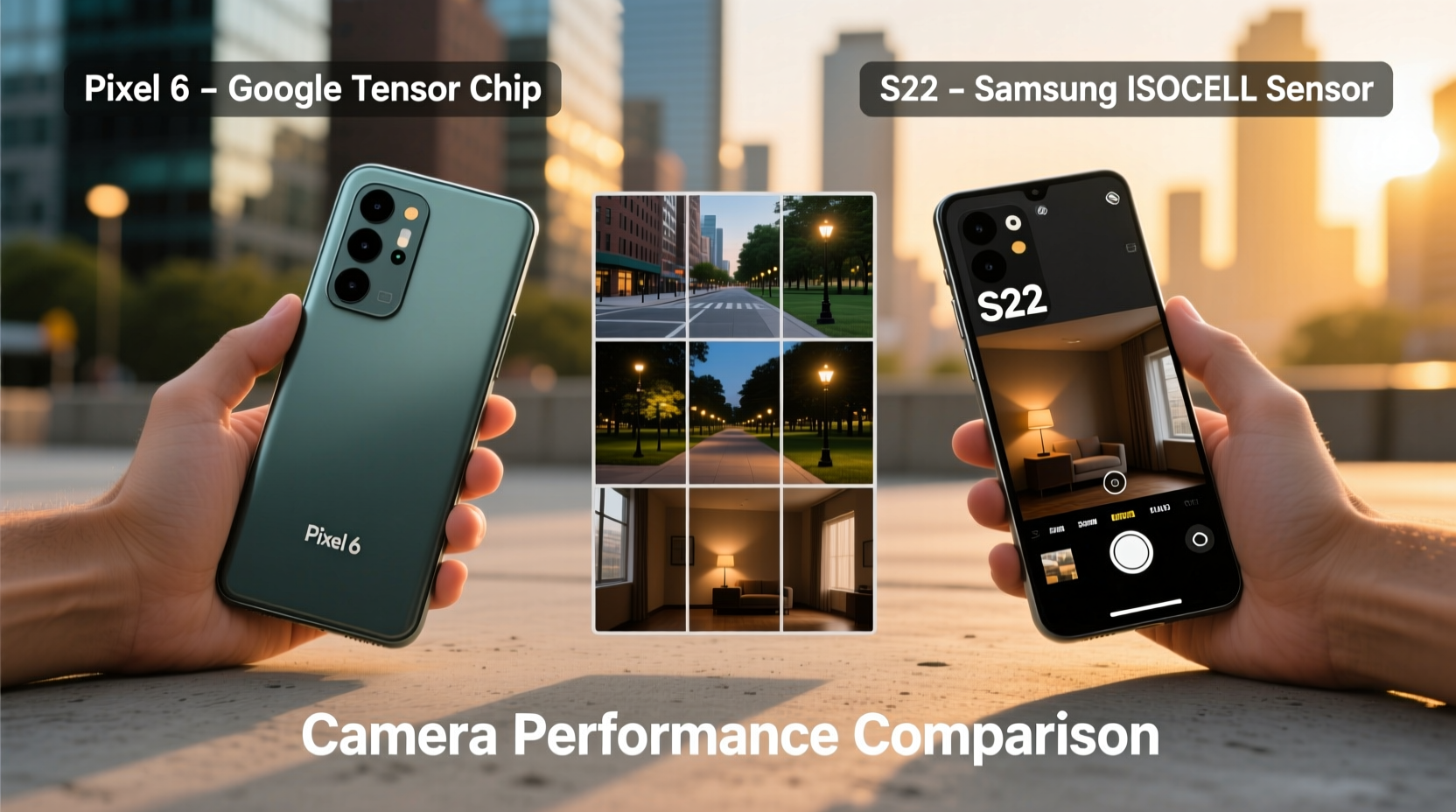
The Galaxy S22 features a triple-lens rear setup: a 50MP main sensor, a 12MP ultra-wide, and a 10MP telephoto with 3x optical zoom. It also supports up to 30x digital zoom and includes laser autofocus for faster subject tracking. The Pixel 6, on the other hand, has a dual-camera system—50MP main and 12MP ultra-wide—with no dedicated telephoto lens. Its digital zoom maxes out at 7x, relying heavily on computational photography to maintain quality.
On paper, the S22 wins with more hardware flexibility. The telephoto lens enables true optical zoom, which is invaluable for portraits, wildlife, or distant subjects. However, Google compensates with industry-leading software processing, particularly in low-light conditions and dynamic range optimization.
“Hardware matters, but in smartphone photography today, software is the differentiator.” — David Kim, Mobile Imaging Analyst at DXOMARK
| Feature | Google Pixel 6 | Samsung Galaxy S22 |
|---|---|---|
| Main Sensor | 50MP (f/1.85) | 50MP (f/1.8) |
| Ultra-Wide | 12MP (f/2.2) | 12MP (f/2.2) |
| Telephoto | No | 10MP (f/2.4), 3x optical zoom |
| Digital Zoom | Up to 7x | Up to 30x |
| Front Camera | 8MP (f/2.0) | 10MP (f/2.2) |
| Video Recording | 4K @ 60fps | 8K @ 24fps, 4K @ 60fps |
Image Quality in Real-World Conditions
In daylight, both phones produce excellent photos with accurate colors and fine detail. The S22 tends to oversharpen images slightly, giving them a polished but sometimes artificial look. The Pixel 6 takes a more natural approach—colors are balanced, skin tones are realistic, and HDR transitions are smoother.
Night mode is where the Pixel continues to shine. Google’s Night Sight algorithm remains one of the best in the industry, pulling remarkable detail from near-dark environments without excessive noise or ghosting. While the S22’s Nightography mode is impressive, it often applies heavier noise reduction, resulting in softer textures and less definition in very dark scenes.
Tip: For low-light shots, use a stable surface or enable Night Sight on the Pixel 6—its longer exposure times benefit from minimal movement.Zoom performance highlights a key trade-off. Without a telephoto lens, the Pixel 6 struggles beyond 5x zoom, even with Super Res Zoom. The S22 maintains clarity up to 10x thanks to its optical foundation, making it far more capable for concert shots, sports, or candid photography from a distance.
User Experience and Software Advantages
The Pixel 6 runs pure Android with guaranteed updates for three years and exclusive AI-powered photo tools like Magic Eraser, Face Unblur, and Photo Unblur. These features allow users to remove photobombers, sharpen motion-blurred faces, or enhance old images—all within the Google Photos app. No other phone offers this level of intelligent post-processing.
The S22 runs Samsung’s One UI, which adds numerous camera modes such as Director’s View, Expert RAW, and Single Take. These appeal to enthusiasts but can overwhelm casual users. While Samsung’s editing suite is robust, it lacks the seamless AI integration found in Pixel-exclusive tools.
- Pixel 6 excels in simplicity, automation, and post-capture enhancement.
- S22 offers more manual controls and creative shooting options.
- For most users, Pixel’s “set it and forget it” approach delivers consistent, high-quality results.
Mini Case Study: Travel Photography in Morocco
Photographer Lena Tran used both devices during a two-week trip through Marrakech and the Atlas Mountains. Her goal was to capture street scenes, architecture, and portraits under variable lighting.
During daytime souk visits, both phones performed admirably. The S22’s 3x zoom allowed her to discreetly photograph artisans at work from across narrow alleys. In dimly lit riads, however, the Pixel 6 consistently produced cleaner, brighter night shots with truer color fidelity. She later used Magic Eraser to remove modern signage from historical courtyard photos—a task that would have required Photoshop on the S22.
“The S22 gave me flexibility I didn’t know I needed,” she said. “But the Pixel saved me hours in editing. If I had to pick one for travel, I’d lean toward the Pixel unless I knew I’d be shooting distant subjects regularly.”
Value Proposition: Is the Extra Cost Justified?
The Pixel 6 launched at $599; the S22 started at $799—a $200 difference. That gap represents nearly 33% more upfront cost. So what do you actually gain?
- Better zoom capability – Essential if you frequently shoot distant subjects.
- 8K video recording – Useful for future-proofing, though few consume 8K content.
- More refined build and display – The S22 has a brighter Dynamic AMOLED screen and slimmer design.
- Faster charging and wireless power sharing – Practical for multi-device users.
Yet the Pixel 6 offers unique advantages: longer software support (Tensor G1 receives OS upgrades longer than Exynos chips), built-in Titan M security chip, and access to Google’s ecosystem of AI tools. It also supports call screening, hold for me, and other Assistant-driven features not available on Samsung devices.
Tip: Consider your usage patterns. If you rarely zoom or edit photos, the Pixel 6 likely meets your needs at a better price point.FAQ
Does the S22 take noticeably better photos than the Pixel 6?
In most everyday situations, the difference is subtle. The S22 pulls ahead in zoomed shots and well-lit video, but the Pixel matches or exceeds it in low light and portrait accuracy. For average users, the improvement may not justify the price jump.
Can the Pixel 6 compete without a telephoto lens?
Yes, but with limits. Google’s Super Res Zoom works well up to 5x, especially with steady hands or tripod use. Beyond that, image quality degrades faster than the S22’s hybrid zoom. If optical zoom is important, the S22 remains the better choice.
Which phone has better long-term software support?
The Pixel 6 guarantees three years of OS updates and five years of security patches. Samsung now offers four years of OS updates for the S22, improving its standing. However, Pixel users get new AI features and camera enhancements earlier due to tight Google integration.
Final Verdict: What Matters Most to You?
The answer to whether the Samsung camera is worth the extra depends entirely on your priorities. If you value optical zoom, high-resolution video, and premium hardware, the S22 earns its price tag. It’s a powerhouse for creators who want flexibility and control.
But if you prioritize natural-looking photos, intelligent software, and hassle-free shooting in challenging lighting, the Pixel 6 delivers exceptional value. Its AI-driven photography suite reduces the need for editing while maintaining outstanding consistency across environments.
Ultimately, the S22 offers more hardware versatility, but the Pixel 6 proves that smart software can close—or even surpass—the gap in real-world results.
🚀 Ready to make your decision? Test both cameras in your daily routine—take sample shots in your home, at night, and with zoom. See which interface feels intuitive and which results match your expectations. The best camera is the one you enjoy using every day.