
The smartphone market in 2023 remains fiercely competitive, especially when it comes to choosing between Google’s budget-conscious Pixel line and Samsung’s premium Galaxy series. The Pixel 5a and Galaxy S22 represent two very different philosophies: one prioritizing clean software and long-term updates at a lower price, the other delivering top-tier hardware with flagship features. But for consumers weighing value against performance, the real question persists — is the Galaxy S22 truly worth its higher price tag over the more affordable Pixel 5a?
This isn’t just about specs on paper. It’s about real-world usability, longevity, camera quality in varied conditions, and how each device fits into your daily life. Let’s break down both phones across key categories to help you decide where your money is best spent.
Design and Build Quality
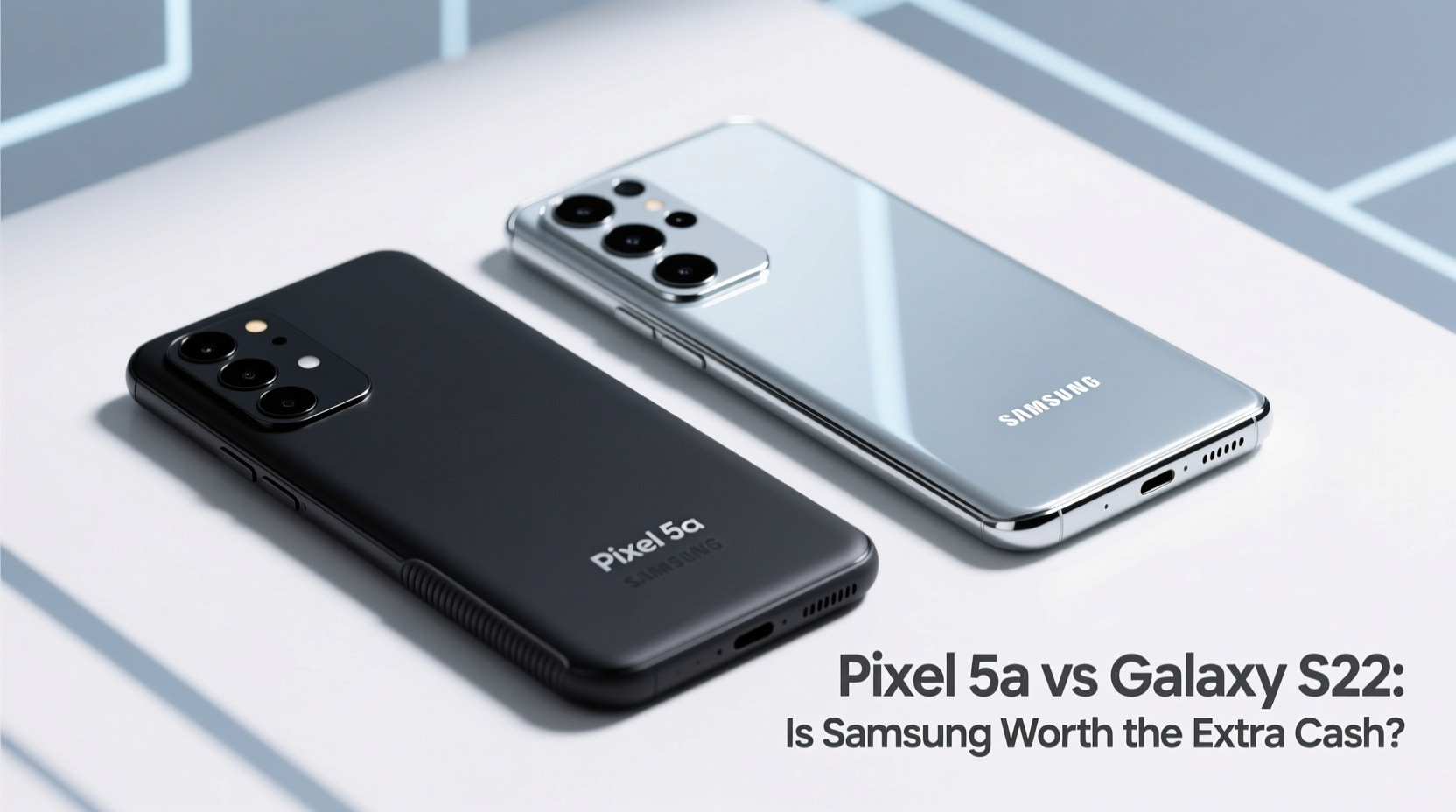
The Pixel 5a stands out with its minimalist, functional design. Built with a durable aluminum frame and a water-resistant (IP67) plastic back, it offers solid protection without the fragility often associated with glass-backed phones. At 183 grams, it’s slightly heavier than average but feels secure in hand. Its 6.3-inch OLED display is surrounded by modest bezels and topped with a punch-hole front camera, giving it a no-frills aesthetic that prioritizes practicality.
In contrast, the Galaxy S22 embraces a sleeker, more luxurious profile. With a Gorilla Glass Victus front and back, plus an aluminum frame, it exudes premium craftsmanship. At 167 grams, it’s lighter and more compact despite having a smaller 6.1-inch Dynamic AMOLED 2X display. The curved edges and tighter bezels enhance its visual appeal, making it feel more refined — though also more prone to accidental touches and screen damage if dropped.
Tip: If you frequently use your phone outdoors or in rugged environments, the IP67 rating and tougher build of the Pixel 5a may offer better peace of mind.Display and Performance Comparison
The Galaxy S22 clearly wins in display technology. Its 6.1-inch panel supports a 120Hz refresh rate, HDR10+, and peak brightness exceeding 1,300 nits — making it ideal for outdoor visibility, gaming, and media consumption. Colors are vibrant, blacks are deep, and motion feels fluid. The Pixel 5a’s 60Hz refresh rate, while sufficient for everyday tasks, feels dated in side-by-side scrolling tests, particularly when navigating social media or fast-paced apps.
Performance follows a similar trend. The S22 runs on Samsung’s customized Exynos 2200 (or Snapdragon 8 Gen 1 in some regions), built on a 4nm process with significantly faster CPU and GPU performance. This translates to smoother multitasking, quicker app launches, and far better gaming capability. The Pixel 5a, powered by the older Qualcomm Snapdragon 765G, handles basic tasks well but stutters under heavy loads like video editing or extended gaming sessions.
“High refresh rate displays are no longer luxury features — they’ve become essential for a responsive user experience.” — Mark Chen, Mobile Hardware Analyst at TechPulse
Camera Capabilities: Real-World Photo Quality
Both phones emphasize computational photography, but their approaches differ. The Pixel 5a continues Google’s legacy of extracting exceptional image quality from modest hardware. Its 12.2MP main sensor consistently produces natural colors, excellent dynamic range, and class-leading low-light photos thanks to Night Sight and HDR+. Ultrawide shots are usable, though not as sharp as competitors’. The lack of telephoto zoom limits versatility, but for point-and-shoot photography, it remains impressive.
The Galaxy S22 packs a more versatile triple-camera system: a 50MP main sensor, 12MP ultrawide, and 10MP telephoto with 3x optical zoom. While pixel-binning reduces the main output to 12MP for better light capture, the additional hardware enables greater creative flexibility. Zoomed shots up to 30x digital zoom are surprisingly usable, and AI-enhanced processing delivers vivid, contrast-rich images that appeal to social media users. However, this processing can sometimes oversaturate skies or distort skin tones.
In controlled lighting, both perform admirably. In low light, the Pixel often captures more balanced exposures with less noise. But the S22’s ability to shoot in varied formats — including 8K video and Super Steady mode — gives it an edge for creators.
Tip: For casual photographers who prioritize simplicity and consistency, the Pixel 5a’s single-tap excellence may be enough. For those who want creative control and zoom options, the S22 is worth considering.Battery Life and Charging
The Pixel 5a excels in endurance. Its 4,680mAh battery routinely lasts 1.5 to 2 days with moderate use, thanks to efficient software and the power-sipping 60Hz display. It supports 18W wired charging and Qi wireless charging, though fast chargers are sold separately.
The Galaxy S22, despite a smaller 3,700mAh battery, manages a full day under normal use due to adaptive refresh rates and optimized power management. However, enabling 120Hz or using GPS-intensive apps drains it noticeably faster. It supports 25W fast charging (charger not included) and 10W wireless charging, offering quicker top-ups when needed.
| Feature | Pixel 5a | Galaxy S22 |
|---|---|---|
| Battery Capacity | 4,680 mAh | 3,700 mAh |
| Charging Speed | 18W wired, wireless | 25W wired, 10W wireless |
| Expected Daily Use | 1.5–2 days | 1 day |
| Reverse Charging | No | Yes (Wireless PowerShare) |
Software, Updates, and Longevity
Here, the Pixel 5a gains significant ground. As a Google flagship, it launched with Android 11 and is guaranteed updates through Android 15, including monthly security patches until 2025. This ensures access to the latest features, privacy tools, and AI integrations directly from Google.
The Galaxy S22, while powerful, follows Samsung’s update policy: four major OS upgrades and five years of security updates. That means it will receive updates until at least 2027 — potentially longer than the Pixel 5a. However, Samsung’s One UI adds layers of customization that some find bloated, and feature rollouts often lag behind Pixel devices.
If you value a clean Android experience, timely bug fixes, and direct integration with Google services like Assistant, Photos, and Recorder, the Pixel remains unmatched. For users who prefer deeper personalization or use Samsung’s ecosystem (like Galaxy Buds or Watch), the S22 integrates more seamlessly.
Real-World Example: A Travel Photographer’s Choice
Sophie, a freelance travel photographer based in Lisbon, used a Pixel 5a for two years before upgrading to the Galaxy S22. “I loved the Pixel’s camera for street shots and night scenes,” she says. “But when I started doing client work requiring zoom and portrait variety, I hit limitations.”
On a recent trip to Morocco, the S22’s 3x optical zoom allowed her to capture detailed architecture from a distance, while the improved front camera made vlogging easier. “The battery didn’t last as long, so I carried a power bank. But the image quality and flexibility were game-changers for my business.”
Her case illustrates a common trade-off: the Pixel 5a is ideal for enthusiasts who want great photos without complexity; the S22 serves professionals or power users needing advanced tools.
Cost Analysis: Is the Premium Justified?
The original retail prices tell part of the story: the Pixel 5a launched at $449, while the Galaxy S22 started at $799 — a $350 difference. Even today, used or refurbished models reflect this gap. So what do you gain for that extra investment?
- Display: 120Hz vs 60Hz — smoother, brighter, more responsive
- Performance: Flagship chip vs mid-range — better multitasking and future-proofing
- Cameras: Triple setup with optical zoom vs dual with digital-only zoom
- Build: Glass-and-metal premium design vs durable but utilitarian
- Accessories: Supports Wireless PowerShare, DeX, and wider ecosystem integration
For budget-conscious buyers, students, or secondary phone users, the Pixel 5a delivers remarkable value. But if you rely on your phone for work, content creation, or high-performance apps, the Galaxy S22’s capabilities justify its cost over time.
Frequently Asked Questions
Can the Pixel 5a still run modern apps smoothly?
Yes, for everyday tasks like browsing, messaging, streaming, and light photo editing. However, demanding games or multitasking with many apps open may cause slowdowns due to the older Snapdragon 765G processor.
Does the Galaxy S22 have better audio than the Pixel 5a?
Both phones have stereo speakers tuned well for their size. The S22’s audio is slightly louder and more balanced, but neither has a headphone jack. External headphones via USB-C or Bluetooth provide the best experience on both.
Which phone gets updates faster?
The Pixel 5a receives updates directly from Google, typically within days of release. The Galaxy S22 gets updates after Samsung’s testing and rollout schedule, which can take weeks longer — though both are supported long-term.
Final Verdict: Making the Right Choice for You
The answer to whether the Galaxy S22 is worth the extra cash depends entirely on your priorities. If you value raw performance, a stunning display, optical zoom, and a premium design, the S22 earns its price. It’s a true flagship built for users who demand the best hardware available.
However, if your needs center around reliable camera performance, long battery life, clean software, and budget efficiency, the Pixel 5a remains a compelling option — even years after release. It proves that thoughtful software engineering can rival expensive hardware in meaningful ways.
Ultimately, both phones succeed in their respective lanes. The Galaxy S22 is worth the upgrade for power users and creatives. The Pixel 5a is a smart buy for pragmatists who don’t want to pay for features they won’t use.
🚀 Ready to make your move? Assess your daily usage, camera needs, and budget — then choose the phone that aligns with your lifestyle, not just the spec sheet.