For casual gamers, the Nintendo Switch isn’t just a gaming console—it’s a lifestyle device. Whether you're unwinding after work, playing with kids on weekends, or squeezing in a quick round of Animal Crossing during lunch, the Switch delivers accessible, joyful experiences. But when it comes to choosing between the original Nintendo Switch and the newer OLED model, many casual players find themselves wondering: is the upgrade worth it?
The answer depends on your habits, priorities, and budget. While both consoles run the same games and offer identical core functionality, subtle differences in design, screen quality, and usability can significantly affect the experience—especially for someone who doesn't play daily but wants reliable, enjoyable sessions when they do.
Display Quality: The Most Noticeable Difference
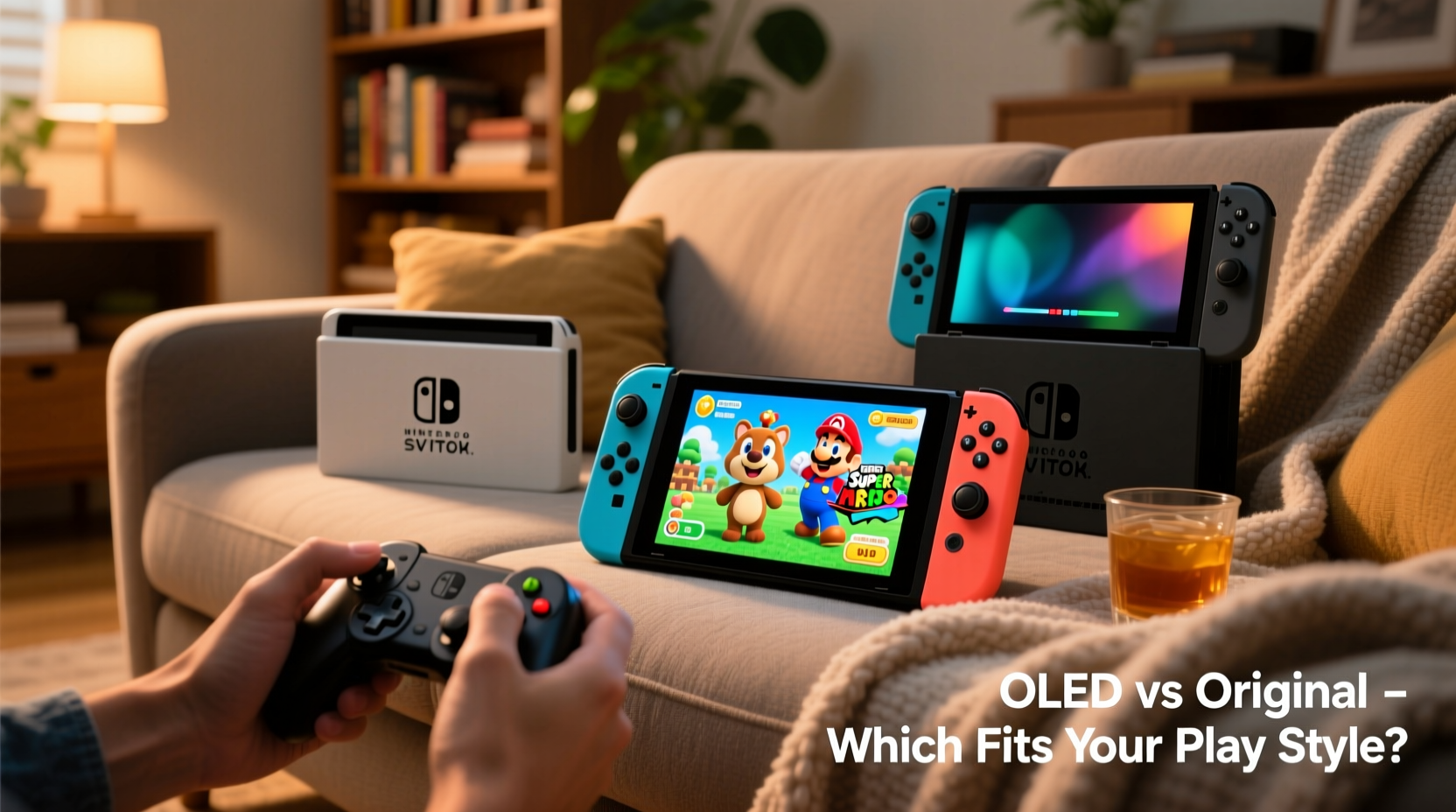
The most striking difference between the original Switch and the OLED model is the screen. The OLED version features a 7-inch organic light-emitting diode (OLED) display, compared to the original’s 6.2-inch LCD panel. This change brings deeper blacks, richer colors, and higher contrast. For casual gamers who often play in handheld mode—on the couch, during commutes, or while lounging—the visual improvement is immediately apparent.
In well-lit rooms or under natural daylight, the OLED screen maintains clarity and vibrancy far better than the original. Colors pop without appearing oversaturated, and dark scenes in games like Luigi’s Mansion 3 or Hollow Knight: Silksong reveal details previously lost in shadow. The improved viewing angles also mean that sharing the screen with a friend or child is more comfortable, even if you’re not directly facing it.
Tip: If you primarily play in handheld mode—even occasionally—the OLED screen offers a noticeably better visual experience that enhances immersion.Built-in Storage and Audio: Small Upgrades That Add Up
Nintendo doubled the internal storage on the OLED model, giving users 64GB compared to the original’s 32GB. For casual gamers who download a few titles at a time—say, Stardew Valley, Super Mario Party, and Tetris 99—this extra space means less juggling between deleting and redownloading games. It also reduces the need to invest in a microSD card right away, though one is still recommended for long-term use.
The speakers on the OLED model have also been upgraded. They are louder and clearer, with better midrange and bass response. In handheld mode, this makes games feel more dynamic—footsteps echo more distinctly in Donkey Kong Country Tropical Freeze, and music in Kirby and the Forgotten Land carries more emotional weight. While audiophiles will still prefer headphones, the built-in audio now holds its own for short bursts of gameplay.
Design and Durability: Subtle but Meaningful Changes
The OLED model introduces a sturdier kickstand—wider, adjustable, and far more reliable than the flimsy hinge on the original. For casual gamers who enjoy tabletop mode with friends or while traveling, this is a game-changer. No more balancing the console on books or propping it up with a phone case. The new stand supports smooth multi-angle positioning, making shared play easier and more stable.
The overall build feels more premium, too. The back has a slightly textured finish that resists fingerprints, and the corners are subtly reinforced. While neither model is built like a tank, the OLED version inspires more confidence during everyday handling—especially important for households with kids or frequent travel.
“Casual gamers benefit most from reliability and ease of use. The OLED’s improved stand and screen reduce friction in setup and viewing, making spontaneous play more inviting.” — Marcus Tran, Consumer Tech Analyst at GameWise Insights
Portability and Battery Life: Are They Truly Different?
Both models fall under the “hybrid” category—equally capable as a home console and a portable device. However, battery life tells an interesting story. The original Switch launched with poor battery life (around 2.5–3 hours for demanding games), but later revisions—including the version released in 2019—improved this to 4.5–9 hours depending on the title.
The OLED model uses the same energy-efficient processor and offers nearly identical battery performance: roughly 4.5–9 hours. So despite the larger, more power-hungry OLED screen, Nintendo managed to maintain efficiency through optimized hardware. For a casual player who plays in 30- to 60-minute sessions, either model will last multiple uses on a single charge.
Portability is virtually unchanged. The OLED model is slightly taller due to the bigger screen, but the weight difference is negligible (420g vs. 398g). Both fit easily into backpacks or tote bags. The real advantage lies in comfort: the OLED’s screen fills more of your field of view, making small text and UI elements easier to read without squinting.
Value Comparison: Is the OLED Worth the Extra Cost?
The OLED model retails for $349.99, while the original (revised) model can be found for around $299.99. That $50 gap may seem steep for incremental improvements, especially when both systems play the exact same games. But for casual gamers, value isn’t just about specs—it’s about enjoyment per use.
| Feature | Original Switch (2019+) | Switch OLED |
|---|---|---|
| Screen Size & Type | 6.2\" LCD | 7\" OLED |
| Internal Storage | 32GB | 64GB |
| Battery Life | 4.5–9 hours | 4.5–9 hours |
| Stand Design | Narrow, fixed-angle | Wide, adjustable |
| Speakers | Average clarity | Louder, richer sound |
| Price (MSRP) | $299.99 | $349.99 |
| Best For | Budget-focused buyers, TV-centric players | Handheld/tabletop users, visual quality seekers |
If your primary use case is docked gameplay—playing on a TV with occasional handheld use—the original Switch remains a smart choice. You’ll save money and lose nothing in functionality. But if you regularly play in handheld or tabletop mode, the OLED’s superior screen, better stand, and enhanced audio justify the premium.
Real-World Example: Sarah’s Weekend Gaming Routine
Sarah, a 34-year-old graphic designer and mother of two, bought her first Switch three years ago. She mostly played on the TV during weekend family time, enjoying Super Mario 3D World + Bowser’s Fury with her kids. When her original unit broke after spilling juice on it, she debated upgrading.
She considered sticking with another original model but ultimately chose the OLED after testing both at a local store. “The screen just looked so much nicer,” she said. “And I realized I was using handheld mode more than I thought—on the couch while the kids napped, or at my parents’ house where their TV doesn’t support the dock.”
Now, she uses the adjustable stand for impromptu puzzle sessions with her daughter using Pikuniku, and appreciates the extra storage for downloading seasonal demos. “I don’t play every day, but when I do, it feels more polished. Worth the extra $50 to me.”
Actionable Checklist: Choosing Your Ideal Model
- Evaluate your primary play mode: Do you mostly use the TV dock, or play handheld/tabletop?
- Assess your lighting environment: Will you play in bright rooms or outdoors? OLED handles glare better.
- Consider durability needs: Do kids or travel expose your console to wear? OLED’s build is slightly more robust.
- Check your storage habits: Do you keep multiple games downloaded? 64GB gives more breathing room.
- Test before buying: Visit a retailer to compare screens side-by-side if possible.
- Factor in accessories: The OLED doesn’t require different Joy-Cons, so existing controllers work fine.
Frequently Asked Questions
Can I use my old accessories with the OLED model?
Yes. All Joy-Con controllers, docks, charging grips, and cases designed for the original Switch are fully compatible with the OLED model. No adapter or update is needed.
Does the OLED model have better performance or graphics?
No. The internal hardware is identical. Games run at the same resolution and frame rate in both docked and handheld modes. The visual improvement comes solely from the screen technology, not processing power.
Is the OLED model harder to repair if damaged?
Repairs are comparable in complexity, but OLED screens are generally more expensive to replace than LCDs. However, third-party repair services report similar turnaround times and availability of parts for both models.
Final Recommendation: Who Should Choose Which?
For **casual gamers who prioritize TV play** and want to minimize cost, the **original Switch (2019 revision)** remains an excellent option. It’s proven, widely supported, and performs identically in core gameplay. If you already own accessories, this model avoids redundant spending.
For **casual gamers who value portability, screen quality, and long-term usability**, the **Switch OLED** is the smarter investment. The enhanced display, superior stand, and doubled storage improve the experience in ways that compound over time—especially for those who play in shorter, more spontaneous sessions.
As one Reddit user in the r/Nintendo community put it: “I only play a few hours a week, but those moments matter. The OLED makes them feel special.”
Conclusion: Make the Choice That Fits Your Lifestyle
Gaming shouldn’t be about chasing specs or owning the latest model. It should be about joy, connection, and relaxation. The Nintendo Switch, in any form, excels at delivering that. But when choosing between the original and OLED models, consider not just what the console can do—but how it fits into your life.
If you reach for it mainly on weekends, during downtime, or to share with family, the OLED’s thoughtful refinements make those moments more seamless and immersive. It’s not a revolutionary leap, but an evolution—one that respects how real people actually use the device.
💬 Have your own experience with the Switch OLED or original model? Share your thoughts below and help fellow casual gamers decide what works best for their lifestyle.