When Apple released the iPhone 12 in 2020, many long-time users of the iPhone XS Max faced a dilemma: was upgrading truly necessary? The XS Max, launched in 2018, was still a powerful device with excellent build quality and camera performance. But the iPhone 12 brought 5G, a new flat-edge design, improved processors, and enhanced cameras. To cut through the marketing noise, we gathered insights from real-world users who made the switch — or chose to stay put.
Design and Build: A Shift in Aesthetics
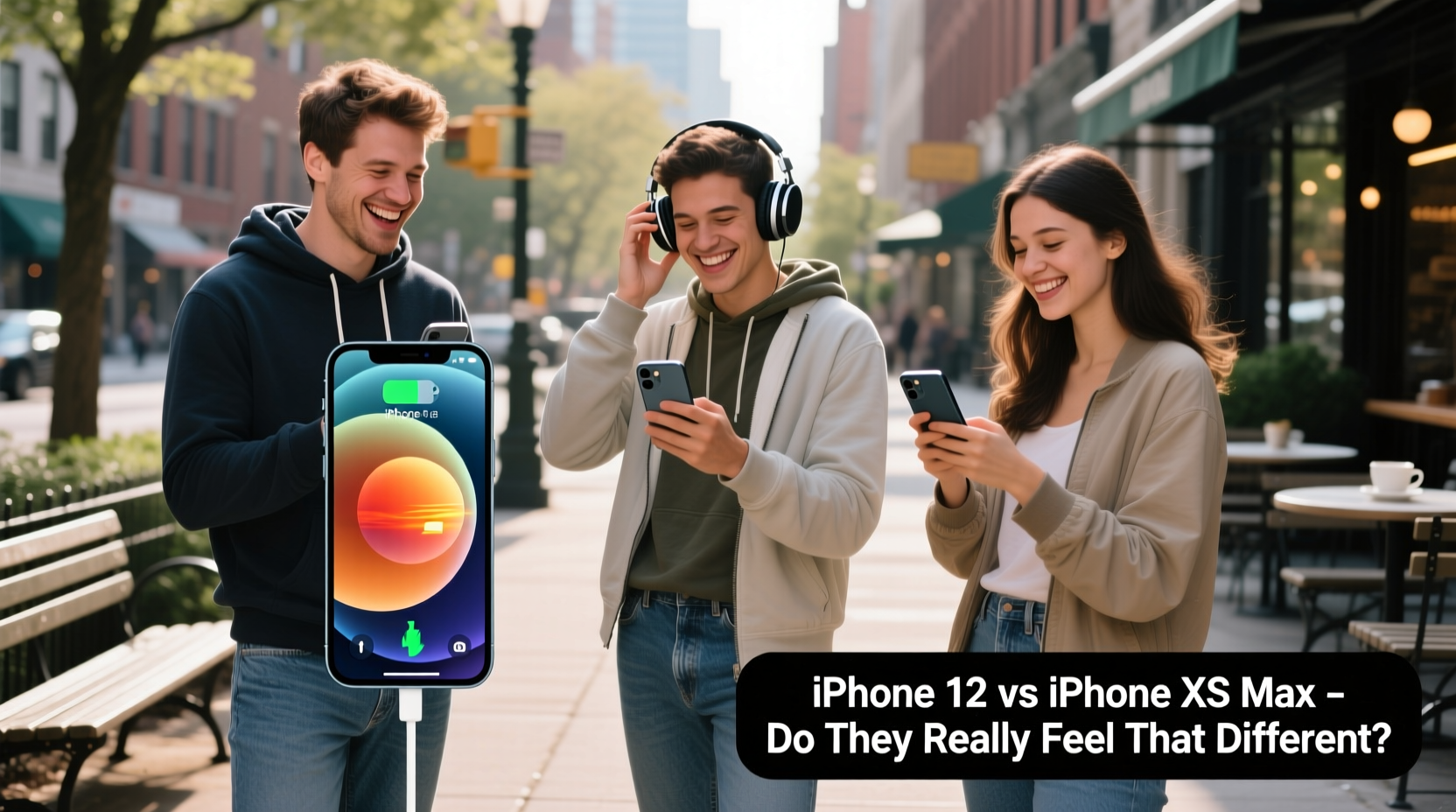
The most immediate difference between the two models is their design language. The iPhone XS Max features curved edges and a stainless steel frame, giving it a premium, almost luxury feel. In contrast, the iPhone 12 adopts a retro-inspired flat-edge aluminum design reminiscent of the iPhone 4 and 5 series, but with modern materials like Ceramic Shield front cover for improved drop resistance.
Users who upgraded often praised the iPhone 12’s lighter weight (164g vs. 208g) and slimmer profile, making it more comfortable for one-handed use despite having nearly the same screen size (6.1” on iPhone 12 vs. 6.5” on XS Max). However, some missed the heft and glossy finish of the XS Max, which felt more substantial in the pocket.
Tip: If you prefer durability over aesthetics, the iPhone 12’s Ceramic Shield offers up to 4x better drop performance — a practical win for everyday use.Performance: Speed and Efficiency Compared
Under the hood, the iPhone 12 runs on the A14 Bionic chip, the first smartphone processor built on a 5nm process. This gives it a significant edge over the XS Max’s A12 Bionic, especially in multitasking, app launch speed, and graphics-intensive tasks like gaming or video editing.
Owners consistently reported smoother animations, faster Face ID response, and noticeably quicker app switching. One developer noted, “Xcode compiles projects about 30% faster on my iPhone 12 compared to my old XS Max — small things add up.”
While iOS updates keep both devices functional, newer versions increasingly favor the A14’s architecture. Users report that background app refresh and photo processing are more efficient on the iPhone 12, reducing lag during heavy usage.
“Even after three years, the XS Max wasn’t slow — but the iPhone 12 feels *snappier* in ways I didn’t expect. It’s not just raw power; it’s responsiveness.” — Jordan Lee, Mobile App Tester
Camera Upgrades: Subtle but Meaningful Improvements
Both phones feature dual-camera systems, but the iPhone 12 introduces Night mode across all lenses and improves low-light video with Dolby Vision HDR recording. While the XS Max still captures excellent photos in daylight, the iPhone 12 pulls ahead in challenging lighting conditions.
Real-world comparisons show that the iPhone 12 produces more balanced exposures, better dynamic range, and superior color accuracy — particularly at night. Portrait mode also benefits from tighter edge detection and depth mapping thanks to the LiDAR scanner (available on Pro models only).
For casual photographers, the differences may seem minor. But enthusiasts and social media creators appreciate the consistency across shooting modes. As one travel blogger put it: “I used to avoid shooting after sunset with the XS Max. Now I look forward to it.”
| Feature | iPhone 12 | iPhone XS Max |
|---|---|---|
| Processor | A14 Bionic (5nm) | A12 Bionic (7nm) |
| Display Size | 6.1 inches | 6.5 inches |
| Weight | 164g | 208g |
| Battery Life (Video Playback) | 17 hours | 14 hours |
| Charging | Lightspeed & MagSafe support | Lightspeed only |
| Night Mode | All cameras | Main camera only |
| 5G Support | Yes | No |
Battery and Charging: Practical Longevity
Battery life is where user experiences diverge. Despite its smaller physical size, the iPhone 12 delivers comparable — and sometimes better — endurance than the XS Max due to the efficiency of the A14 chip. In mixed-use scenarios (social media, messaging, streaming, calls), most users get through a full day without needing a recharge.
However, enabling 5G can reduce battery life by up to 20%, according to field reports. Many owners now use “LTE-only” mode unless they’re downloading large files or streaming HD video. The XS Max, lacking 5G entirely, avoids this drain but also misses out on faster network speeds.
Charging has evolved too. The iPhone 12 supports MagSafe, allowing magnetic alignment with chargers and accessories. Though neither phone includes a charger in the box, MagSafe opens new convenience options — albeit at an extra cost.
Mini Case Study: Sarah’s Upgrade Dilemma
Sarah, a freelance photographer based in Portland, held onto her iPhone XS Max for nearly four years. She relied on it for client previews, quick edits, and social posting. By late 2023, she noticed longer export times in Lightroom and occasional crashes when using newer AR apps.
After testing both devices side-by-side at an Apple Store, she upgraded to the iPhone 12 primarily for camera consistency and processing speed. “The difference in exporting edited JPEGs was shocking — 15 seconds versus 45 on the XS Max,” she said. “And my Instagram Stories look sharper now, even in dim cafes.”
She did miss the larger screen initially but adapted within weeks. Her biggest surprise? Battery life improved despite heavier usage. “I thought I’d need to charge twice a day. I don’t even hit 50% by bedtime.”
Is the Upgrade Worth It? A Practical Checklist
Deciding whether to upgrade depends on your needs, budget, and current satisfaction level. Use this checklist to evaluate your situation:
- ✅ Are you experiencing frequent app crashes or slowdowns?
- ✅ Do you want better low-light photography?
- ✅ Is 5G access important in your area or work?
- ✅ Are you still using a case designed for older iPhones?
- ✅ Have you maxed out storage and can’t offload enough data?
- ✅ Do you value longer software support (iOS updates)?
If three or more apply, the iPhone 12 likely offers meaningful improvements. But if your XS Max still handles daily tasks smoothly, waiting longer — or skipping to a future model — might be smarter.
Frequently Asked Questions
Can the iPhone XS Max still run the latest iOS versions?
Yes, as of iOS 17, the iPhone XS Max remains supported. However, future updates may eventually drop compatibility, while the iPhone 12 will likely receive updates until at least 2026.
Does the iPhone 12 have better sound than the XS Max?
Audio quality is very similar, with both featuring stereo speakers and spatial audio support. Some users note slightly louder volume on the iPhone 12, but the difference is minimal in real-world listening.
Will my old accessories work with the iPhone 12?
Most cases won’t fit due to different dimensions and camera layout. Lightning cables and AirPods remain compatible. MagSafe accessories only work with iPhone 12 and later.
Final Verdict: Evolution, Not Revolution
The iPhone 12 isn’t a radical leap over the XS Max — it’s a thoughtful evolution. For users clinging to their 2018 flagship, the upgrade brings tangible benefits: faster performance, better cameras in low light, improved durability, and future-proofing via 5G and longer software support.
Yet, the XS Max remains capable. If you're not pushing your phone hard or prioritizing screen size, staying put makes financial sense. But for those seeking snappier interactions, cleaner night shots, and peace of mind about obsolescence, the iPhone 12 delivers quiet but consistent gains.
🚀 Ready to decide? Try borrowing an iPhone 12 for a day or visit an Apple Store for a hands-on test. Real experience beats specs every time.