If you're still using an iPhone 6S in 2024, you're part of a surprisingly loyal group. Apple reported that millions of users continued relying on the 6S well beyond its expected lifecycle. But as app demands grow and iOS updates evolve, the question arises: Is upgrading to an iPhone XS (or even considering one today) actually worth it—or are you just throwing money away?
The answer isn't a simple yes or no. It depends on your usage, expectations, and how long you plan to keep your next device. Let’s break down the real differences between the iPhone 6S and XS, assess whether the upgrade makes financial and functional sense today, and help you make a smart decision—without falling for marketing hype.
Performance: Night and Day Difference
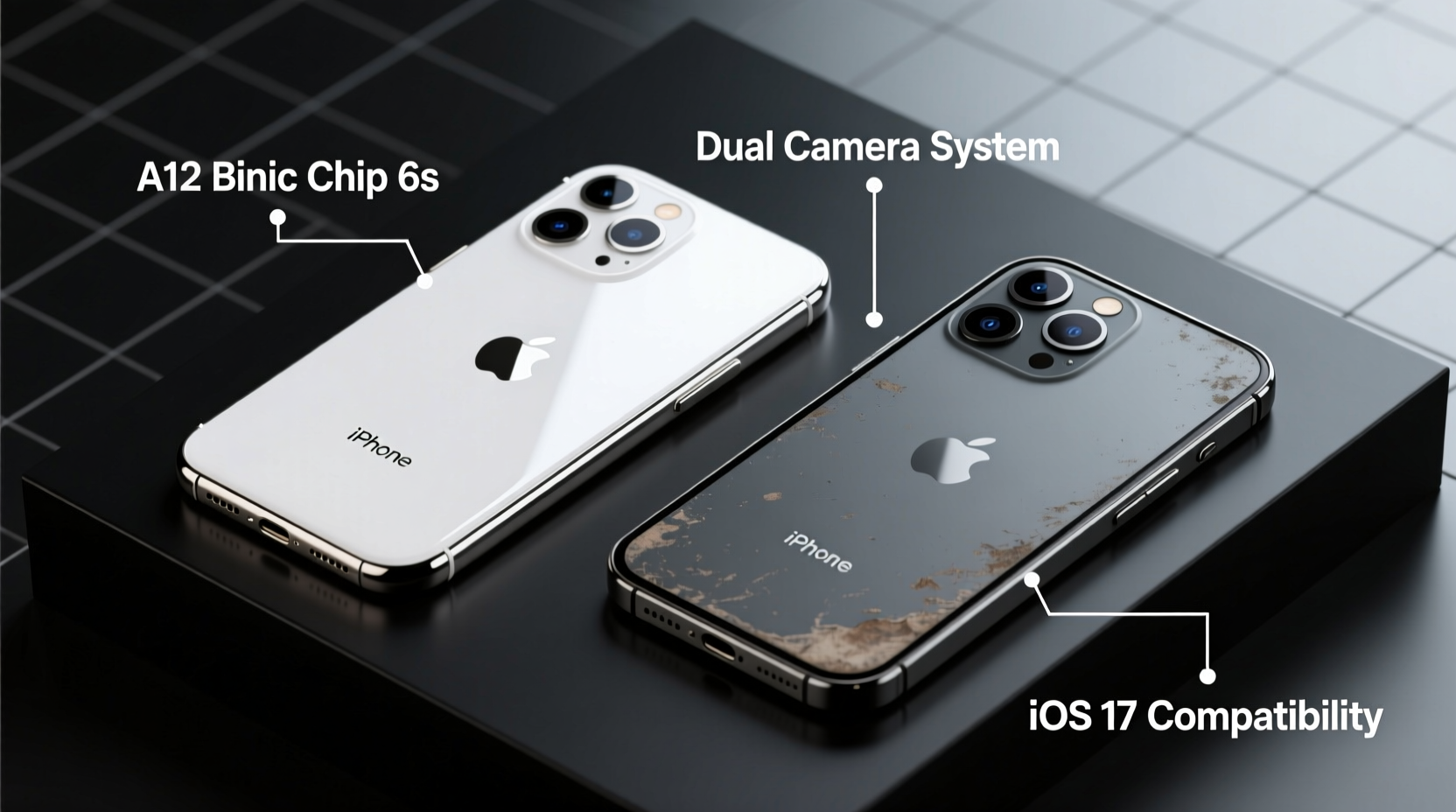
The iPhone 6S, released in 2015, was powered by the A9 chip—a solid performer in its time. But fast forward nearly a decade, and even basic tasks like switching apps or loading web pages can feel sluggish. iOS updates since 2020 have noticeably slowed down the 6S, especially with multitasking or newer versions of Safari.
In contrast, the iPhone XS, launched in 2018, runs on the A12 Bionic chip—the first 7nm processor in any smartphone. This isn’t just an incremental improvement; it’s a generational leap. The A12 handles machine learning, augmented reality, and modern apps with ease, even under heavy loads.
Tip: If your current phone takes more than two seconds to open commonly used apps, you’re losing productivity without realizing it.Benchmarks show the A12 is over three times faster in CPU tasks and five times faster in GPU performance than the A9. For real-world users, this means smoother animations, quicker app launches, and better responsiveness when using navigation, social media, or video calling tools.
Display and Design: From Home Button to Edge-to-Edge
The design language between these two phones couldn’t be more different. The 6S sticks with Apple’s classic home-button layout, a 4-inch Retina display (1334x750), and thick bezels. While durable, it feels outdated compared to modern smartphones.
The iPhone XS introduced the edge-to-edge Super Retina OLED display (5.8 inches, 2436x1125). Colors are deeper, blacks are true black, and brightness reaches up to 625 nits—making outdoor visibility far superior. Face ID replaces Touch ID, offering a seamless unlock experience once set up correctly.
Build quality also improves significantly. The XS uses surgical-grade stainless steel and glass on both sides, making it more premium—but also more prone to scratches if not protected. Still, the overall user experience from holding and interacting with the XS feels like stepping into the modern era.
Camera Comparison: Quality That Actually Matters
On paper, both phones have capable cameras, but real-world results tell a different story.
| Feature | iPhone 6S | iPhone XS |
|---|---|---|
| Rear Camera | 12MP, f/2.2 | Dual 12MP (wide + telephoto), f/1.8 & f/2.4 |
| Front Camera | 5MP, f/2.2 | 7MP, f/2.2 with Portrait Mode |
| Video Recording | 4K at 30fps | 4K at 60fps, extended dynamic range |
| Low-Light Performance | Poor detail, high noise | Significantly better exposure and clarity |
The XS supports Portrait Mode on both front and rear cameras, uses Smart HDR, and captures much richer details in shadows and highlights. Low-light photography sees the biggest jump—where the 6S produces grainy, dim images, the XS maintains usable sharpness and color accuracy.
“Upgrading from a 6S to an XS is one of the most noticeable camera leaps in iPhone history.” — David Kim, Mobile Photographer & Tech Reviewer
Software Support and Longevity
This is where the decision gets critical. As of 2024, the iPhone 6S no longer receives iOS updates. It topped out at iOS 15.7, meaning no new features, security patches, or compatibility with recent app versions. Many banking, messaging, and productivity apps now require iOS 16 or later.
The iPhone XS originally shipped with iOS 12 and received updates all the way through iOS 17. While it won’t get iOS 18 (Apple typically supports devices for about 5–6 years), it’s still secure, functional, and compatible with nearly all current apps.
If you rely on your phone for work, shopping, or communication, running an unsupported OS poses real risks—from phishing vulnerabilities to app incompatibility. An upgrade isn’t just about speed; it’s about staying safe and connected.
Real-Life Example: Sarah’s Upgrade Dilemma
Sarah, a freelance graphic designer, held onto her iPhone 6S for seven years. She prided herself on frugality and saw no reason to upgrade—until she tried using Adobe Fresco for client sketches. The app crashed repeatedly, zooming lagged, and saving files took minutes. Her clients started complaining about delayed deliveries.
She bought a used iPhone XS for $180. Instantly, her workflow improved. Apps launched instantly, stylus input was responsive, and she could send large files without freezing. Within two months, she landed two new clients who valued her faster turnaround. The upgrade paid for itself—not through specs, but through professional reliability.
Tip: Consider the hidden cost of inefficiency. Time lost waiting for a slow phone adds up—especially if you use it for work.Is It Worth It in 2024? A Cost-Benefit Breakdown
Let’s be realistic: The iPhone XS isn’t a new phone. It’s discontinued, and Apple no longer sells it directly. However, it remains widely available on the secondhand market, often priced between $150 and $220 depending on condition.
For that price, you gain:
- A modern iOS experience with full app compatibility
- Excellent camera performance for casual and semi-pro use
- Smooth performance for daily tasks, social media, and light gaming
- Three more years of potential usability (with proper care)
But consider alternatives: An iPhone XR or iPhone 11 might offer better battery life and newer chips at similar prices. The XS has average battery life—about 10–11 hours of mixed use—which may disappoint heavy users.
Upgrade Checklist: Ask Yourself These Questions
- Do apps frequently crash or freeze on my 6S?
- Have I stopped receiving iOS updates?
- Do I struggle with taking clear photos or videos?
- Do I use my phone for work, banking, or communication?
- Am I frustrated by slow performance during everyday tasks?
If you answered “yes” to three or more, upgrading is not wasteful—it’s practical maintenance, like replacing worn-out tires on a car.
Frequently Asked Questions
Can the iPhone 6S still be used in 2024?
Yes, but with major limitations. It won’t receive security updates, many apps won’t install or run properly, and performance will continue degrading. It’s only suitable for very basic tasks like calls, texts, or offline music.
Is the iPhone XS battery replaceable?
Yes, and it should be. After five+ years, most XS batteries have degraded below 80% capacity. Apple offers battery replacements for around $69, which can restore near-new performance and extend the phone’s life by 2–3 years.
Should I skip the XS and go for a newer model?
If your budget allows ($300+), yes. An iPhone 11 or 12 offers better battery, faster processors, and support through 2026–2027. But if you're on a tight budget and need a reliable step up from the 6S, the XS is still a strong choice.
Final Verdict: Upgrade Smart, Not Just Because You Can
Sticking with an iPhone 6S out of loyalty or frugality is understandable. But clinging to it when it hinders your daily life isn’t saving money—it’s costing you time, convenience, and security.
Upgrading to an iPhone XS in 2024 isn’t about chasing the latest tech. It’s about moving from a device that barely functions in today’s digital world to one that keeps up. For less than the cost of a monthly subscription service, you gain years of smoother performance, better photos, and peace of mind knowing your phone won’t hold you back.
If you find a well-maintained XS with a replaced battery under $200, it’s a smart investment. But don’t stop there—evaluate what you truly need. Sometimes, spending a little more upfront saves frustration—and actual money—down the road.
💬 Still on a 6S? Share your experience—what’s keeping you from upgrading, or what changed after you did? Join the conversation and help others make informed choices.