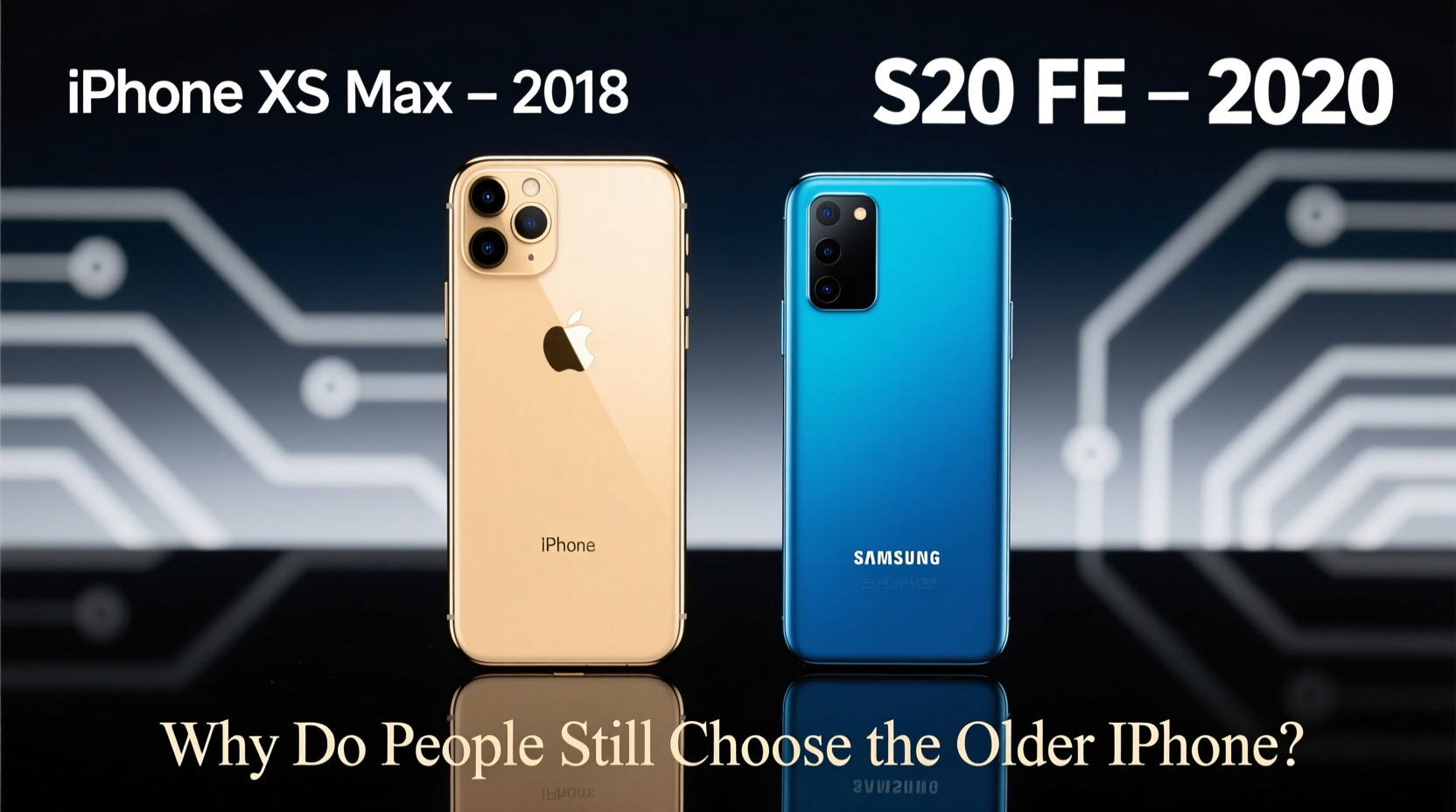
Despite being released in 2018, the iPhone XS Max remains a surprisingly popular choice in today’s smartphone market—especially when compared to more recent Android alternatives like the Samsung Galaxy S20 FE. On paper, the S20 FE outperforms the XS Max in nearly every technical category: faster processor, higher refresh rate display, better camera hardware, longer battery life, and support for 5G. Yet, many consumers continue to choose the older iPhone. Why?
The answer lies not just in specs, but in real-world experience, ecosystem integration, longevity, and user priorities. While Android has made tremendous strides, Apple’s combination of software consistency, build quality, and long-term support continues to resonate with a loyal user base—even years after release.
Performance and Longevity: The iOS Advantage
One of the most compelling reasons users still opt for the iPhone XS Max is its sustained performance. Apple’s A12 Bionic chip, while no longer cutting-edge, was built with future-proofing in mind. Thanks to tight integration between hardware and software, iOS devices often remain smooth and responsive for five or more years—a lifespan rarely matched by mid-tier Android phones.
In contrast, the S20 FE, powered by the Exynos 990 or Snapdragon 865 (depending on region), delivers stronger raw power. However, real-world degradation in Android devices often stems not from the chipset, but from inconsistent software updates and background bloat. Many Android phones receive only two to three years of OS updates, after which performance can decline noticeably due to outdated optimization and security patches.
“iOS updates are designed to maintain responsiveness even on older hardware. That’s a huge advantage for long-term ownership.” — David Lin, Mobile Software Analyst at TechInsight Group
The XS Max, despite its age, received iOS updates up to iOS 17, ensuring compatibility with modern apps, security features, and cloud services. This extended software lifecycle gives it staying power that few Android phones—even flagship models—can match.
Ecosystem Lock-In and User Loyalty
Apple’s ecosystem is one of its strongest selling points. Users invested in AirPods, Apple Watch, MacBooks, or iCloud services find switching platforms inconvenient. Features like Handoff, Universal Clipboard, iMessage continuity, and seamless photo syncing across devices create a frictionless experience that Android alternatives struggle to replicate.
For someone upgrading from an iPhone 8 or XR, sticking with the XS Max means preserving that ecosystem synergy without needing to relearn workflows or lose functionality. Even if the S20 FE offers better camera specs or a 120Hz screen, it can’t deliver iMessage blue bubbles or FaceTime grid view—features that matter deeply to many Apple users.
Tip: If you own multiple Apple devices, staying within the ecosystem often saves time and reduces setup friction more than any single hardware upgrade.Build Quality and Design Timelessness
The iPhone XS Max features surgical-grade stainless steel frame and glass back, giving it a premium heft and feel. While heavier than most modern smartphones, its construction exudes durability and class. In contrast, the S20 FE uses a polycarbonate plastic frame and back, which keeps it lighter and less prone to shattering—but also feels less luxurious.
Design trends shift quickly, but Apple’s minimalist aesthetic has aged well. The XS Max lacks the punch-hole cutout or camera island common in newer phones, offering a cleaner front profile. For users who prioritize understated elegance over flashy tech, the XS Max still looks current.
| Feature | iPhone XS Max | Samsung S20 FE |
|---|---|---|
| Release Year | 2018 | 2020 |
| Display | 6.5\" OLED, 60Hz | 6.5\" Super AMOLED, 120Hz |
| Processor | A12 Bionic | Snapdragon 865 / Exynos 990 |
| Rear Cameras | Dual 12MP (Wide + Telephoto) | Triple 12MP (Wide + Ultra-wide + Telephoto) |
| Battery Life (Typical Use) | ~12 hours | ~16 hours |
| Software Support (Latest OS) | iOS 17 (5-year update cycle) | Android 13/14 (3–4 years expected) |
| Water Resistance | IP68 (up to 2m for 30 mins) | IP68 (up to 1.5m for 30 mins) |
Real-World Example: Sarah’s Upgrade Dilemma
Sarah, a freelance photographer based in Portland, needed a new phone in 2023. Her iPhone X was slowing down, and she considered the S20 FE for its superior low-light camera and larger battery. She even tested one at a carrier store.
But after using it for a week, she returned it. “The camera was great, but my Lightroom presets didn’t sync right, and copying files to my MacBook took forever without AirDrop,” she explained. “Plus, my AirPods Pro kept disconnecting.”
She ended up buying a used iPhone XS Max instead. “It’s not the newest, but it works perfectly with everything I already own. And it still takes beautiful photos in daylight.” For Sarah, compatibility and workflow efficiency outweighed raw specs.
Cost Considerations and Value Retention
Another factor driving continued demand for the XS Max is its depreciation curve. By 2023, unlocked models could be found for $250–$350, making them competitive with budget Android phones. Meanwhile, the S20 FE, though newer, often sells for $400+ in refurbished condition.
Apple devices also retain resale value significantly better than most Android phones. According to data from Glyde and Swappa, iPhones lose about 50% of their value after two years, compared to 60–70% for comparable Samsung models. This makes buying a slightly older iPhone a financially smarter move for budget-conscious buyers who plan to resell later.
Tip: When buying used smartphones, consider total cost of ownership—including resale value—not just upfront price.Checklist: Should You Buy an Older iPhone Like the XS Max?
- ✅ Are you already invested in Apple’s ecosystem (iCloud, AirPods, Mac)?
- ✅ Do you prefer long-term software updates and consistent performance?
- ✅ Is build quality and design longevity important to you?
- ✅ Are you on a budget but want reliable daily performance?
- ❌ Do you need 5G, 120Hz display, or advanced night photography?
- ❌ Are you planning to keep the phone beyond 2025?
If most of your answers are “yes” to the first four and “no” to the last two, the XS Max may still be a smart choice.
Frequently Asked Questions
Is the iPhone XS Max still worth it in 2024?
Yes, for specific users. If you value iOS stability, ecosystem integration, and don’t need cutting-edge features like 5G or high-refresh displays, the XS Max remains capable for everyday tasks. However, battery health may be a concern in older units, so check replacement history before buying.
How does the S20 FE compare in camera performance?
The S20 FE generally wins on versatility, with ultra-wide and telephoto lenses, better night mode, and higher dynamic range. However, the XS Max produces natural color tones and excellent portrait mode results thanks to Apple’s computational photography. Video recording remains superior on the iPhone, especially in stabilization and audio clarity.
Can the iPhone XS Max run modern apps smoothly?
Most apps run well, though some newer games and AR applications may show limitations. iOS 17 dropped support for the A12 chip in certain regions, meaning not all XS Max units received the latest update. Check compatibility before upgrading.
Conclusion: Why Legacy Devices Still Matter
The enduring appeal of the iPhone XS Max isn’t about ignorance of newer technology—it’s about informed prioritization. Buyers aren’t comparing spec sheets; they’re weighing real-world usability, long-term reliability, and personal workflows. For many, the S20 FE represents progress on paper, but the XS Max delivers peace of mind in practice.
As smartphones become increasingly powerful, the marginal gains of each new generation diminish. What matters more is how well a device fits into your life—not just for a year, but for years. In that context, choosing a proven, supported, and well-integrated device like the iPhone XS Max isn’t nostalgia. It’s rational.
💬 Have you held onto an older iPhone longer than expected? Share your story in the comments—your experience might help others decide what truly matters in a smartphone.