When it comes to smartphone photography, two names dominate the conversation: Apple’s iPhone and Samsung’s Galaxy S series. The iPhone 14 Pro (and its successors) and the Samsung Galaxy S22 Ultra represent the pinnacle of mobile imaging technology. But amid the marketing claims and social media buzz, a critical question remains: Is the iPhone camera truly superior, or is its reputation more about brand perception than performance?
This isn’t just a battle of megapixels or lens count. It’s about real-world usability, dynamic range, color accuracy, low-light performance, and how consistently each device delivers results that satisfy both casual users and enthusiasts. Let’s cut through the noise with a detailed, side-by-side analysis.
Image Quality: Natural vs Enhanced
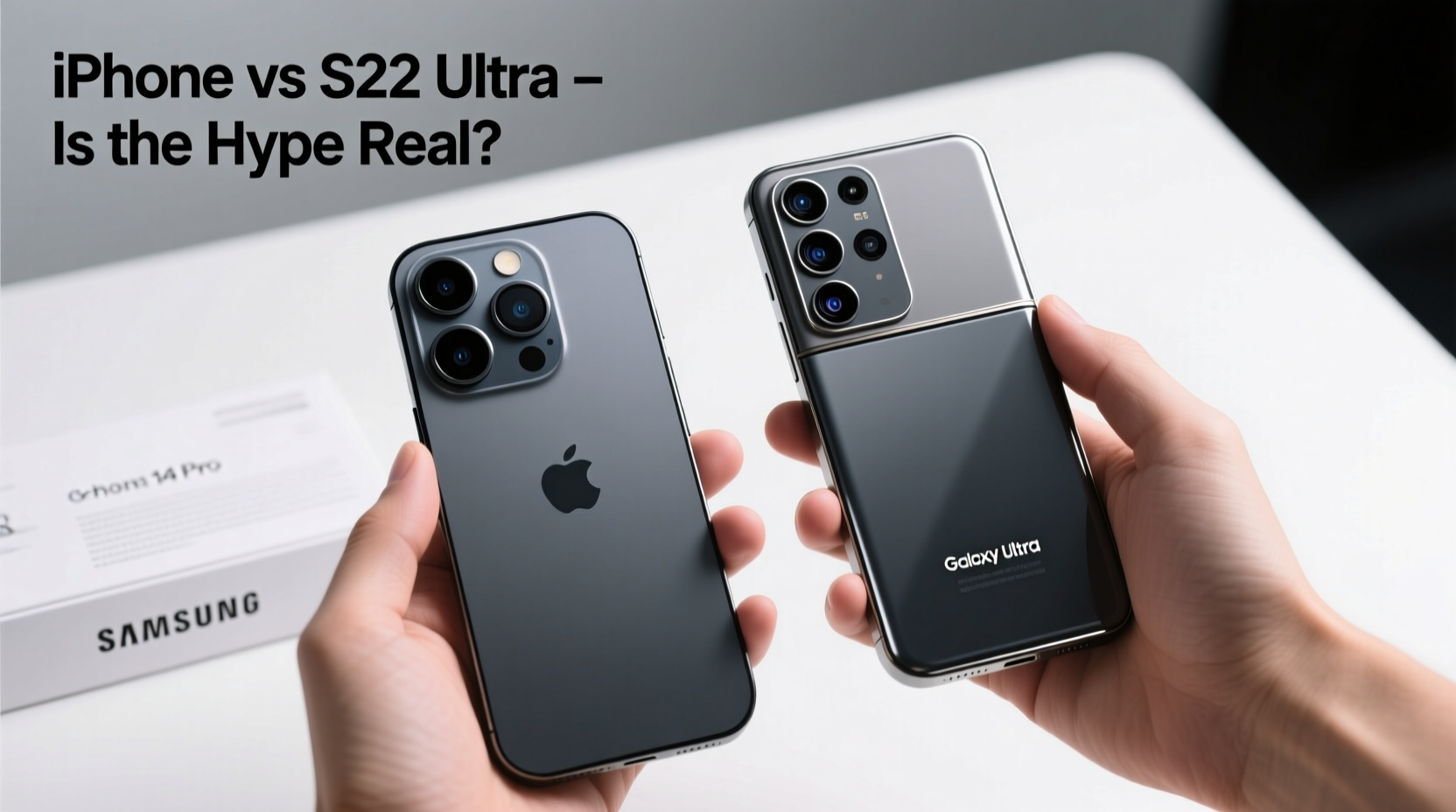
The most noticeable difference between the iPhone and the S22 Ultra lies in image processing philosophy. Apple prioritizes realism—colors are accurate, contrast is balanced, and skin tones remain natural. Samsung, on the other hand, applies a more aggressive processing style: images pop with enhanced saturation, sharpening, and HDR boost, making them ideal for social media at first glance.
In daylight conditions, both devices capture excellent detail. The S22 Ultra’s 108MP main sensor allows for exceptional resolution, especially when zoomed or cropped. However, this high resolution is often downsampled to 12MP, meaning real-world gains are subtle unless you're printing large photos.
The iPhone’s smaller 48MP sensor (in newer models) uses pixel binning effectively, producing clean, well-exposed 12MP shots with excellent dynamic range. While it lacks the sheer resolution of Samsung’s setup, its consistency across lighting conditions is impressive.
Tip: If you prefer true-to-life colors for editing or professional use, the iPhone’s neutral output gives you more flexibility in post-processing.Low-Light and Night Mode Performance
Night photography has become a key battleground. Both phones feature advanced Night Mode algorithms, but they approach low-light differently.
The iPhone excels in preserving shadow detail without introducing excessive noise. Its computational photography blends multiple exposures seamlessly, resulting in balanced, natural-looking night shots. Highlights like streetlights are controlled, and white balance stays consistent.
The S22 Ultra pushes brightness harder, often making scenes appear more illuminated than they were in reality. While this can be appealing, it sometimes leads to overexposed areas and unnatural color casts, particularly under sodium-vapor lighting. That said, its ability to capture fine detail in near-darkness is remarkable—especially with the telephoto lenses.
“Samsung’s Night Mode is aggressive—it wants to show you everything, even if it wasn’t visible to the naked eye. Apple prefers restraint, aiming for what your eyes would’ve seen.” — David Lin, Mobile Imaging Analyst at DXOMARK
Zoom and Telephoto Capabilities
This is where the S22 Ultra pulls ahead decisively. With dual telephoto lenses—a 3x optical zoom and a 10x periscope zoom—it offers unmatched versatility for distant subjects.
The iPhone relies on a single 3x telephoto lens. Beyond that, digital zoom degrades quality quickly. At 5x or 10x, the S22 Ultra still captures usable detail thanks to its periscope design, while the iPhone struggles with softness and noise.
For wildlife, concerts, or architecture from a distance, the S22 Ultra is simply more capable. However, the iPhone maintains better color consistency and exposure when switching between wide and zoomed shots.
| Feature | iPhone 14 Pro | Samsung S22 Ultra |
|---|---|---|
| Main Sensor | 48MP, f/1.78 | 108MP, f/1.8 |
| Ultra-Wide | 12MP, f/2.2 | 12MP, f/2.2 |
| Telephoto (Optical) | 12MP, 3x zoom | 10MP, 3x zoom |
| Periscope Zoom | None | 10MP, 10x optical zoom |
| Max Digital Zoom | 15x | 100x (Space Zoom) |
| Night Mode on All Lenses | Yes | Yes |
Video: Where the iPhone Still Reigns
If there’s one area where the iPhone clearly outperforms the S22 Ultra, it’s video recording. The iPhone’s cinematic mode, sensor-shift stabilization, and Dolby Vision HDR support make it the preferred choice for creators.
Apple’s video stabilization is industry-leading—footage remains smooth even during brisk walking or shaky conditions. Audio focus follows the subject, and the dynamic range in 4K recordings preserves both shadows and highlights beautifully.
Samsung’s video is solid but inconsistent. While it supports 8K at 24fps, the files are massive and offer little practical benefit. Stabilization is good but not as refined, and HDR processing can lead to flickering in high-contrast scenes. For vloggers, filmmakers, or anyone posting to YouTube or Instagram, the iPhone delivers more reliable, broadcast-ready footage.
Tip: Use the iPhone for primary video content, but leverage the S22 Ultra’s zoom for capturing distant action in stills.Real-World Example: Concert Photography
Consider a scenario: you’re at an outdoor music festival, trying to capture a band performing on a distant stage. Lighting is mixed—backlit by spotlights, with smoke and movement complicating composition.
With the iPhone, you get a well-balanced shot at 3x zoom. Colors are natural, and noise is minimal. But the performers are small in the frame. Switching to the S22 Ultra, you engage the 10x periscope lens. Suddenly, you’re close enough to see facial expressions. The image is slightly warmer and noisier, but the level of detail is unmatched. You sacrifice some tonal accuracy for proximity—and in this case, that trade-off pays off.
This illustrates the core difference: the iPhone prioritizes quality within its limits; the S22 Ultra expands those limits, even if perfection is occasionally compromised.
Software and User Experience
Apple’s camera interface is minimalist and intuitive. There’s no clutter, and settings are accessible without overwhelming new users. The shutter response is nearly instantaneous, crucial for candid moments.
Samsung’s interface offers more manual controls—Pro Mode lets you adjust ISO, shutter speed, white balance, and RAW capture. This appeals to enthusiasts who want DSLR-like control. However, the abundance of modes (Single Take, Director’s View, AI enhancements) can feel bloated and confusing for average users.
Additionally, Samsung’s AI often alters photos automatically—boosting greens in landscapes or smoothing skin in portraits. Some appreciate this; others find it intrusive. The iPhone avoids such alterations, giving you what the camera saw, not what software thinks you want to see.
Checklist: Choosing Based on Your Needs
- I shoot mostly in daylight → Either performs well; iPhone for accuracy, S22 Ultra for vibrancy.
- I take lots of zoomed-in photos → S22 Ultra is the clear winner.
- I record videos regularly → iPhone offers superior stabilization and dynamic range.
- I edit photos professionally → iPhone’s neutral profile provides better starting points.
- I value simplicity and speed → iPhone’s interface is faster and less distracting.
- I love experimenting with modes → S22 Ultra’s Pro Mode and AI features offer more creative options.
Frequently Asked Questions
Is the iPhone camera better in low light?
It depends on your preference. The iPhone produces more natural, balanced low-light photos with less noise. The S22 Ultra makes scenes brighter but may introduce artifacts or unnatural colors. For authenticity, choose iPhone; for visibility, consider Samsung.
Can the S22 Ultra replace a DSLR?
No smartphone fully replaces a DSLR, but the S22 Ultra comes closer in terms of zoom and manual controls. For travel or everyday use, it’s impressively capable. For studio work or print photography, dedicated cameras still win.
Why do influencers prefer iPhones?
Many content creators favor iPhones for their consistent video quality, seamless ecosystem integration, and reliability. The iPhone also dominates in regions like North America, influencing brand alignment. However, top-tier Samsung users produce equally compelling content—it’s more about workflow than hardware superiority.
Conclusion: Beyond the Hype
The idea that the iPhone camera is “better” isn’t universally true—it’s context-dependent. The iPhone delivers exceptional consistency, realistic color science, and best-in-class video. It’s a tool that works brilliantly out of the box, requiring little learning curve.
The S22 Ultra, meanwhile, offers greater flexibility—especially in zoom and manual control. It’s a powerhouse for photographers who want to push boundaries, even if it occasionally sacrifices subtlety for spectacle.
The hype around the iPhone is partly justified, but it’s amplified by ecosystem loyalty and cultural momentum. Samsung doesn’t always get fair credit, despite matching or exceeding Apple in several technical areas.
💬 What’s your experience? Have you switched from iPhone to S22 Ultra or vice versa? Share your real-world results and help others decide based on actual use, not just specs.