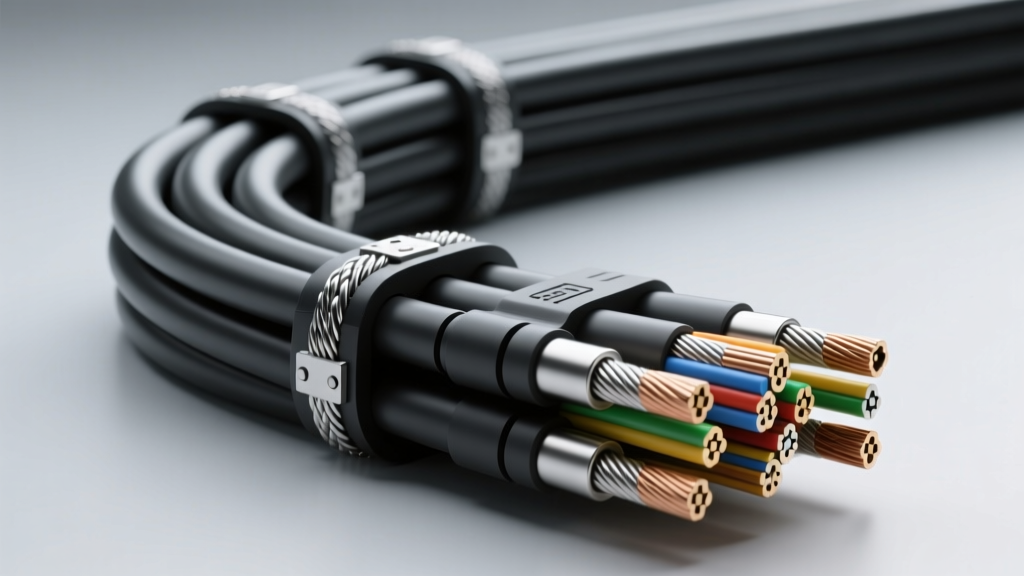
Types of Inductive Proximity Sensors
An inductive proximity sensor is a non-contact device that detects the presence of metallic objects using electromagnetic fields. Widely used in industrial automation, these sensors offer reliable performance in harsh environments and are essential for monitoring machine operations, positioning, and safety systems. Understanding the different types helps in selecting the right sensor for specific applications.
Standard Inductive Sensors
Designed for general-purpose metal detection at short to medium ranges (typically 1–30 mm).
Advantages
- Cost-effective and widely available
- Reliable detection of ferrous and non-ferrous metals
- Compact size for easy integration
- Long operational life with minimal maintenance
Limitations
- Limited sensing range
- Sensitivity varies with target material
- Not suitable for high-temperature environments
Best for: Conveyor systems, assembly lines, part positioning, and general automation tasks
High-Temperature Sensors
Built to operate reliably in extreme heat, often up to 150°C or higher.
Advantages
- Stable performance in extreme heat
- Durable housing materials (e.g., ceramic or high-grade plastics)
- Ideal for continuous operation in hot environments
- Resistant to thermal shock and expansion
Limitations
- Higher cost than standard models
- May require special mounting considerations
- Limited availability in certain sizes
Best for: Foundries, glass manufacturing, food processing ovens, and engine testing facilities
Long-Range Sensors
Engineered for extended detection distances—up to several centimeters—using enhanced coil designs.
Advantages
- Greater detection distance than standard sensors
- Reduced need for precise alignment
- Effective for large or distant metal targets
- Improved safety with non-contact monitoring from a distance
Limitations
- Larger physical size
- Higher power consumption
- More sensitive to electromagnetic interference
Best for: Heavy machinery, crane systems, large-scale automation, and outdoor equipment monitoring
Slot-Type Sensors
Compact sensors with a narrow profile designed to fit into tight spaces and detect passing objects.
Advantages
- Ultra-compact design for space-constrained installations
- Perfect for detecting small metal parts on conveyors
- Easy integration into existing machinery
- High repeatability and accuracy
Limitations
- Narrow sensing field
- Limited to linear or slot-based applications
- May require protective shielding in dusty environments
Best for: Precision assembly lines, packaging machines, electronics manufacturing, and robotics
Multi-Channel Sensors
Advanced sensors with multiple independent sensing zones for simultaneous object detection.
Advantages
- Monitor multiple targets or positions at once
- Reduces the number of sensors needed
- Independent adjustment of each sensing channel
- Increases system efficiency and reduces wiring complexity
Limitations
- Higher initial cost
- More complex setup and configuration
- Limited availability compared to single-channel models
Best for: Complex automation systems, multi-stage manufacturing, robotics arms, and quality control stations
| Sensor Type | Sensing Range | Environment | Key Applications | Installation Flexibility |
|---|---|---|---|---|
| Standard | 1–30 mm | Normal industrial | Conveyors, part detection | High |
| High-Temperature | 1–20 mm | Up to 150°C+ | Metal processing, ovens | Medium |
| Long-Range | Up to 60 mm+ | General to harsh | Heavy machinery, cranes | Medium |
| Slot-Type | 1–10 mm | Space-constrained | Precision manufacturing | Very High |
| Multi-Channel | Configurable per channel | Controlled industrial | Complex automation | Medium |
Expert Tip: When selecting an inductive proximity sensor, always consider the target material (ferrous vs. non-ferrous metals), required sensing distance, environmental conditions (temperature, moisture, vibration), and mounting space. For optimal performance, ensure proper shielding and avoid electromagnetic interference from nearby motors or power cables.
Key Features of Inductive Proximity Sensors
Inductive proximity sensors are widely used in industrial automation due to their reliability, durability, and precision. These non-contact devices detect metallic objects using electromagnetic fields, making them ideal for harsh environments where mechanical switches would fail. Below is a detailed breakdown of their core features and operational advantages.
Core Operational Features
Sensing Technology
Inductive proximity sensors operate on the principle of electromagnetic induction. They generate a high-frequency electromagnetic field from a coil within the sensor head. When a metallic object enters this field, eddy currents are induced in the target, causing a change in the coil’s oscillation amplitude. This change is detected by the sensor’s internal circuitry, triggering a signal output.
Because detection occurs without physical contact, these sensors eliminate mechanical wear, significantly extending service life. This makes them highly reliable in repetitive automation tasks such as conveyor belt monitoring, part positioning, and machine safety systems.
Sensing Distance
The sensing range of inductive sensors typically spans from a few millimeters to over 30 mm, depending on the sensor model and target characteristics. Standard sensors offer detection distances between 4 mm and 10 mm, suitable for most general-purpose applications.
Long-range variants can detect objects up to 30 mm or more, providing greater flexibility in installation and alignment. However, actual sensing distance is influenced by the target material, size, and shape. For example, larger ferrous metals like mild steel yield the maximum rated distance, while non-ferrous metals such as aluminum may reduce effective range by up to 60%.
Response Time
Response time refers to how quickly a sensor detects a target and switches its output state. Inductive sensors typically respond within 0.1 to 2 milliseconds, enabling real-time detection in high-speed operations.
This rapid response is critical in fast-moving automation systems—such as bottling lines, robotic arms, or CNC machinery—where delays could result in misalignment, collisions, or production errors. The quick switching capability ensures precise timing and synchronization across complex control systems.
Output Type
Inductive sensors are available with multiple output configurations to integrate seamlessly with various control systems. The most common types include:
- PNP (Sourcing): Outputs a positive voltage when activated; commonly used in European and Asian control panels.
- NPN (Sinking): Connects the load to ground when active; widely used in North American systems.
- NO (Normally Open): Output turns ON when a target is detected.
- NC (Normally Closed): Output turns OFF when a target is detected.
- Programmable Outputs: Advanced models allow users to configure NO/NC behavior via software or push-button settings.
Selecting the correct output type ensures compatibility with PLCs, relays, and other automation components.
Environmental Resistance
Designed for rugged industrial environments, most inductive proximity sensors carry an IP67 or higher ingress protection rating. This means they are completely dust-tight and can withstand temporary immersion in water up to 1 meter for 30 minutes.
They are built to endure exposure to oil, coolant, vibration, and extreme temperatures (typically -25°C to +70°C). These qualities make them suitable for use in food processing, metalworking, automotive manufacturing, and outdoor machinery where environmental conditions are challenging.
Target Material Dependence
Inductive sensors are primarily designed to detect conductive metals, with optimal performance on ferrous materials like iron and mild steel. Stainless steel is also reliably detected, though some grades may slightly reduce sensing distance due to lower magnetic permeability.
Non-ferrous metals such as aluminum, copper, and brass can be detected, but the effective sensing range is typically reduced by 30–60% compared to steel. To address this, specialized sensors with enhanced sensitivity or material-specific tuning are available for applications involving non-ferrous targets.
It's important to select a sensor based on the expected target material to ensure consistent and reliable detection.
| Feature | Typical Range/Type | Application Considerations |
|---|---|---|
| Sensing Distance | 2 mm – 30+ mm | Depends on target size, material, and sensor model; derate for non-ferrous metals |
| Response Time | 0.1 ms – 2 ms | Essential for high-speed automation and precision timing |
| Output Types | PNP, NPN, NO, NC, Programmable | Must match control system voltage and logic requirements |
| Environmental Rating | IP67, IP68, IP69K | Choose based on exposure to dust, moisture, and washdown conditions |
| Operating Temperature | -25°C to +70°C | Extended ranges available for extreme environments |
Best Practices for Optimal Performance
Important: Always consult the manufacturer’s datasheet before installation. Using the wrong sensor type or installing it incorrectly can lead to false triggers, reduced lifespan, or system failure. Proper selection and setup ensure long-term reliability and integration into automated processes.
Uses of Inductive Proximity Sensors
Inductive proximity sensors are non-contact devices that detect the presence of metallic objects without physical interaction. Their durability, reliability, and resistance to environmental factors make them indispensable across various industrial sectors. By generating an electromagnetic field, these sensors identify changes caused by nearby metal objects, triggering precise control responses in automated systems.
Below are key applications where inductive proximity sensors significantly enhance operational efficiency, safety, and accuracy.
Automated Manufacturing Processes
Inductive proximity sensors are foundational in modern automated manufacturing, where precision and consistency are paramount. Integrated into robotic arms and assembly lines, they detect the presence, position, and alignment of metal components with high repeatability.
- Enable robotic systems to accurately pick, place, and orient metal parts during production
- Ensure correct sequencing in multi-stage manufacturing by verifying component placement
- Support real-time quality assurance by detecting missing or misaligned parts before further processing
- Operate reliably in harsh environments with dust, vibration, and temperature fluctuations
Key benefit: Minimizes downtime and reduces scrap rates through early error detection
Inventory Management Systems
In smart inventory and logistics operations, inductive sensors play a vital role in tracking metal-tagged items, pallets, or containers. They automate data collection and streamline supply chain visibility.
- Detect metal RFID tags or embedded markers on inventory for real-time tracking
- Integrate with warehouse management systems (WMS) to automatically update stock levels
- Monitor conveyor movement and item flow in distribution centers
- Reduce manual counting errors and improve inventory accuracy by up to 98%
Ideal for: High-volume warehouses, retail backrooms, and just-in-time (JIT) supply chains
Automotive Industry Applications
From production lines to vehicle safety systems, inductive sensors are critical in both manufacturing and end-use automotive applications.
- Verify correct positioning of engine components, axles, and transmission parts during assembly
- Monitor door, hood, and trunk closure mechanisms to ensure secure latching
- Support safety interlocks that prevent vehicle startup if doors are not properly closed
- Used in anti-lock braking systems (ABS) and transmission sensors for speed and position feedback
Critical function: Enhances both production quality and in-vehicle safety
Machine Safety Systems
Safety is a top priority in industrial environments, and inductive sensors serve as essential components in safeguarding personnel and equipment.
- Confirm that safety guards, covers, and access panels are securely in place before machine startup
- Act as interlock devices that immediately halt operations if protective barriers are opened
- Comply with international safety standards such as ISO 13849 and IEC 62061
- Prevent accidental operation during maintenance or cleaning procedures
Pro tip: Pair with redundant sensor setups for mission-critical safety applications
Packaging Industry
In packaging operations, precision and contamination control are essential—inductive sensors help maintain both.
- Ensure accurate positioning of metalized containers, caps, or trays on filling and sealing lines
- Prevent labeling or filling errors by confirming product presence before processing
- Detect broken metal parts or foreign metallic contaminants in food, pharmaceutical, and consumer goods packaging
- Improve line efficiency by reducing jams and misfeeds through real-time monitoring
Added value: Supports compliance with HACCP and FDA food safety regulations
Additional Industrial Applications
Beyond the core uses, inductive proximity sensors are employed in diverse sectors due to their versatility and ruggedness.
- Metalworking: Monitor tool position and workpiece detection in CNC machines
- Material Handling: Detect metal rollers, chains, or carriers on conveyors
- Energy & Utilities: Used in turbine monitoring and valve position sensing
- Printing & Paper: Control web tension and detect metal spools or guides
- Pharmaceuticals: Ensure correct placement of metal components in blister packaging
Universal advantage: No physical contact means minimal wear and long service life
Expert Insight: When selecting inductive proximity sensors, consider factors such as sensing range, target material type (ferrous vs. non-ferrous), environmental conditions (moisture, temperature, EMI), and required output signal (PNP/NPN). For optimal performance, choose sensors with IP67 or higher ratings for dust and water resistance, especially in demanding industrial settings.
| Industry | Primary Use Case | Sensor Type | Key Benefit |
|---|---|---|---|
| Manufacturing | Component detection on robotic lines | Flush-mount inductive sensor | High precision and repeatability |
| Automotive | Door closure and assembly verification | Miniature inductive switch | Compact size, high reliability |
| Warehousing | Inventory tracking with metal tags | Long-range inductive sensor | Extended detection up to 40mm |
| Packaging | Contaminant detection and positioning | Hygienic stainless steel sensor | Easy to clean, corrosion-resistant |
| Heavy Machinery | Safety interlock monitoring | Heavy-duty armored sensor | Impact and vibration resistant |
Why Choose Inductive Proximity Sensors?
- Non-contact operation: Eliminates mechanical wear, ensuring long-term reliability
- Fast response time: Ideal for high-speed automation and real-time control
- Robust construction: Resistant to oil, dust, moisture, and extreme temperatures
- Versatile mounting: Available in cylindrical, rectangular, and flush-mount designs
- Low maintenance: No moving parts reduce servicing needs and downtime
- Cost-effective: Long lifespan and minimal failure rates reduce total cost of ownership
How to Choose the Right Inductive Proximity Sensor: A Comprehensive Buyer’s Guide
Inductive proximity sensors are essential components in industrial automation, offering reliable non-contact detection of metallic objects. For business owners and procurement professionals, selecting the right sensor involves evaluating multiple technical and environmental factors. This guide provides a detailed breakdown of the key considerations to help you make informed purchasing decisions and stock products that meet diverse customer needs across various industries.
Important Note: Inductive sensors only detect metallic objects and are not suitable for non-metallic materials. Always verify the application requirements before selection to avoid compatibility issues.
Key Factors to Consider When Choosing Inductive Proximity Sensors
- Temperature Resistance
Industrial environments often expose sensors to extreme temperatures. Choose models with wide operating temperature ranges (e.g., -25°C to +70°C or higher) to ensure reliability in both freezing and high-heat conditions. Sensors used in foundries, ovens, or outdoor machinery must be rated for thermal stability to prevent drift or failure.
- Shock and Vibration Resistance
Machinery such as presses, conveyors, and CNC equipment generates constant vibrations. Opt for sensors with robust housings (e.g., stainless steel or reinforced plastic) and internal damping. Look for IP67 or higher ratings and consider models with integrated or optional mounting brackets to minimize movement and prolong sensor life.
- Target Material Compatibility
Different metals affect sensing distance due to variations in electrical conductivity and magnetic permeability. Ferrous metals like iron and steel are easiest to detect, while non-ferrous metals (e.g., aluminum, copper) may reduce effective range by up to 60%. Select sensors with material compensation features or specify the reduced sensing distance (Sr) for accurate performance across diverse materials.
- Sensing Distance (Nominal vs. Effective Range)
The sensing distance determines how far the sensor can detect a target. Standard ranges vary from 1 mm to 50 mm or more. Short-range sensors (1–5 mm) suit precision positioning, while long-range models (10–50 mm) work well in heavy machinery. Always account for environmental derating and ensure the sensor’s effective sensing distance meets your application needs.
- Detection System Type
Understand the difference between mechanical and non-contact inductive systems. True inductive sensors are non-mechanical and detect metal via electromagnetic fields. Clarify customer needs: applications involving moving metal parts (e.g., rotating shafts) benefit from inductive sensors, while physical contact detection may require limit switches instead.
- Environmental Conditions
Assess exposure to moisture, dust, chemicals, and electromagnetic interference (EMI). For wet or washdown environments (e.g., food processing), select sensors with high IP ratings (IP67, IP68, or IP69K) and corrosion-resistant materials. In EMI-heavy areas (e.g., near motors or welders), choose shielded sensors with noise suppression circuitry.
- Installation and Mounting Flexibility
Facilitate easy integration by offering sensors with multiple mounting options—threaded bodies (M8, M12, M18, M30), flush/non-flush designs, and adjustable brackets. Ensure availability of various housing lengths and shapes to fit confined spaces. Pre-wired or connector-style models improve serviceability and reduce downtime.
- Output Signal Type
Match the sensor output to the control system:
- Digital (Switching): On/Off signals (PNP or NPN), ideal for basic presence detection.
- Analog: Continuous output (4–20 mA or 0–10 V), useful for measuring distance or position.
- IO-Link: Smart sensors with bidirectional communication for diagnostics and configuration.
- Switching Frequency (Response Speed)
This defines how quickly a sensor can detect and respond to moving targets. High-speed applications (e.g., bottling lines, sorting machines) require sensors with switching frequencies of 1 kHz or higher. Lower frequencies (50–500 Hz) suffice for slower processes. Always match this spec to the cycle time of the machine.
- Testing, Certification, and Compliance
Prioritize sensors with recognized certifications such as CE, UL, RoHS, and ATEX (for hazardous areas). These indicate compliance with international safety, environmental, and performance standards. Certified sensors reduce liability and are often required in regulated industries like pharmaceuticals, automotive, and oil & gas.
| Selection Factor | Recommended Range/Type | Common Applications | Key Product Features to Look For |
|---|---|---|---|
| Temperature Range | -25°C to +70°C (standard); up to +150°C (high-temp) | Outdoor equipment, ovens, cold storage | Wide temp rating, thermal stability |
| Vibration Resistance | Up to 20g or higher | CNC machines, conveyors, presses | Stainless steel housing, shock-absorbing design |
| Sensing Distance | 1–50 mm (adjustable or fixed) | Positioning, counting, end-of-travel detection | Adjustable inductance, LED indicators |
| Output Type | PNP/NPN digital, 4–20 mA analog, IO-Link | PLC integration, process control, smart factories | Configurable outputs, diagnostic feedback |
| Environmental Protection | IP67, IP68, or IP69K | Food processing, washdown areas, marine | Sealed housing, stainless steel, chemical resistance |
Pro Tip: When stocking sensors, offer a range of sizes (M8 to M30), sensing distances, and output types to cover most industrial use cases. Include IO-Link enabled models to future-proof inventory for smart manufacturing trends.
Additional Recommendations for Suppliers and Distributors
- Provide detailed product datasheets highlighting technical specs and compatibility charts.
- Train sales teams on sensor fundamentals to better assist technical customers.
- Partner with reputable manufacturers that offer warranties and technical support.
- Offer sample kits for customers to test sensors in real-world conditions.
- Stay updated on Industry 4.0 trends—smart sensors with diagnostics and remote configuration are increasingly in demand.
Selecting the right inductive proximity sensor goes beyond basic functionality. By understanding your customers' operational environments, target materials, and control system requirements, you can supply reliable, high-performance sensors that enhance automation efficiency and reduce maintenance costs. When in doubt, consult with technical experts or manufacturers to ensure optimal product fit.
Frequently Asked Questions About Inductive Proximity Sensors
Q1: How can users extend the lifespan of inductive proximity sensors?Proper installation and maintenance are key to maximizing the longevity and performance of inductive proximity sensors. To ensure reliable operation over time, consider the following best practices:
- Correct Mounting: Install the sensor securely in a stable position, ensuring it is aligned properly with the target object to prevent mechanical stress or misalignment.
- Avoid Interference: Keep other metallic objects outside the sensor’s detection field to prevent false triggering and electromagnetic interference that could degrade performance.
- Regular Cleaning: Accumulated metal shavings or debris can interfere with the sensor’s magnetic field. Regularly clean the sensor face using a dry or slightly damp cloth to maintain optimal sensitivity.
- Environmental Protection: Use protective sleeves or enclosures in harsh environments (e.g., high moisture, dust, or vibration) to shield the sensor from damaging conditions.
- Proper Wiring: Ensure connections are tight and insulated to avoid voltage spikes or short circuits that may damage internal circuitry.
By following these guidelines, businesses and operators can significantly reduce downtime and replacement costs while maintaining consistent automation performance.
Q2: Can the detection range of an inductive proximity sensor be improved through adjustments?While inductive sensors have a fixed nominal sensing range based on design, users can optimize performance by adjusting external factors. True range enhancement isn't achieved through internal calibration but through strategic setup:
- Target Material: Use highly conductive metals like iron, steel, or nickel. The sensor’s effective range is typically rated for mild steel; non-ferrous metals (e.g., aluminum, copper) may reduce detection distance by up to 60%.
- Target Size: Ensure the target is at least as large as the sensor’s diameter. Larger, flat surfaces provide better detection than small or curved objects.
- Sensor Positioning: Mount the sensor as close as safely possible to the target path without risking contact. Even small reductions in distance can improve signal reliability.
- Alignment: Align the sensor perpendicular to the target surface to maximize magnetic coupling and detection accuracy.
Note: Some advanced models feature potentiometers or IO-Link compatibility for fine-tuning sensitivity, but these do not increase the maximum physical range—only adaptability to specific conditions.
Q3: Can inductive proximity sensors detect non-metallic materials?No, inductive proximity sensors are specifically designed to detect only metallic objects. They operate on the principle of electromagnetic induction:
- Operating Principle: The sensor generates a high-frequency electromagnetic field. When a conductive metal object enters this field, eddy currents form, reducing the oscillation amplitude and triggering the output.
- Non-Metallic Limitations: Materials such as plastic, wood, glass, or rubber do not conduct electricity and therefore do not disturb the field—making them undetectable by standard inductive sensors.
- Alternative Solutions: For non-metal detection, consider using capacitive sensors (for materials with dielectric properties) or photoelectric sensors (ideal for transparent or solid non-metals).
Selecting the right sensor type based on material composition is crucial for reliable automation and process control.
Q4: Are normally open (NO) and normally closed (NC) inductive sensors interchangeable?No, normally open (NO) and normally closed (NC) configurations are not directly interchangeable, as they serve fundamentally different control functions:
| Feature | Normally Open (NO) | Normally Closed (NC) |
|---|---|---|
| Default State | Output is OFF (no signal) when no target is present. | Output is ON (signal active) when no target is present. |
| Trigger Action | Turns ON when a metal target is detected. | Turns OFF when a metal target is detected. |
| Use Case Example | Starting a conveyor when a part is present. | Stopping a machine when a guard is removed (safety interlock). |
| Signal Logic | Positive detection logic — “detect and activate.” | Negative detection logic — “detect and deactivate.” |
Swapping NO and NC sensors without adjusting the control system logic can lead to incorrect machine behavior or safety hazards. Always verify the required signal type with your PLC or control circuit before installation.