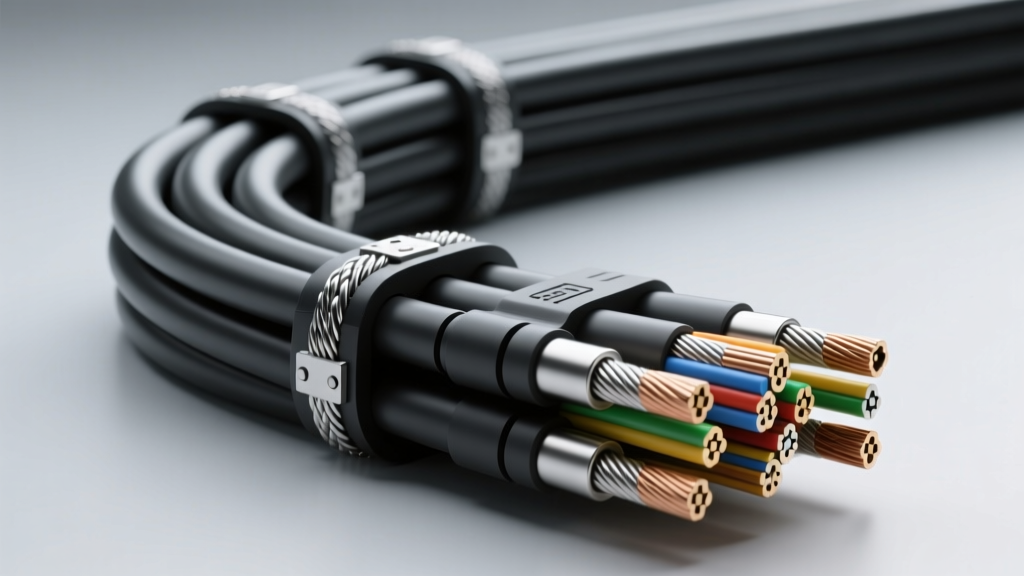
Types of 48-Core Breakout Cables: A Comprehensive Guide
A 48-core breakout cable is a high-density fiber optic solution designed to support complex data transmission needs in modern network environments. These cables are essential for managing large volumes of data across data centers, enterprise networks, and telecommunications infrastructure. Understanding the different types of 48-core breakout cables helps ensure optimal performance, scalability, and reliability in both indoor and outdoor installations.
Fan-Out Cables
Also known as "breakout-style" cables, these feature individually jacketed fibers bundled together under a common outer sheath, allowing for easy separation and termination.
Advantages
- High flexibility and ease of handling
- Excellent airflow management in tight spaces
- Compliant with tight bend radius standards
- Lightweight and compact design
- Quick deployment in server rooms and data centers
Limitations
- Larger diameter than distribution cables
- Less ideal for long-distance outdoor runs
- Higher material usage increases cost
Best for: Indoor installations, high-density patching, data center interconnects, and short-haul backbone applications
Splice Cables
Designed specifically for fusion splicing, these cables enable seamless extension of fiber optic runs by connecting two multi-fiber segments.
Advantages
- Enables network expansion without new trenching
- Supports various core counts including 48-core configurations
- Ideal for long-haul and field installations
- High reliability when properly spliced
- Customizable for specific routing requirements
Limitations
- Requires skilled technicians for splicing
- Splice points need protective enclosures
- Higher initial labor cost
Best for: Field splicing, network extensions, outdoor-to-indoor transitions, and custom-length installations
Breakout Ports & Panels
These are termination points or patch panels that allow efficient management of 48-core fiber bundles by providing individual access to each fiber or grouped breakout ports.
Advantages
- Streamlines fiber organization in high-density setups
- Facilitates quick connection/disconnection
- Reduces clutter and improves cable management
- Supports modular upgrades and maintenance
- Enables precise routing to different destinations
Limitations
- Requires proper labeling for tracking
- Panel space can be limited in crowded racks
- Higher upfront cost for structured enclosures
Best for: Centralized fiber distribution, data center cross-connects, telecom closets, and structured cabling systems
Distribution Cables
These contain 48 fibers within a single protective jacket, designed to be split at termination points for routing individual fibers to separate locations.
Advantages
- Compact and lightweight compared to fan-out designs
- Cost-effective for general-purpose installations
- Easy to install and route through conduits
- Widely used in both commercial and residential buildings
- Supports centralized splitting via splice trays or patch panels
Limitations
- Requires breakout kits or splice enclosures for individual access
- Less flexibility for direct connectorization
- Fibers are not individually ruggedized
Best for: Horizontal cabling, building backbones, campus networks, and structured cabling infrastructure
Loose-Tube Cables
Engineered for outdoor environments, these cables house 48 fibers in buffer tubes that allow movement and protection against environmental stressors.
Advantages
- Superior protection against moisture, temperature extremes, and physical stress
- Ideal for aerial, direct-burial, and duct installations
- Excellent performance over long distances (up to several kilometers)
- High tensile strength and durability
- Resistant to UV radiation and chemical exposure
Limitations
- Not suitable for indoor use without jacket modification
- Requires indoor-outdoor transition enclosures
- More complex termination process
Best for: Outdoor runs, campus links, telecom networks, and harsh environmental conditions
| Cable Type | Environment | Durability | Installation Ease | Best Use Case |
|---|---|---|---|---|
| Fan-Out Cables | Indoor | High | Very Easy | Data centers, server rooms, patching |
| Splice Cables | Indoor/Outdoor | Very High | Moderate (requires splicing) | Network extensions, field splicing |
| Breakout Ports | Indoor | High | Easy (with proper planning) | Fiber management, high-density setups |
| Distribution Cables | Indoor | Medium | Easy | Commercial/residential backbone, general use |
| Loose-Tube Cables | Outdoor | Excellent | Moderate (requires protection) | Long-distance, harsh environments, telecom |
Expert Tip: When working with 48-core breakout cables, always use color-coded labeling and documentation to maintain traceability. For outdoor-to-indoor transitions, consider using hybrid cables or transition enclosures to ensure compliance with fire safety codes while maintaining signal integrity.
Materials Used in 48-Core Breakout Cables: A Comprehensive Guide
48-core breakout cables are engineered for high-density data transmission in demanding environments, combining performance, durability, and reliability. These fiber optic cables utilize a combination of advanced materials—each serving a critical role in protecting the delicate glass fibers and ensuring uninterrupted signal integrity. Understanding the materials used in their construction helps in selecting the right cable for industrial, outdoor, or high-traffic installations.
Kevlar Yarn: Lightweight Strength and Tensile Protection
Kevlar yarn, a type of aramid fiber, is a key component in 48-core breakout cables due to its exceptional strength-to-weight ratio. It is strategically woven around the internal fibers to provide tensile strength without adding significant bulk. This protective layer prevents stretching, snapping, or crushing during installation and operation.
Commonly integrated into the cable’s central strength member or as a sheath wrap, Kevlar safeguards the optical fibers from mechanical stress. Its resistance to heat and abrasion makes it ideal for use in tight bends, confined spaces, and high-vibration environments. Over time, Kevlar maintains the structural integrity of the cable, ensuring long-term reliability and performance.
Plastic Tubing: Organization, Flexibility, and Signal Isolation
Plastic tubing plays a dual role in both loose-tube and tight-buffered fiber optic cable designs. In 48-core breakout cables, individual or grouped fibers are encased in durable plastic tubes—typically made from materials like polyethylene (PE), polyvinyl chloride (PVC), or low-smoke zero-halogen (LSZH) compounds.
These tubes protect the fragile glass fibers from moisture, dust, and physical damage while keeping them neatly organized. The flexibility of plastic allows the cable to be routed through conduits, walls, and ceilings with ease, even in narrow or complex pathways. Additionally, by isolating each fiber or group, plastic tubing minimizes crosstalk and signal interference, preserving data clarity and transmission speed.
Steel Wire: Reinforced Mechanical and Environmental Protection
Steel wire is incorporated into the cable structure to provide robust mechanical reinforcement, especially in outdoor or industrial-grade breakout cables. Positioned as a central strength member or within the cable core, steel wire resists pulling forces during installation and prevents sagging over long spans.
This metal component enhances crush resistance, making the cable suitable for direct burial, aerial deployment, or use in high-traffic industrial zones. It also improves the cable’s resilience to extreme weather conditions, including temperature fluctuations, wind, and ice. By maintaining structural stability, steel wire ensures consistent performance and longevity in harsh environments.
Fiber Optic Glass: The Core of High-Speed Data Transmission
At the heart of every 48-core breakout cable are 48 individual strands of ultra-pure glass fiber—each thinner than a human hair. These fibers are made from fused silica and engineered to transmit data as pulses of light with minimal loss or distortion.
The glass core and cladding structure allows for high-bandwidth, low-latency communication over long distances. Unlike copper cables, fiber optic glass is immune to electromagnetic interference (EMI), making it ideal for data centers, telecommunications networks, and sensitive electronic environments. Designed for durability and long service life, the glass fibers support critical services such as high-speed internet, digital voice, and HD video transmission.
Armor Sheaths: Ultimate Protection Against Physical Damage
Armor sheaths provide an additional layer of defense for 48-core breakout cables in high-risk environments. Constructed from materials such as corrugated galvanized steel tape (GTS), aluminum interlock armor, or stainless steel braid, these protective layers shield the internal components from crushing, rodent bites, and accidental impact from construction tools.
Armored cables are commonly used in outdoor installations, underground conduits, industrial plants, and areas with high rodent activity. The armor also enhances fire resistance and grounding capabilities when required. By safeguarding the delicate optical fibers, armor sheaths ensure uninterrupted connectivity and reduce maintenance costs over time.
| Material | Primary Function | Common Applications |
|---|---|---|
| Kevlar Yarn | Tensile strength and cut resistance | Indoor/outdoor cables, tight spaces, high-flex installations |
| Plastic Tubing | Fiber protection and signal isolation | Data centers, LANs, building backbones |
| Steel Wire | Structural support and pull resistance | Aerial cables, long-span runs, industrial settings |
| Fiber Optic Glass | Data transmission via light signals | Telecom, internet backbones, enterprise networks |
| Armor Sheaths | Crush and rodent resistance | Direct burial, outdoor, hazardous environments |
Important: When selecting a 48-core breakout cable, consider the environment and installation method. Using unarmored cables in high-risk areas can lead to fiber damage and network downtime. Always follow manufacturer specifications for bending radius, pulling tension, and termination procedures to ensure optimal performance and safety.
What Industries Benefit from 48-Core Breakout Cables?
48-core breakout fiber optic cables are engineered for high-density data transmission, making them essential across industries that demand reliability, speed, and scalability. These cables split a single multi-fiber trunk into individual or grouped fibers, enabling direct, secure connections between critical systems. Their robust construction and flexibility in deployment support complex network infrastructures where uninterrupted communication is vital. Below are key industries that rely on 48-core breakout cables to maintain operational excellence and future-ready connectivity.
Manufacturing Plants
Modern manufacturing facilities depend on real-time data exchange between automated machinery, programmable logic controllers (PLCs), and supervisory control systems. 48-core breakout cables provide the high-bandwidth backbone needed for seamless integration of production lines, robotics, and monitoring systems.
- Enable fast, noise-resistant communication in electrically noisy industrial environments
- Support Industrial Internet of Things (IIoT) devices and sensors for predictive maintenance and process optimization
- Facilitate centralized monitoring and control across large factory floors
- Withstand vibrations, temperature fluctuations, and mechanical stress common in production settings
Key advantage: Ensures minimal downtime and maximizes throughput in automated manufacturing operations.
Data Centers
In high-performance data centers, managing vast amounts of traffic between servers, switches, and storage units requires scalable and efficient cabling solutions. 48-core breakout cables are ideal for structured cabling architectures, supporting high port density and reducing cable congestion.
- Enable parallel connectivity in spine-leaf network topologies for low-latency data transfer
- Support 10G, 40G, and 100G Ethernet applications through fan-out configurations (e.g., 12 x 4-fiber MPO to LC)
- Improve airflow and cable management in tightly packed racks
- Reduce the need for additional patch panels, streamlining infrastructure and lowering latency
Critical benefit: Enhances network scalability and reliability, crucial for cloud services, virtualization, and enterprise computing.
Broadcasting
Broadcast networks require ultra-reliable, low-latency transmission of high-definition video, audio, and control signals—especially during live events. 48-core breakout cables deliver the bandwidth and signal integrity needed for studio-to-transmitter links, outside broadcasts, and master control rooms.
- Transmit multiple uncompressed HD or 4K video streams simultaneously over long distances
- Support SMPTE hybrid fiber cables for camera power, data, and video in field production
- Minimize signal degradation and electromagnetic interference (EMI) in complex broadcast environments
- Enable rapid reconfiguration of signal routing during live events
Operational impact: Ensures broadcast continuity and pristine signal quality for television, streaming, and satellite distribution.
Academic Institutions
Universities, research labs, and K–12 school districts use 48-core breakout cables to support expansive campus-wide networks that handle e-learning platforms, digital classrooms, administrative systems, and scientific research.
- Connect multiple buildings with high-capacity backbones for unified network access
- Support bandwidth-intensive applications like video conferencing, online testing, and cloud-based educational tools
- Enable high-speed data transfer for research projects involving big data, genomics, or computational modeling
- Future-proof campus infrastructure for growing device density and smart campus initiatives
Strategic value: Provides a scalable, secure foundation for digital transformation in education.
Aeronautics
In aerospace and aviation, reliable data transmission is critical for flight safety, navigation, and onboard systems. 48-core breakout cables are used in aircraft avionics, ground support equipment, and air traffic control infrastructure.
- Transmit real-time flight data, sensor readings, and communication signals between cockpit systems and control units
- Withstand extreme temperatures, pressure changes, and vibration encountered during flight
- Support fiber-to-the-antenna (FTTA) and radar systems in military and commercial aircraft
- Enable high-bandwidth in-flight entertainment (IFE) and passenger Wi-Fi systems
Mission-critical role: Ensures fail-safe communication in both airborne and ground-based aviation systems.
Additional Applications
Beyond the core industries listed, 48-core breakout cables are increasingly valuable in other high-tech and infrastructure-dependent sectors:
- Healthcare: Connect imaging systems (MRI, CT), telemedicine platforms, and hospital networks with zero-latency data transfer
- Energy & Utilities: Support SCADA systems for power grid monitoring and smart metering networks
- Transportation: Enable communication in rail signaling, intelligent traffic systems, and airport operations
- Military & Defense: Provide secure, jam-resistant communication links in command and control centers
Emerging trend: As digital transformation accelerates, industries are adopting fiber breakout solutions to meet rising bandwidth demands and ensure network resilience.
Expert Insight: When deploying 48-core breakout cables, consider factors such as fiber type (single-mode vs. multimode), jacket rating (plenum, riser, armored), and termination method (factory-terminated vs. field-terminated). Pre-terminated breakout cables reduce installation time and improve reliability, making them ideal for mission-critical environments. Always align cable specifications with current and future bandwidth needs to avoid costly upgrades.
| Industry | Primary Use Case | Key Requirements | Typical Fiber Configuration |
|---|---|---|---|
| Manufacturing | Machine automation & IIoT | Durability, EMI resistance, real-time response | 48-fiber MPO to 12x LC duplex |
| Data Centers | Server-to-switch connectivity | High density, low latency, scalability | 48-fiber MPO to 12x MTP/LC |
| Broadcasting | Live video transmission | Low latency, signal purity, long reach | 48-core to hybrid fiber/copper breakout |
| Academic Institutions | Campus backbone networks | Scalability, distance coverage, future readiness | Single-mode 48-core to patch panels |
| Aeronautics | Avionics & ground systems | Vibration resistance, lightweight, reliability | Armored breakout with ruggedized connectors |
Why 48-Core Breakout Cables Are a Strategic Investment
- Scalability: One cable can serve multiple endpoints, simplifying expansion as network needs grow
- Reliability: Fiber optics are immune to electromagnetic interference and crosstalk, ensuring clean signal transmission
- Space Efficiency: Consolidates multiple connections into a single trunk, reducing clutter in conduits and racks
- Cost-Effectiveness: Reduces labor and hardware costs compared to individual fiber runs
- Security: Difficult to tap without detection, making them ideal for sensitive communications
As industries continue to digitize and rely more heavily on real-time data, 48-core breakout cables are becoming a foundational element of modern infrastructure—ensuring performance, resilience, and adaptability in an increasingly connected world.
How to Properly Store 48-Core Breakout Cables: A Complete Guide
Proper storage of 48-core fiber optic breakout cables is essential for maintaining signal integrity, preventing physical damage, and extending the lifespan of your investment. These high-density cables contain delicate optical fibers that are vulnerable to environmental stress, bending, and pests. This comprehensive guide outlines best practices for storing 48-core breakout cables to ensure they remain in optimal condition when not in use.
Important Note: Fiber optic cables are sensitive and expensive. Improper storage can lead to irreversible damage, costly replacements, and network downtime. Always handle with care and follow manufacturer specifications for your specific cable model.
Avoid Bent Areas and Excessive Bending
One of the most critical aspects of fiber optic cable storage is preventing sharp bends that can damage internal fibers. When fibers are bent too tightly, they can kink or even break, disrupting light transmission and degrading signal quality.
- Never bend the cable tighter than its specified minimum bending radius, typically 10–15 times the cable’s outer diameter (check manufacturer specs)
- Avoid folding, kinking, or crushing the cable under heavy objects
- Sharp bends cause microbending or macrobending losses, which increase signal attenuation
- Always coil the cable loosely in large loops to prevent strain on internal fibers
Keep Away from Heat Sources
Exposure to high temperatures can degrade both the outer jacket and internal fiber components of a breakout cable. Prolonged heat exposure weakens structural integrity and accelerates material aging.
- Avoid storing near furnaces, heaters, radiators, or industrial equipment that emits heat
- Never leave cables in direct sunlight or in vehicles during hot weather
- High temperatures can cause jacket cracking, fiber brittleness, and delamination
- Temperature extremes may also affect the buffer tubes and strength members inside the cable
- Store in environments where temperature remains consistently below 60°C (140°F)
Store in a Cool, Dry Environment
Moisture and humidity are major threats to fiber optic cables. Damp conditions can lead to water ingress, corrosion of strength members, and long-term fiber degradation.
- Ideal storage conditions: temperatures between 10°C and 30°C (50°F–86°F) with relative humidity below 60%
- Use climate-controlled rooms, data closets, or dry storage warehouses whenever possible
- Avoid basements, garages, or outdoor sheds that are prone to dampness and temperature fluctuations
- Moisture can lead to hydrogen darkening, a phenomenon that increases signal loss over time
- If storing long-term, consider using sealed containers with desiccant packs
Use Loose, Even Coiling Techniques
How you coil and secure the cable plays a major role in preserving its performance and longevity.
- Coil the cable in large, loose loops (minimum 30 cm / 12 inches in diameter) to avoid internal stress
- Use the over-under coiling method to prevent twisting and maintain flexibility
- Secure coils with soft, non-abrasive ties such as Velcro straps or padded cable wraps
- Never use zip ties or tight bands that can compress the cable and damage internal fibers
- Label each coil with cable type, length, date of storage, and usage history for easy identification
Protect from Rodents and Pests
Fiber optic cables—especially those with plastic jackets—are vulnerable to chewing by rodents and insects. Even minor damage can compromise the entire cable.
- Store cables in sealed, pest-resistant enclosures such as metal cabinets or plastic storage bins with tight-fitting lids
- Metal cabinets offer superior protection against rodents, moisture, and accidental impact
- Avoid storing cables on concrete floors or near walls where pests are more likely to travel
- Keep storage areas clean and free of food debris that may attract pests
- Consider using rodent deterrents (e.g., ultrasonic devices or traps) in larger storage facilities
| Storage Factor | Recommended Practice | Risks of Improper Handling | Protective Solutions |
|---|---|---|---|
| Bending | Coil loosely; follow minimum bend radius | Fiber breakage, signal loss, increased attenuation | Use cable reels or spools; avoid tight loops |
| Heat | Store below 60°C away from heat sources | Jacket cracking, fiber brittleness, material degradation | Climate-controlled rooms, shaded areas |
| Moisture | Dry environment; humidity under 60% | Water ingress, hydrogen darkening, corrosion | Sealed containers, desiccants, elevated shelves |
| Coiling | Over-under method with soft ties | Twisting, internal stress, reduced flexibility | Velcro straps, cable management sleeves |
| Pests | Secure metal or sealed plastic enclosures | Chewed jackets, broken fibers, complete failure | Metal cabinets, pest traps, clean storage zones |
Expert Tip: For long-term storage, periodically inspect cables every 3–6 months. Uncoil and re-coil them gently to relieve any set memory and check for signs of damage, moisture, or pests. This proactive approach ensures cables remain ready for deployment when needed.
Additional Best Practices
- Always cap or cover connectors with protective dust caps to prevent contamination
- Store cables off the floor on shelves or racks to avoid water exposure and physical damage
- Keep cables organized by length, type, and application for quick retrieval
- Never stack heavy items on top of stored cables
- Document storage locations and maintenance checks for inventory management
By following these guidelines, you can significantly extend the service life of your 48-core breakout cables and ensure reliable performance when deployed. Proper storage is not just about protection—it's an investment in network reliability and operational efficiency. Treat fiber optic cables with the care they deserve, and they will deliver consistent, high-quality signal transmission for years to come.
Frequently Asked Questions About 48-Core Breakout Cables
Q1: How to Choose a 48-Core Breakout Cable?Selecting the right 48-core breakout cable involves evaluating several key factors to ensure optimal performance and longevity in your specific application. Here’s a detailed breakdown:
- Cable Length: Determine the required run distance. For short indoor installations (e.g., data centers, server rooms), shorter cables with a tighter bend radius are ideal for navigating tight spaces and conduits.
- Environmental Conditions: Outdoor deployments demand rugged construction. Look for cables with UV-resistant, moisture-proof jackets (like LSZH or PE) and armored variants to withstand temperature extremes, moisture, and physical stress.
- Core Utilization: A 48-core cable supports high-density data transmission. Match the core count to your current and future bandwidth needs—ideal for backbone networks, telecom hubs, or enterprise campuses with heavy traffic demands.
- Connectors and Compatibility: Choose pre-terminated connectors (e.g., LC, SC, MTP/MPO) that align with your existing patch panels and equipment to streamline installation and reduce field termination errors.
- Installation Method: Consider whether the cable will be pulled through ducts, aerially mounted, or buried. Armored or direct-burial rated cables may be necessary for harsh environments.
Consulting with a network infrastructure specialist can help tailor the selection to your project’s technical and environmental requirements.
Q2: What Are the Advantages of a 48-Core Breakout Cable?48-core breakout cables offer numerous performance and operational benefits, making them a preferred choice for high-capacity network infrastructures:
- High Bandwidth Capacity: With 48 individual fibers, these cables support massive data throughput, ideal for backbone links, data center interconnects, and high-traffic enterprise networks.
- Long-Distance Signal Integrity: Fiber optics maintain signal strength over kilometers without degradation, enabling reliable communication across large facilities or campuses.
- Durability and Protection: Each fiber is individually buffered and reinforced, reducing the risk of breakage during installation or maintenance. The robust outer jacket shields against abrasion, crushing, and environmental damage.
- Scalability: Provides ample room for network expansion without requiring additional cable runs, reducing future upgrade costs.
- Reduced Maintenance: Designed for long-term stability, these cables experience minimal performance drift, resulting in lower lifecycle maintenance needs.
These features make 48-core breakout cables a smart investment for organizations prioritizing reliability, scalability, and future-proofing their network architecture.
Q3: What Are the Preventive Measures for 48-Core Breakout Cables?Proper handling and preventive care are essential to preserve the performance and lifespan of fiber optic cables. Follow these best practices:
- Avoid Excessive Bending: Never bend the cable tighter than its specified minimum bend radius (typically 10–15 times the cable diameter). Sharp bends can cause micro-cracks in the glass fibers, leading to signal loss or failure.
- Prevent Coil Set: Avoid storing cables tightly coiled for extended periods. This can create permanent curvature, increasing attenuation and installation difficulty.
- Protect from Contaminants: Keep connectors covered with dust caps when not in use. Dust, dirt, and oils can degrade optical surfaces and impair signal transmission.
- Control Environmental Exposure: Shield cables from extreme temperatures, direct sunlight, and moisture, especially during storage and installation.
- Use Proper Handling Techniques: Always wear lint-free gloves when touching fiber ends to prevent skin oils from contaminating the glass. Use proper pulling grips and tension monitors during installation to avoid fiber strain.
- Inspect Regularly: Use optical inspection scopes to check connector ends and perform periodic OTDR (Optical Time Domain Reflectometer) tests to detect early signs of degradation.
Implementing these preventive measures ensures consistent performance and extends the operational life of your fiber infrastructure.
Q4: Do 48-Core Breakout Cables Have a Long Life?Yes, 48-core breakout cables are engineered for exceptional longevity, typically lasting **25 years or more** under proper conditions. Their lifespan is influenced by several factors:
- Installation Quality: Correct pulling techniques and adherence to bend radius specifications prevent early damage.
- Operating Environment: Stable temperatures, low humidity, and protection from physical stress significantly enhance durability.
- Maintenance Practices: Regular cleaning, inspection, and timely repairs prevent minor issues from escalating.
- Storage Conditions: When not in use, store cables in a cool, dry place, loosely coiled on a spool, and away from chemicals or sharp objects.
Due to their long service life and minimal need for replacement, 48-core breakout cables offer a high return on investment and reduce long-term operational costs—making them a cost-effective solution for mission-critical networks.
Q5: Are 48-Core Breakout Cables Eco-Friendly?Yes, 48-core breakout cables are considered environmentally responsible due to several sustainable attributes:
| Eco-Factor | Description |
|---|---|
| Long Service Life | With a lifespan exceeding 25 years, these cables reduce the frequency of replacements, minimizing electronic waste and resource consumption. |
| Energy Efficiency | Fiber optics transmit data using light instead of electrical signals, requiring significantly less power and generating less heat than copper cables. |
| Material Composition | Core materials like silica glass and certain thermoplastics are recyclable. Many manufacturers now use low-smoke zero-halogen (LSZH) jackets that are safer for the environment and human health. |
| Reduced Carbon Footprint | Higher data capacity per cable reduces the number of runs needed, lowering material usage, transportation emissions, and installation energy. |
By choosing high-quality, long-lasting fiber optic solutions like 48-core breakout cables, organizations contribute to greener IT infrastructure and support broader sustainability goals.