Types of ICs (Integrated Circuits)
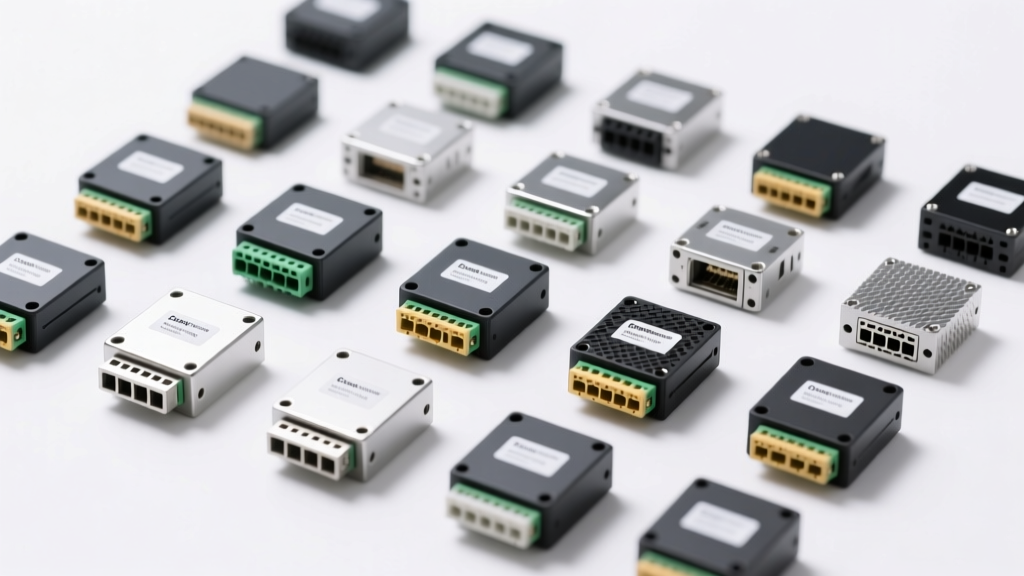
An Integrated Circuit (IC) is a miniaturized electronic circuit fabricated on a semiconductor material, typically silicon. ICs are the foundation of modern electronics, enabling complex functions in compact, efficient, and cost-effective packages. Based on their functionality and signal processing capabilities, ICs are categorized into several key types, each serving distinct roles in electronic systems.
Analog Integrated Circuits
Designed to process continuous signals that vary over time, such as voltage or current levels.
Advantages
- Excellent for real-world signal processing
- High precision in amplification and filtering
- Smooth handling of continuous data (e.g., sound, temperature)
- Essential for sensor interfacing and power regulation
Limitations
- Sensitive to noise and interference
- More complex design and tuning required
- Limited scalability compared to digital circuits
Common Examples: Operational amplifiers (op-amps), voltage regulators, linear amplifiers, active filters
Key Applications: Audio equipment, power management systems, industrial sensors, medical devices
Digital Integrated Circuits
Process discrete binary signals (0s and 1s), forming the core of computing and digital logic systems.
Advantages
- High noise immunity and reliability
- Easy to design, replicate, and scale
- Supports complex logic operations and data storage
- Foundation of modern computing and digital communication
Limitations
- Requires analog components for real-world interface
- Higher power consumption at high speeds
- Signal quantization can lead to data loss
Common Examples: Microprocessors, memory chips (RAM, ROM), logic gates (AND, OR, NOT), FPGAs
Key Applications: Computers, smartphones, digital watches, embedded systems, networking equipment
Mixed-Signal Integrated Circuits
Combine both analog and digital circuitry on a single chip to process and convert signals between domains.
Advantages
- Enables seamless interface between analog and digital worlds
- Reduces system complexity and component count
- Improves efficiency and integration in compact devices
- Essential for data acquisition and communication systems
Limitations
- Complex design and manufacturing process
- Potential for cross-domain interference (noise coupling)
- Higher cost than pure analog or digital ICs
Common Examples: Analog-to-Digital Converters (ADCs), Digital-to-Analog Converters (DACs), data acquisition chips, smart sensors
Key Applications: Communication systems, IoT devices, automotive electronics, test and measurement equipment
Radio-Frequency (RF) Integrated Circuits
Specialized ICs designed to operate at high frequencies, typically in the MHz to GHz range, for wireless communication.
Advantages
- Enables wireless transmission and reception of data
- High-frequency signal amplification and modulation
- Compact integration of RF components (mixers, oscillators, amplifiers)
- Critical for modern connectivity (Wi-Fi, Bluetooth, cellular)
Limitations
- Highly sensitive to layout and parasitic effects
- Challenging to design and test
- Higher power consumption in transmit mode
Common Examples: RF amplifiers, mixers, phase-locked loops (PLLs), transceivers
Key Applications: Smartphones, wireless routers, GPS systems, radar, satellite communication
| Type | Signal Type | Key Strengths | Typical Applications | Complexity Level |
|---|---|---|---|---|
| Analog ICs | Continuous | Precision signal processing, low latency | Audio, sensors, power supplies | Medium |
| Digital ICs | Discrete (Binary) | High reliability, scalability, logic processing | Computers, digital logic, memory | High (in advanced designs) |
| Mixed-Signal ICs | Analog + Digital | Bridging real-world and digital systems | Communications, IoT, data conversion | High |
| RF ICs | High-Frequency Analog | Wireless transmission, signal modulation | Wireless devices, radar, telecom | Very High |
Expert Tip: When designing systems that interface with the physical world (e.g., sensors, audio, wireless), a combination of analog, mixed-signal, and digital ICs is often required. Understanding the strengths of each type helps optimize performance, power efficiency, and system integration.
Features and Applications of the IRF740 Power MOSFET
The IRF740 is a high-performance N-channel enhancement-mode power MOSFET widely used in switching and power management applications. With a maximum drain-source voltage of 400V and a continuous drain current of up to 9.2A, it delivers reliable performance in high-voltage circuits. Its low on-resistance (RDS(on) = 0.55Ω) and fast switching speed (with a 55 ns delay time) make it ideal for applications requiring efficient power control and minimal energy loss.
Key Features and Benefits
High Voltage Rating (400V)
The IRF740 is rated for a drain-source breakdown voltage of 400V, making it suitable for high-voltage power supplies, inverters, and industrial control systems. This high voltage tolerance allows it to be used in off-line switching power supplies and motor control circuits where input voltages can exceed 300V DC.
Its robust voltage handling capability ensures reliable operation in environments with voltage spikes or transient surges, reducing the risk of device failure in demanding electrical conditions.
Low Gate Charge (26 nC)
With a gate charge of only 26 nanocoulombs, the IRF740 requires minimal drive current to switch on and off. This characteristic significantly reduces the power required by the gate driver circuit, improving overall system efficiency.
This low gate charge makes the IRF740 particularly well-suited for high-frequency switching applications such as DC-DC converters, switch-mode power supplies (SMPS), and pulse-width modulation (PWM) controllers. It also enhances performance in battery-powered and portable systems where energy conservation is critical.
Robust Thermal Management
The IRF740 features a large silicon die and efficient thermal design that enables effective heat dissipation under heavy load conditions. It has a low thermal resistance from junction to case (RθJC), allowing heat to be transferred efficiently to a heatsink.
Encapsulated in a durable TO-220 package, the device is resistant to thermal stress and can operate reliably in high-temperature environments. Its maximum junction temperature is typically rated at 150°C, ensuring stable performance even in enclosed or poorly ventilated systems.
Easy Mounting and Integration (TO-220 Package)
Housed in a standard TO-220 package, the IRF740 offers excellent mechanical stability and ease of mounting. The metal tab includes a mounting hole, enabling secure attachment to heatsinks using a screw and insulating washer.
This package is widely supported in PCB designs and prototyping platforms, making integration into existing circuits straightforward. Its pinout (Gate, Drain, Source) follows industry conventions, simplifying layout design and replacement in repair scenarios.
| Parameter | Value | Description |
|---|---|---|
| Drain-Source Voltage (VDS) | 400 V | Maximum allowable voltage between drain and source |
| Continuous Drain Current (ID) | 9.2 A | Maximum continuous current at 25°C case temperature |
| On-Resistance (RDS(on)) | 0.55 Ω | Typical resistance when fully enhanced |
| Gate Charge (Qg) | 26 nC | Charge required to switch the MOSFET; affects switching speed and drive power |
| Delay Time (Turn-On) | 55 ns | Time from gate signal rise to drain current flow initiation |
| Package Type | TO-220 | Standard through-hole package with heatsink mounting capability |
Common Applications
Important: While the IRF740 is robust, proper heat sinking is essential when operating near current or power limits. Always use a thermal pad or insulator when mounting to a heatsink, and ensure adequate ventilation. Avoid exceeding the maximum junction temperature (150°C) to prevent thermal runaway. Refer to the official datasheet for safe operating area (SOA) curves and derating guidelines.
Commercial Uses of Integrated Circuits (ICs)
Integrated circuits (ICs) are the foundation of modern electronics, enabling compact, efficient, and powerful solutions across nearly every commercial industry. These miniaturized electronic components combine transistors, resistors, and capacitors on a single semiconductor chip, revolutionizing how devices process, store, and transmit data. From smartphones to life-saving medical equipment, ICs play a critical role in enhancing performance, reliability, and connectivity.
Below are the major commercial applications of integrated circuits, highlighting their diverse functions and technological impact.
Consumer Electronics
Integrated circuits are central to the functionality and advancement of consumer electronics. Devices such as smartphones, tablets, smart TVs, gaming consoles, and wearable tech rely heavily on specialized ICs for processing, memory, and signal handling.
- Microprocessors and SoCs (System-on-Chip) handle complex computing tasks, enabling multitasking, high-speed performance, and AI-driven features.
- Memory ICs like DRAM and flash storage provide fast access to data and long-term storage for apps, photos, and media.
- Power management ICs (PMICs) optimize battery usage and charging efficiency in portable devices.
- Audio and video codec ICs deliver high-fidelity sound and 4K/8K video processing for immersive entertainment.
Key Insight: The demand for thinner, faster, and more energy-efficient devices continues to drive innovation in consumer IC design.
Computing Devices
ICs form the backbone of all computing systems, from personal laptops to enterprise data centers. They enable data processing, logic operations, memory access, and system coordination essential for modern computing.
- Central Processing Units (CPUs) execute instructions and manage system operations, with multi-core designs enhancing performance.
- Graphics Processing Units (GPUs) accelerate rendering and are increasingly used in AI and machine learning applications.
- RAM and SSD controller ICs ensure rapid data retrieval and storage, critical for smooth system responsiveness.
- Chipsets and I/O controllers manage communication between the CPU, peripherals, and network interfaces.
Industry Trend: Cloud computing and edge computing are pushing demand for high-performance, low-latency ICs in servers and networking hardware.
Telecommunications
The global telecommunications infrastructure depends on integrated circuits to transmit, receive, and process vast amounts of data across wired and wireless networks.
- Mixed-signal ICs, including Analog-to-Digital Converters (ADCs) and Digital-to-Analog Converters (DACs), bridge analog signals (like voice) with digital processing systems.
- RF (Radio Frequency) ICs enable wireless communication in smartphones, Wi-Fi routers, and 5G base stations by modulating and demodulating signals.
- Network processors and FPGAs manage data routing, encryption, and protocol handling in switches and routers.
- Optical communication ICs support high-speed fiber-optic data transmission in backbone networks.
Critical Role: ICs are essential for achieving high bandwidth, low latency, and reliable connectivity in next-generation networks like 5G and beyond.
Automotive Industry
Modern vehicles are increasingly reliant on integrated circuits for safety, performance, comfort, and autonomy. The number of ICs per vehicle has grown dramatically with the rise of smart and electric cars.
- Engine Control Units (ECUs) use microcontrollers to optimize fuel injection, emissions, and engine timing for efficiency and performance.
- Advanced Driver Assistance Systems (ADAS) employ sensor fusion ICs, radar processors, and vision chips to enable features like automatic braking and lane keeping.
- Infotainment systems integrate audio processors, GPS receivers, and touchscreen controllers for enhanced user experience.
- Battery management ICs monitor and balance cells in electric vehicles (EVs), ensuring safety and longevity.
Future Outlook: Autonomous driving and vehicle-to-everything (V2X) communication will require even more powerful and redundant IC systems.
Industrial and Medical Equipment
In both industrial automation and healthcare, ICs deliver precision, reliability, and real-time control—critical for safety and operational efficiency.
- Programmable Logic Controllers (PLCs) use microprocessors and interface ICs to automate manufacturing lines, robotics, and process control systems.
- Sensor interface ICs amplify and digitize signals from temperature, pressure, and motion sensors in industrial environments.
- Medical imaging devices like MRI, CT, and ultrasound machines rely on high-speed ADCs, signal processors, and timing ICs for accurate diagnostics.
- Patient monitoring systems use low-power ICs to continuously track vital signs such as heart rate, blood oxygen, and ECG with minimal energy consumption.
Quality Requirement: Medical and industrial ICs often meet strict standards (e.g., ISO 13485, IEC 61508) for safety, durability, and electromagnetic compatibility.
Emerging and Cross-Industry Applications
Beyond traditional sectors, ICs are enabling innovation in smart cities, IoT, renewable energy, and aerospace.
- IoT devices use ultra-low-power microcontrollers and wireless ICs (Bluetooth, LoRa, NB-IoT) for remote sensing and connectivity.
- Smart grids and solar inverters rely on power management and control ICs to regulate energy flow and improve efficiency.
- Aerospace and defense systems employ radiation-hardened ICs for navigation, communication, and avionics in extreme conditions.
- AI accelerators and neural processing units (NPUs) are being integrated into edge devices for real-time decision-making.
Innovation Driver: The convergence of AI, IoT, and 5G is creating unprecedented demand for smarter, more integrated semiconductor solutions.
Technical Insight: As Moore’s Law slows, advancements in IC technology are shifting toward specialized architectures (e.g., ASICs, AI chips), 3D packaging, and heterogeneous integration to continue improving performance and energy efficiency across commercial applications.
| Industry | Key IC Types | Primary Functions | Trending Technologies |
|---|---|---|---|
| Consumer Electronics | SoCs, PMICs, Memory ICs | Processing, Power, Storage | AI integration, 5G modems |
| Computing | CPU, GPU, SSD Controllers | Data Processing, Rendering, Storage | Chiplets, AI acceleration |
| Telecommunications | RF ICs, ADCs, Network Processors | Signal Transmission, Data Routing | 5G mmWave, Optical ICs |
| Automotive | MCUs, Sensor Fusion, BMS ICs | Control, Safety, Energy Management | Autonomous driving, V2X |
| Medical & Industrial | Signal Conditioners, PLCs, ADCs | Monitoring, Automation, Imaging | Wearable diagnostics, Industry 4.0 |
Why ICs Are Indispensable in Modern Commerce
- Miniaturization: ICs allow complex circuitry to fit into compact devices, enabling portable and wearable technology.
- Energy Efficiency: Advanced fabrication processes reduce power consumption, extending battery life and reducing heat.
- Cost-Effectiveness: Mass production of ICs lowers per-unit costs, making advanced technology accessible to broader markets.
- Reliability: Solid-state design with fewer moving parts increases durability and reduces failure rates.
- Scalability: ICs can be customized or scaled for everything from simple sensors to supercomputers.
How to Choose Integrated Circuits (ICs) for Resale: A Comprehensive Guide for Business Owners
Selecting the right integrated circuits (ICs) for resale is a strategic decision that impacts product performance, market competitiveness, and customer satisfaction. With rapid advancements in semiconductor technology and diverse application requirements, business owners must evaluate multiple technical and commercial factors. This guide provides a detailed breakdown of key considerations when sourcing ICs, helping you make informed decisions that align with your target market’s needs and technical expectations.
Important Note: Always verify IC specifications with manufacturer datasheets and consider long-term supply chain stability. Counterfeit components are prevalent in the electronics market—source only from authorized distributors or reputable suppliers to ensure authenticity and reliability.
Key Factors to Consider When Selecting ICs for Resale
- Material Composition and Semiconductor Technology
The base material of an IC significantly influences its electrical properties, thermal performance, cost, and suitability for specific applications.
- Silicon (Si): The most widely used semiconductor material due to its excellent balance of performance, manufacturability, and cost. Ideal for general-purpose digital logic, microcontrollers, and consumer electronics.
- Gallium Nitride (GaN): Offers superior power efficiency, higher switching frequencies, and better thermal conductivity than silicon. Commonly used in high-efficiency power supplies, electric vehicles, and RF amplifiers. Although more expensive, GaN is gaining traction in premium and industrial markets.
- Silicon Carbide (SiC): Known for high-temperature tolerance and robustness in high-voltage environments. Frequently used in power conversion systems such as solar inverters and EV motor drives.
- Gallium Arsenide (GaAs): Excels in high-frequency and low-noise applications like satellite communications and radar systems. However, it is more fragile and costly compared to silicon.
Recommendation: Match the semiconductor material to your end-user segment—silicon for cost-sensitive consumer products, and GaN/SiC for high-performance industrial or automotive applications.
- Application-Specific Functionality
Different types of ICs serve distinct roles in electronic systems. Understanding the primary function helps align inventory with market demand.
- Power ICs: Regulate, convert, and manage electrical power. Widely used in power supplies, battery management systems (BMS), and automotive electronics. High demand in EVs and renewable energy sectors.
- Linear (Analog) ICs: Process continuous signals and are essential in amplifiers, sensors, audio equipment, and signal conditioning circuits. Popular in medical devices, industrial controls, and audio gear.
- Digital ICs: Perform binary operations and include microprocessors, FPGAs, memory chips, and logic gates. Found in computing, networking, and data storage solutions.
- Radio Frequency (RF) ICs: Handle wireless signal transmission and reception. Critical for smartphones, IoT devices, 5G infrastructure, and Wi-Fi modules.
Insight: Diversify your IC portfolio based on emerging trends—e.g., increasing demand for RF ICs in smart home devices and digital ICs in edge computing.
- System Compatibility and Interoperability
An IC must be compatible with the host system’s architecture, voltage levels, communication protocols, and physical interface.
- Mismatched bandwidth or signal timing can degrade system performance. For example, replacing a GaAs-based RF IC with a silicon alternative may reduce signal integrity in high-frequency applications.
- Check pin compatibility, logic families (e.g., TTL vs. CMOS), and protocol support (I²C, SPI, UART) to ensure seamless integration.
- Consider backward compatibility for replacement parts in legacy systems—a key selling point for industrial and aerospace clients.
Pro Tip: Offer cross-reference guides or substitution recommendations to help customers find suitable replacements, enhancing customer trust and support.
- Form Factor and Packaging Type
The physical design of an IC affects thermal management, space utilization, and ease of assembly.
- Dual Flat No-Lead (DFN): Compact surface-mount package ideal for space-constrained devices like wearables and mobile phones.
- Quad Flat Package (QFP): Offers multiple pins in a small footprint, commonly used in microcontrollers and processors.
- PMOS/Bipolar Packages: Older but still relevant in certain analog and power applications. PMOS packages are known for compact size and efficient heat dissipation.
- Ball Grid Array (BGA): High-density packaging for advanced processors and FPGAs, though more challenging to solder and inspect.
Business Strategy: Stock miniaturized packages (e.g., DFN, QFN) for portable electronics markets, and larger packages (e.g., TO-220, BGA) for industrial and power applications.
- Power Supply Requirements
Voltage and current specifications determine where an IC can be deployed.
- Low-Voltage ICs (1.8V–3.3V): Designed for battery-powered and portable devices such as smartphones, sensors, and IoT nodes. Energy efficiency is critical here.
- High-Voltage ICs (≥12V): Used in motor drives, industrial automation, and power conversion systems. These often require robust thermal and electrical protection.
- Check quiescent current, dropout voltage, and efficiency curves—especially for power management ICs (PMICs).
Market Insight: The growing popularity of battery-operated and energy-efficient devices makes low-power ICs a high-growth segment.
| Selection Criteria | Ideal Use Cases | Potential Risks | Supplier Questions to Ask |
|---|---|---|---|
| Material (e.g., Si, GaN, SiC) | Consumer electronics, EVs, power systems | Overpaying for over-specified materials | “Is this a first-source or drop-in replacement?” |
| Application Type (Digital, Analog, RF, Power) | IoT, automotive, telecom, computing | Misalignment with customer needs | “What are the common failure modes?” |
| Compatibility (Pinout, Voltage, Protocol) | Replacement parts, upgrades | Integration issues in end systems | “Do you provide simulation models or reference designs?” |
| Form Factor (DFN, QFP, BGA, etc.) | Portable devices, industrial controllers | Assembly challenges or rework costs | “Are evaluation boards available?” |
| Supply Power (Voltage, Current, Efficiency) | Battery-powered, high-power systems | Shortened battery life or overheating | “What is the typical power dissipation under load?” |
Expert Tip: Build relationships with IC manufacturers or authorized distributors to gain access to technical support, product roadmaps, and lifecycle notifications. This helps anticipate obsolescence and plan inventory transitions smoothly.
Additional Business-Oriented Recommendations
- Monitor industry trends such as electrification, 5G expansion, and AI hardware to anticipate demand shifts.
- Offer value-added services like technical datasheets, application notes, or compatibility checklists to differentiate your offerings.
- Track component lifecycle status (active, NRND, obsolete) to avoid stocking soon-to-be-discontinued parts.
- Consider bundling complementary ICs (e.g., power + logic + RF) for complete subsystem solutions.
- Invest in anti-counterfeit verification tools or certifications (e.g., AS6081) to build customer confidence.
Choosing the right ICs for resale goes beyond technical specs—it involves understanding your customers’ applications, supply chain dynamics, and future technology trends. By systematically evaluating material, function, compatibility, form factor, and power needs, you can curate a competitive, reliable, and profitable product lineup. When in doubt, consult with application engineers or leverage manufacturer design resources to ensure your selections meet real-world performance expectations.
Frequently Asked Questions About Integrated Circuits
Q1: Do Integrated Circuits Have Any Maintenance Requirements?Integrated Circuits (ICs) themselves do not require direct maintenance, as they are solid-state components with no moving parts and are designed for long-term reliability. However, the performance and longevity of ICs are heavily influenced by the environment in which they operate. Businesses should focus on maintaining the equipment and systems where ICs are installed. This includes:
- Thermal Management: Ensuring proper ventilation and cooling to prevent overheating, which can degrade IC performance and shorten lifespan.
- Power Supply Stability: Using clean, regulated power sources to avoid voltage spikes or fluctuations that can damage sensitive circuitry.
- Dust and Moisture Control: Keeping enclosures sealed and clean to prevent contamination that could lead to short circuits or corrosion.
- Regular System Diagnostics: Monitoring for early signs of failure in surrounding components (e.g., capacitors, connectors) that could indirectly affect IC operation.
By maintaining optimal operating conditions, businesses can maximize the efficiency and durability of their electronic systems and avoid premature IC failure.
Q2: What Is The Lifespan Of An Integrated Circuit?The typical lifespan of an Integrated Circuit ranges from 10 to 20 years under normal operating conditions. However, actual longevity depends on several key factors:
- Operating Environment: ICs in stable, temperature-controlled environments (e.g., data centers) tend to last longer than those exposed to extreme heat, humidity, or vibration.
- Usage Intensity: Power ICs used in high-performance computing or industrial machinery may degrade faster due to constant thermal cycling and electrical stress, often lasting around 10 years.
- Application-Specific Durability: ICs designed for aerospace, satellite systems, or deep-space missions are built with radiation-hardened materials and rigorous testing, enabling them to function reliably for up to 20 years or more.
- Manufacturing Quality: Higher-grade components from reputable manufacturers generally offer better longevity and resistance to wear.
While ICs can technically last decades, technological obsolescence often precedes physical failure, meaning devices may be replaced before the ICs wear out.
Q3: Can Businesses Install Integrated Circuits By Themselves?In most cases, businesses—especially retailers or end-users—do not need to install Integrated Circuits directly. ICs are typically pre-installed on circuit boards or within modules by manufacturers. However, when handling or replacing ICs is necessary (e.g., in repair or customization), proper procedures must be followed:
- ESD (Electrostatic Discharge) Protection: ICs are highly sensitive to static electricity. Technicians should use anti-static wrist straps, mats, and grounded tools to prevent damage during installation.
- Proper Handling: Avoid touching the pins or leads directly; use tweezers or vacuum tools designed for microelectronics.
- Specialized Tools: Some ICs, such as Ball Grid Array (BGA) chips, require professional equipment like reflow soldering stations or hot-air rework tools, which are not typically available in standard retail environments.
- Customer Guidance: Retailers should inform customers about the fragility of ICs and recommend professional installation for complex replacements to avoid costly damage.
While basic IC replacement (e.g., DIP or SOIC packages) can be done by trained individuals, complex installations should be left to qualified electronics technicians.
Q4: Can Integrated Circuits Be Recycled?Yes, Integrated Circuits can and should be recycled as part of responsible electronic waste (e-waste) management. Recycling ICs offers significant environmental and economic benefits:
- Resource Recovery: ICs contain valuable precious metals such as gold, silver, copper, and palladium. Advanced recycling processes can extract these materials for reuse in new electronics, reducing the need for mining.
- Reduction of E-Waste: Proper recycling helps minimize the growing volume of electronic waste in landfills, where hazardous substances like lead and cadmium can leach into soil and water.
- Energy Savings: Reclaiming metals from old ICs consumes significantly less energy than extracting raw materials, lowering the carbon footprint of electronics manufacturing.
- Compliance and Responsibility: Many regions have regulations requiring proper disposal and recycling of electronic components, making it essential for businesses to partner with certified e-waste recyclers.
To recycle ICs effectively, they are typically removed from circuit boards using specialized techniques like desoldering or shredding, followed by chemical or mechanical separation of materials.
Q5: Are There Environmentally Friendly Integrated Circuits?Yes, the electronics industry is increasingly developing environmentally friendly Integrated Circuits designed to reduce environmental impact throughout their lifecycle. These eco-conscious ICs feature:
- Lead-Free and RoHS-Compliant Materials: Manufactured without hazardous substances like lead, mercury, or cadmium, complying with international environmental standards such as the Restriction of Hazardous Substances (RoHS) directive.
- Recyclable Packaging and Substrates: Use of biodegradable or easily recyclable materials in packaging and chip carriers to reduce plastic waste.
- Energy-Efficient Design: Low-power ICs that consume less energy during operation, contributing to reduced greenhouse gas emissions in data centers and consumer devices.
- Extended Lifespans: Designed for durability and reliability, reducing the frequency of replacement and minimizing e-waste generation.
- Green Manufacturing Processes: Produced in facilities that prioritize energy efficiency, water conservation, and waste reduction.
Companies adopting eco-friendly ICs not only support sustainability goals but also enhance brand reputation and comply with evolving environmental regulations. As green technology advances, these components are becoming more accessible and cost-effective.