For most people, earphones are a daily necessity—whether for commuting, working out, or unwinding with music after a long day. But as audio technology advances, a growing number of consumers are considering high-fidelity (HiFi) earphones. These premium models promise superior sound, better materials, and more immersive listening experiences. Yet they often come with price tags several times higher than standard earbuds. So, is the upgrade truly justified? The answer depends on your priorities, usage habits, and how much you value sound quality.
What Makes Earphones \"HiFi\"? Defining the Difference
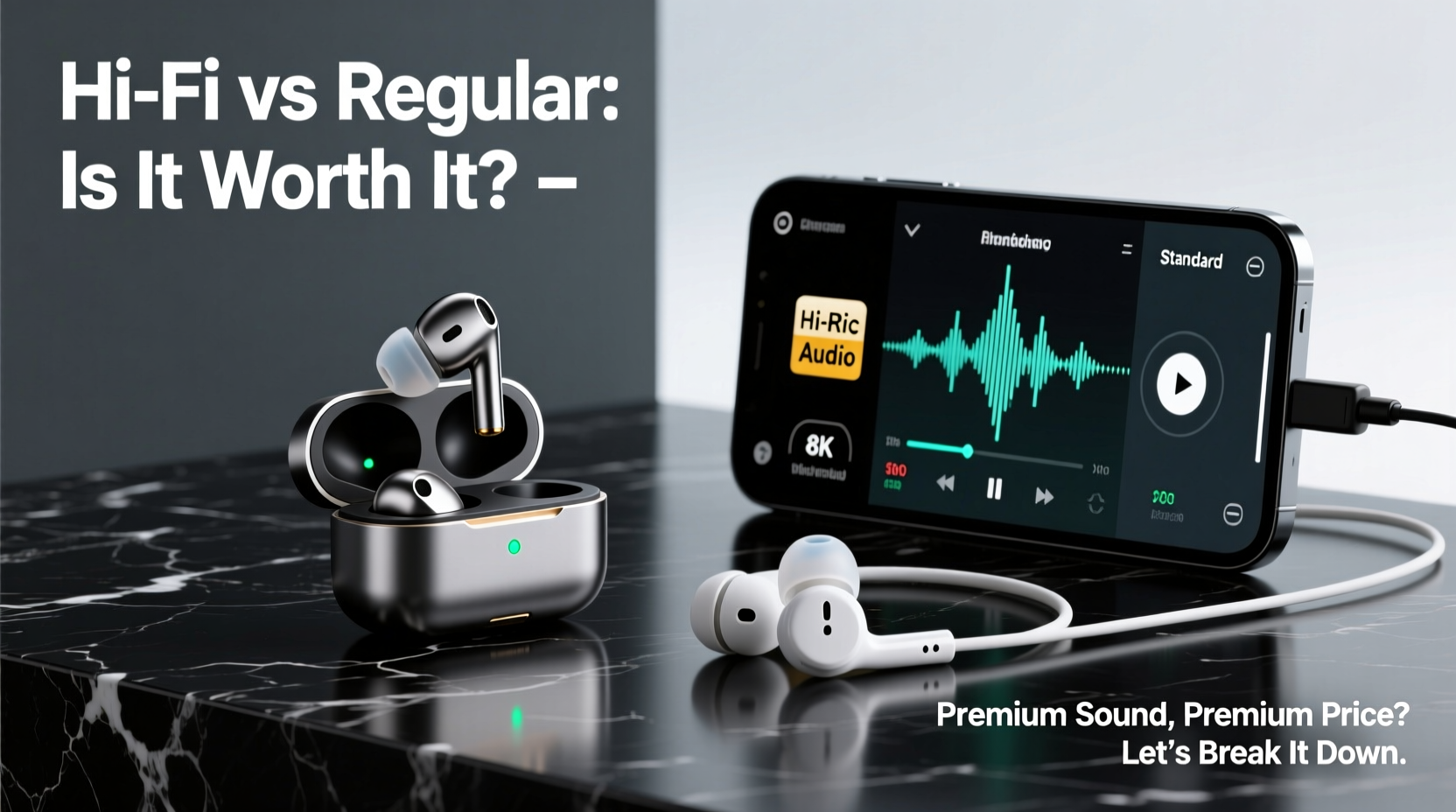
HiFi, short for high fidelity, refers to audio equipment that reproduces sound with minimal distortion and high accuracy to the original recording. HiFi earphones are engineered to deliver a balanced, detailed, and dynamic listening experience. This contrasts with regular earphones, which are typically designed for convenience, affordability, and general-purpose use rather than sonic precision.
The key differences lie in driver design, materials, tuning philosophy, and engineering focus:
- Drivers: HiFi models often use multiple drivers (e.g., dynamic, balanced armature, or planar magnetic) to separate frequency ranges and reduce distortion.
- Materials: Premium metals, ceramics, and memory alloys replace plastic housings for better resonance control and durability.
- Tuning: HiFi earphones are meticulously tuned by audio engineers to achieve flat frequency response or genre-specific profiles.
- Cables & Connectors: Many feature detachable, oxygen-free copper cables with gold-plated connectors to minimize signal loss.
Sound Quality: A Clear Step Up
The most significant advantage of HiFi earphones is their sound performance. Regular earphones often emphasize bass or treble to make music sound “exciting” out of the box, but this comes at the expense of balance and detail. In contrast, HiFi earphones aim for neutrality and transparency.
When listening to a well-recorded album through a quality HiFi pair, you’ll notice:
- Better instrument separation—individual sounds don’t blur together.
- Improved spatial imaging—vocals and instruments feel placed in a 3D space.
- Greater dynamic range—soft passages remain clear, and loud sections don’t distort.
- Accurate tonality—guitars sound like guitars, not compressed digital approximations.
This level of fidelity reveals nuances you might have never noticed before—a breath between vocal lines, the subtle reverb on a snare drum, or the ambient room noise in a live recording. For casual listeners, these details may go unnoticed. But for audiophiles, musicians, or anyone who values music deeply, it transforms the experience from background noise to active engagement.
“High-fidelity audio isn’t about louder sound—it’s about truer sound. It’s the difference between hearing a song and feeling it.” — Daniel Park, Audio Engineer & Mastering Specialist
Build Quality and Longevity
Regular earphones, especially budget in-ears, are often built with cost-cutting in mind. Thin cables, flimsy housings, and non-replaceable parts mean they rarely last beyond a year or two with daily use. HiFi models, however, are constructed for longevity.
Many premium brands offer modular designs—detachable cables, swappable tips, and repairable components—that extend product life. Some manufacturers even provide servicing for worn-out drivers or broken connectors, something unheard of in mass-market earbuds.
| Feature | Regular Earphones | HiFi Earphones |
|---|---|---|
| Housing Material | Plastic | Aluminum, Ceramic, Resin |
| Cable Type | Fixed PVC | Detachable OFC Copper |
| Driver Replaceability | No | Sometimes (pro models) |
| Avg. Lifespan | 6–18 months | 3–7 years |
| Repair Support | Rare | Available (select brands) |
Real-World Example: The Commuter Who Upgraded
Take Mark, a software developer who used $20 earbuds for his daily train commute. He enjoyed music but never considered himself an “audiophile.” After receiving a pair of mid-tier HiFi earphones as a gift, he began noticing how muffled his old buds sounded. Instruments overlapped, lyrics were buried, and songs felt fatiguing after 30 minutes.
With the new earphones, his favorite playlist took on new depth. He could distinguish the double bass in a Billie Holiday track, hear the finger taps on a guitar neck in a folk song, and feel the spatial layering in electronic music. Over time, he started seeking out high-resolution recordings and even revisited albums he hadn’t listened to in years. What began as curiosity turned into a deeper appreciation for music itself.
For Mark, the investment wasn’t just about better gear—it changed how he engaged with art.
Do You Need HiFi Earphones? A Practical Checklist
Before spending hundreds on HiFi earphones, ask yourself the following. Check each item that applies:
- ✅ I listen to music actively, not just in the background.
- ✅ I own or stream high-quality audio files (FLAC, ALAC, Tidal Masters, etc.).
- ✅ I notice when music sounds muddy, distorted, or unbalanced.
- ✅ I use a dedicated audio player or DAC/amp with my phone.
- ✅ I’ve outgrown my current earphones’ sound limitations.
- ✅ I value craftsmanship and long-term durability over disposability.
If four or more apply, HiFi earphones are likely a worthwhile investment. If fewer apply, you may not fully utilize their capabilities—and your money might be better spent elsewhere.
Step-by-Step: How to Evaluate a HiFi Purchase
- Assess your source: Ensure your device supports high-resolution audio playback. A smartphone with a weak DAC won’t unlock a HiFi earphone’s full potential.
- Define your budget: Entry-level HiFi models start around $100; flagship pairs can exceed $1,000. Set realistic expectations.
- Try before you buy: Attend audio expos or visit specialty stores. Sound preference is subjective—what works for one listener may not suit another.
- Read expert reviews: Look for consistent feedback on tonal balance, comfort, and build, not just marketing claims.
- Check return policies: Buy from retailers offering trials. Many online vendors allow returns within 14–30 days if you’re unsatisfied.
Frequently Asked Questions
Can I hear the difference between HiFi and regular earphones?
Yes, especially if you’re using high-quality recordings and paying close attention. The improvement is most noticeable in clarity, separation, and naturalness of sound. However, the difference may be subtle with compressed formats like MP3 or low-bitrate streaming.
Do I need special equipment to use HiFi earphones?
Not always. Many modern smartphones and portable players can drive entry-level HiFi models adequately. However, higher-end or harder-to-drive models benefit from a dedicated DAC (digital-to-analog converter) or amplifier to reach their full potential.
Are wireless earphones capable of HiFi sound?
Some newer models support lossless codecs like LDAC, aptX Adaptive, or LHDC, which transmit higher data rates. However, true HiFi still favors wired connections due to bandwidth and latency limitations in Bluetooth. For now, the best HiFi experience remains wired.
Final Verdict: Are They Worth It?
HiFi earphones aren’t for everyone. If your primary needs are convenience, portability, and basic functionality, regular earphones—or even free ones bundled with phones—are perfectly sufficient. But if you care about music, seek authenticity in sound, and want gear that lasts, HiFi models offer tangible benefits that justify their cost over time.
They represent a shift from passive consumption to active listening. And while the price may seem steep upfront, consider the long-term value: years of enhanced enjoyment, reduced replacement cycles, and a deeper connection to the music you love.
🚀 Ready to elevate your listening? Start by testing a mid-range HiFi model with a return policy. Experience the difference for yourself—and rediscover the music you thought you already knew.