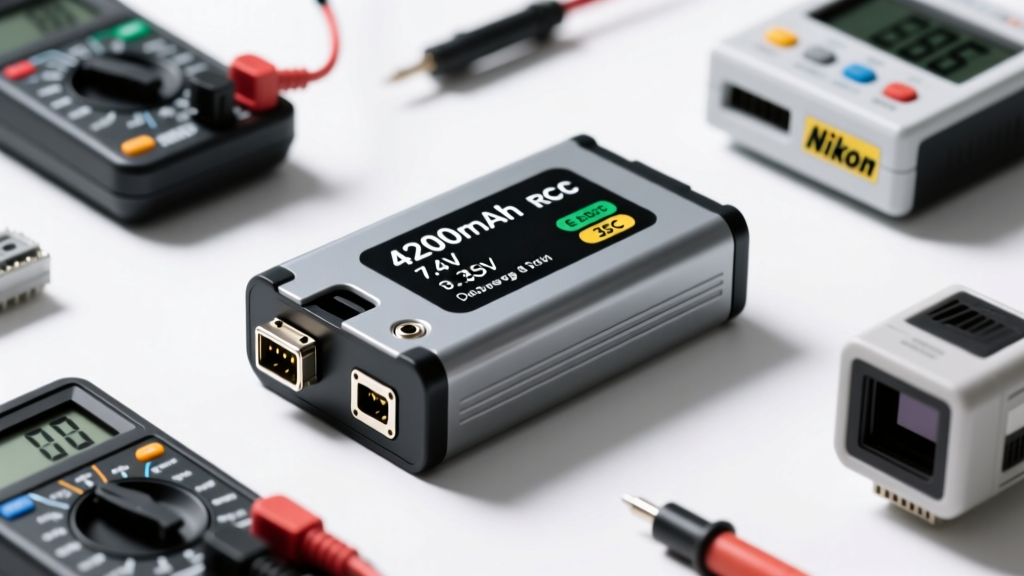
Types of 4200mAh RC Batteries: A Comprehensive Guide
Remote-controlled (RC) vehicles such as cars, airplanes, and boats rely heavily on consistent and reliable power sources. One of the most critical decisions in optimizing performance is selecting the right battery. The 4200mAh rating refers to the battery's capacity in milliamp-hours, indicating how much electrical charge it can store. A 4200mAh battery can theoretically deliver 4.2 amps for one hour, or 1 amp for 4.2 hours—making higher mAh values ideal for extended run times.
While the capacity remains consistent at 4200mAh, the chemistry, voltage, and configuration vary significantly, affecting performance, safety, and suitability for different RC applications. Below is a detailed breakdown of the most common 4200mAh battery types used in the RC hobby world.
3.7V 1S LiPo
Lithium Polymer (LiPo) batteries are the go-to choice for high-performance RC applications. A 1S configuration means a single cell with a nominal voltage of 3.7V (fully charged at 4.2V). Despite its lower voltage, this compact battery offers high energy density, making it lightweight and efficient.
Advantages
- High energy density in small size
- Lightweight design ideal for speed-focused builds
- Fast charging and discharging capabilities
- Excellent power-to-weight ratio
Limitations
- Lower voltage limits top speed and torque
- Requires careful handling and charging
- Fire risk if punctured or overcharged
- Shorter lifespan with improper use
Best for: Mini RC cars, indoor drones, lightweight models where size and weight are critical
NiMH 6-Cell 7.2V
Nickel-Metal Hydride (NiMH) batteries with six 1.2V cells in series provide a total of 7.2V. These are among the most popular choices for beginner and intermediate RC enthusiasts due to their balance of safety, cost, and performance.
Advantages
- Safe and stable chemistry—no fire risk
- More affordable than LiPo alternatives
- Durable and tolerant of overcharging
- Widely compatible with standard RC chargers and vehicles
Limitations
- Heavier than LiPo batteries
- Slower discharge rate limits peak performance
- Lower energy density compared to LiPo
- Memory effect with repeated partial charging
Best for: Entry-level RC cars, boats, and planes; ideal for casual users and younger hobbyists
NiCd 6-Cell 7.2V
Nickel-Cadmium (NiCd) batteries, though largely outdated, are still used in specific rugged or high-drain applications. Like NiMH, they use six 1.2V cells to deliver 7.2V but are built for durability under extreme conditions.
Advantages
- Extremely durable and shock-resistant
- Handles high discharge currents with ease
- Performs well in cold temperatures
- Can be fast-charged without damage
Limitations
- Higher self-discharge rate (loses charge when idle)
- Toxic cadmium content—environmentally harmful
- Lower energy density than NiMH or LiPo
- Strong memory effect requires full discharge cycles
Best for: Vintage RC models, heavy-duty off-road vehicles, and industrial-grade applications where reliability trumps efficiency
7.4V 2S LiPo
Though not explicitly mentioned in the original content, the 7.4V 2S LiPo is a common and powerful 4200mAh variant. It uses two lithium polymer cells in series, doubling the voltage for significantly enhanced performance.
Advantages
- Higher voltage for increased speed and torque
- Excellent power delivery for aggressive driving
- Lightweight with high discharge rates (e.g., 30C, 50C)
- Ideal for upgraded or modified RC systems
Limitations
- Requires a compatible 2S-ready ESC and motor
- More expensive than NiMH or NiCd
- Sensitive to over-discharge and swelling
- Mandates use of a balance charger
Best for: High-performance RC cars, drift machines, rock crawlers, and racing drones
| Battery Type | Voltage | Weight | Performance | Lifespan | Best Use Case |
|---|---|---|---|---|---|
| 1S LiPo 3.7V | 3.7V | Very Light | Low-Moderate | 200-300 cycles | Mini RC models, lightweight builds |
| NiMH 6-Cell 7.2V | 7.2V | Moderate | Moderate | 500+ cycles | Beginner RC vehicles, casual use |
| NiCd 6-Cell 7.2V | 7.2V | Moderate | Moderate-High (drain) | 1000+ cycles (with care) | Rugged, high-stress environments |
| 2S LiPo 7.4V | 7.4V | Light | High | 300-500 cycles | Racing, off-road, performance builds |
Expert Tip: Always match your battery type to your RC system's specifications. Using a 2S LiPo in a 1S-only setup can damage your motor and ESC. Additionally, store LiPo batteries at 3.8V per cell when not in use to maximize lifespan and safety.
Safety Note: NiCd batteries contain toxic materials and should be recycled properly. LiPo batteries should be charged in a fireproof bag and never left unattended during charging.
Applications and Benefits of a 4200mAh Battery in RC Systems
Remote-controlled (RC) devices rely heavily on high-performance batteries to deliver consistent power, extended run times, and reliable operation. Among the most popular options for hobbyists and professionals alike is the 4200mAh RC battery—typically a lithium polymer (LiPo) pack known for its optimal balance of capacity, weight, and power delivery. While its primary role is powering remote-controlled models, the versatility of a 4200mAh battery extends across various platforms and custom applications.
Key Uses of a 4200mAh RC Battery
RC Vehicles
Remote-controlled cars, trucks, and off-road buggies are among the most common users of 4200mAh batteries. These high-capacity packs provide extended drive times—often 20 to 40 minutes depending on motor load and terrain—making them ideal for racing, crawling, or recreational driving.
The 4200mAh rating delivers ample current to support brushless motor systems, enabling rapid acceleration and sustained top speeds. This makes the battery particularly suitable for high-performance builds where both power and endurance are critical.
RC Aircraft
Whether it's fixed-wing airplanes or multirotor drones like quadcopters, a 4200mAh LiPo battery offers an excellent power-to-weight ratio. This is crucial in aviation applications where every gram affects flight performance, stability, and efficiency.
For mid-sized RC planes and camera-equipped drones, this capacity supports longer flight durations, allowing for extended aerial photography sessions or complex aerobatic routines. The steady voltage output ensures consistent motor performance throughout the discharge cycle.
RC Boats and Watercraft
Electric-powered RC boats—including high-speed hydroplanes, scale tugboats, and sailboats—benefit significantly from the 4200mAh battery’s ability to deliver sustained power in demanding marine environments.
Beyond propulsion, these batteries also power onboard electronics such as LED lighting, sound systems, and advanced navigation modules. Their sealed design (when properly protected) resists moisture, enhancing reliability on water-based models.
RC Helicopters
Remote-controlled helicopters require precise and responsive power delivery to maintain rotor stability and control. A 4200mAh battery provides sufficient energy to operate both the main rotor and tail motor systems efficiently, supporting longer flight sessions without frequent landings for recharging.
For intermediate to advanced pilots, this extended flight time translates into more practice time, improved maneuverability, and greater enjoyment—whether flying recreationally or performing professional aerial tasks.
DIY and Custom Projects
Hobbyists and makers frequently choose 4200mAh batteries for custom-built RC projects due to their availability, compatibility with standard ESCs (Electronic Speed Controllers), and flexible form factors.
From robotic platforms and autonomous vehicles to animated models and portable power solutions, this battery size offers a sweet spot between runtime and physical dimensions. Its widespread use means easy integration with chargers, connectors, and voltage regulators commonly found in the RC ecosystem.
Portable Power Backup
Beyond traditional RC use, many enthusiasts repurpose 4200mAh LiPo packs as emergency power sources for small electronics. With proper circuitry, they can charge smartphones, cameras, or FPV (First-Person View) goggles in the field.
While not a direct replacement for commercial power banks, their high discharge rates and capacity make them valuable in mobile setups, especially during outdoor RC events or long filming sessions.
| Application | Battery Advantage | Typical Runtime |
|---|---|---|
| RC Cars & Trucks | High current delivery for brushless motors | 25–35 minutes |
| RC Airplanes | Lightweight with stable voltage output | 15–25 minutes |
| RC Drones/Quadcopters | Balanced capacity for flight time and payload | 12–20 minutes |
| RC Boats | Durable performance in wet conditions | 20–30 minutes |
| RC Helicopters | Precise power control for rotor systems | 10–18 minutes |
Why Choose a 4200mAh Battery?
Safety Note: Always use a LiPo-compatible charger and store batteries in a fireproof bag. Never overcharge, puncture, or expose to extreme temperatures. Improper handling can lead to swelling, fire, or permanent damage. Check voltage regularly and dispose of damaged packs safely.
Specifications and Maintenance of 4200mAh RC Batteries
The 4200mAh RC battery is a popular choice among hobbyists due to its balanced capacity, runtime, and compatibility with a wide range of remote-controlled vehicles. Whether used in drones, cars, boats, or aircraft, understanding the specifications, proper maintenance, and selection criteria ensures peak performance, longevity, and safety.
Key Specifications of 4200mAh RC Batteries
Understanding the technical details of a 4200mAh battery helps in selecting the right model for your RC application.
- Capacity: 4200mAh (milliampere-hours) indicates how much charge the battery can store. Higher capacity means longer run times between charges.
- Voltage: Typically ranges from 7.4V (2S LiPo) to 11.1V (3S LiPo), depending on the number of cells connected in series.
- Discharge Rate (C-Rating): Commonly between 25C to 50C. A higher C-rating means the battery can deliver more power quickly, ideal for high-performance RC models.
- Chemistry: Most 4200mAh batteries are Lithium Polymer (LiPo), though Nickel Metal Hydride (NiMH) versions exist for older or entry-level systems.
- Weight & Size: LiPo batteries are lightweight and compact, making them ideal for speed and agility-focused RC builds.
Note: Always match the voltage and physical dimensions to your RC model’s specifications.
Common Applications
4200mAh batteries are versatile and widely used across various RC platforms:
- RC Cars & Trucks: Ideal for 1/10 or 1/8 scale models, offering extended run times without excessive weight.
- Drones & FPV Aircraft: Provides a good balance between flight time and payload capacity.
- Boats & Submarines: Water-resistant packaging options available; excellent for moderate-duration runs.
- Entry-Level to Mid-Tier Hobbyists: A sweet spot between cost, performance, and ease of use.
Pro tip: Use a battery with a higher C-rating for racing or aerobatic models to ensure consistent power delivery under load.
Maintenance of 4200mAh RC Batteries
Proper care significantly extends the lifespan and performance of your 4200mAh RC battery. Follow these best practices to keep your battery in top condition:
- Proper Storage: Store batteries in a cool, dry place at room temperature (20°C���25°C). For LiPo batteries, use a storage voltage of 3.7–3.8V per cell to prevent degradation during long-term storage.
- Regular Inspections: Check for signs of damage such as swelling, punctures, leaks, or frayed wires. Swollen batteries should be immediately retired and disposed of safely.
- Terminal Cleaning: Clean connectors and terminals regularly with a cotton swab and isopropyl alcohol to prevent corrosion and ensure optimal conductivity.
- Balanced Charging: Always use a balance charger to maintain equal voltage across all cells, preventing cell imbalance that reduces efficiency and lifespan.
- Rotation: If you own multiple batteries, rotate their usage evenly to avoid overuse of a single unit.
Expert Tip: Use a fireproof LiPo storage bag or metal ammo box when charging or storing lithium-based batteries to minimize fire risk in case of failure.
How to Choose the Right RC Battery
Selecting the ideal battery for your RC vehicle involves more than just matching capacity. Consider these key factors for an informed decision:
Compatibility & Fit
Ensure the battery matches your RC model’s voltage, physical dimensions, and connector type.
- Check your vehicle’s manual for recommended voltage (e.g., 2S, 3S) and maximum capacity.
- Verify that the battery fits securely in the compartment without obstructing moving parts.
- Match connectors (e.g., T-plug, XT60, Deans) or use adapters if necessary.
Battery Chemistry Comparison
| Chemistry | Voltage Per Cell | Energy Density | Lifespan (Cycles) | Best For |
|---|---|---|---|---|
| Lithium Polymer (LiPo) | 3.7V | High | 300–500 | High-performance models, drones, racing |
| Nickel Metal Hydride (NiMH) | 1.2V | Moderate | 500–1000 | Beginner kits, slower vehicles |
| Nickel Cadmium (NiCd) | 1.2V | Low | 1000+ | Legacy systems, extreme environments |
- Brand & Quality: Opt for reputable brands like Tattu, Gens Ace, or Venom. High-quality batteries offer better consistency, safety features (e.g., overcharge protection), and reliable C-ratings.
- Budget vs. Long-Term Value: While budget batteries may seem cost-effective, they often degrade faster and pose higher safety risks. Investing in premium batteries reduces replacement frequency and enhances performance.
How to Avoid Damage to 4200mAh RC Batteries
Preventing damage ensures both safety and sustained performance. Follow these essential precautions:
- Use the Correct Charger: Always use a charger designed for your battery type. LiPo batteries require a dedicated LiPo charger with balance leads to prevent overcharging, which can lead to fire hazards. NiMH batteries need smart chargers with delta-peak detection.
- Avoid Over-Discharging: Never discharge a LiPo battery below 3.0V per cell or a NiMH below 1.0V per cell. Most ESCs have low-voltage cutoffs, but it’s wise to monitor voltage during use.
- Temperature Management: Operate and store batteries within 20°C–30°C. Avoid charging immediately after use—let the battery cool down first. Never charge a cold or hot battery.
- Physical Protection: Use protective cases or LiPo safety bags during transport and storage. This is especially critical for LiPo batteries, which can ignite if punctured or short-circuited.
- No Short Circuits: Keep terminals covered and avoid placing batteries near metal objects. Inspect wires and connectors regularly for wear.
Safety Reminder: Damaged or puffed LiPo batteries should never be charged. Dispose of them at a certified recycling center or use a saltwater discharge method under supervision.
Best Practices Summary
- Charge Safely: Charge on a non-flammable surface using a fireproof bag.
- Store Properly: Keep at 50% charge (3.8V/cell) in a dry, cool environment.
- Balance Charge: Use balance mode every charge to extend cell life.
- Monitor Performance: Track runtime and voltage drop over time—declining performance indicates aging.
- Dispose Responsibly: Recycle old batteries instead of throwing them in the trash.
Benefits of a 4200mAh Battery for RC Applications
The 4200mAh battery has become a popular choice among remote control (RC) enthusiasts due to its optimal balance of capacity, performance, and reliability. Whether you're operating RC cars, drones, boats, or aircraft, this battery capacity—especially in lithium polymer (LiPo) and NiMH formats—offers significant advantages over lower-capacity alternatives. Below is a detailed breakdown of the key benefits that make the 4200mAh battery a top-tier option for RC hobbyists and professionals alike.
Safety Note: Always use a compatible charger and follow manufacturer guidelines when charging LiPo batteries. Store in a fireproof container and never leave unattended during charging to prevent thermal runaway or fire hazards.
Higher Performance and Efficiency
A 4200mAh battery, particularly in the 3.7V lithium polymer (LiPo) configuration, represents advanced energy storage technology with exceptional energy density. This means it can store more power in a compact and lightweight form, making it ideal for RC applications where weight and space are critical factors.
LiPo batteries deliver consistent voltage throughout their discharge cycle, resulting in smooth and uninterrupted power delivery. This stability enhances the performance of RC vehicles, allowing for sustained high speeds and responsive handling without the sudden drop in power often seen with lower-quality batteries.
Additionally, the higher capacity translates into longer run times—often 30% to 50% longer than standard 2200–3000mAh batteries—enabling extended play or flight sessions on a single charge. This makes the 4200mAh battery especially valuable for competitive racing, aerial photography drones, or long-range RC exploration.
Versatility Across RC Platforms
One of the standout features of the 4200mAh battery is its versatility. Available in both LiPo and NiMH chemistries, it fits a wide range of RC vehicles and devices, including:
- RC cars and trucks (on-road and off-road)
- RC airplanes and helicopters
- Multirotor drones and FPV (First Person View) systems
- RC boats and submarines
- Robotics and educational kits
These batteries come in various configurations (e.g., 2S, 3S, 4S) and physical dimensions, ensuring compatibility with different chassis and battery compartments. This cross-platform usability allows hobbyists to standardize their power systems, reducing the need to maintain multiple battery types and simplifying inventory management.
Environmental Sustainability
Rechargeable 4200mAh batteries contribute significantly to environmental sustainability compared to single-use alkaline batteries. A single rechargeable battery can be cycled hundreds to thousands of times, drastically reducing electronic waste and the demand for raw materials.
Modern LiPo and NiMH batteries are also increasingly recyclable. Many recycling centers now accept spent LiPo cells, recovering valuable materials like lithium, cobalt, and nickel. By choosing rechargeable batteries, users help minimize landfill accumulation and lower the carbon footprint associated with battery production and disposal.
Proper end-of-life recycling not only supports environmental goals but also ensures hazardous materials are safely managed, preventing soil and water contamination.
Cost-Effective Long-Term Solution
While the initial investment in a high-quality 4200mAh battery may be higher than disposable options, the long-term savings are substantial. Consider this:
- A single 4200mAh LiPo battery can last 3–5 years with proper care and charging practices.
- It replaces hundreds of alkaline batteries over its lifetime, saving both money and frequent replacements.
- Reduced downtime and consistent performance increase enjoyment and efficiency in RC activities.
When factoring in reduced maintenance and fewer battery purchases, the 4200mAh option proves to be one of the most economical choices for regular RC users.
Enhanced Safety Features
Safety is a crucial consideration, especially in fast-moving RC vehicles used by children or in high-speed environments. Modern 4200mAh LiPo batteries include built-in protection circuits that guard against:
- Overcharging: Prevents voltage from exceeding safe limits during charging.
- Over-discharging: Shuts down power delivery before cell voltage drops to damaging levels.
- Short circuits: Reduces risk of fire or explosion from accidental contact.
- Thermal overload: Monitors temperature and interrupts charging if overheating occurs.
NiMH variants are inherently more stable and less prone to thermal issues, making them a safer option for beginners or indoor use. Regardless of chemistry, proper handling and storage practices further enhance safety and extend battery life.
| Battery Feature | Benefit for RC Users | Common Applications | Lifespan (Charge Cycles) |
|---|---|---|---|
| 4200mAh Capacity | Extended run time (20–50% longer than 3000mAh) | RC cars, drones, boats | 300–500 (LiPo), 500–1000 (NiMH) |
| High Energy Density | Lightweight with maximum power output | FPV drones, racing cars | 3–5 years with care |
| Rechargeable Design | Reduces waste and long-term costs | All RC platforms | Years of reuse |
| Protection Circuitry | Prevents overcharge, short circuits, and thermal issues | Indoor, outdoor, child-friendly models | Enhances safety and longevity |
| Versatile Form Factors | Fits multiple RC chassis and battery trays | Multi-platform hobbyists | Compatible with standard mounts |
Expert Tip: To maximize the lifespan of your 4200mAh battery, store it at 50% charge when not in use for extended periods. Use a storage mode on your charger and keep batteries in a cool, dry place away from direct sunlight.
Maintenance and Best Practices
- Always use a balance charger designed for your battery chemistry (LiPo or NiMH).
- Avoid discharging below 3.0V per cell for LiPo batteries to prevent permanent damage.
- Inspect batteries regularly for puffing, leaks, or damaged connectors.
- Label and rotate multiple batteries to ensure even usage and wear.
- Keep a log of charge cycles and performance to anticipate replacement needs.
In conclusion, the 4200mAh battery stands out as a high-performance, versatile, and eco-friendly power solution for RC enthusiasts. Its combination of extended runtime, broad compatibility, safety features, and cost efficiency makes it an excellent investment for both casual users and serious hobbyists. With proper care and maintenance, this battery can deliver reliable power for years, enhancing your RC experience while supporting sustainability and safety.
Frequently Asked Questions About 4200mAh RC Batteries
Q1: What is the run time of a 4200mAh RC battery?The runtime of a 4200mAh RC (remote control) battery depends on several factors, including the current draw of the device it powers and usage conditions. The milliamp-hour (mAh) rating indicates the battery’s capacity—specifically, a 4200mAh battery can theoretically supply 4.2 amps for one hour, or 1 amp for 4.2 hours.
- Low-power devices: In low-drain applications (e.g., small RC cars or receivers), a 4200mAh battery may last 4–5 hours.
- High-performance devices: In power-hungry applications like high-speed RC vehicles or powerful drones, current draw can exceed 20–30 amps, reducing runtime to 10–15 minutes.
- Real-world factors: Temperature, age of the battery, discharge rate (C-rating), and efficiency of the electronic speed controller (ESC) also affect actual runtime.
For example, a drone drawing 21A from a 4200mAh (4.2Ah) battery would have an estimated runtime of about 12 minutes (4.2Ah ÷ 21A = 0.2 hours). Always consider your device’s average current consumption when estimating battery life.
Q2: How long do 4200mAh batteries last?4200mAh batteries are typically rechargeable lithium-ion (Li-ion) or lithium-polymer (LiPo) cells, known for their high energy density and long service life. Their longevity depends on both cycle life and calendar life:
- Cycle life: Most quality 4200mAh RC batteries can endure 300–500 full charge-discharge cycles before capacity drops to 80% of the original.
- Daily usage impact: Frequent deep discharges or aggressive use in high-performance RC models may reduce lifespan to 1–2 years.
- Proper care: With gentle use, storage at optimal charge levels (around 50%), and avoidance of extreme temperatures, these batteries can last 3–5 years or more.
- Capacity degradation: Over time, internal resistance increases and capacity diminishes, leading to shorter runtimes even if the battery still powers the device.
Regular inspection for swelling, reduced performance, or charging issues is recommended to ensure safety and reliability.
Q3: Are 4200mAh batteries safe for the environment?Compared to single-use batteries, 4200mAh rechargeable batteries are significantly more eco-friendly due to their reusability and reduced waste. However, their environmental impact depends on proper usage and disposal:
- Waste reduction: A single rechargeable 4200mAh battery can replace hundreds of disposable alkaline batteries over its lifetime.
- Recyclability: Lithium-based batteries contain valuable and potentially hazardous materials. Most components (lithium, cobalt, nickel, aluminum) can be recovered through certified recycling programs.
- Responsible disposal: Never throw Li-ion or LiPo batteries in household trash. Use designated e-waste or battery recycling drop-off points to prevent soil and water contamination.
- Sustainable advancements: Newer battery chemistries (e.g., lithium iron phosphate or LFP) offer improved safety and recyclability, further reducing environmental impact.
By recharging responsibly and recycling properly, users can minimize the ecological footprint of high-capacity RC batteries.
Q4: Can 4200mAh RC batteries be used in drones?Yes, 4200mAh RC batteries are commonly used in drones, provided they meet specific compatibility requirements:
| Compatibility Factor | Details |
|---|---|
| Voltage (S-rating) | A 4200mAh battery must match the drone’s required voltage (e.g., 3S = 11.1V, 4S = 14.8V). Using the wrong voltage can damage electronics or reduce performance. |
| Physical Size & Weight | The battery must fit securely in the drone’s compartment. Excess weight from a larger battery can reduce flight time and maneuverability. |
| Discharge Rate (C-rating) | High-performance drones require batteries with sufficient continuous discharge current (e.g., 25C or higher). A 4200mAh 25C battery can deliver up to 105A (4.2A × 25). |
| Connector Type | Ensure the battery connector (e.g., XT60, EC3, JST) matches the drone’s power input to avoid modification or connection issues. |
When matched correctly, a 4200mAh battery can offer extended flight times and stable power delivery, making it a popular choice for hobbyist and intermediate drones.
Q5: What charging practices can extend the life of 4200mAh batteries?Proper charging habits are essential to maximize the lifespan, safety, and performance of 4200mAh RC batteries. Follow these best practices:
- Use a compatible smart charger: Always use a balance charger designed for your battery chemistry (LiPo, Li-ion, etc.) to ensure even cell charging and prevent overvoltage.
- Avoid full discharges: Never drain the battery below 3.0V per cell. Recharge when voltage drops to around 3.5–3.7V per cell to reduce stress.
- Don’t overcharge: Never leave batteries charging unattended for long periods. Modern chargers usually auto-stop, but double-check settings.
- Charge at moderate temperatures: Charge only at room temperature (20–25°C / 68–77°F). Charging a cold or hot battery can cause damage or fire.
- Store properly: For long-term storage, charge to ~50% (3.8V per cell) and keep in a cool, dry place away from flammable materials.
- Limit fast charging: While convenient, frequent fast charging increases heat and degrades cells faster. Use standard charge rates (1C) when possible.
By following these guidelines, you can significantly extend the usable life of your 4200mAh battery while maintaining peak performance and safety.