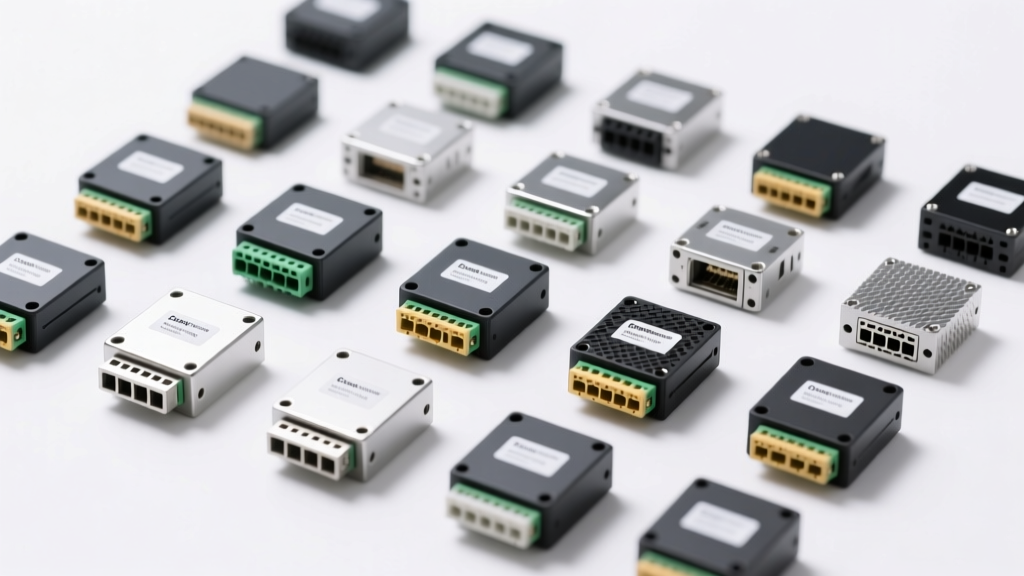
Types of Cable Position Sensors
A cable position sensor, also known as a string potentiometer or draw-wire sensor, is a precision device used to measure linear or angular displacement by tracking the extension and retraction of a flexible cable attached to a moving object. These sensors convert mechanical motion into an electrical signal, enabling accurate monitoring of position, distance, and speed in a wide range of industrial, mechanical, and automation applications.
Available in various configurations, cable position sensors are engineered to meet specific performance, environmental, and operational demands. Below is a comprehensive overview of the most common types, their working principles, advantages, and ideal use cases.
Linear Cable Position Sensors
Designed to measure straight-line displacement, these sensors track the linear movement of an object by winding or unwinding a stainless steel cable from a spring-loaded spool. The displacement is converted into an analog or digital signal for real-time monitoring.
Advantages
- High accuracy and repeatability
- Simple mechanical design
- Wide measurement range (up to several meters)
- Robust performance in harsh environments
Limitations
- Susceptible to cable wear over time
- Requires proper alignment to avoid side loading
- May need periodic recalibration
Best for: Construction machinery, cranes, hydraulic cylinders, robotics, and material handling systems
Circular (Rotary) Cable Position Sensors
These sensors measure angular displacement by detecting the rotation of a drum or pulley around which the cable is wound. As the object rotates, the cable extends or retracts, allowing the sensor to calculate the angle of movement based on rotational output.
Advantages
- Precise angular measurement
- Ideal for rotational mechanisms
- Compact integration in rotating assemblies
- Compatible with feedback control systems
Limitations
- Limited to applications with rotational motion
- Requires consistent cable tension
- Potential for cable slippage if not maintained
Best for: Robotic arms, servomechanisms, industrial automation, and heavy rotating equipment
Digital Cable Position Sensors
These sensors provide discrete digital output signals (e.g., SSI, CANbus, or Modbus) instead of continuous analog signals. They offer high-resolution position data in defined increments, making them ideal for integration with programmable logic controllers (PLCs) and digital control systems.
Advantages
- High noise immunity
- Easy integration with digital systems
- Long-distance signal transmission without degradation
- Supports advanced diagnostics and data logging
Limitations
- Higher initial cost than analog sensors
- Requires compatible digital interface
- More complex setup and configuration
Best for: Factory automation, CNC machines, smart manufacturing, and IoT-enabled monitoring systems
Expendable (Disposable) Cable Position Sensors
Engineered for single-use or short-term applications in extreme or high-wear environments, these sensors are cost-effective solutions for temporary monitoring. They maintain reliability under harsh conditions such as high temperature, dust, moisture, or corrosive exposure.
Advantages
- Low cost per unit
- Reliable in extreme conditions
- No need for long-term maintenance
- Quick replacement minimizes downtime
Limitations
- Short operational lifespan
- Not suitable for continuous long-term use
- Limited precision compared to premium models
Best for: Testing environments, temporary installations, hazardous zones, and disposable equipment
Multichannel Cable Position Sensors
These advanced sensors integrate multiple measurement channels within a single housing, enabling simultaneous monitoring of several cables or movement axes. They are ideal for complex systems where synchronized position tracking is critical for performance and safety.
Advantages
- Enables multi-axis position monitoring
- Reduces system complexity and wiring
- Improves synchronization and control accuracy
- Space-saving design for compact installations
Limitations
- Higher cost due to complexity
- Requires advanced signal processing
- Installation and calibration can be challenging
Best for: Multi-axis robotics, large-scale industrial machinery, aerospace test rigs, and coordinated motion systems
| Type | Measurement Type | Output Signal | Lifespan | Primary Applications |
|---|---|---|---|---|
| Linear | Linear Displacement | Analog or Digital | Long (with maintenance) | Construction, Robotics, Hydraulics |
| Circular (Rotary) | Angular Displacement | Analog or Digital | Long | Robotic Arms, Servos, Industry |
| Digital | Linear or Angular | Digital (SSI, CAN, etc.) | Very Long | Automation, Smart Systems |
| Expendable | Linear or Angular | Analog or Digital | Short (Single-use) | Testing, Harsh Environments |
| Multichannel | Multi-axis Displacement | Digital | Long | Complex Machinery, Robotics |
Expert Tip: For optimal performance and longevity, ensure that cable position sensors are installed with proper cable alignment and tension. Using protective sleeves or conduit in abrasive environments can significantly extend cable life and maintain measurement accuracy.
Durability & Material of Cable Position Sensor
The durability of the cable position sensor is a critical factor, as it directly influences the long-term reliability and accuracy of measurements across diverse operational environments. From agricultural machinery to industrial automation and marine systems, these sensors are exposed to mechanical stress, temperature fluctuations, moisture, and corrosive elements. The materials used in their construction play a pivotal role in determining resistance to wear, environmental degradation, and mechanical failure.
Selecting the right combination of materials ensures extended service life, reduced maintenance costs, and consistent performance under demanding conditions. Below is a detailed breakdown of key material components and protective features that define the durability of cable position sensors.
Housing Materials and Durability
Reinforced Plastics
Lightweight and cost-effective, reinforced plastic housings offer good resistance to corrosion and moderate impact. They are ideal for indoor or low-stress environments where weight and chemical exposure are concerns. However, they lack the structural strength of metals and may degrade under prolonged UV exposure or extreme temperatures.
Stainless Steel
Renowned for exceptional strength and corrosion resistance, stainless steel housings are best suited for outdoor, marine, and heavy industrial applications. They resist rust, high pressure, and physical damage, making them ideal for harsh environments such as offshore platforms, mining equipment, and chemical processing plants.
Aluminum Alloys
Offering an optimal balance between strength, weight, and cost, aluminum alloy housings are widely used in mobile and aerospace applications. While naturally prone to oxidation, they are typically treated with anodizing to enhance surface hardness and corrosion resistance, significantly improving longevity without adding excessive weight.
Cable Materials: Performance by Application
Stainless Steel Cables
Highly resistant to abrasion, UV radiation, and corrosion, stainless steel cables are the top choice for rugged environments. Commonly used in construction, mining, and oil & gas industries, they maintain integrity under heavy loads and extreme temperatures. Their durability comes at the expense of flexibility and increased weight.
High-Strength Nylon
Lightweight and chemically inert, nylon-sheathed cables provide excellent corrosion resistance and smooth operation. They are particularly effective in marine and mobile applications where moisture and salt exposure are common. Though less robust than metal cables, they reduce wear on internal pulleys and are quieter during operation.
Kevlar-Reinforced Cables
Known for their high tensile strength and flexibility, Kevlar cables excel in high-vibration environments such as robotics, test rigs, and aerospace systems. They resist stretching and fatigue, ensuring consistent measurement accuracy over time. However, they require protective outer jackets to guard against abrasion and environmental exposure.
Sensor Mechanism Materials: Internal Component Durability
The internal mechanics—such as pulleys, drums, gears, and potentiometers—are crucial for precision and longevity. These components must withstand constant motion, friction, and load cycles. Material selection here directly affects wear rates and calibration stability.
Protective Features and Environmental Sealing
Modern cable position sensors often incorporate advanced sealing technologies to enhance durability in challenging environments. Ingress Protection (IP) ratings are a standardized measure of a sensor’s ability to resist dust and water.
| IP Rating | Protection Level | Recommended Applications |
|---|---|---|
| IP65 | Dust-tight, protected against low-pressure water jets | Outdoor industrial equipment, agricultural machinery |
| IP67 | Dust-tight, protected against temporary immersion (up to 1m for 30 min) | Marine systems, construction vehicles, washdown environments |
| IP68 | Dust-tight, protected against continuous submersion | Subsea instrumentation, offshore platforms, wastewater treatment |
| IP69K | Dust-tight, protected against high-pressure, high-temperature water jets | Food & beverage processing, sterilization environments |
Sensors with IP67 or higher ratings are strongly recommended for outdoor, wet, or dirty environments. Additional features like sealed bearings, O-rings, and hydrophobic membranes further extend operational life by preventing contaminant ingress.
Important: Always match the sensor’s material and protection rating to its operating environment. Using a plastic-housed, low-IP-rated sensor in a corrosive or high-moisture setting can lead to premature failure and inaccurate readings. Conversely, over-specifying materials can increase cost unnecessarily. Consult manufacturer datasheets and application engineers to ensure optimal material selection for your specific use case.
Commercial Value of Cable Position Sensors
The cable position sensor delivers significant commercial value across industries by combining versatility, precision, and cost-efficiency. These sensors provide reliable linear or angular position feedback in a wide range of applications—from industrial automation and construction equipment to marine systems, robotics, and automotive testing. Their ability to operate accurately under demanding conditions while maintaining affordability makes them a preferred choice for businesses aiming to enhance operational efficiency, reduce downtime, and scale smart monitoring systems.
Versatility Across Industries
Cable position sensors are engineered for adaptability, functioning effectively in both linear and rotational measurement scenarios. Their flexible design allows integration into diverse mechanical systems such as robotic arms, cranes, excavators, winches, and automated test rigs.
- Used in manufacturing for monitoring conveyor displacement and actuator stroke length
- Deployed in construction machinery to track boom extension and bucket positioning
- Integrated into marine winch systems for precise cable payout measurement
- Applied in automotive R&D for suspension travel analysis and pedal position tracking
Key insight: The broader the application scope, the higher the return on investment—making these sensors highly attractive to OEMs and system integrators.
Accuracy and Operational Reliability
Precision is critical in automated and safety-sensitive environments. Cable position sensors offer high-resolution feedback—often within ±0.02% full-scale accuracy—ensuring consistent performance even in dynamic operating conditions.
- Enable closed-loop control in robotics for repeatable motion accuracy
- Support predictive maintenance by detecting deviations in machine movement
- Enhance safety in lifting equipment by preventing over-extension
- Improve process consistency in packaging and material handling systems
Business impact: Accurate data reduces errors, minimizes waste, and increases throughput—directly contributing to lower operational costs and improved productivity.
Cost-Effectiveness and ROI
Compared to alternative position sensing technologies like LVDTs or laser-based systems, cable position sensors deliver superior functionality at a fraction of the cost—especially in long-stroke applications.
- Lower initial investment with minimal setup requirements
- Bulk procurement options make them ideal for large-scale industrial deployments
- Reduced need for calibration and external signal conditioning
- Long service life reduces replacement frequency and lifecycle costs
Smart investment: Businesses can achieve high-performance sensing without the premium price tag, making these sensors ideal for budget-conscious yet performance-driven operations.
Robustness in Harsh Environments
Designed for durability, many cable sensors feature stainless steel cables, sealed housings, and rugged enclosures that resist moisture, dust, vibration, and extreme temperatures (-40°C to +85°C).
- Corrosion-resistant models perform reliably in offshore and maritime settings
- Dust-proof designs maintain accuracy in mining and quarrying operations
- Vibration-tolerant construction ensures stability in heavy machinery
- IP65 and IP67-rated units withstand washdowns and outdoor exposure
Maintenance advantage: Reduced failure rates lead to fewer service calls and extended uptime—critical for continuous production and remote installations.
Technological Integration & Smart Capabilities
Modern digital cable position sensors are equipped with advanced electronics that support seamless integration into IoT and Industry 4.0 frameworks.
- Analog (0–10V, 4–20mA) and digital (SSI, CANopen, Modbus) outputs for easy PLC connectivity
- Multi-channel variants allow simultaneous monitoring of multiple axes or machines
- Real-time data transmission enables remote diagnostics and cloud-based analytics
- Programmable zero/span settings simplify field calibration and system tuning
Future-ready value: These sensors act as key enablers of smart manufacturing, allowing companies to transition from reactive to predictive operational models.
Scalability and Customization
Manufacturers offer customizable stroke lengths (from 25mm to over 50 meters), mounting options, cable types, and output signals to meet specific application needs.
- Tailored solutions for unique OEM equipment designs
- Quick turnaround for modified configurations
- Compatibility with both new installations and retrofits
- Support for hazardous area certifications (ATEX, IECEx) where required
Strategic benefit: Flexibility in design and deployment allows businesses to standardize on a single sensor platform across multiple product lines.
Industry Insight: When advising clients, emphasize total cost of ownership (TCO) rather than upfront price. Highlight how cable position sensors reduce downtime, improve data quality, and integrate easily with existing control systems—delivering measurable ROI within months of deployment. For mission-critical applications, recommend models with redundant outputs or built-in diagnostics to further enhance reliability.
| Industry Sector | Primary Application | Key Sensor Benefit | Expected Lifespan |
|---|---|---|---|
| Manufacturing & Automation | Robotic arm positioning, press stroke control | High repeatability and analog integration | 5–7 years |
| Construction & Mining | Crane jib extension, excavator bucket angle | Durability in dusty, high-vibration environments | 4–6 years |
| Marine & Offshore | Winch payout, crane cable tension monitoring | Corrosion resistance and waterproof sealing | 6–8 years |
| Automotive Testing | Suspension travel, pedal displacement | Precise analog output and compact design | 5+ years |
| Renewables (Wind) | Blade pitch control, yaw positioning | Long stroke capability and temperature resilience | 7–10 years |
Additional Commercial Advantages
- Inventory Efficiency: Standardized sensor platforms reduce spare parts complexity across fleets or facilities
- Energy Optimization: Precise position feedback supports efficient motor control, reducing power consumption
- Safety Compliance: Enables adherence to OSHA, ISO, and machinery directive requirements through accurate limit detection
- Remote Monitoring: Facilitates centralized supervision of distributed assets, ideal for SCADA and IIoT systems
- Vendor Support: Leading brands offer technical documentation, calibration services, and application engineering assistance
How To Choose the Right Cable Position Sensor: A Comprehensive Guide
Selecting the appropriate cable position sensor—also known as a string potentiometer or draw-wire sensor—is crucial for achieving accurate and reliable position feedback in mechanical and industrial applications. These sensors are widely used in automation, robotics, construction equipment, and testing systems where linear or angular displacement must be monitored. To ensure optimal performance, durability, and compatibility, several key factors must be carefully evaluated during the selection process.
Important Note: Choosing the wrong cable position sensor can lead to inaccurate readings, premature failure, or system downtime. Always match the sensor specifications to your application’s mechanical, environmental, and electrical requirements.
Key Factors When Selecting a Cable Position Sensor
- Measurement Range
The measurement range defines the maximum distance the sensor can accurately measure. Cable position sensors operate by spooling a stainless steel cable attached to a spring-loaded mechanism. As the object moves, the cable extends or retracts, and the sensor translates this motion into a positional signal.
- Linear Applications: Ideal for measuring straight-line movement such as hydraulic cylinder extension, conveyor positioning, or robotic arm travel.
- Rotary Applications: Some sensors use a pulley system to convert linear motion into angular displacement, useful in rotational monitoring setups.
- Always select a sensor with a range slightly exceeding your application’s maximum travel to prevent over-extension and damage.
- Environmental Conditions
The operating environment significantly impacts sensor longevity and accuracy. Exposure to harsh conditions requires rugged construction and protective features.
- Temperature: Ensure the sensor is rated for both minimum and maximum ambient temperatures in your environment (e.g., -40°C to +85°C for industrial use).
- Moisture & Dust: Look for IP65 or higher ingress protection ratings to guard against water, dust, and debris—especially critical for outdoor or washdown environments.
- Chemical Exposure: Choose sensors with corrosion-resistant housings (e.g., anodized aluminum or stainless steel) and chemically inert cables if exposed to oils, solvents, or cleaning agents.
- Type of Movement and Mechanical Load
Understanding the nature of motion in your application helps determine the mechanical durability needed.
- Static or Low-Cycle Applications: Standard sensors with moderate spring tension are sufficient for infrequent or slow movements.
- Dynamic or High-Cycle Applications: Sensors must withstand constant cable extension/retraction. Look for models with high-cycle life (e.g., 1 million+ cycles), reinforced cables, and precision bearings.
- Lateral Load: Avoid side-loading the cable, as it can cause kinking or misalignment. Use guide pulleys if necessary to maintain alignment.
- Output Signal Type
The sensor’s output must be compatible with your control system (PLC, DAQ, microcontroller, etc.).
- Analog Outputs:
- 0–10 VDC: Common in industrial automation; easy to interface with most controllers.
- 4–20 mA: Ideal for long cable runs due to noise immunity; widely used in process control.
- Digital Outputs:
- SPI, I²C, or RS-485: Suitable for modern embedded systems requiring high precision and data logging.
- Digital sensors often include built-in diagnostics and calibration features.
- Incremental Encoder Output: Provides pulse signals for speed and direction detection in motion control systems.
- Analog Outputs:
- Installation and Mounting Considerations
Proper installation ensures long-term reliability and measurement accuracy.
- Ensure the sensor is mounted securely to avoid vibration-induced errors.
- Align the cable path as straight as possible to minimize friction and wear.
- Use mounting brackets or flanges that match your setup—some sensors offer multiple mounting options.
- Consider space constraints; compact sensors are available for tight installations.
- Remote electronics versions allow the sensing element to be placed in harsh areas while keeping the electronics in a protected zone.
- Budget and Total Cost of Ownership
While initial cost is important, consider long-term value and reliability.
- Entry-Level Sensors: Cost-effective for non-critical or short-term projects but may lack durability or precision.
- Premium Sensors: Offer higher accuracy (±0.1%), better temperature stability, longer life, and advanced features like temperature compensation and EMI shielding.
- Factor in maintenance, downtime, and replacement costs—investing in a robust sensor often reduces lifecycle expenses.
| Selection Factor | Recommended for Industrial Use | Avoid If… | Top Tips |
|---|---|---|---|
| Measurement Range | Range exceeds max travel by 10–15% | Range is too tight or too excessive (reduces resolution) | Use guide pulleys for indirect measurement paths |
| Environmental Rating | IP65 or higher, stainless steel housing | Plastic housing in outdoor or wet environments | Add protective boots or covers in abrasive conditions |
| Output Type | 4–20 mA or digital for long distances | Analog 0–5V in electrically noisy areas | Use shielded cables and proper grounding |
| Mechanical Durability | 1M+ cycle rating, spring-loaded retraction | Non-retractable or flimsy cable design | Inspect cable weekly in high-use applications |
| Installation Flexibility | Multiple mounting options, swivel joints | Rigid mounting with no alignment tolerance | Allow slight cable float to prevent binding |
Expert Tip: Always perform a field test with a prototype sensor before full deployment. This allows you to verify range, alignment, signal stability, and environmental resilience under real operating conditions—saving time and cost in the long run.
Additional Recommendations
- Regularly inspect the cable for fraying, kinks, or corrosion—replace if damaged to prevent failure.
- Choose sensors with built-in overtravel protection to prevent damage from accidental over-extension.
- Calibrate the sensor periodically, especially in precision-critical applications.
- Consult manufacturer datasheets for temperature coefficients, linearity, and repeatability specs.
- Consider sensors with integrated electronics for simplified wiring and improved noise resistance.
Selecting the right cable position sensor involves balancing technical requirements, environmental challenges, and budget constraints. By carefully evaluating each factor—measurement range, environmental resilience, motion type, output compatibility, installation needs, and lifecycle cost—you can ensure reliable, accurate performance for years. When in doubt, consult with a sensor specialist or manufacturer to tailor a solution to your specific application.
Frequently Asked Questions About Cable Position Sensors
Q1: Can a circular cable position sensor be used in an automated warehouse?Yes, circular cable position sensors—also known as draw-wire or string potentiometers—are highly effective in automated warehouse environments. These sensors are specifically designed to measure linear or rotational displacement with high precision by winding a stainless steel cable around a spring-loaded spool.
In automated storage and retrieval systems (AS/RS), they monitor the exact position of robotic shuttles, cranes, and lift mechanisms. This real-time positional feedback ensures accurate placement and retrieval of goods, minimizing errors and maximizing space utilization.
- Precision Tracking: Enables sub-millimeter accuracy in locating inventory within high-density racking systems.
- Integration with Control Systems: Compatible with PLCs and SCADA systems for seamless automation and data logging.
- Reliability: Operates consistently under continuous cycling, making it ideal for 24/7 warehouse operations.
Their compact design and robust construction make them well-suited for integration into complex material handling equipment where space is limited but accuracy is critical.
Q2: What are the typical applications of a cable position sensor?Cable position sensors are versatile transducers used across numerous industries due to their ability to convert mechanical motion into reliable electronic signals. Their flexibility in measuring both linear and angular movement makes them indispensable in dynamic environments.
Key applications include:
- Industrial Machinery: Monitoring actuator stroke length, valve positioning, and conveyor alignment in manufacturing plants.
- Robotics: Providing feedback for joint angles and arm extension in robotic manipulators used in assembly lines and collaborative robots.
- Construction & Heavy Equipment: Measuring boom angle and bucket position in excavators, cranes, and aerial work platforms for safety and operational control.
- Marine Systems: Tracking rudder angle, winch payout, and sail position on commercial and recreational vessels.
- Automotive Testing: Used in dynamometers and suspension test rigs to measure displacement during performance evaluation.
- Agricultural Machinery: Monitoring implement height and tilt on tractors and harvesters for precision farming.
These sensors are often chosen over alternatives like LVDTs or optical encoders when long measurement ranges, ruggedness, and ease of installation are priorities.
Q3: Are cable position sensors durable enough to work outdoors?Absolutely. Modern cable position sensors are engineered for harsh outdoor environments and can withstand extreme temperatures, moisture, dust, and mechanical stress.
Several design features contribute to their durability:
- Corrosion-Resistant Materials: Housings made from anodized aluminum, stainless steel, or engineered polymers resist rust and chemical exposure.
- Ingress Protection (IP) Ratings: Many models offer IP65, IP67, or even IP69K ratings, ensuring protection against water jets, temporary submersion, and high-pressure cleaning.
- Sealed Bearings and Cables: Prevent contamination from dirt, sand, and debris that could impair sensor function.
- Wide Operating Temperature Range: Typically rated from -40°C to +85°C (-40°F to +185°F), suitable for arctic to desert conditions.
This resilience makes them ideal for outdoor applications such as construction sites, mining operations, offshore platforms, and agricultural fields where reliability under adverse conditions is essential.
Q4: How do cable position sensors improve industrial operations?Cable position sensors play a pivotal role in enhancing industrial automation by delivering accurate, real-time position data that enables smarter control decisions.
Their impact on operational efficiency includes:
- Increased Automation: Enable closed-loop control systems to automatically adjust machinery based on precise positional feedback, reducing reliance on manual intervention.
- Error Reduction: Minimize misalignment, overtravel, and incorrect positioning that lead to product defects or equipment damage.
- Enhanced Safety: Provide critical feedback for overload protection, anti-collision systems, and emergency shutdown protocols in cranes and lifts.
- predictive Maintenance: Detect abnormal movement patterns or cable wear early, allowing maintenance before failure occurs.
- Improved Productivity: Optimize cycle times and throughput in automated processes by ensuring consistent and repeatable motion control.
By integrating these sensors, companies achieve tighter process control, lower downtime, and improved worker safety—key drivers of long-term cost savings and competitive advantage.
Q5: What is the commercial value of cable position sensors?Cable position sensors deliver significant commercial value by bridging the gap between mechanical movement and digital intelligence in industrial systems.
From a business perspective, their benefits translate into measurable returns:
- Cost Efficiency: Reduce labor costs and material waste through precise control in heavy-duty applications such as mining shovels, concrete pumps, and timber harvesters.
- Operational Reliability: Maintain consistent performance in challenging environments, minimizing unplanned downtime and repair expenses.
- Scalability: Easily integrated into new or existing systems across multiple sectors, offering a high return on investment (ROI).
- Regulatory Compliance: Support safety standards in industries like construction and maritime by enabling compliance with OSHA, ISO, and other regulatory requirements.
- Global Applicability: Widely used in mining, oil & gas, maritime logistics, renewable energy (e.g., wind turbine pitch control), and infrastructure development.
Due to their adaptability, durability, and precision, cable position sensors have become mission-critical components in modern industrial ecosystems, making them a smart investment for businesses aiming to improve efficiency, safety, and profitability.